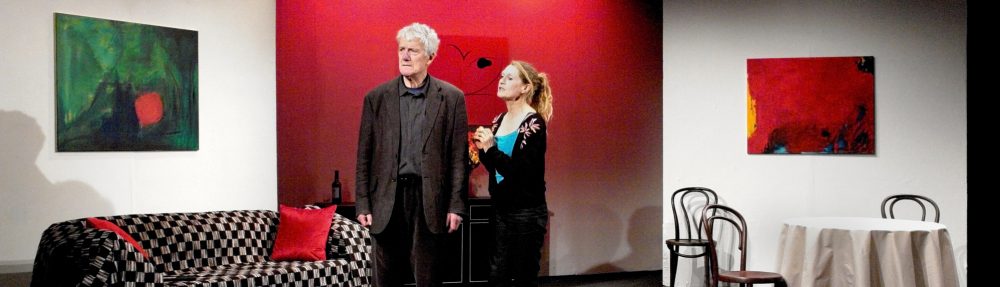
Listed in order, just scroll down to find them – Murder, Margaret and Me / Arabian Nights / Jerusalem
Murder, Margaret and Me
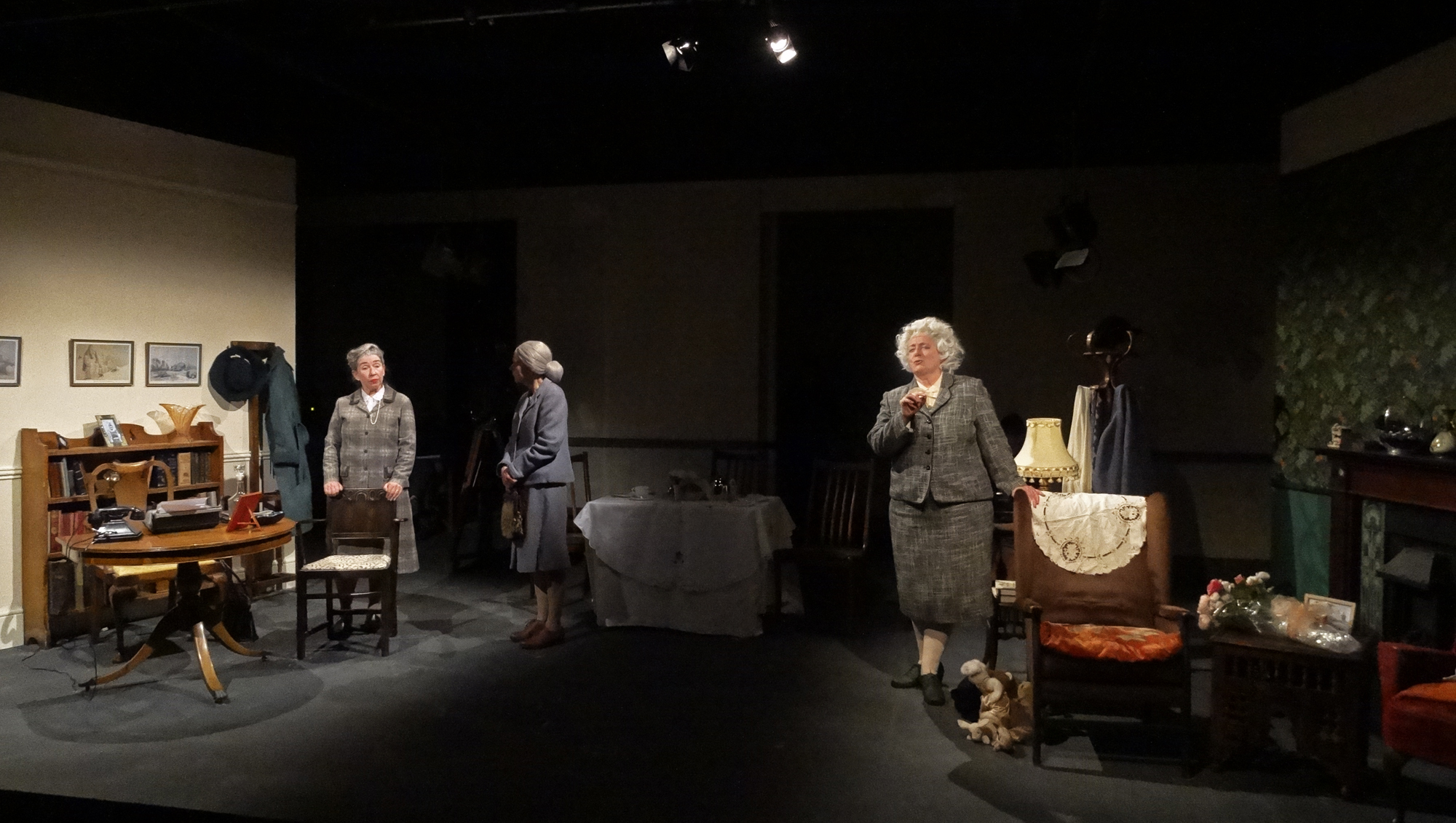
We used the full width of the Upstairs Theatre stage for New Venture’s May production of ‘Murder, Margaret and Me’. The set had to give us Agatha Christie’s office (left) as well as Margaret Rutherford’s lounge (right), while leaving space for action to take place in the middle.
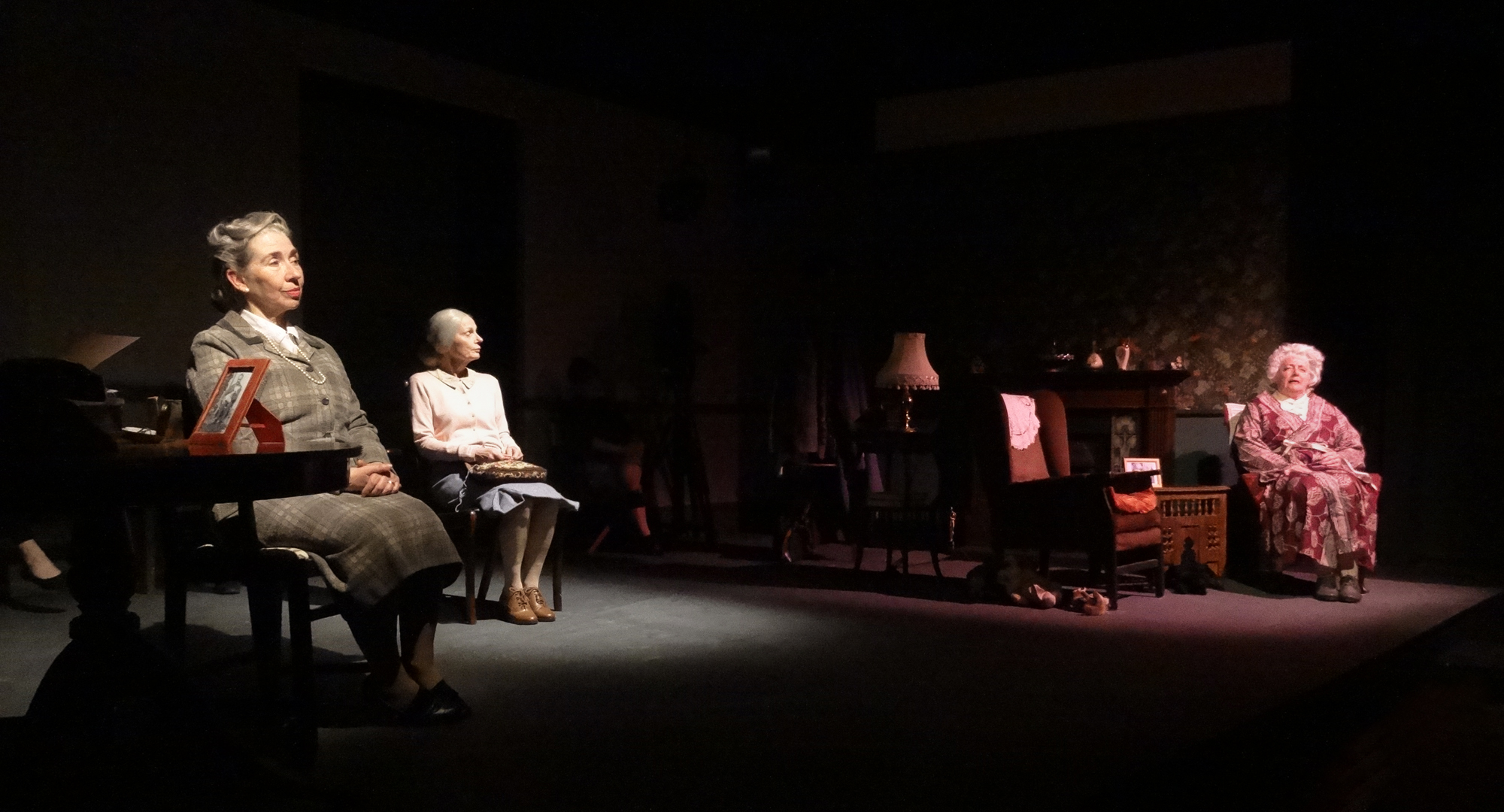
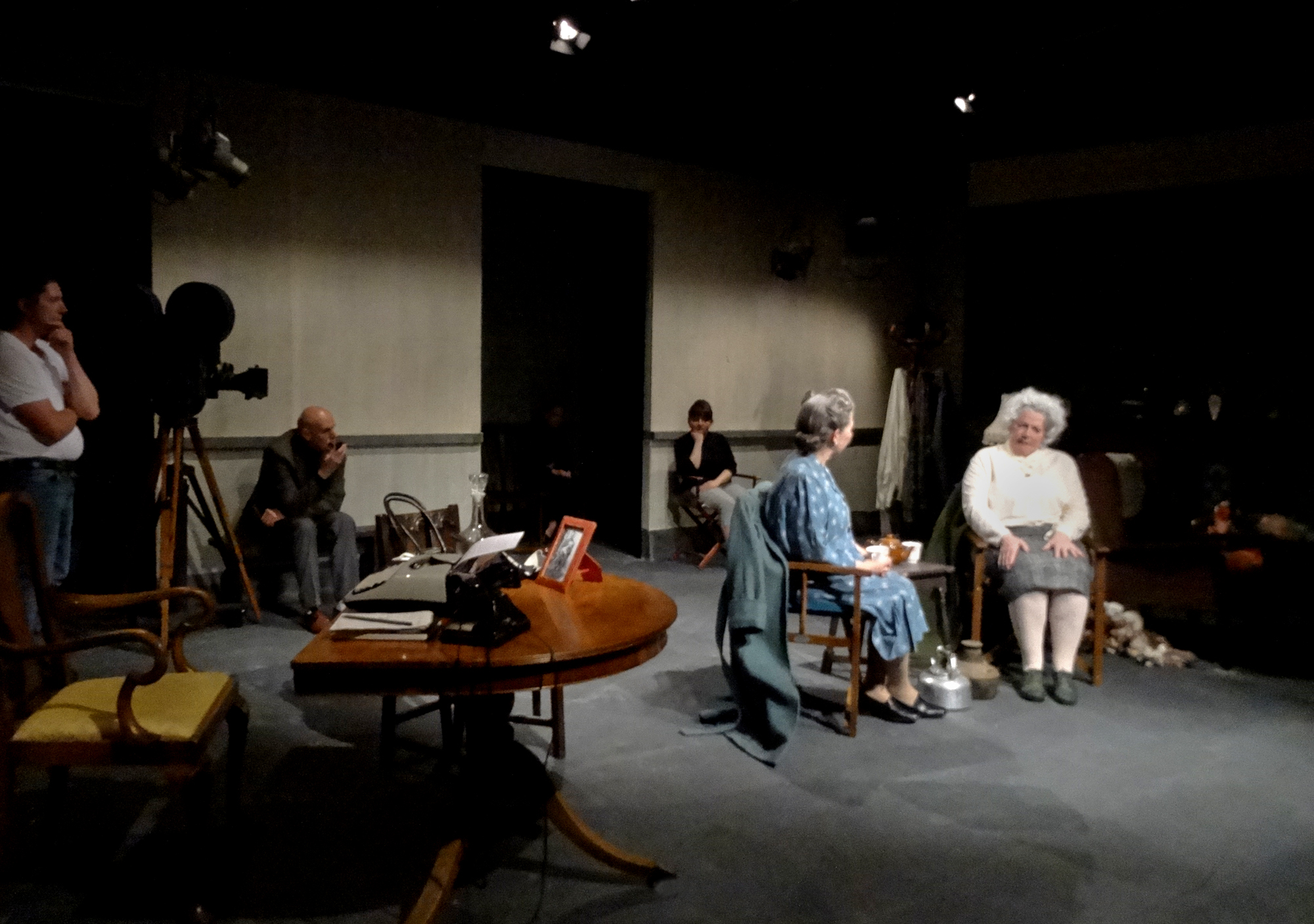
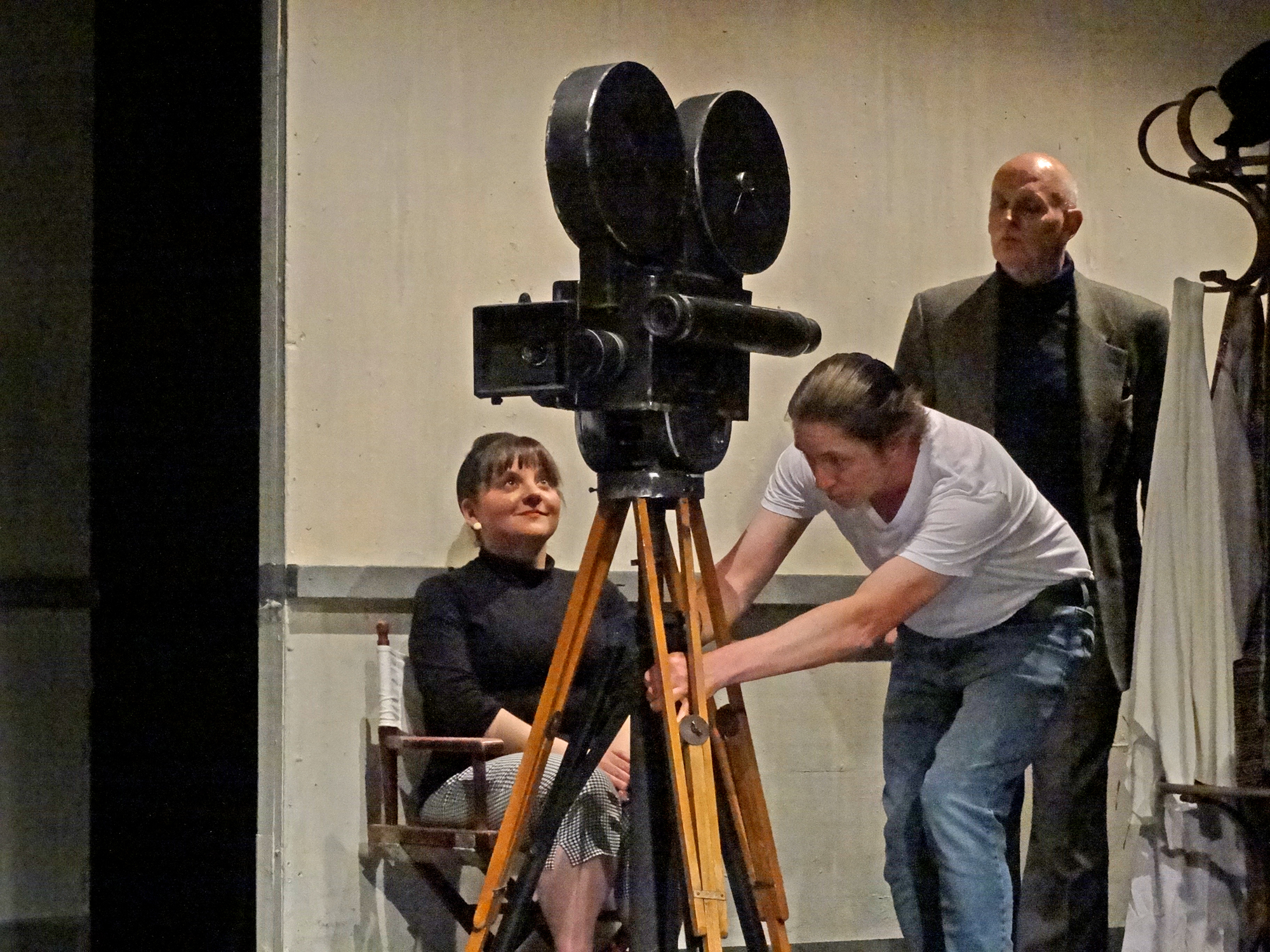
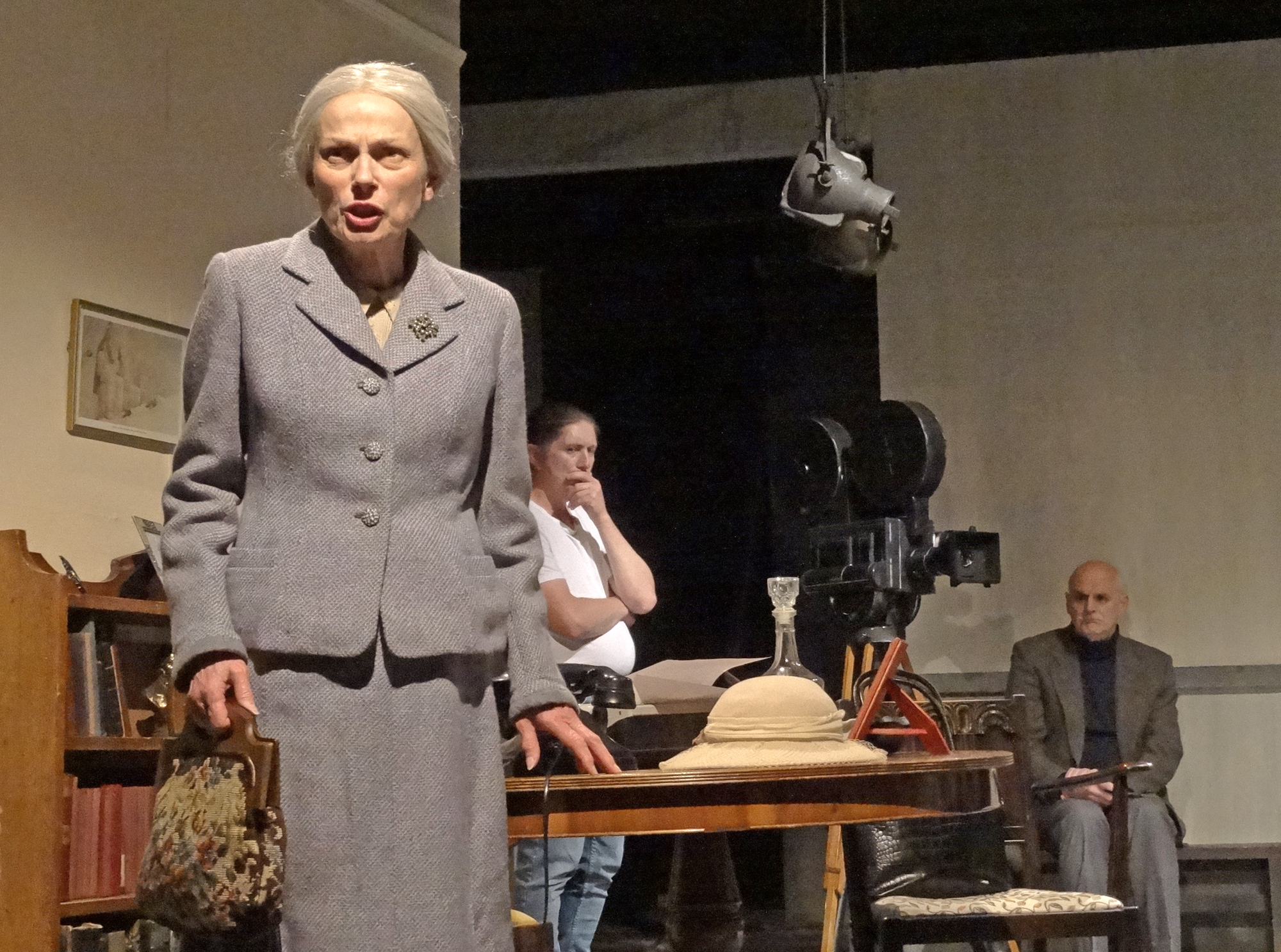
Philip Meeks’ play was written as a straightforward examination of family secrets that both Christie and Rutherford were desperate to conceal – but Director Bryony Weaver’s vision was to have the story staged as if it was being filmed on a Pinewood set, playing out the scenes in front of a camera crew. True meta-theatre: the film-makers watch the actors, and we the audience watch the film-makers, who of course are actors themselves.
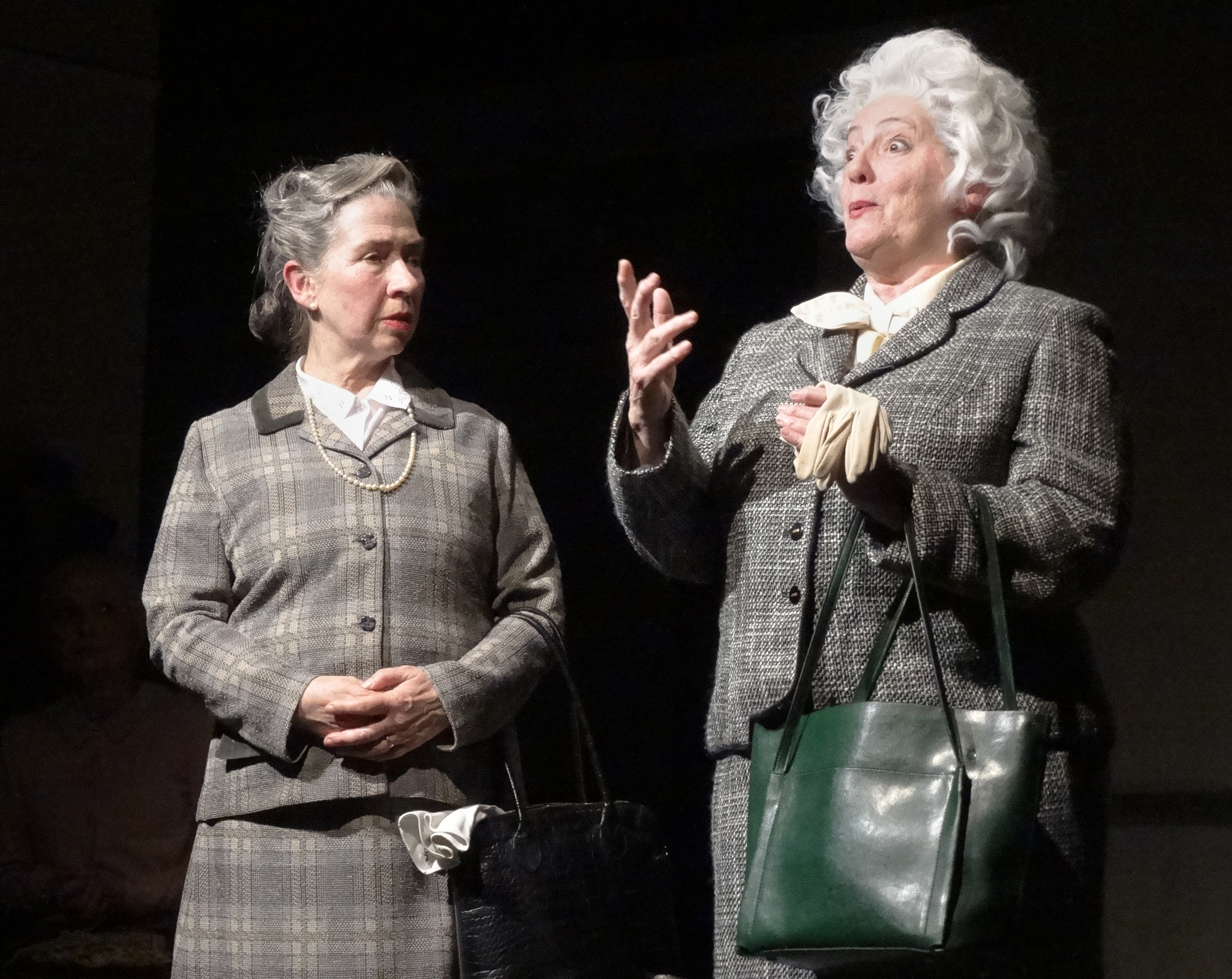
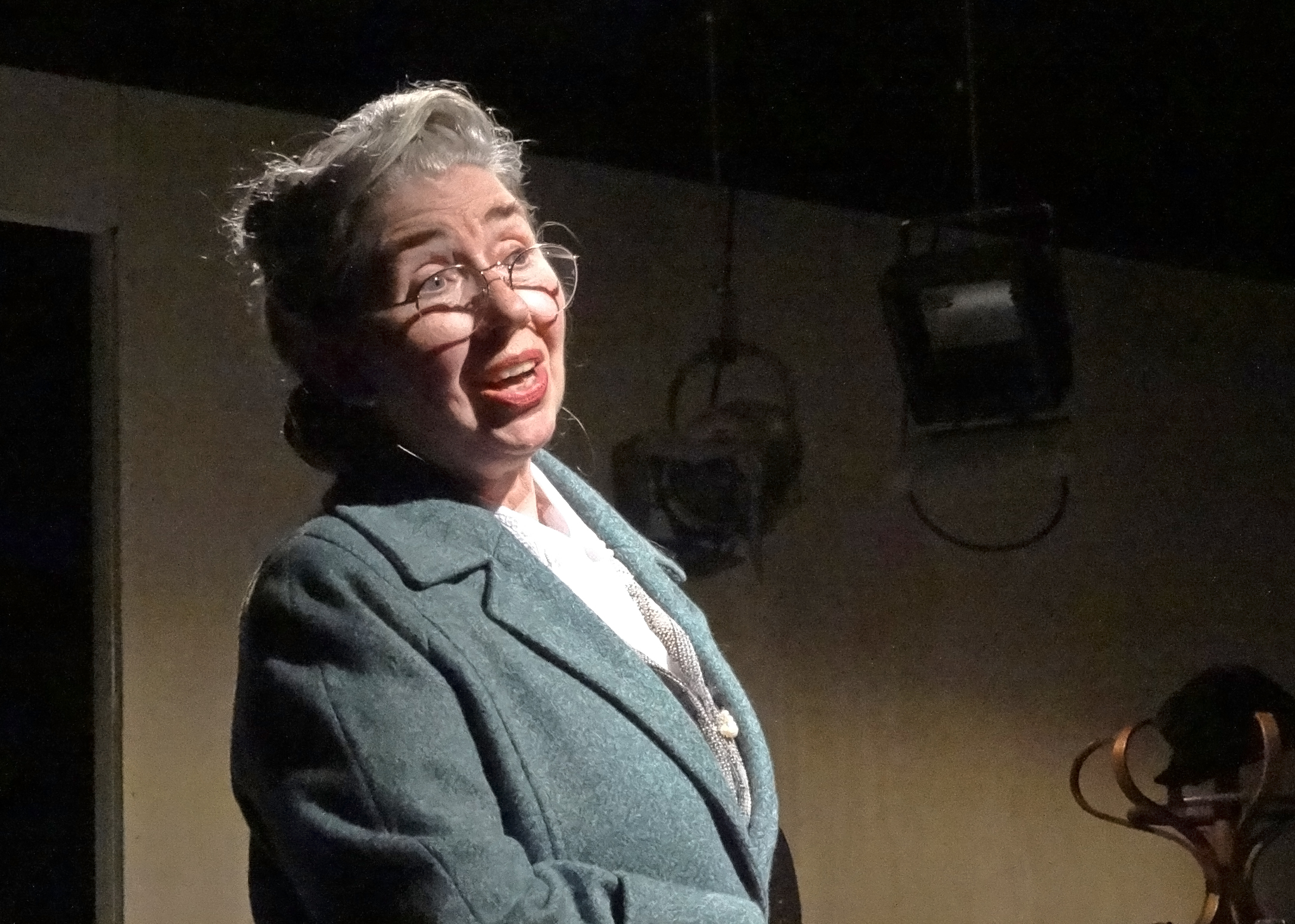
The two main characters are writer Agatha Christie (left) and actress Margaret Rutherford (right), but there’s a third: ‘The Spinster’, a woman who seems to live inside Christie’s head, like a conscience or inner voice, and who offers advice and comments on the action like a Greek Chorus.
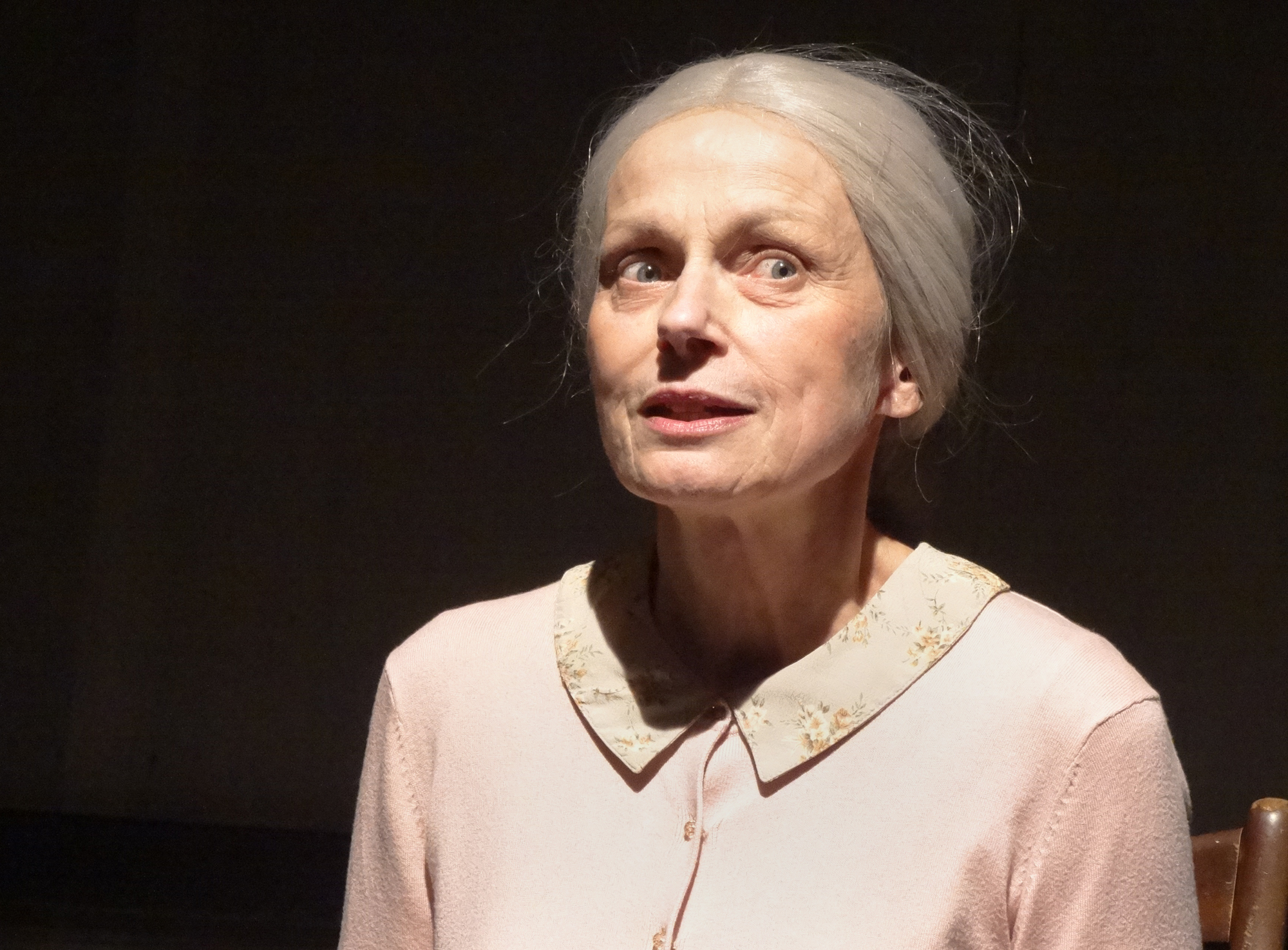
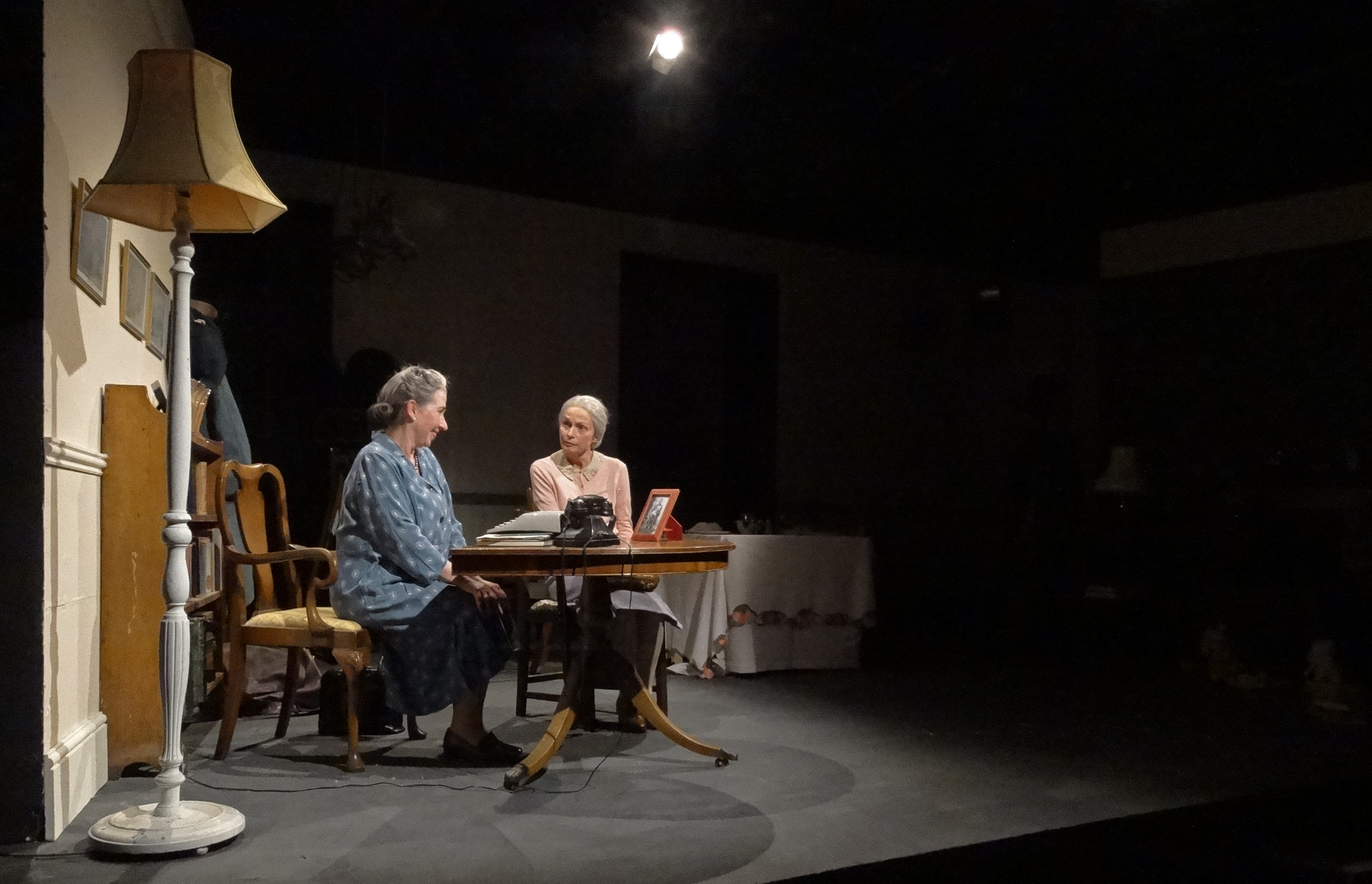
It seems that only Agatha Christie (and the audience) can see her. They spend a lot of time in Christie’s office, which I had to keep separate from the rest of the set. Tricky, but very satisfying to watch the focus switch from one location to the next.
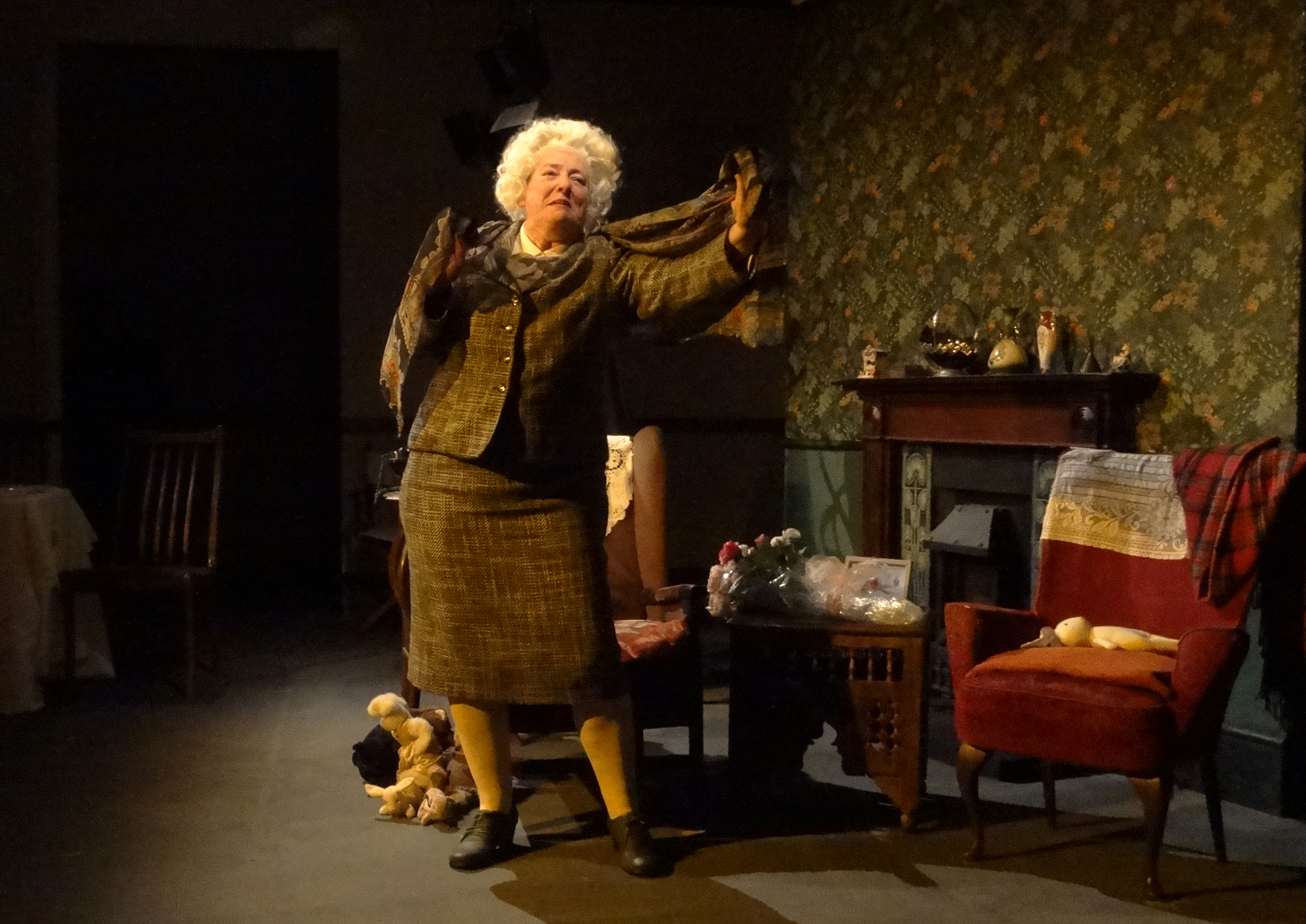
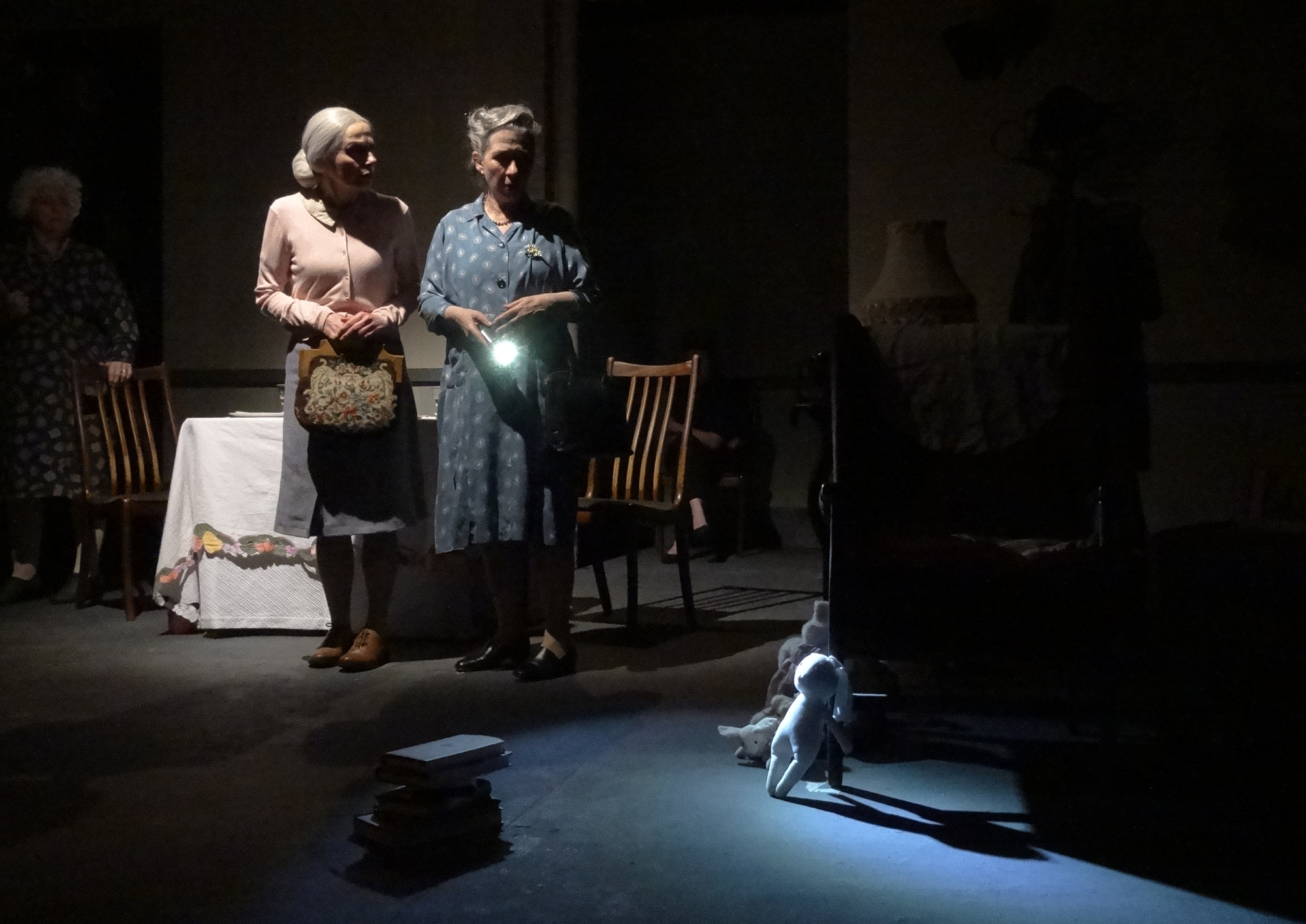
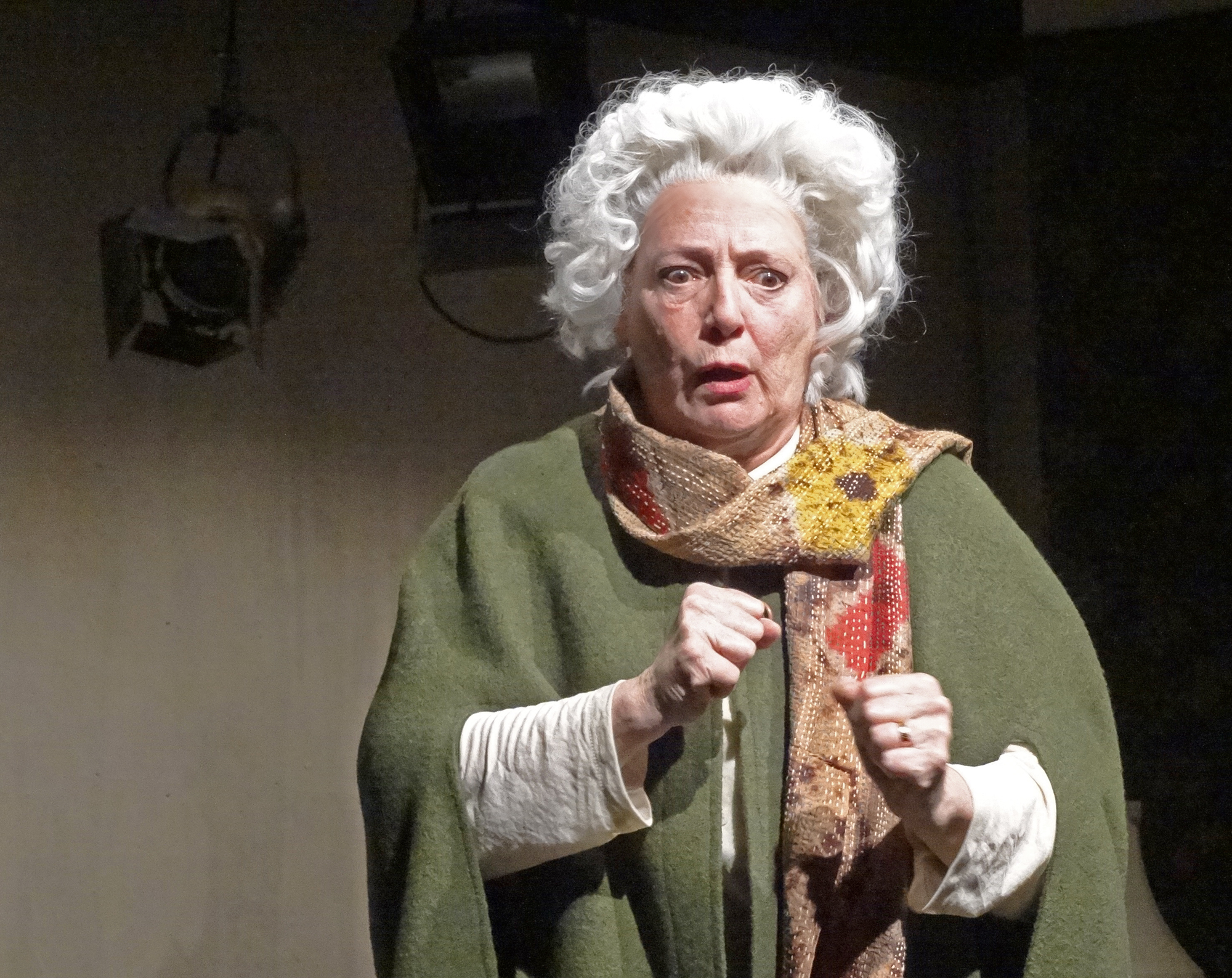
On the other side of the stage, Margaret Rutherford reminisced about her experiences with a Jordanian Prince (don’t ask!), and at one point Agatha and The Spinster explore the secrets of Margaret’s house – and her ‘family’ of stuffed toys.
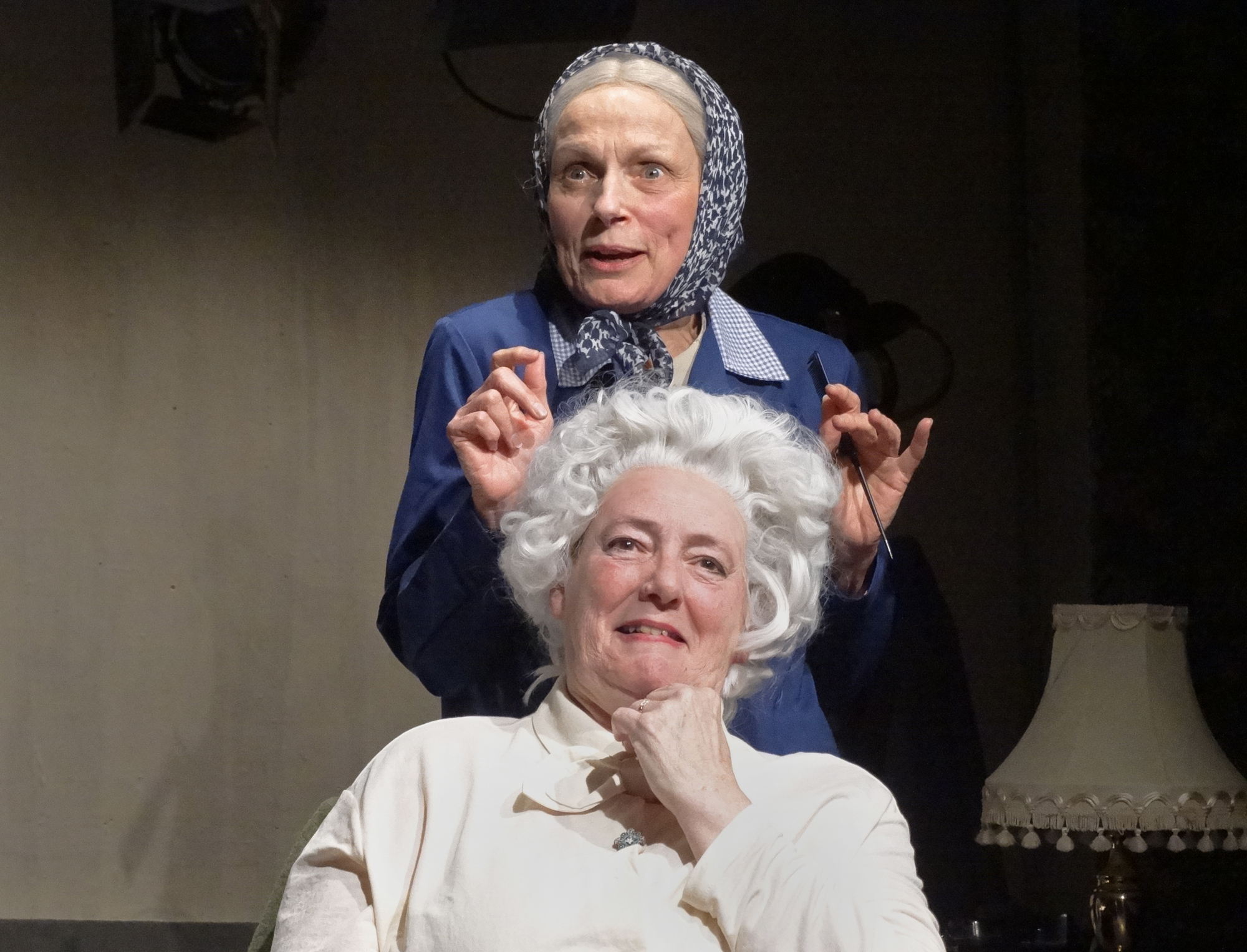
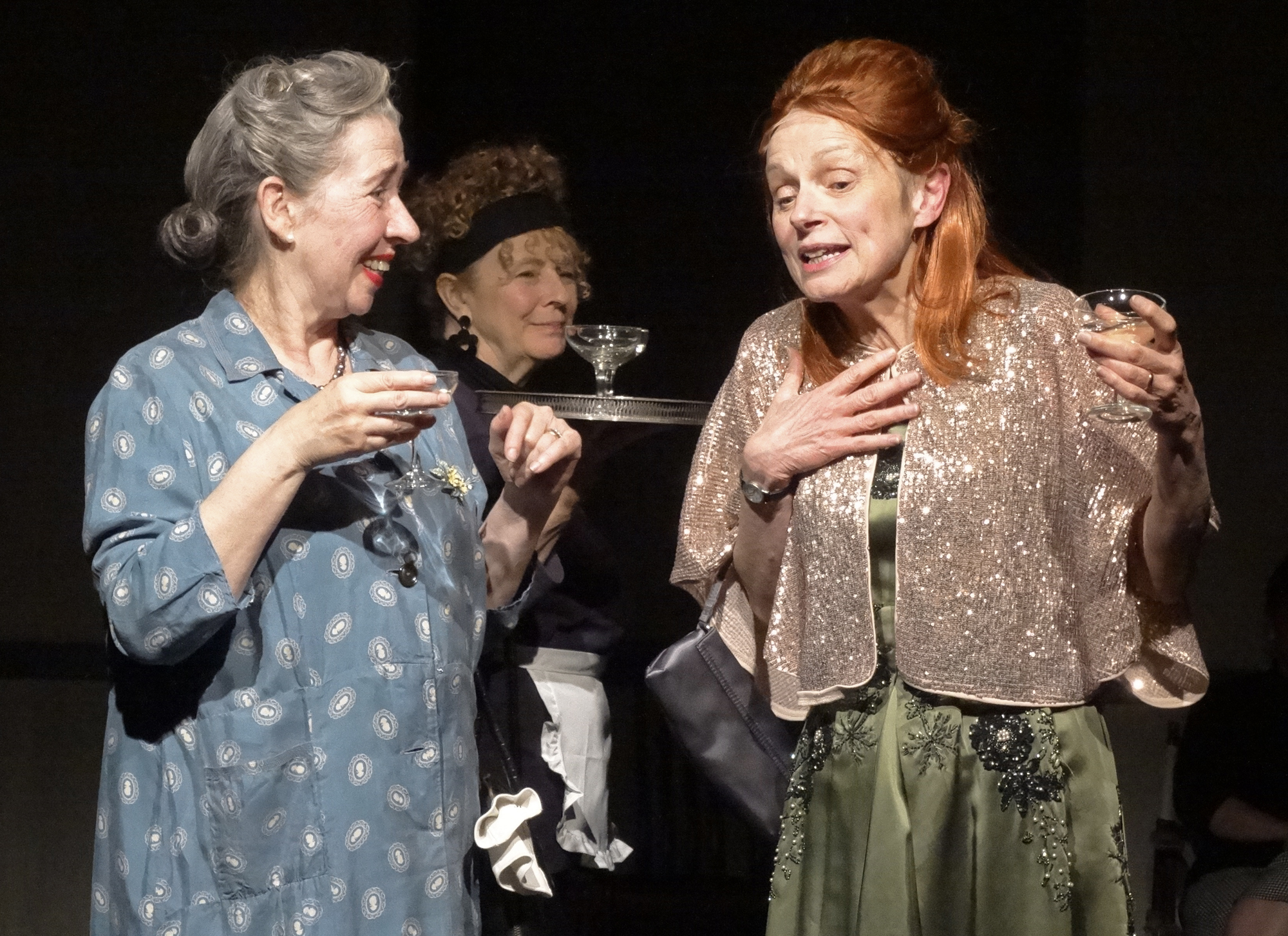
The Spinster didn’t spend all her time inside Agatha’s head – Janice Jones also switched into a dazzling set of minor characters, from Rutherford’s hairdresser to one of Christie’s fans at a literary reception.
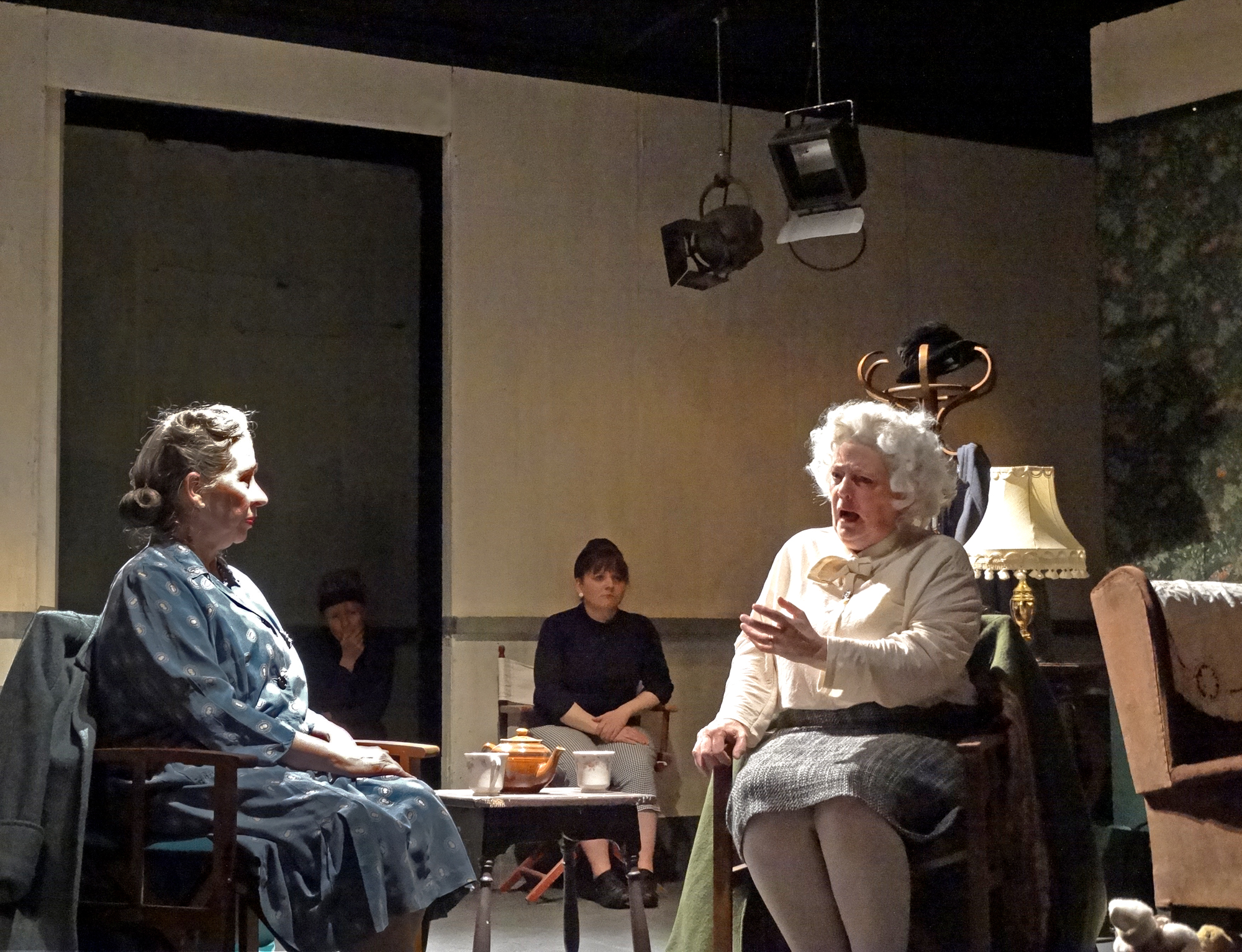
As well as the actual lighting rig, we hung old theatre lanterns from the building tie-bars, to help create the period feel.
*
*
Arabian Nights
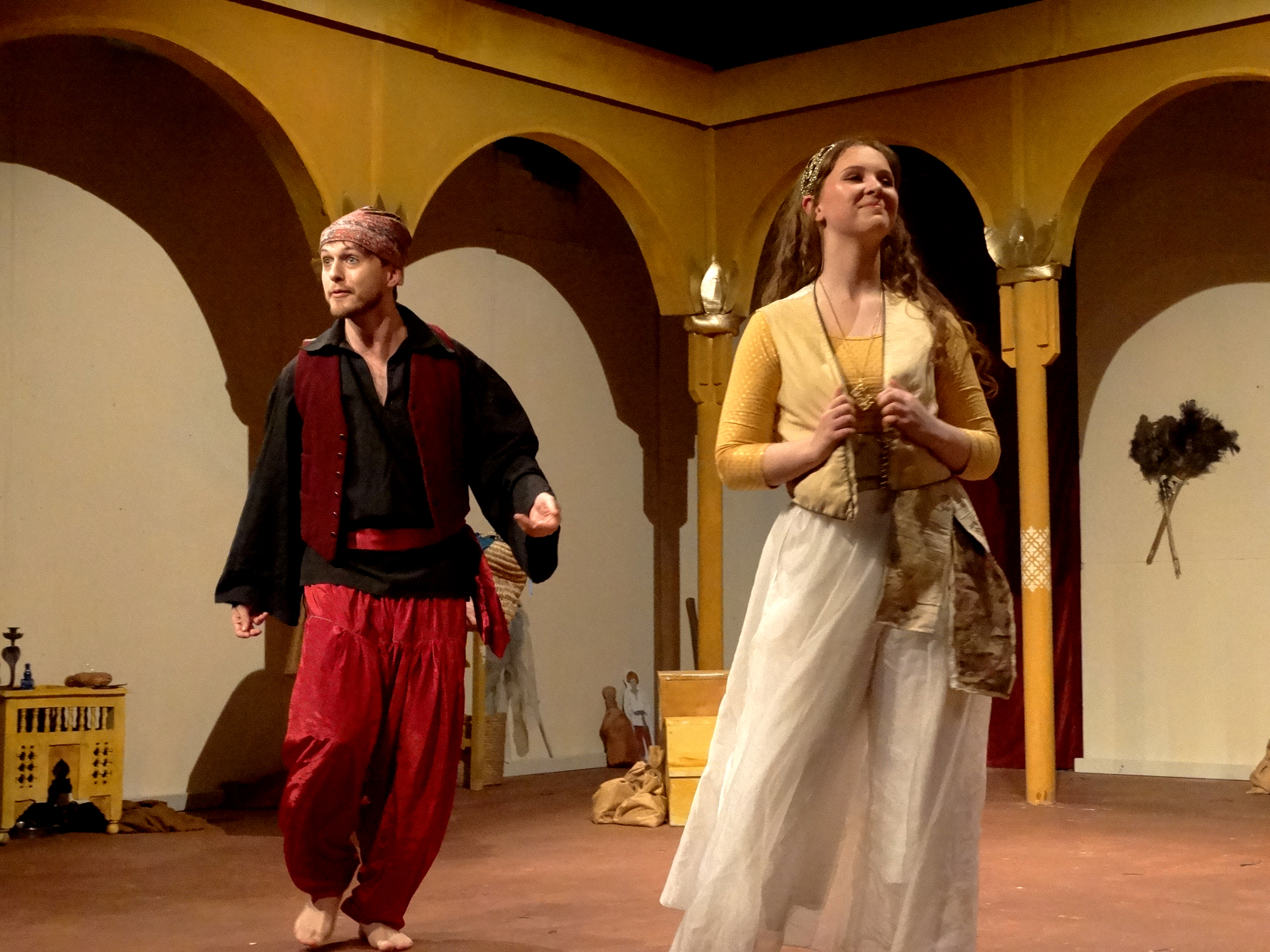
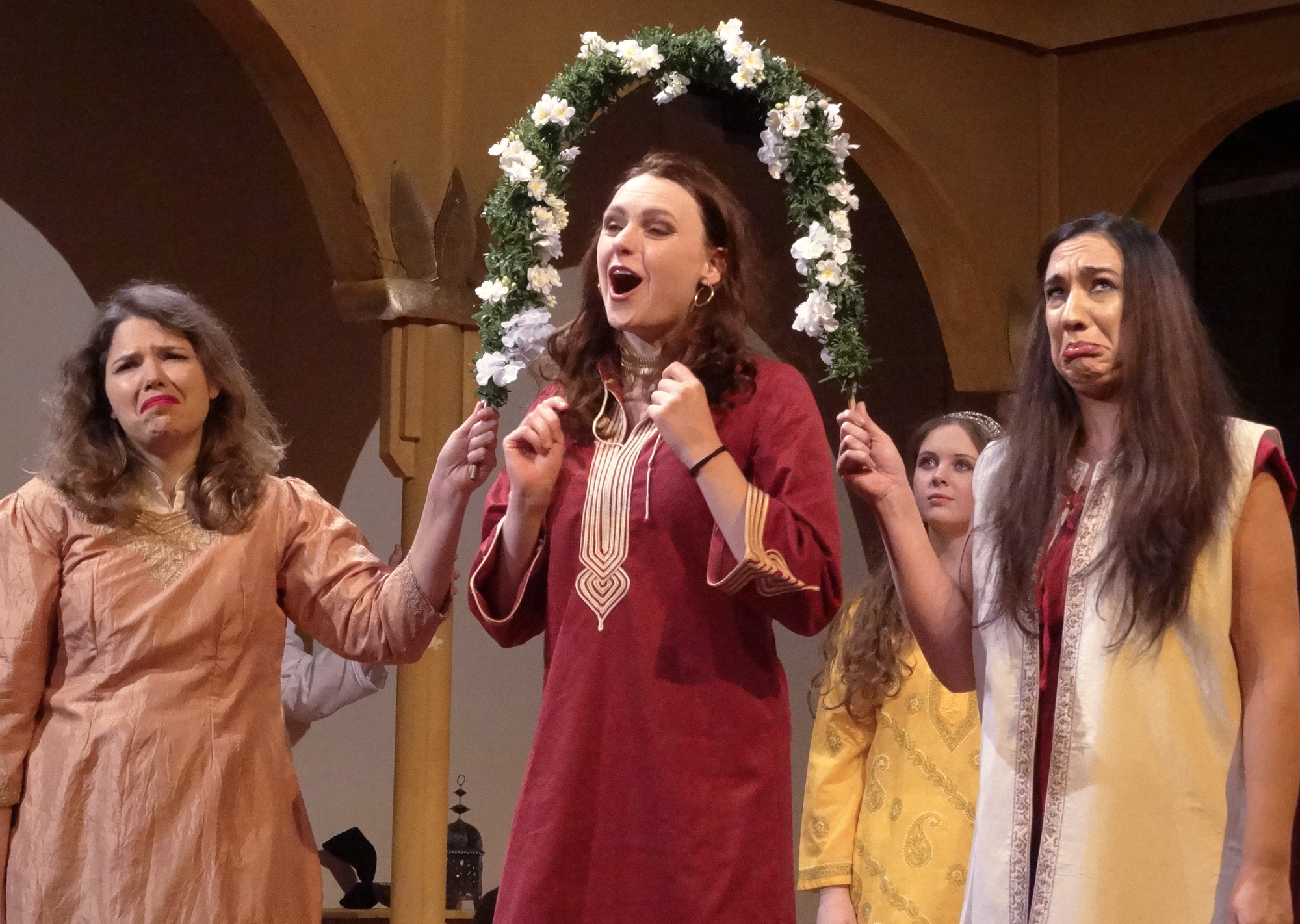
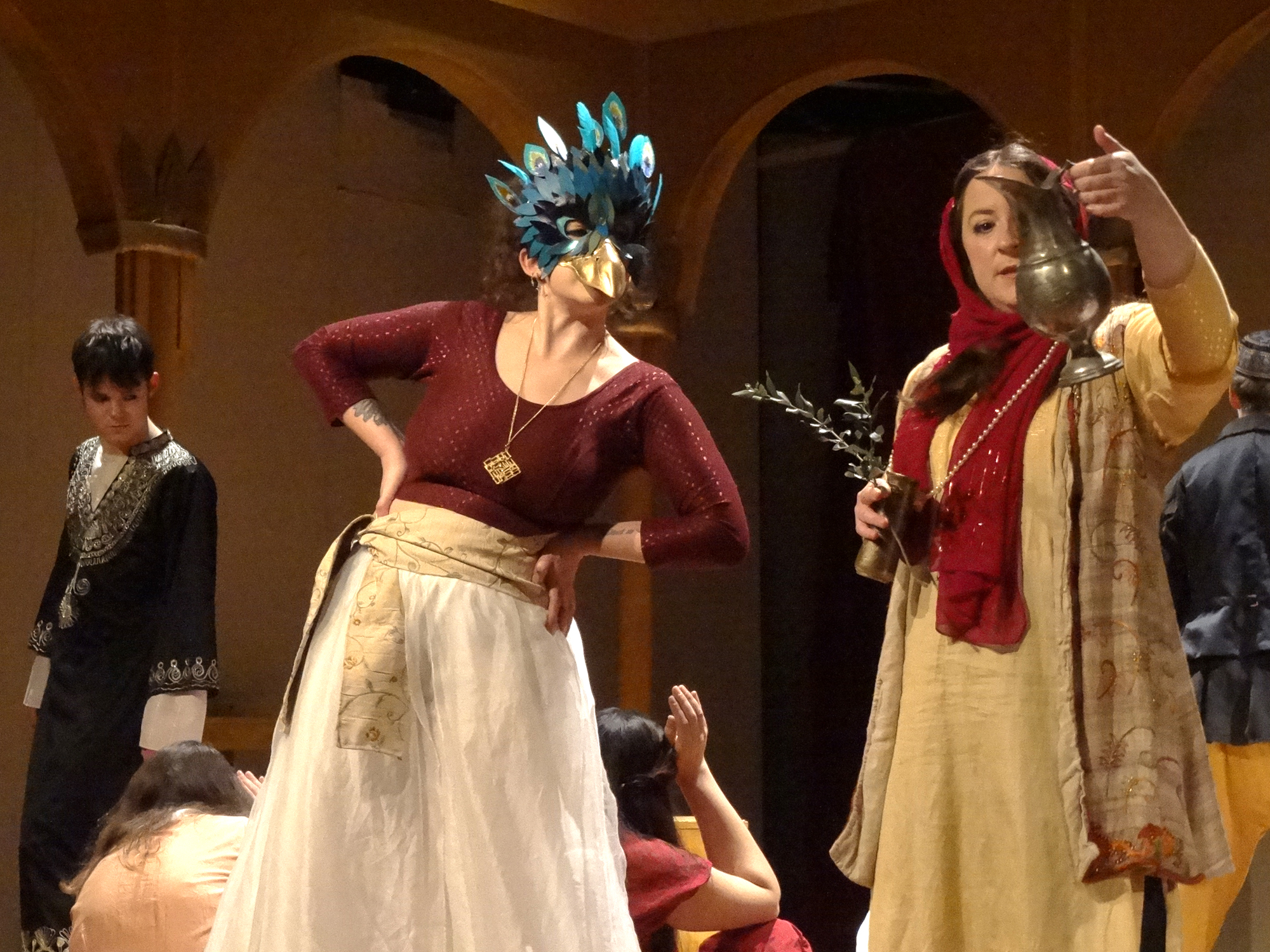
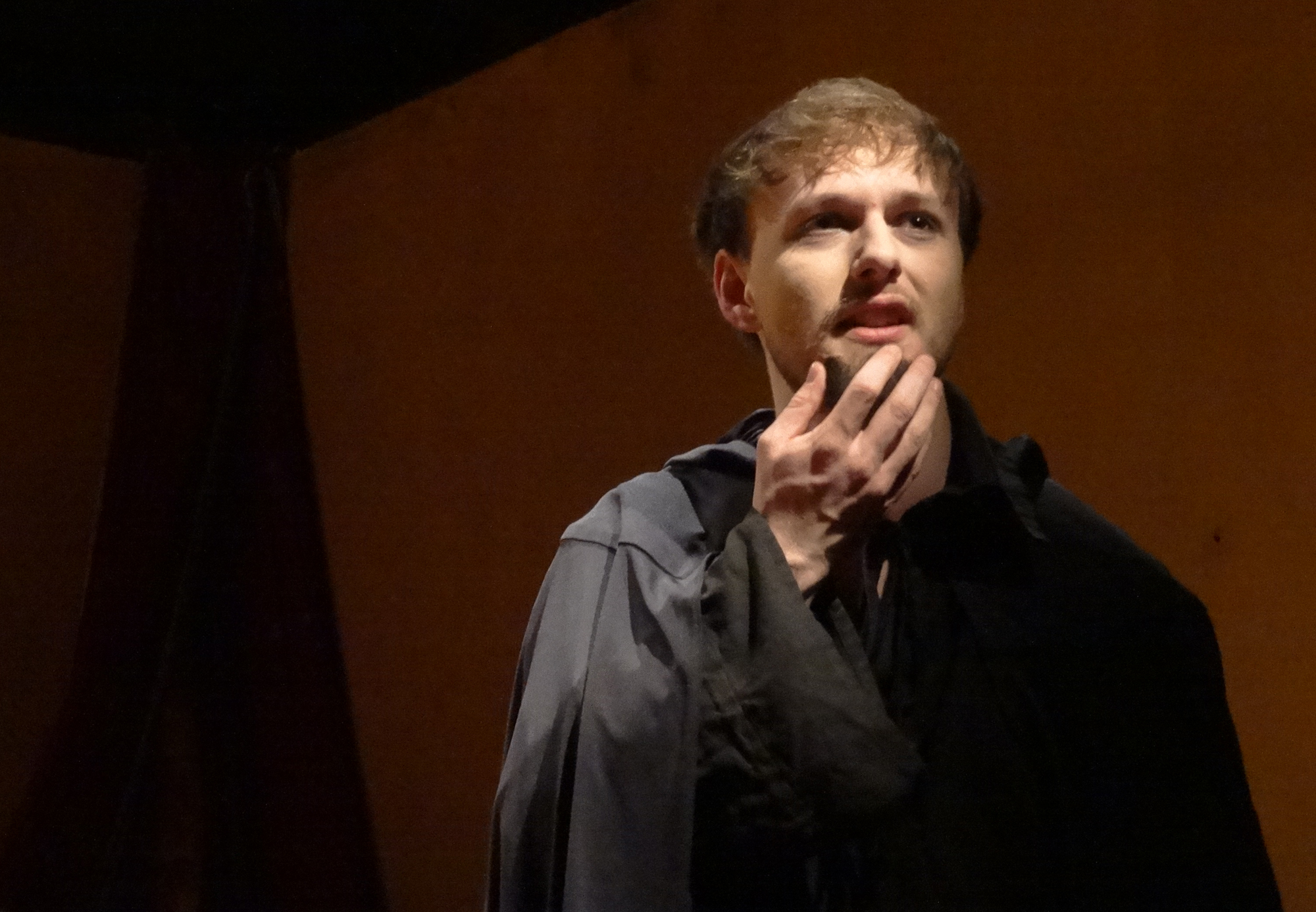
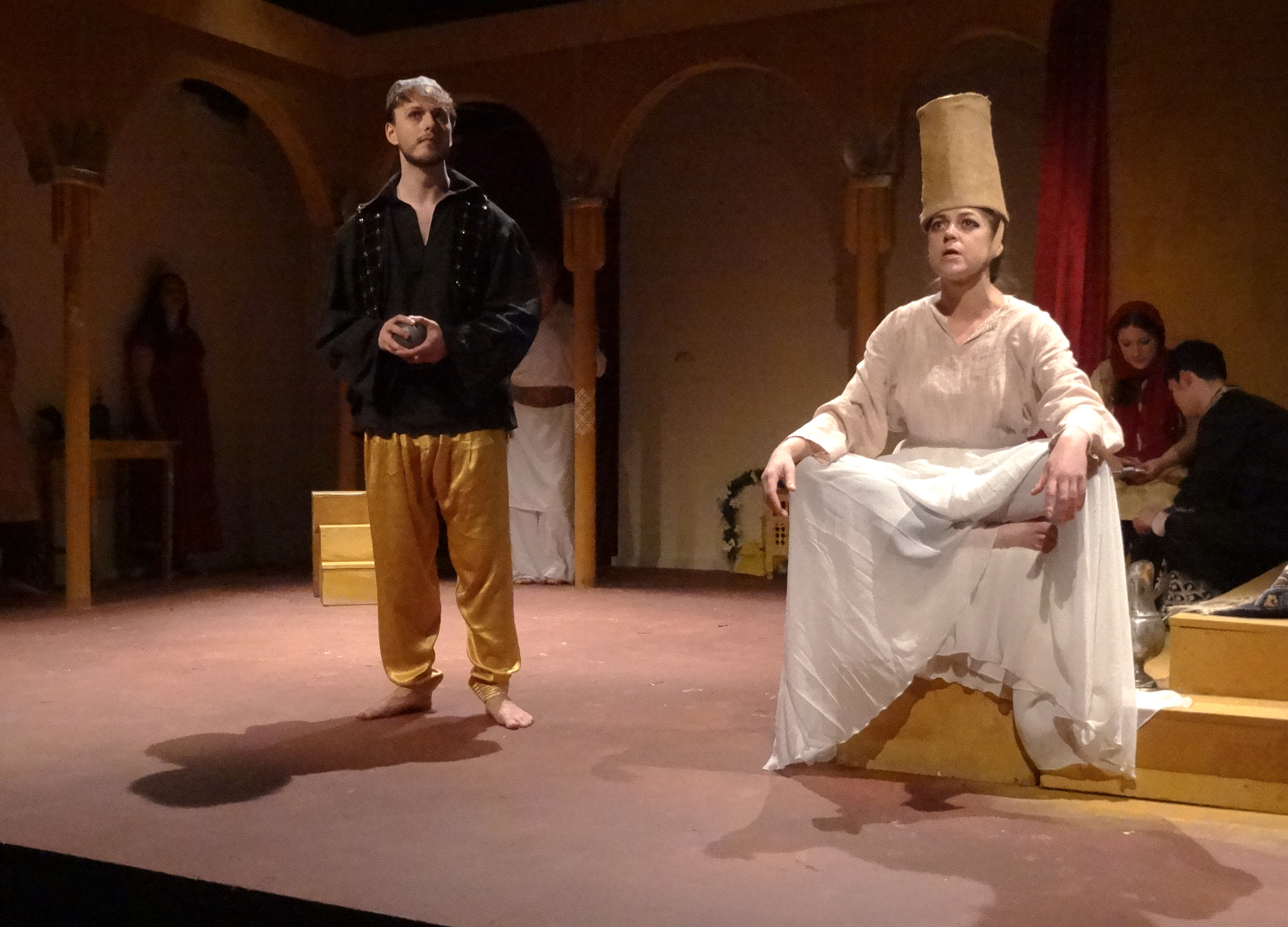
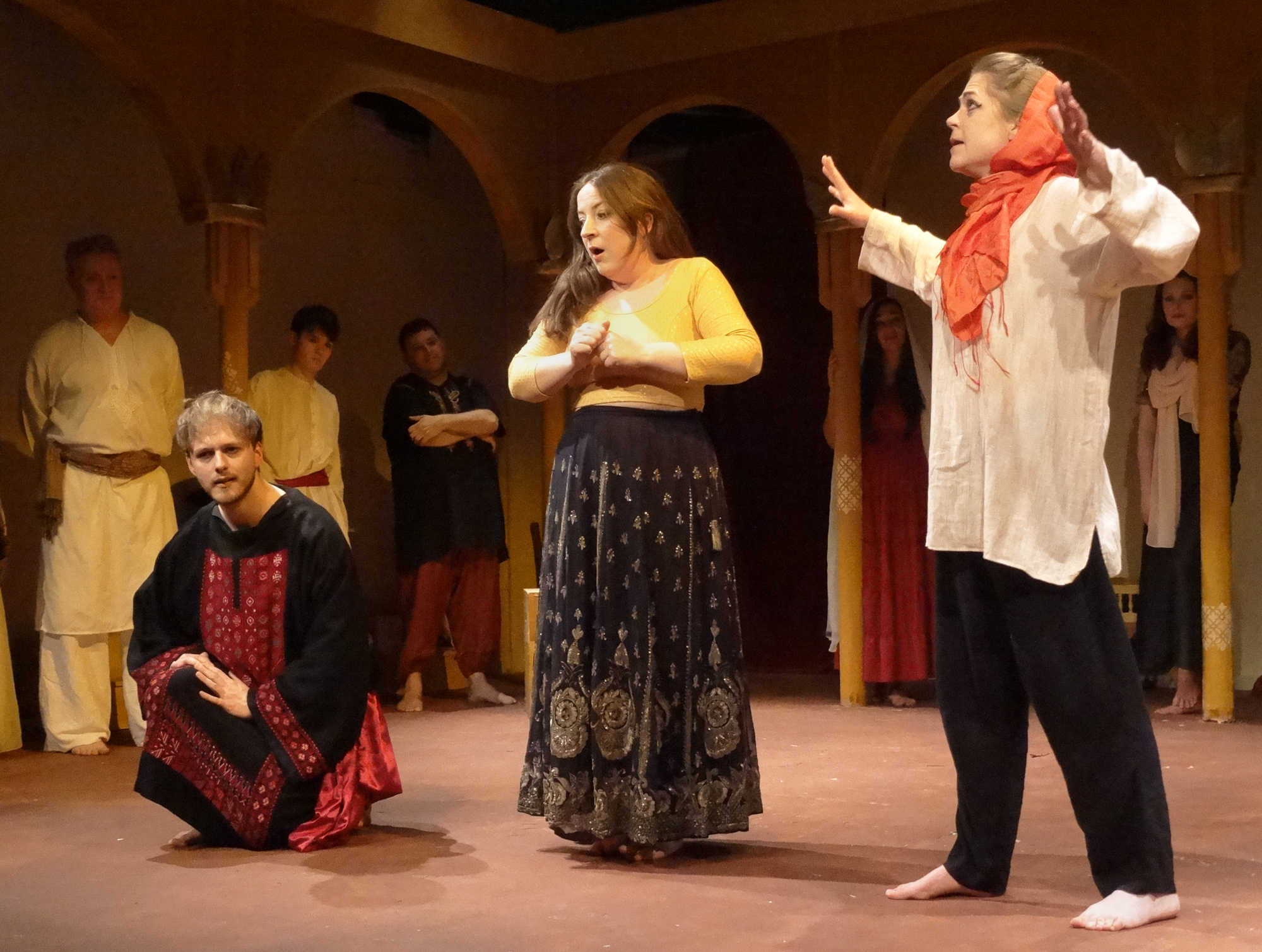
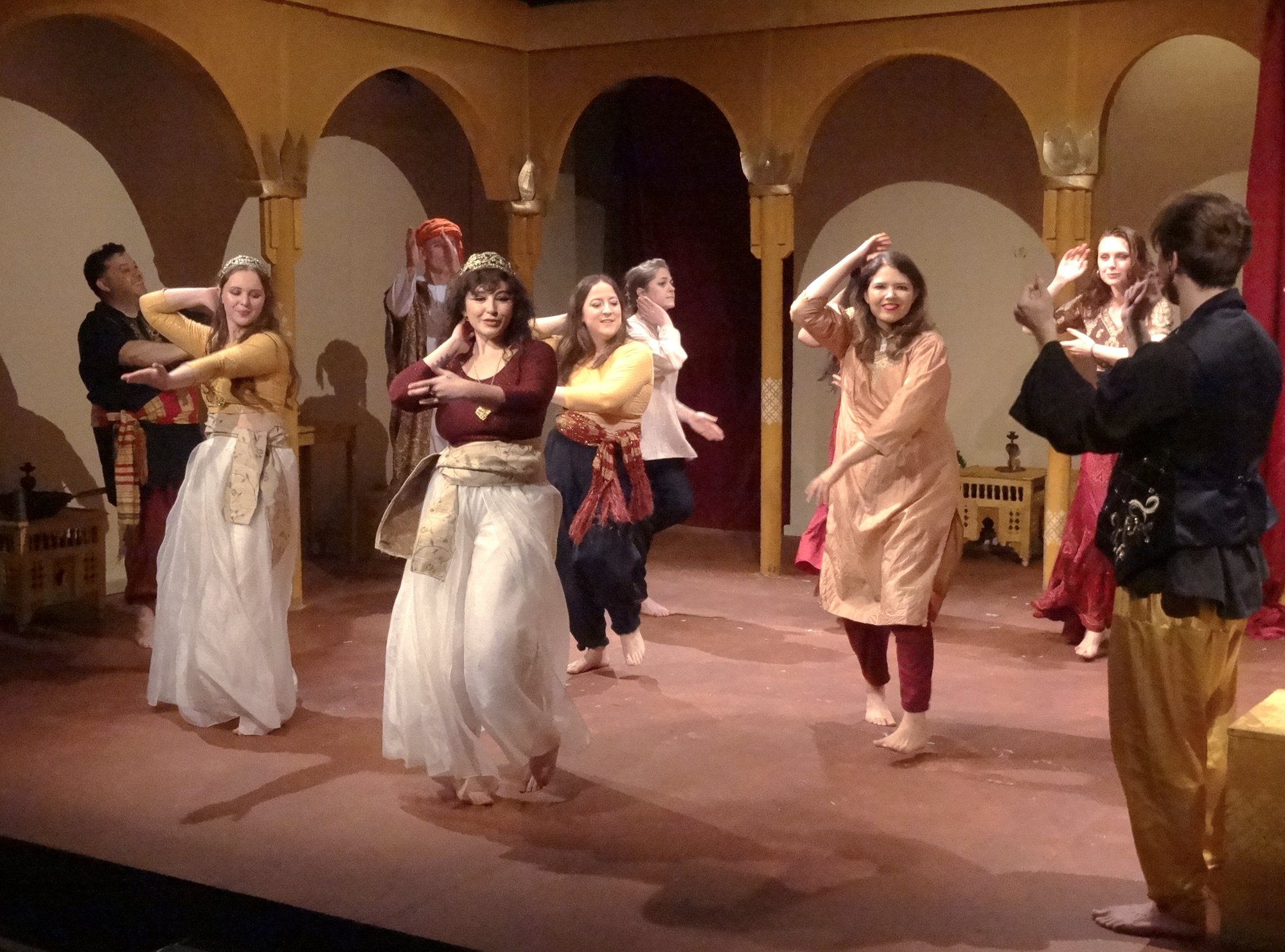
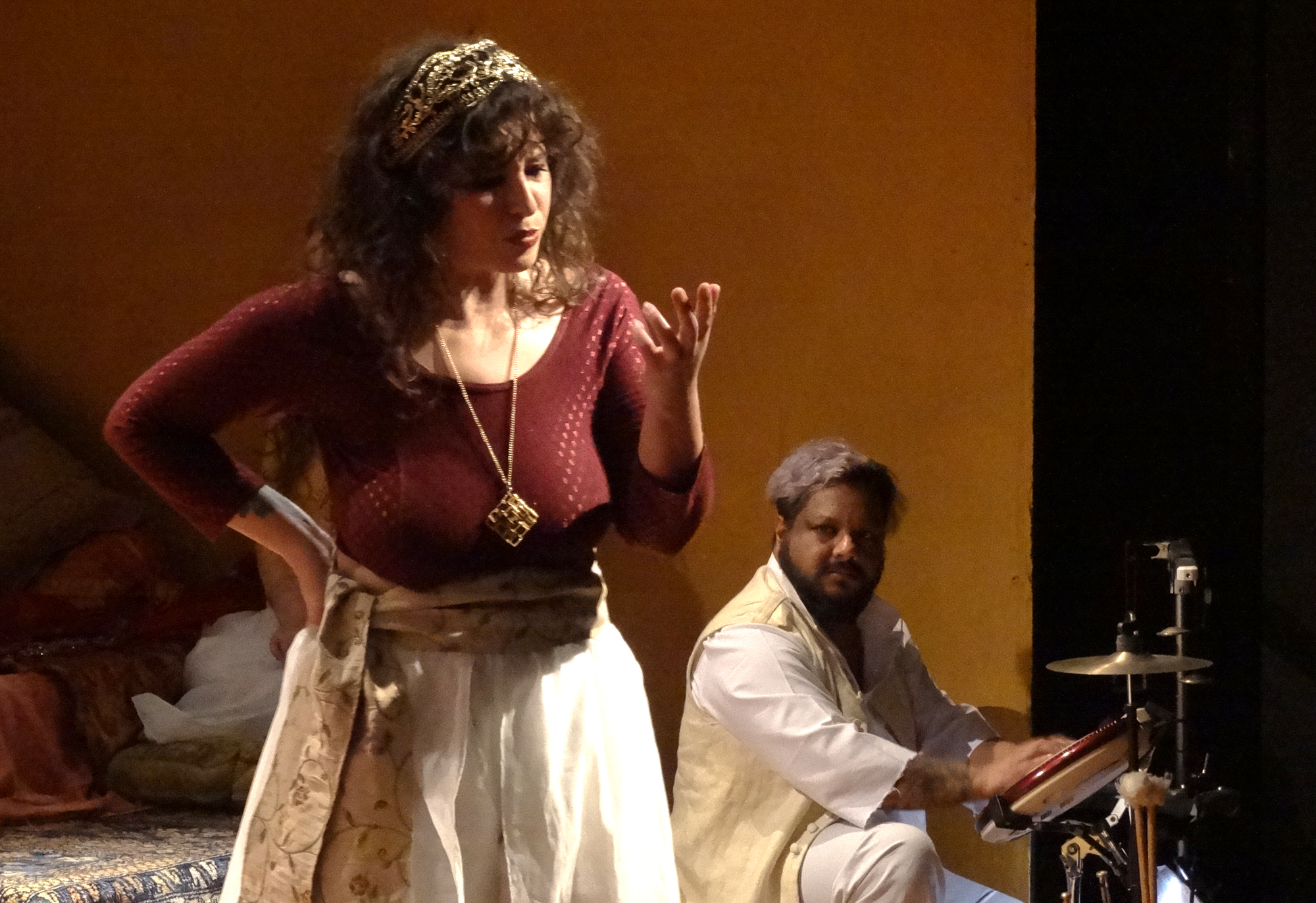
For ‘Arabian Nights’, New Venture’s March production, designer Simon Glazier and his team constructed an Islamic collonade as a frame for the action. I was able to light it so that the shadows produced a powerful three-dimensional effect.
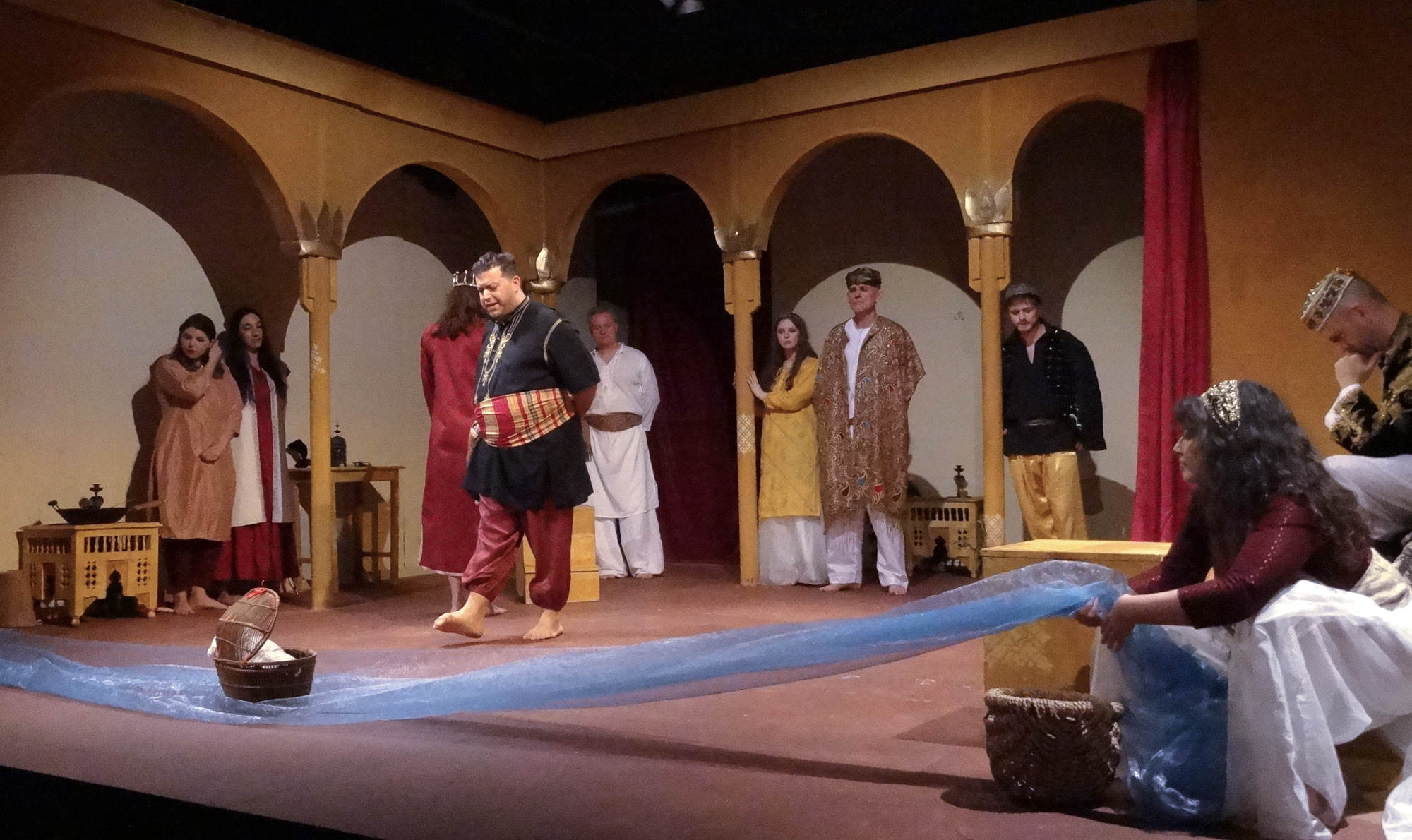
Director Diane Robinson made full use of it to position her large cast as they acted out the series of traditional Middle Eastern tales. Imaginative staging, too – here a length of material becomes a stream, with an actor reeling it in, as a floating basket slowly passes the King’s Steward.
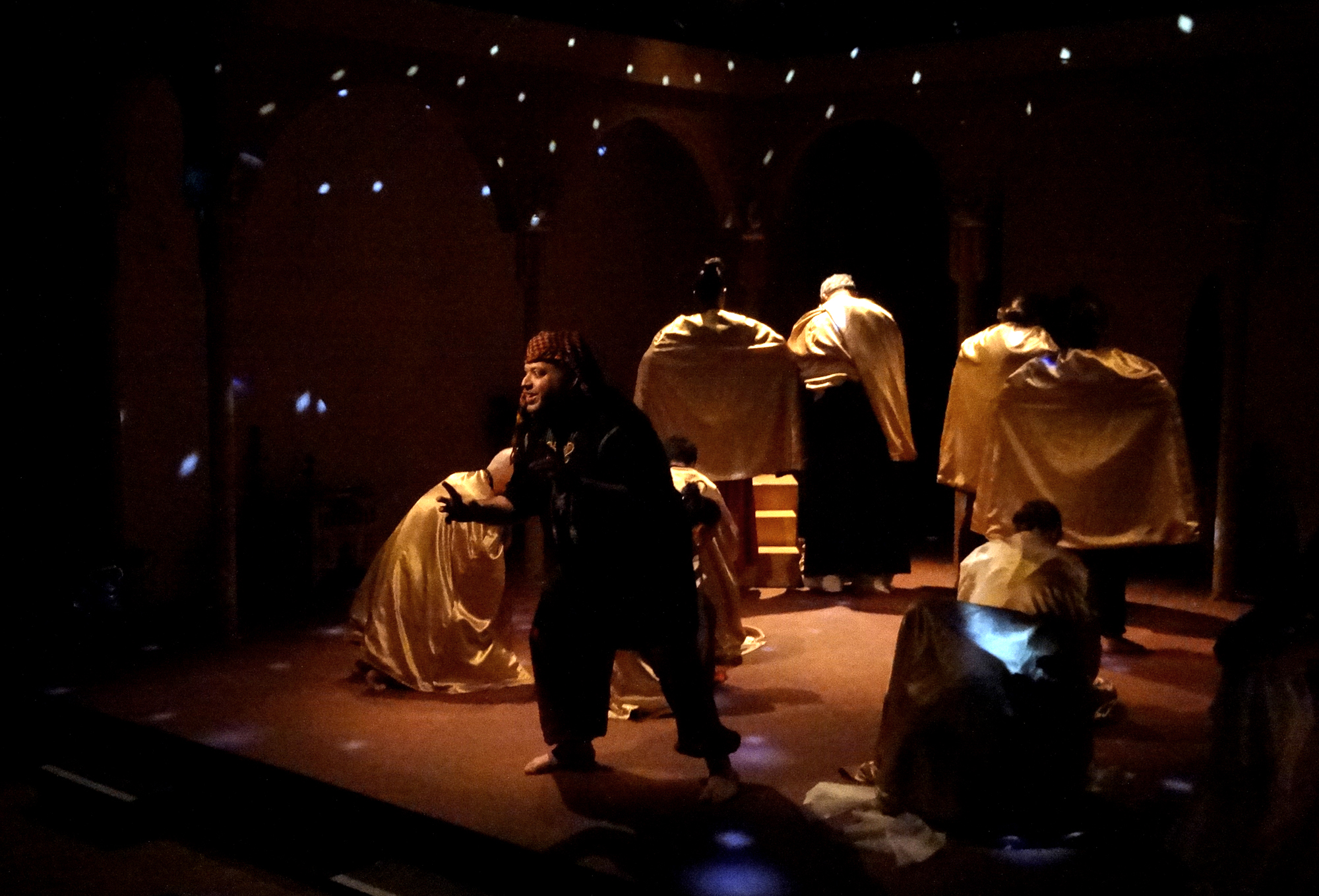
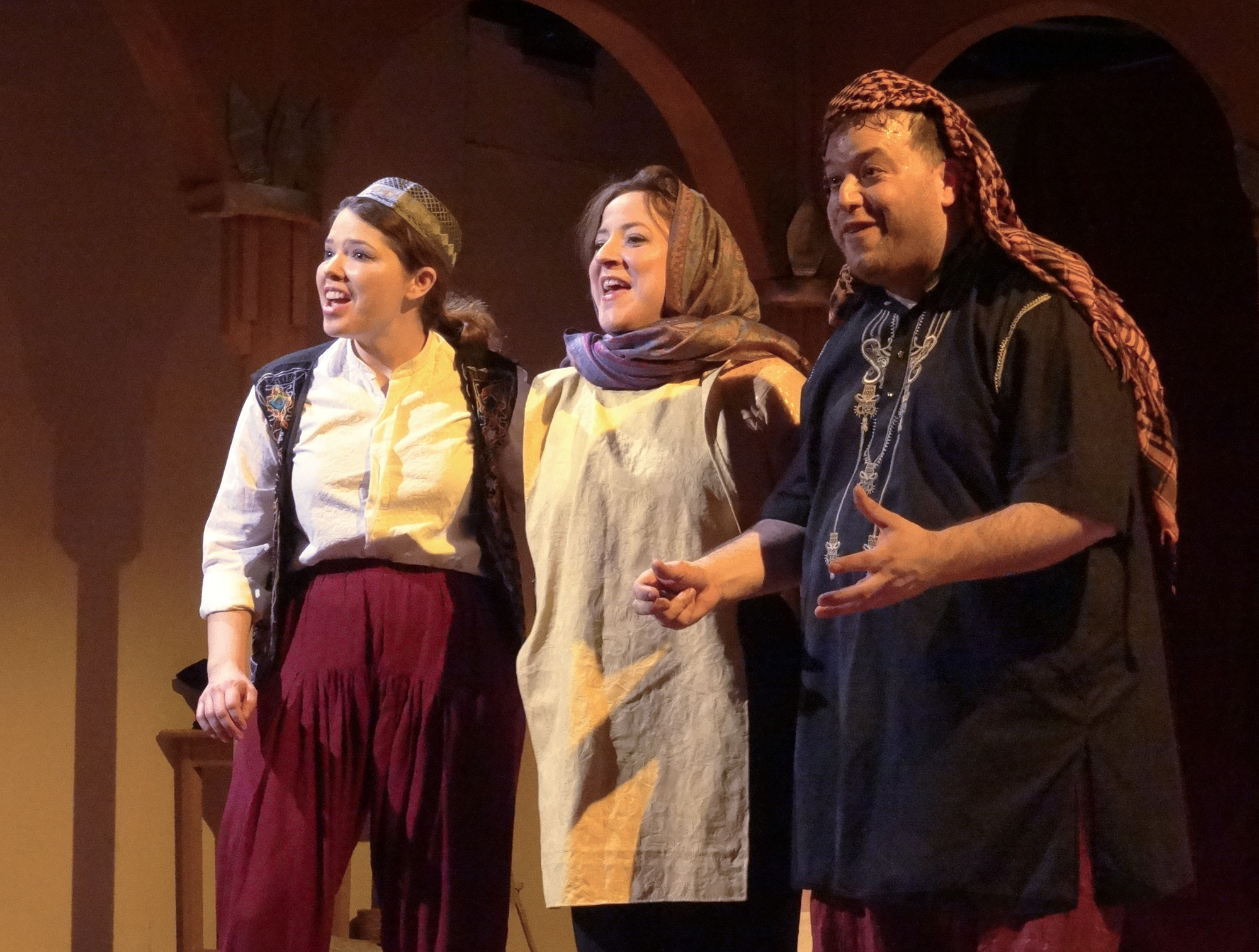
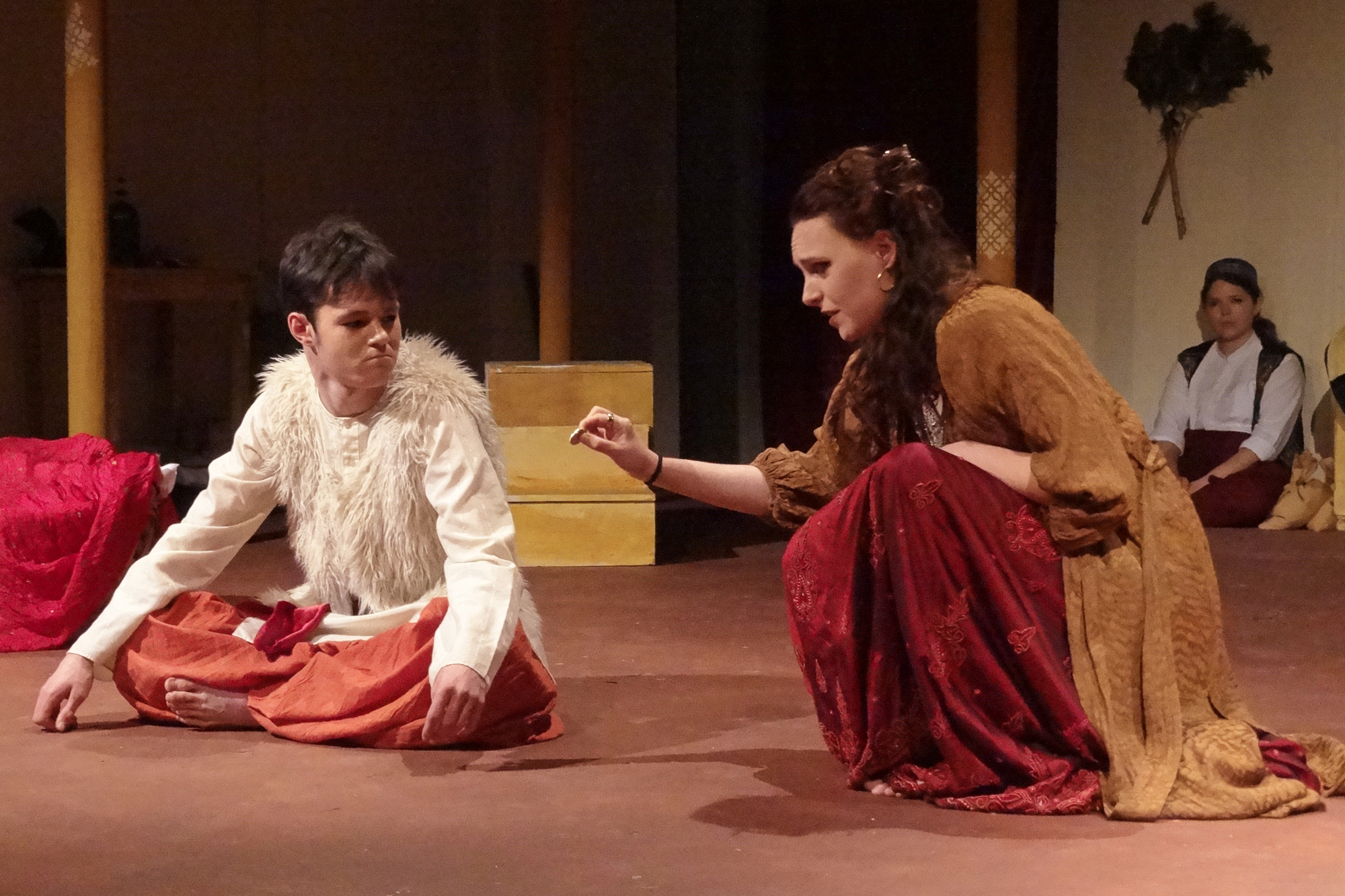
Multi roles from the cast. The same actor became Ali Baba in another episode, in the Forty Thieves’ cave, surrounded by sparkling diamonds and bags of gold.
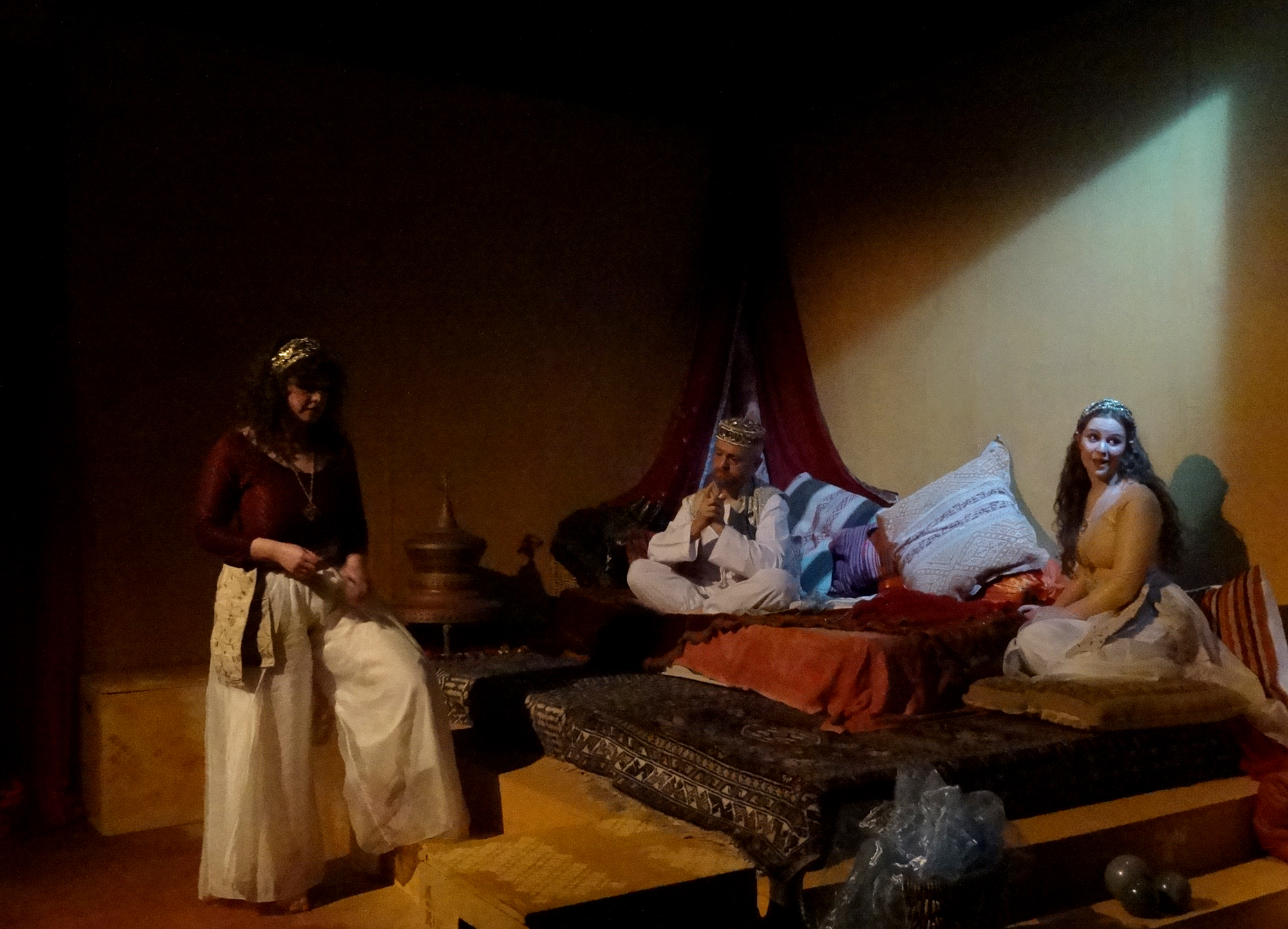
The other side of the stage featured the King’s bedchamber, with moonlight streaming in through a window as Sherezade told her tales. As the night ended the chamber flooded with daylight and the Headsman waited to execute the King’s wife.
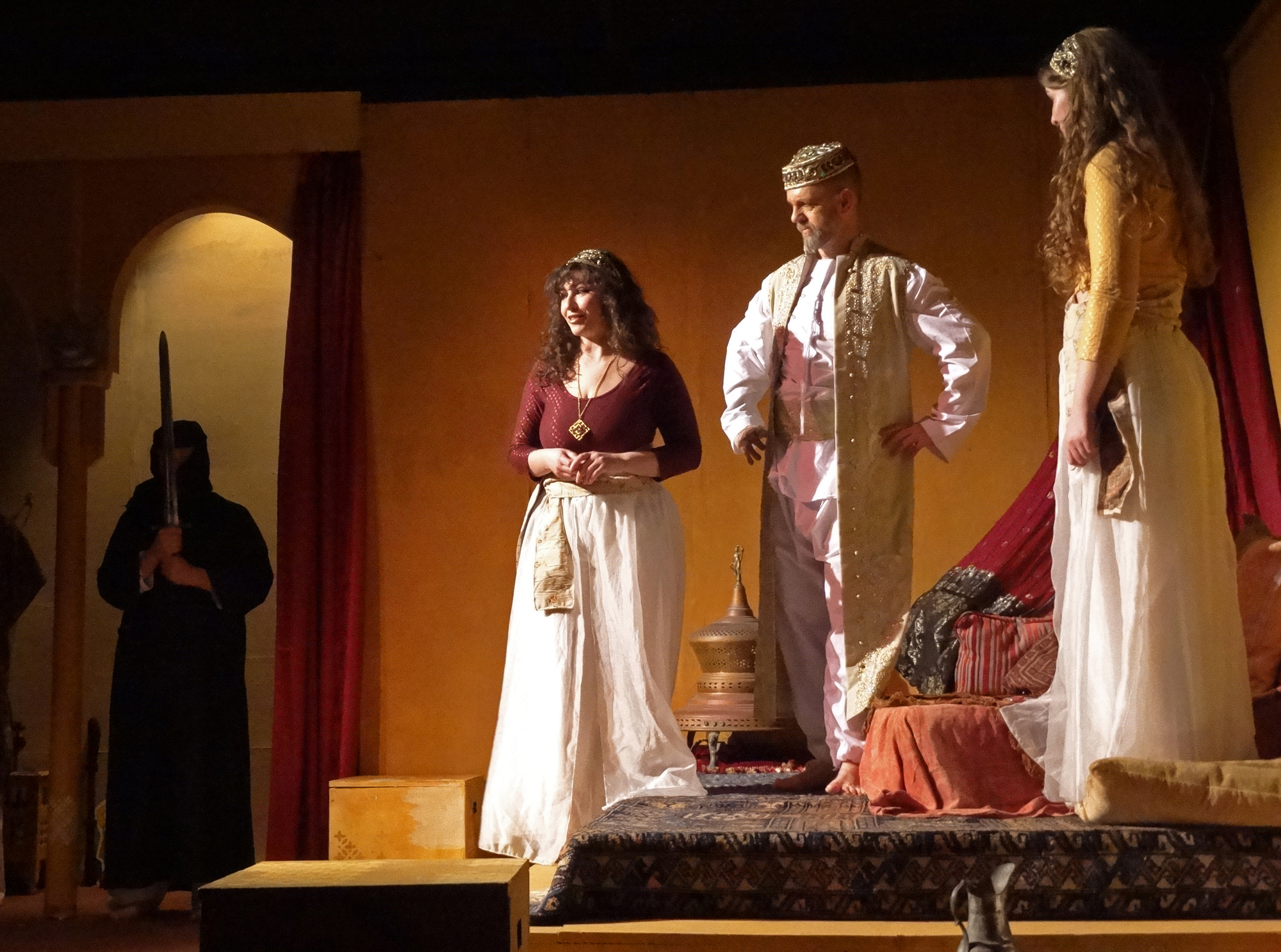
The king had killed many wives before Sherezade began her tales. This is the blood-soaked Palace courtyard, as he took revenge on all women because of his first, unfaithful, queen.
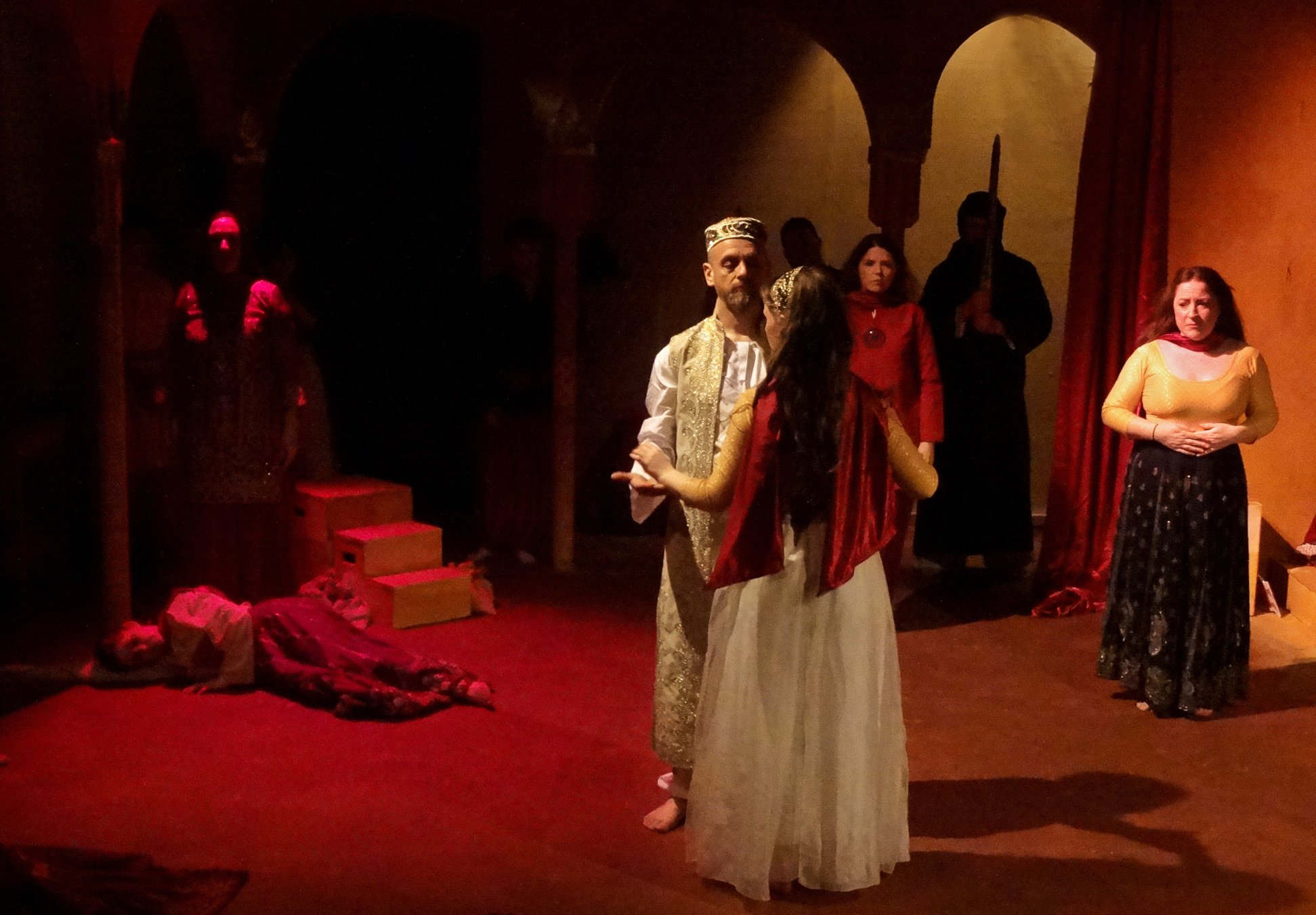
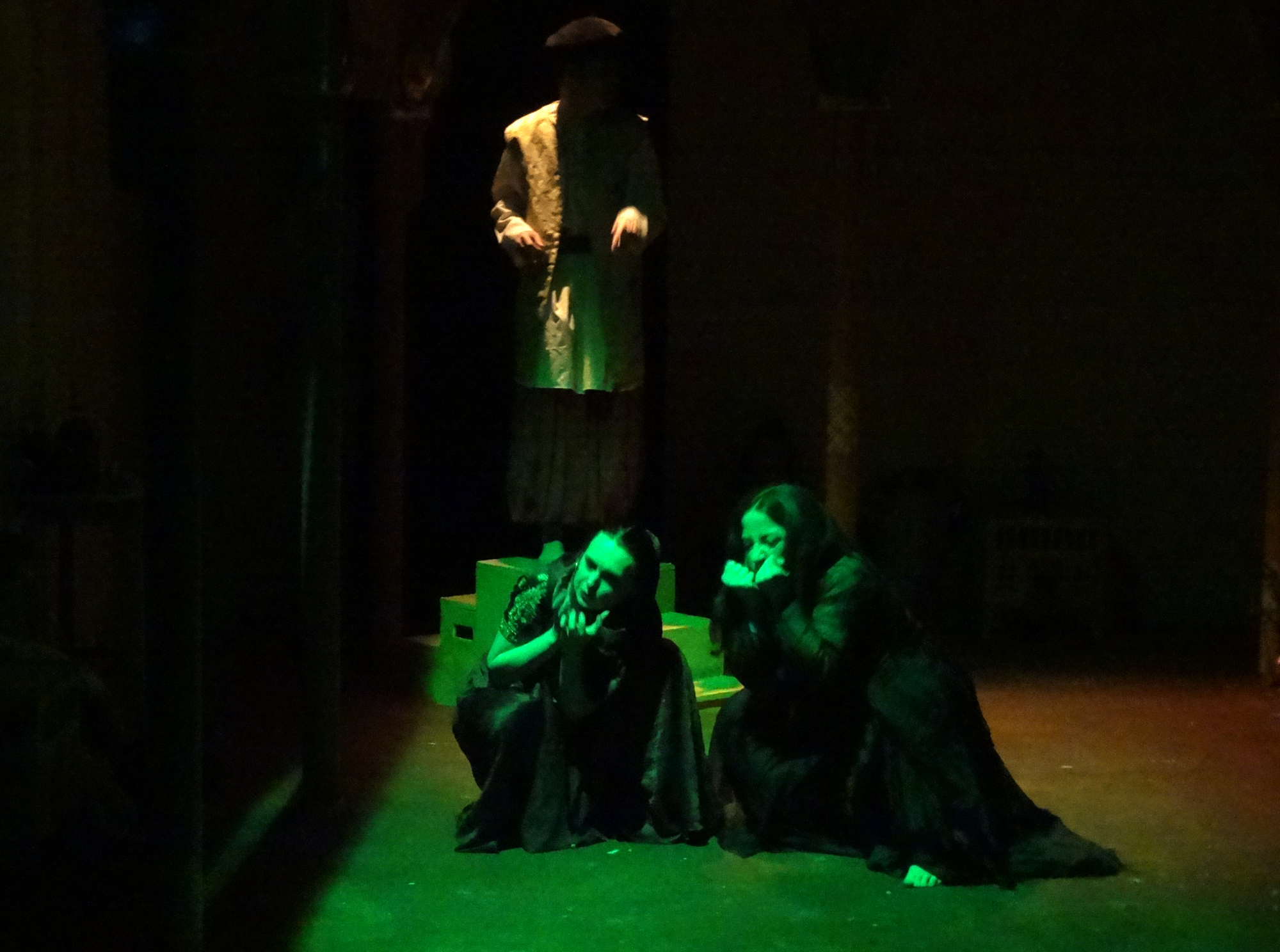
Lots of lighting changes for different scenes – ninety-eight in total. I also had to evoke a graveyard at night, where ghouls are devouring the flesh of recently-buried corpses.
We made use of the entire width of the stage …
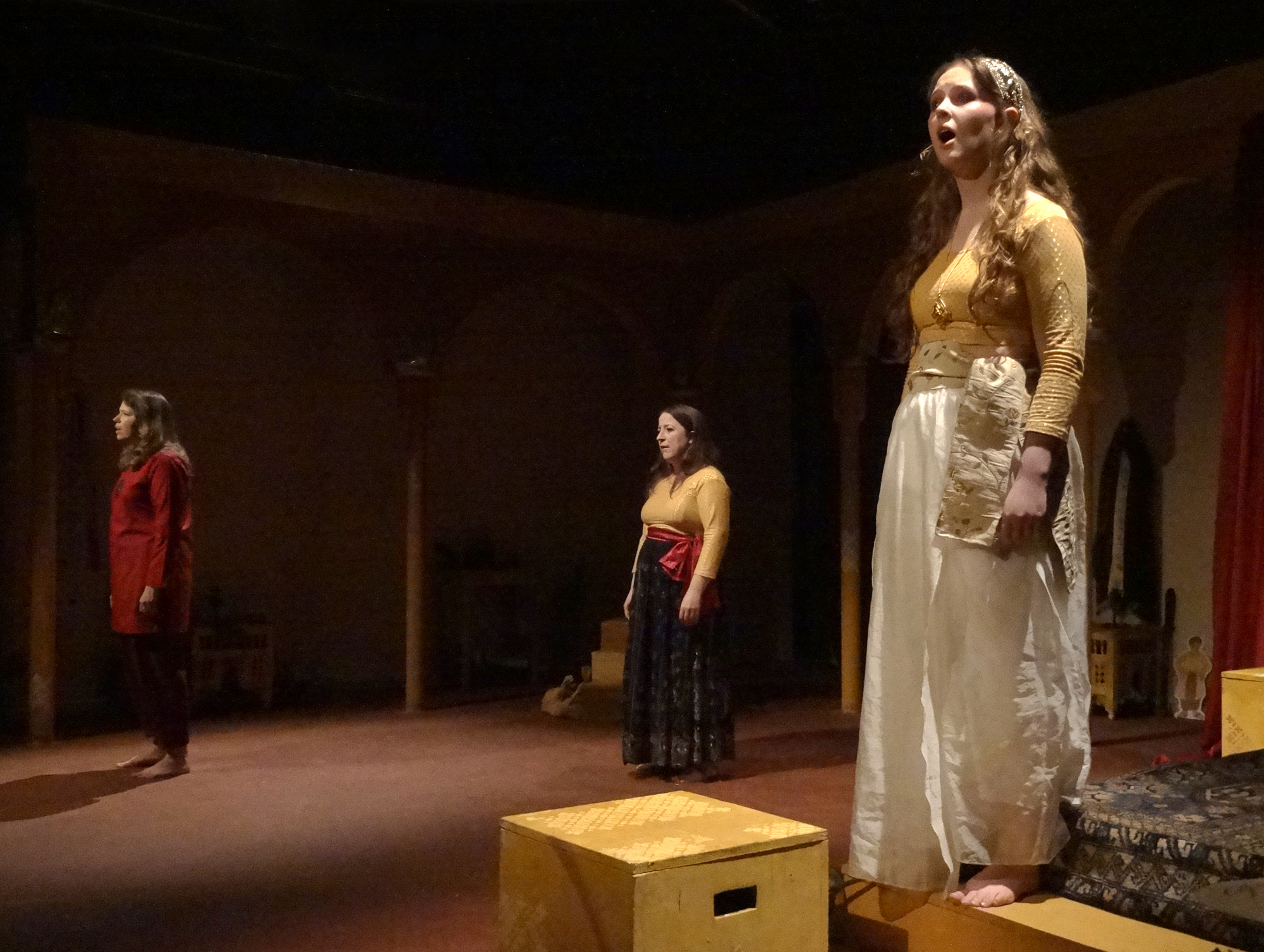
… which we needed to – as there were some BIG puppets to help tell Sinbad’s story
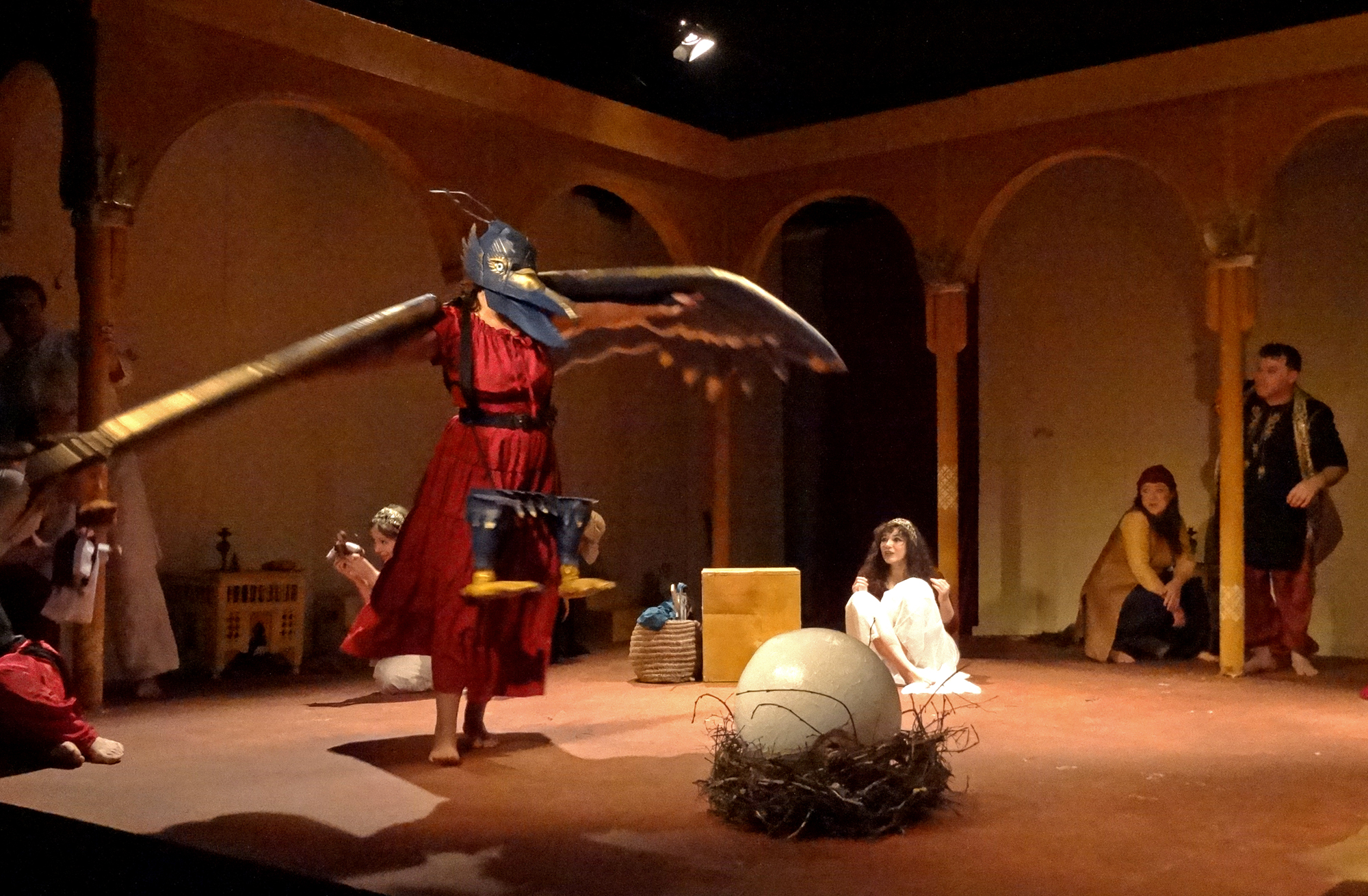
Smaller puppets too – as well as the huge bird, Anita Sullivan created a mini-Sinbad to help illustrate the sailor’s adventures.
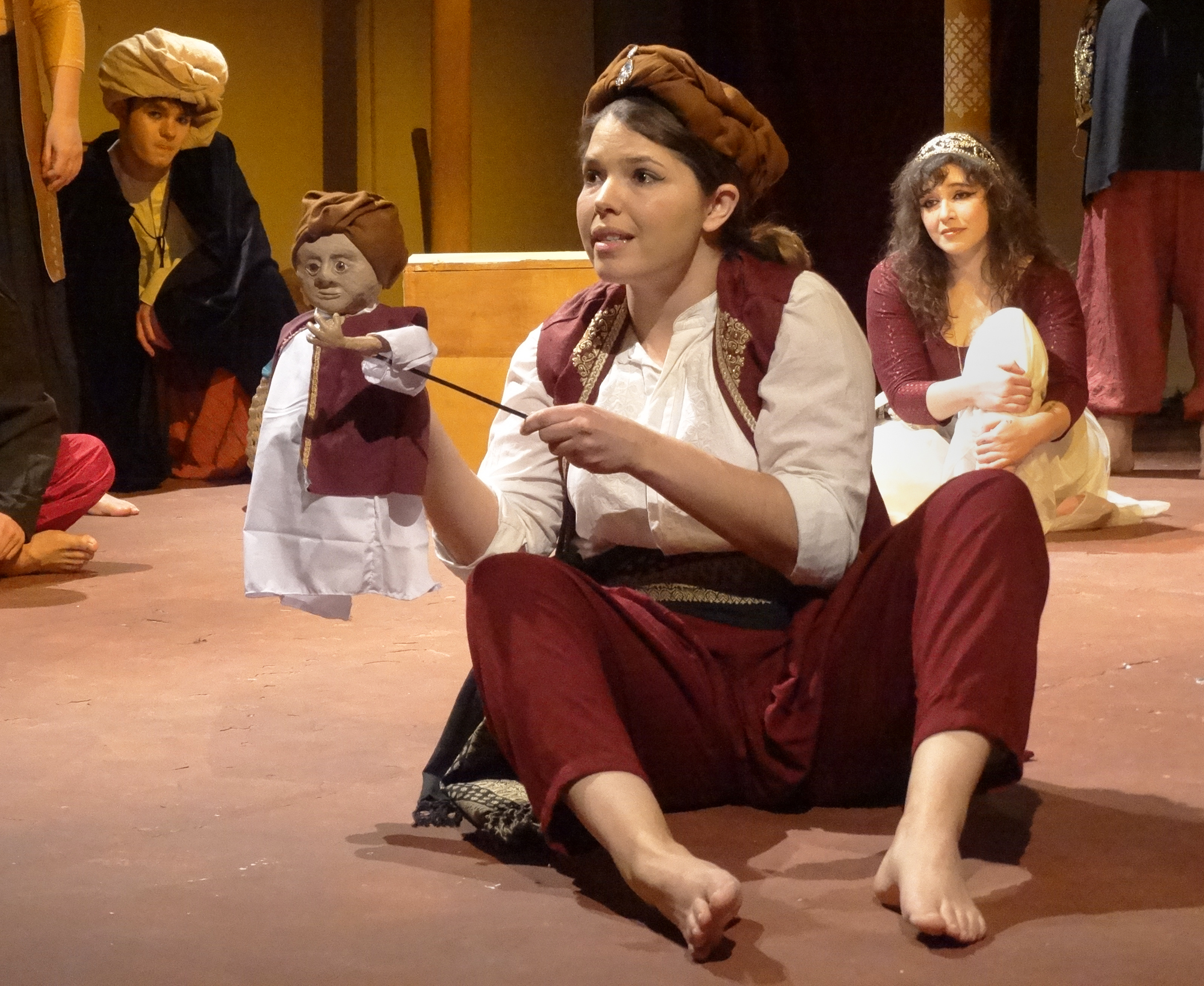
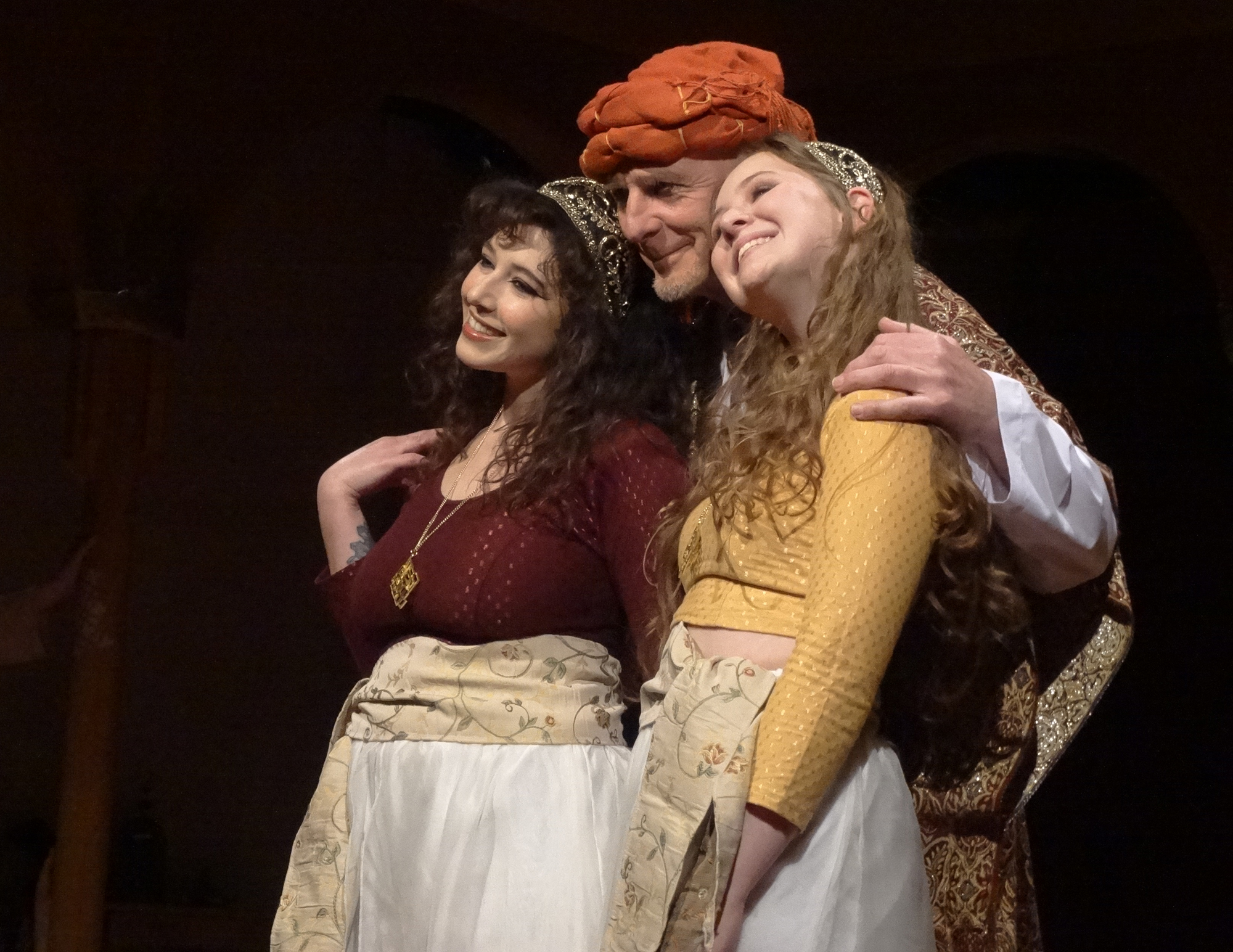
The King’s Vizir and his daughters were central characters, but we also had sinuous dancing from Marjana, a servant who saves Ali Baba and defeats the Forty Thieves.
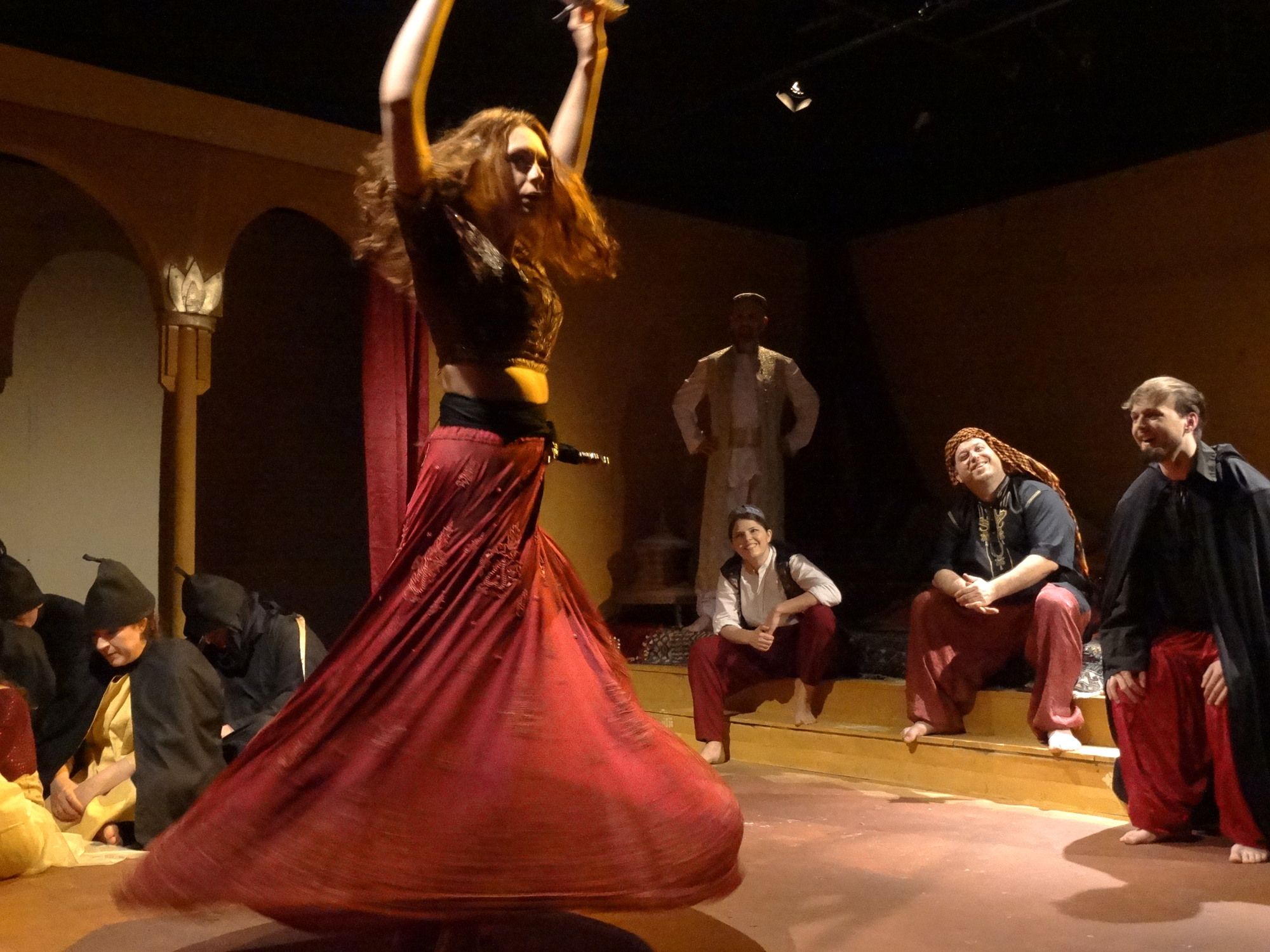
So many unforgettable moments.
“Listen”
*
*
Jerusalem
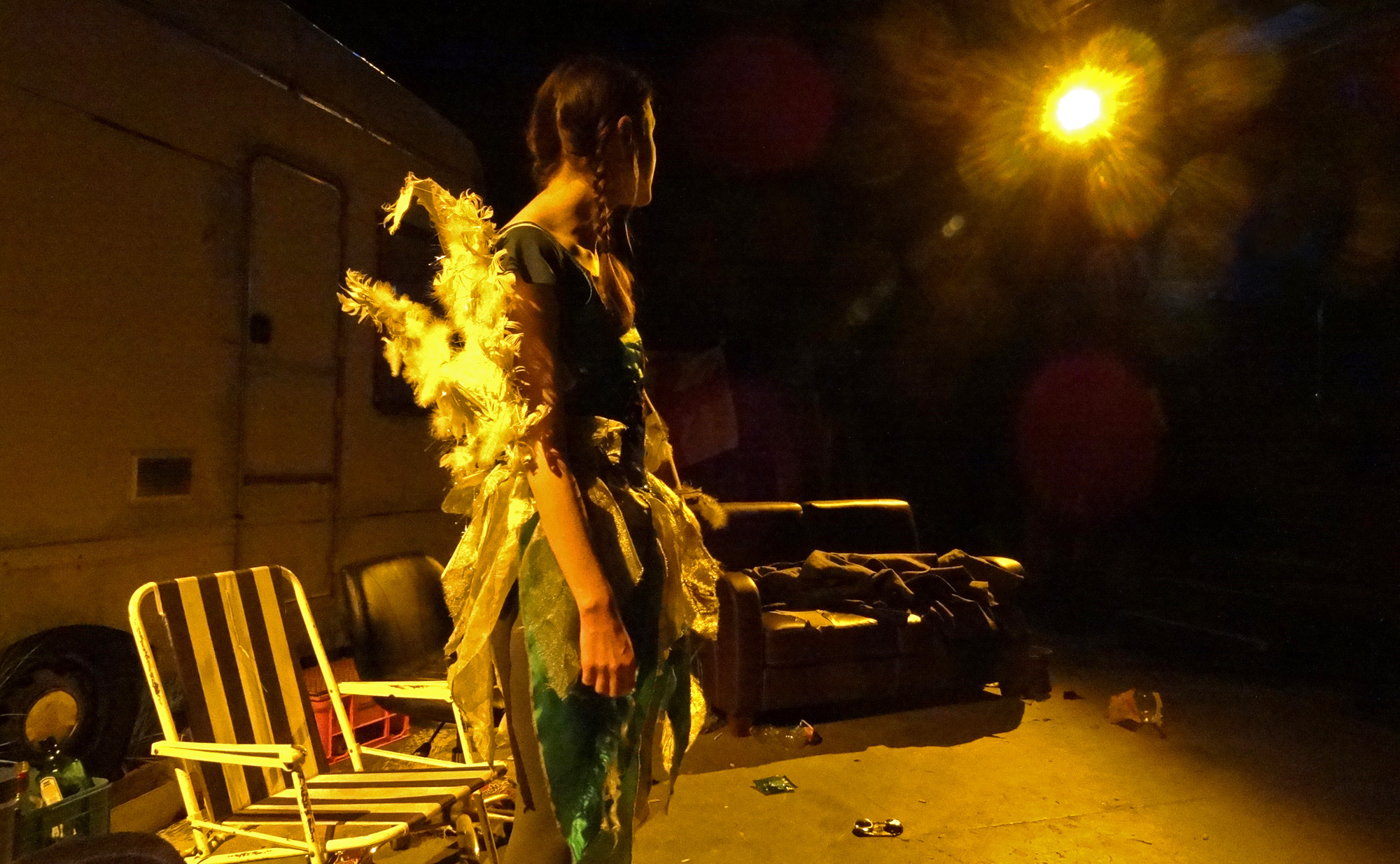
This is Phaedra, a fifteen year old girl from the West Country, who opens the Jezz Butterworth play that was New Venture’s February production. She’s singing ‘Jerusalem’, the hymn based on William Blake’s great poem, singing it acapella, and the play’s a celebration of ‘Englishness’ – for better or worse. Phaedra’s dressed as some kind of fairy or woodland sprite, and in fact the whole play is set in a wood, somewhere just outside a small Wiltshire town, where Rooster Byron lives in a broken-down caravan. Like the forest in ‘A Midsummer Night’s Dream’, this is a place outside the normal rules of society.
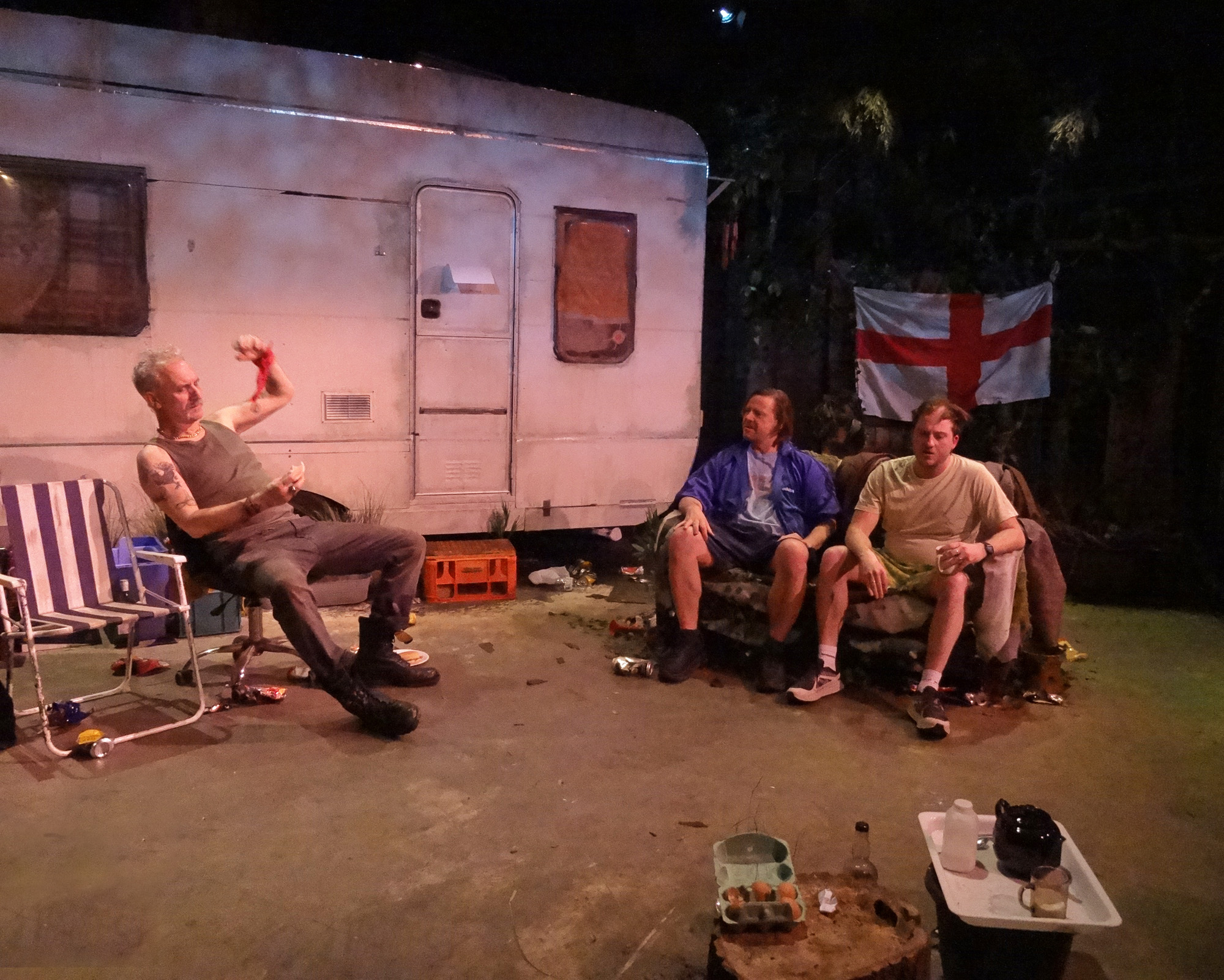
The action takes place over one entire day in April: St George’s Day – so my lighting had to evoke the pinks of early dawn, through the brighter daylight of midday, and conclude with the amber rays of the setting sun. I also managed to suggest the light filtering through the trees above Simon Glazier’s wonderfully junk-filled set.
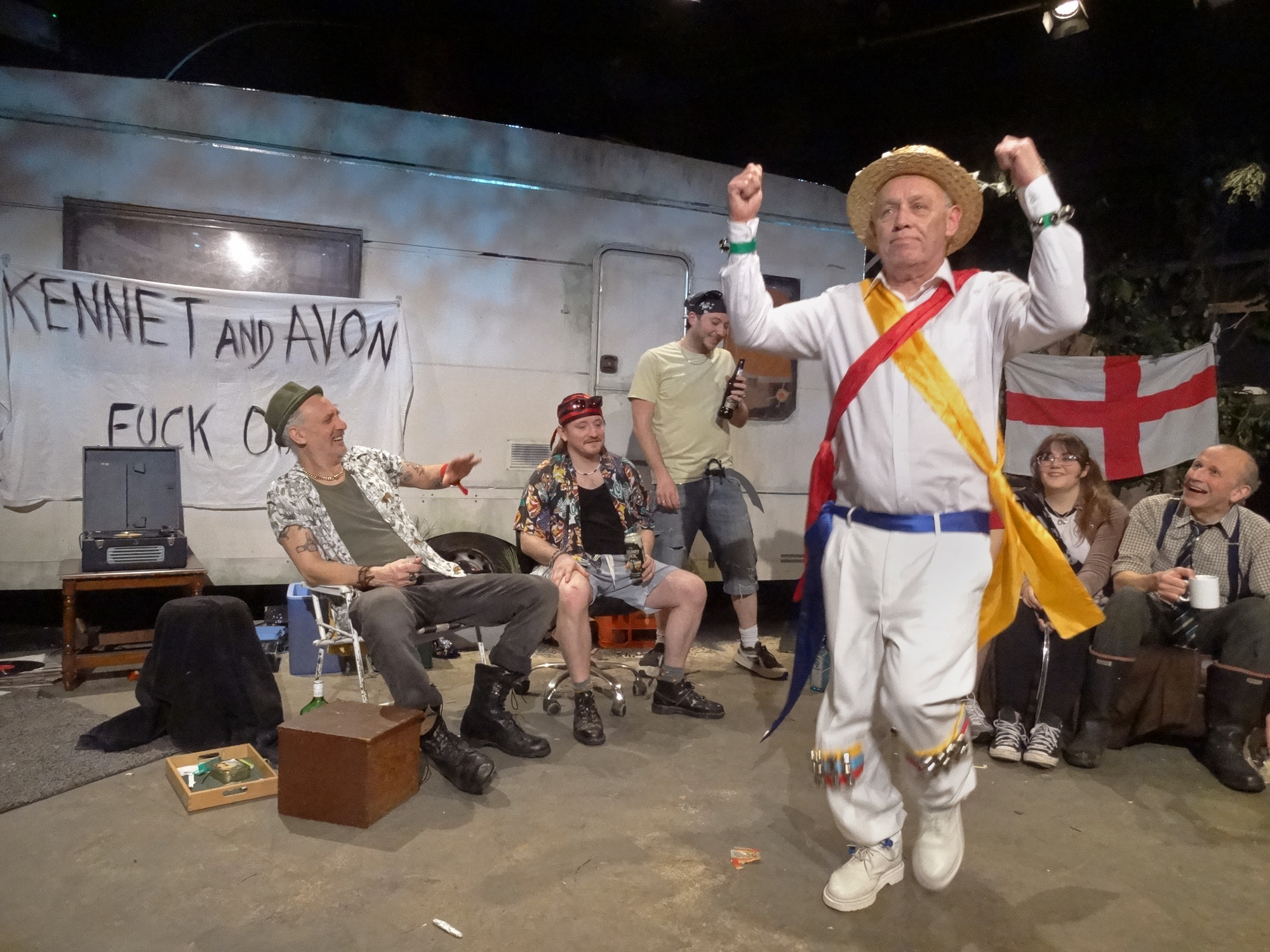
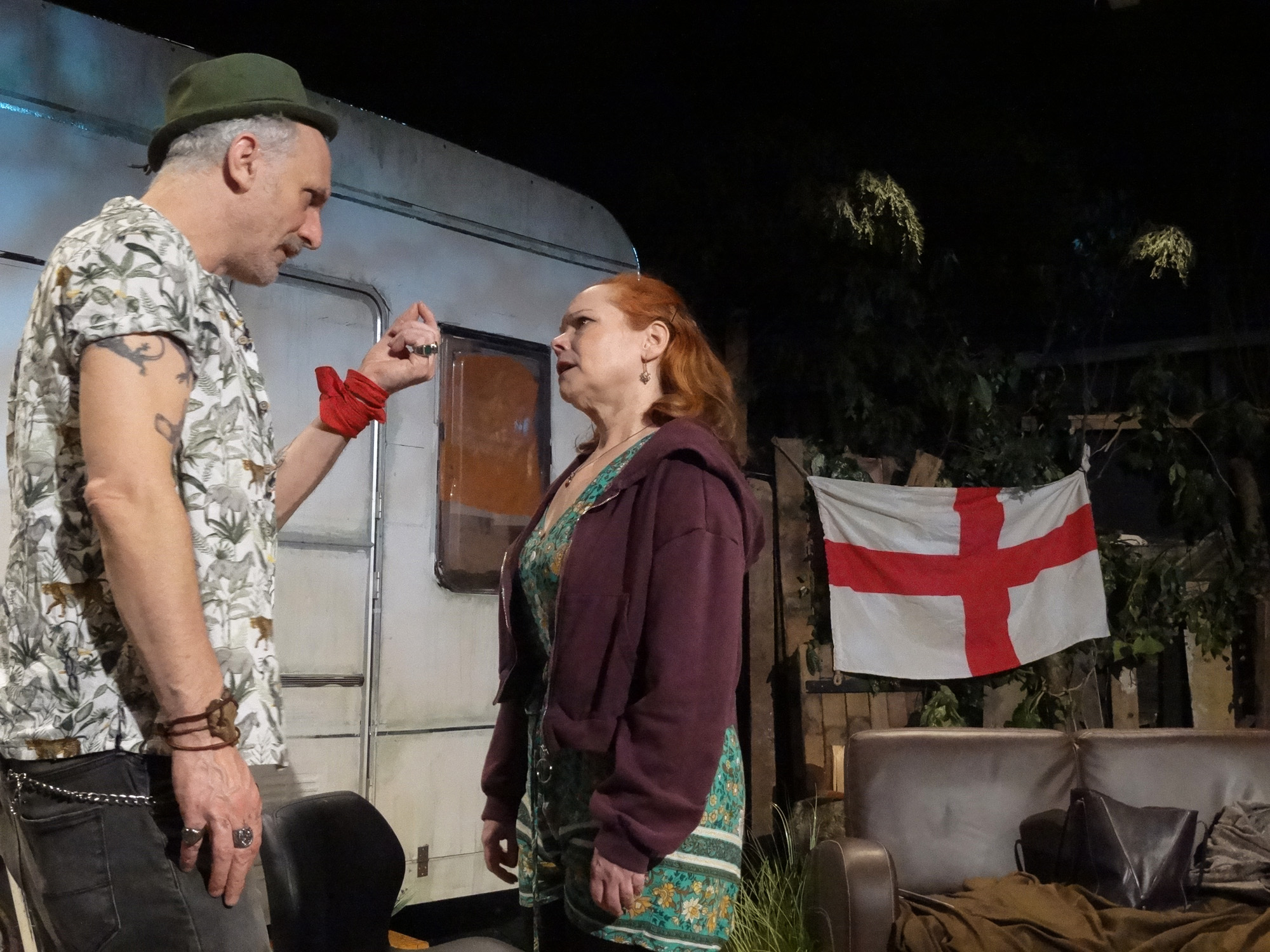
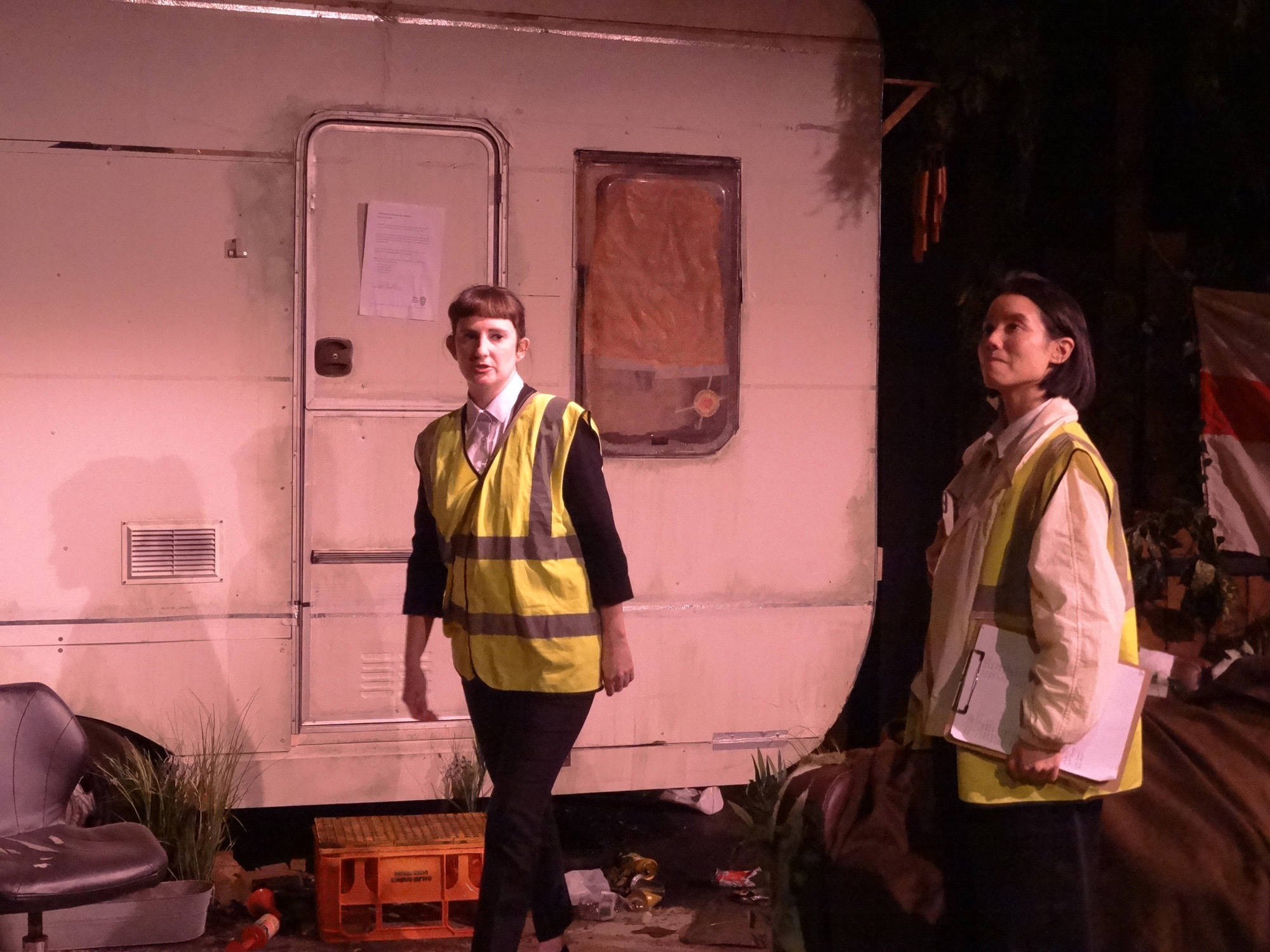
Rooster’s about to be evicted from the site, and the day began and ended with visits from a pair of Council officials.
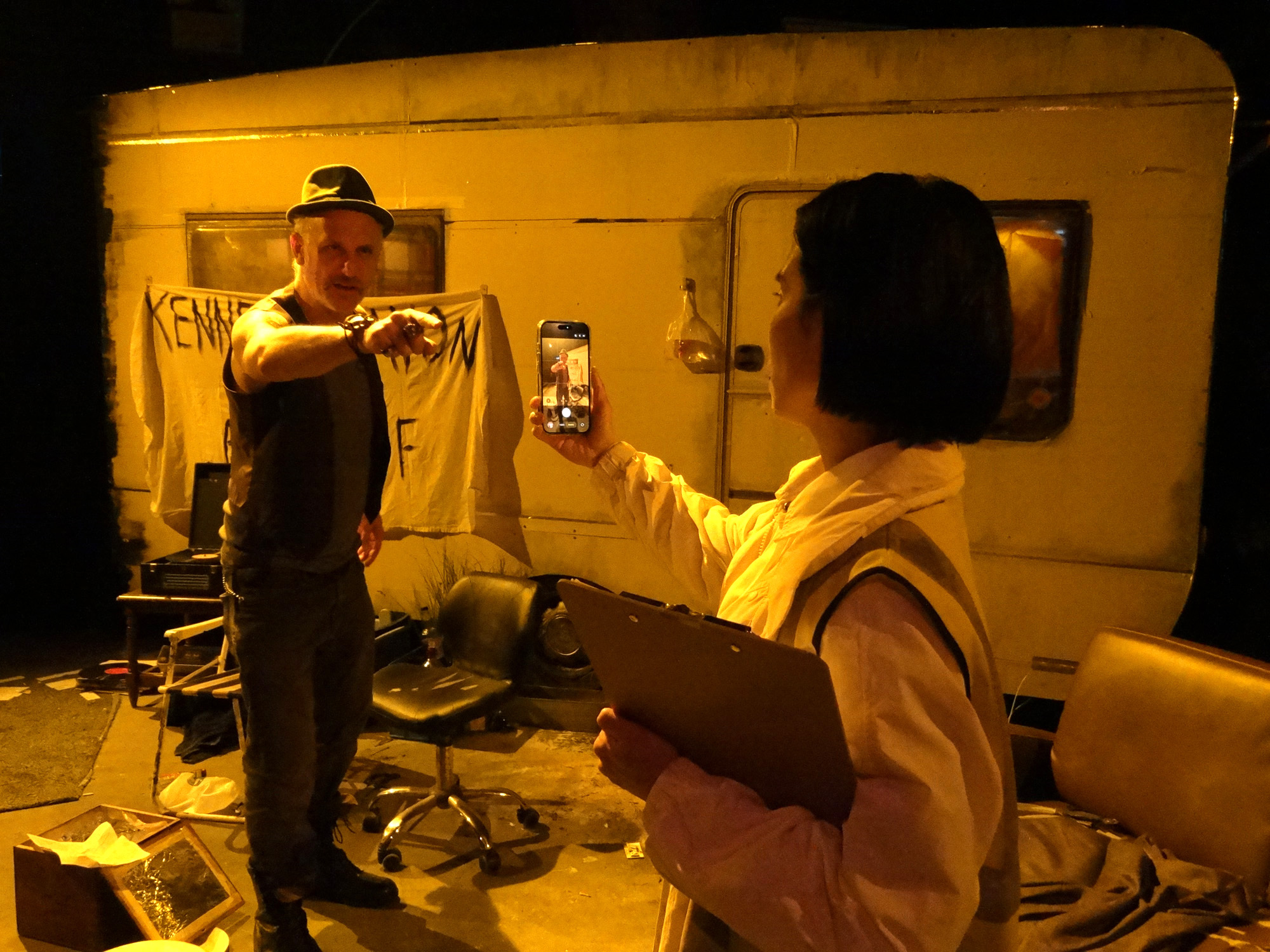
I’m always fascinated by the names playwrights give their characters, and Phaedra in Greek mythology was the Queen who lusted after her stepson (it didn’t end well …) This Phaedra seems to have run off to the woods to seek the protection of Rooster, as her own stepfather looks to be a very predatory individual indeed.
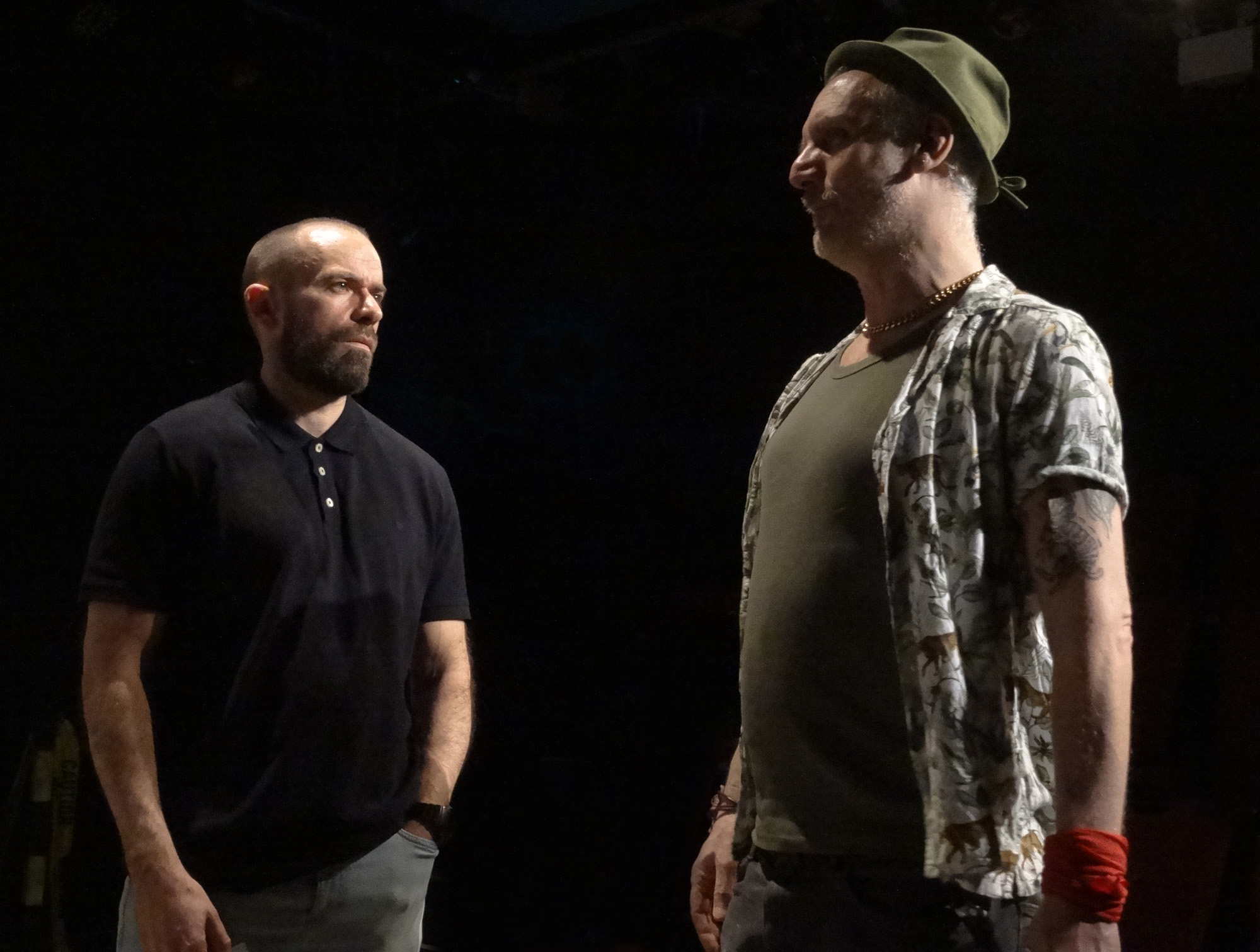
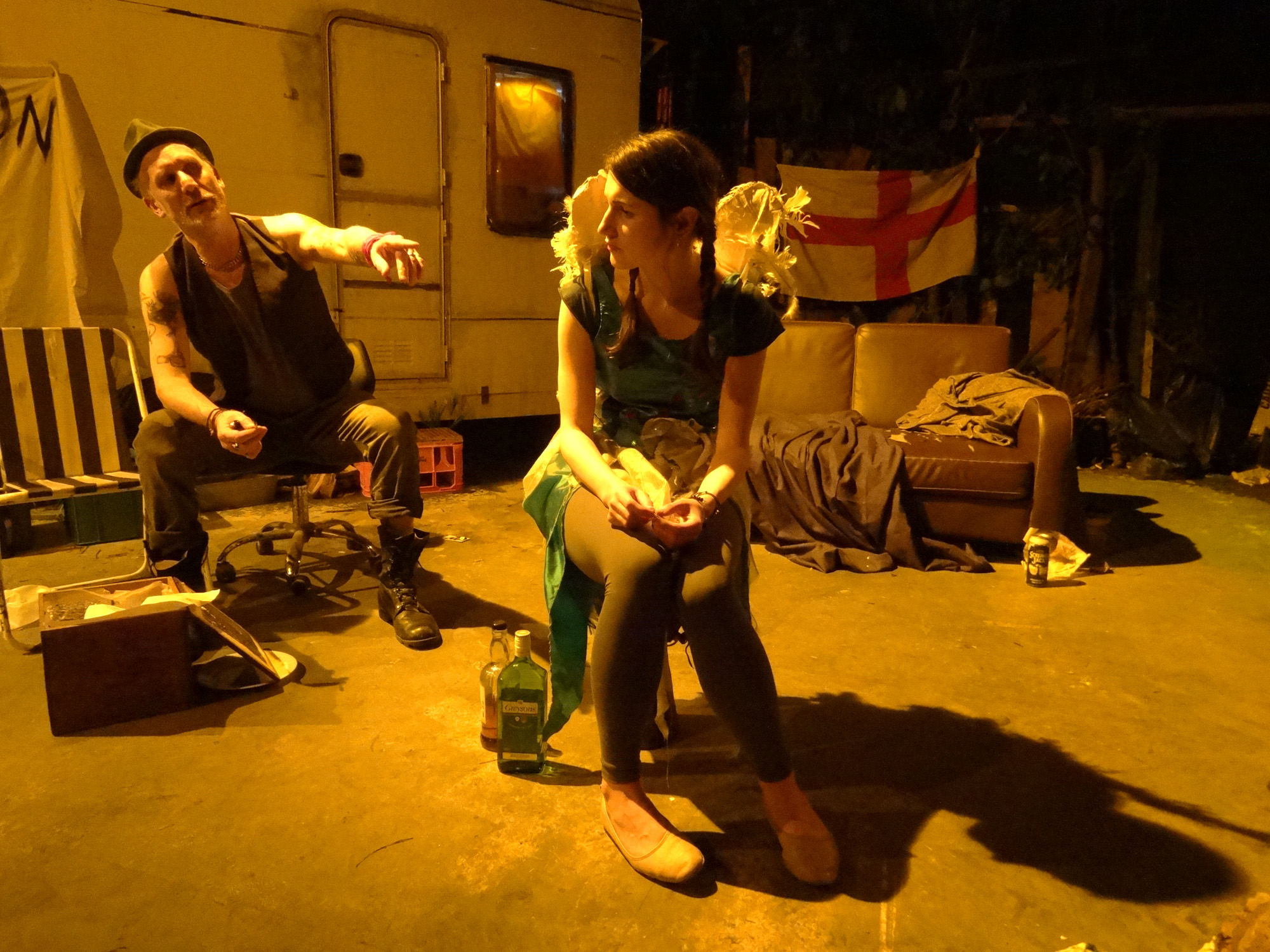
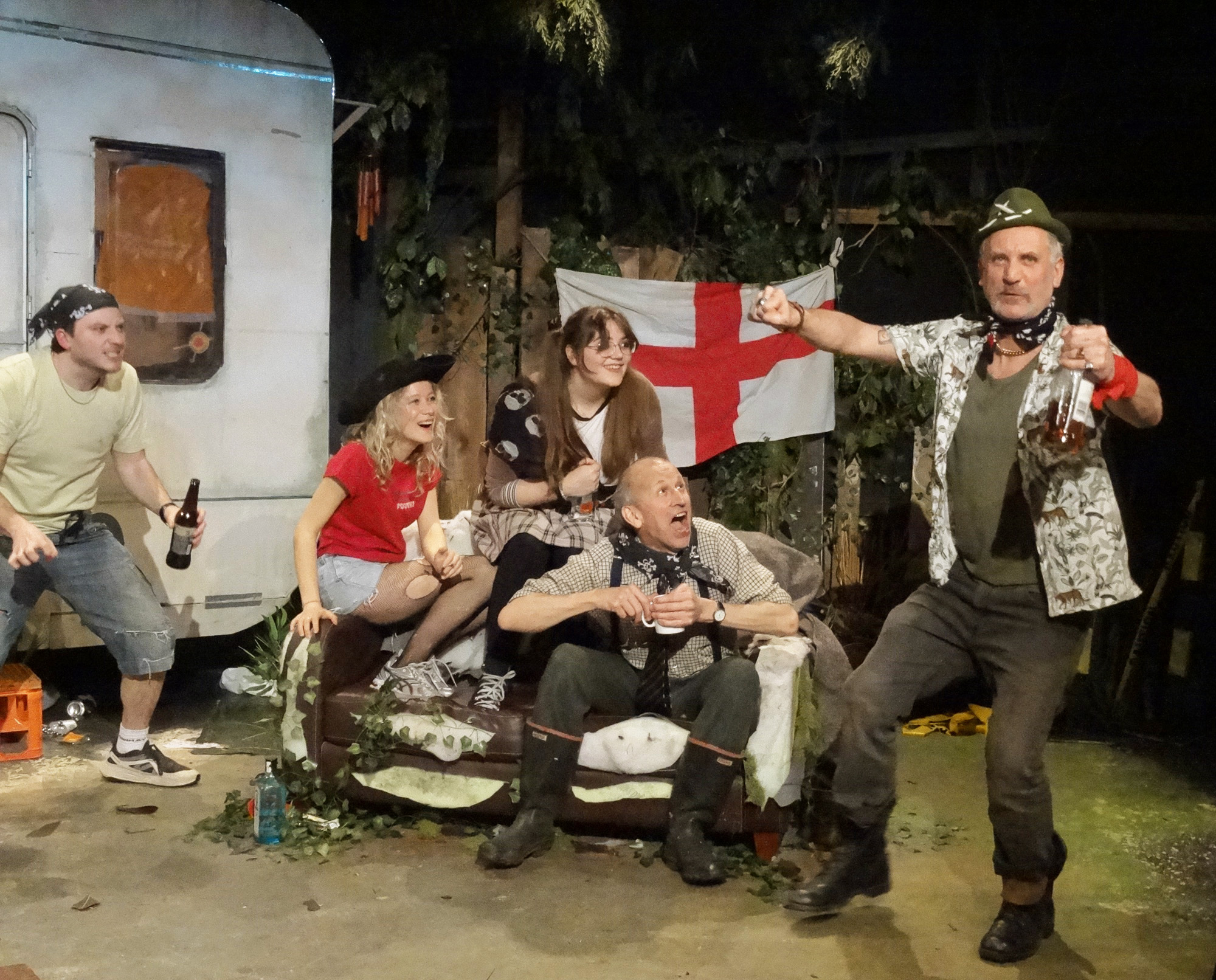
Director David Villiers got very powerful performances from his entire cast, with a lot of ensemble work as well as big speeches from the main characters.
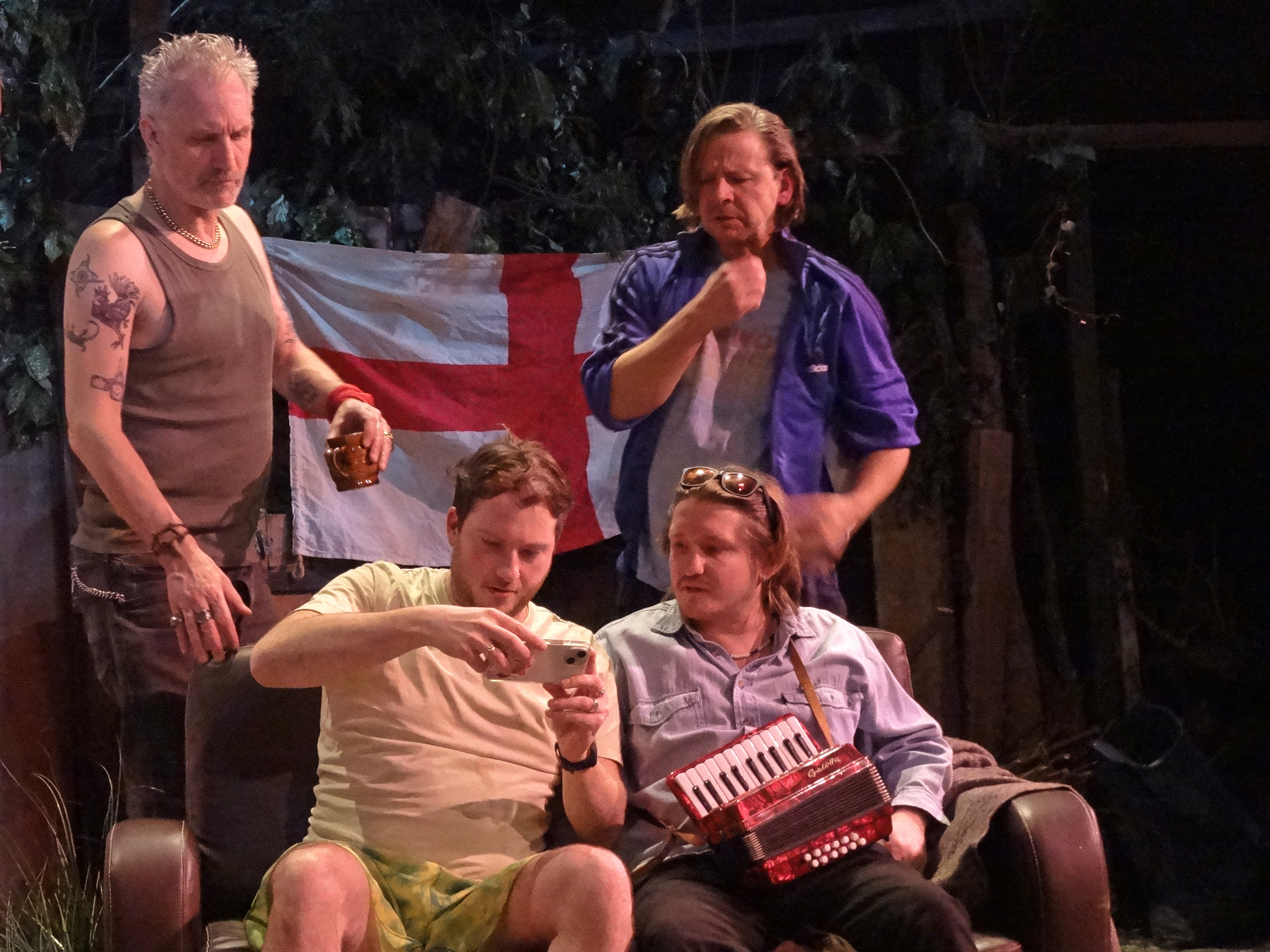
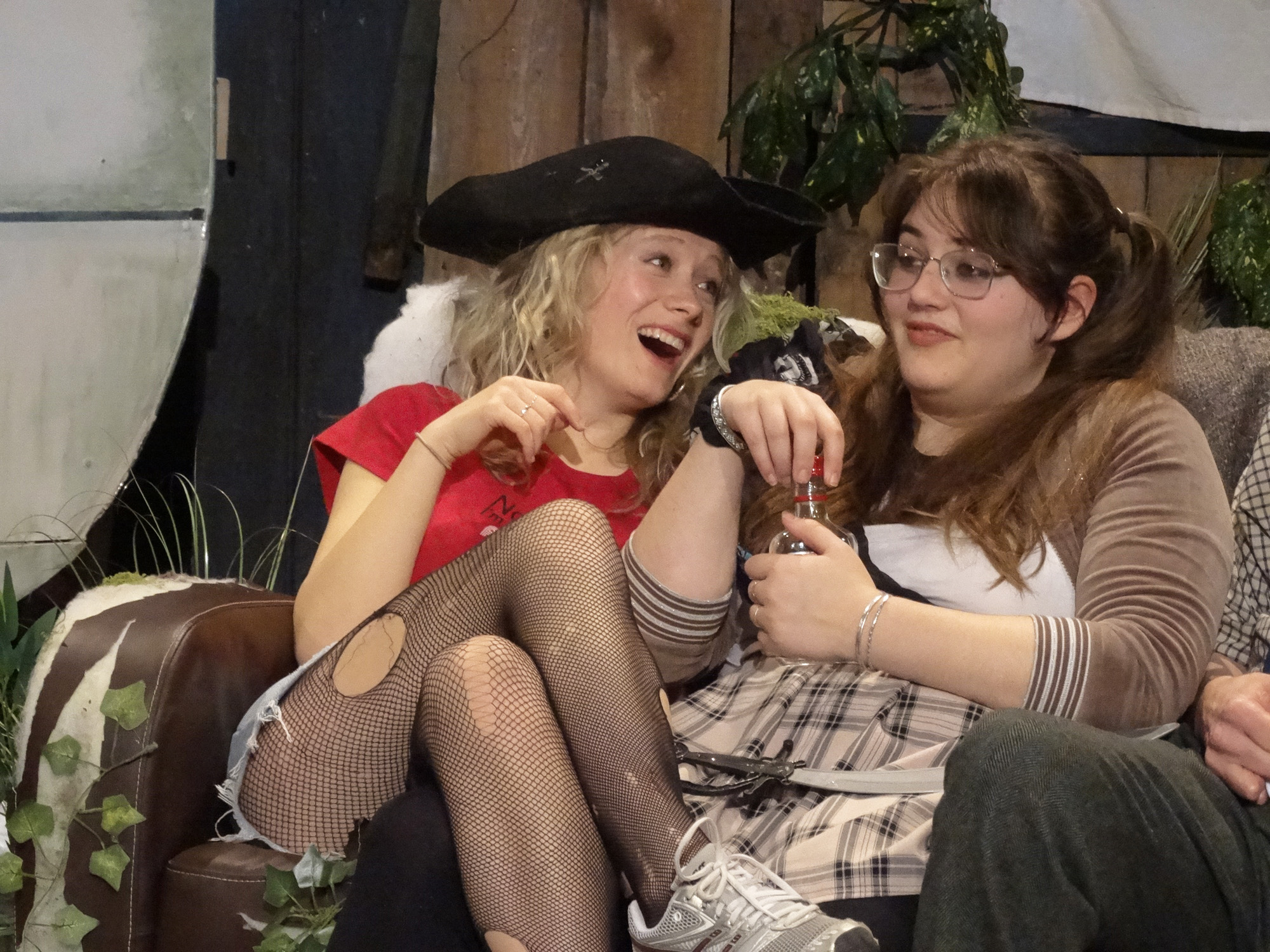
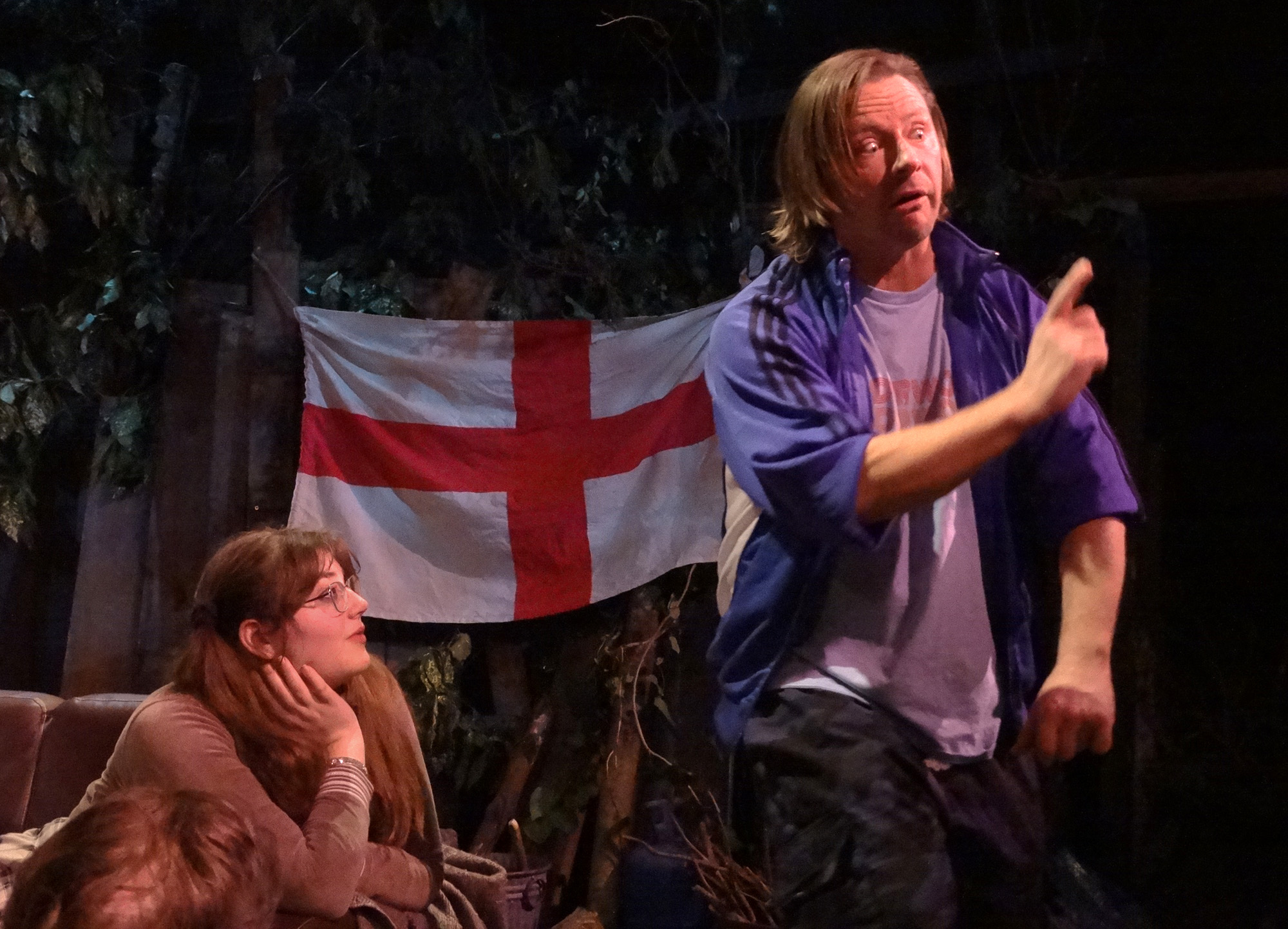
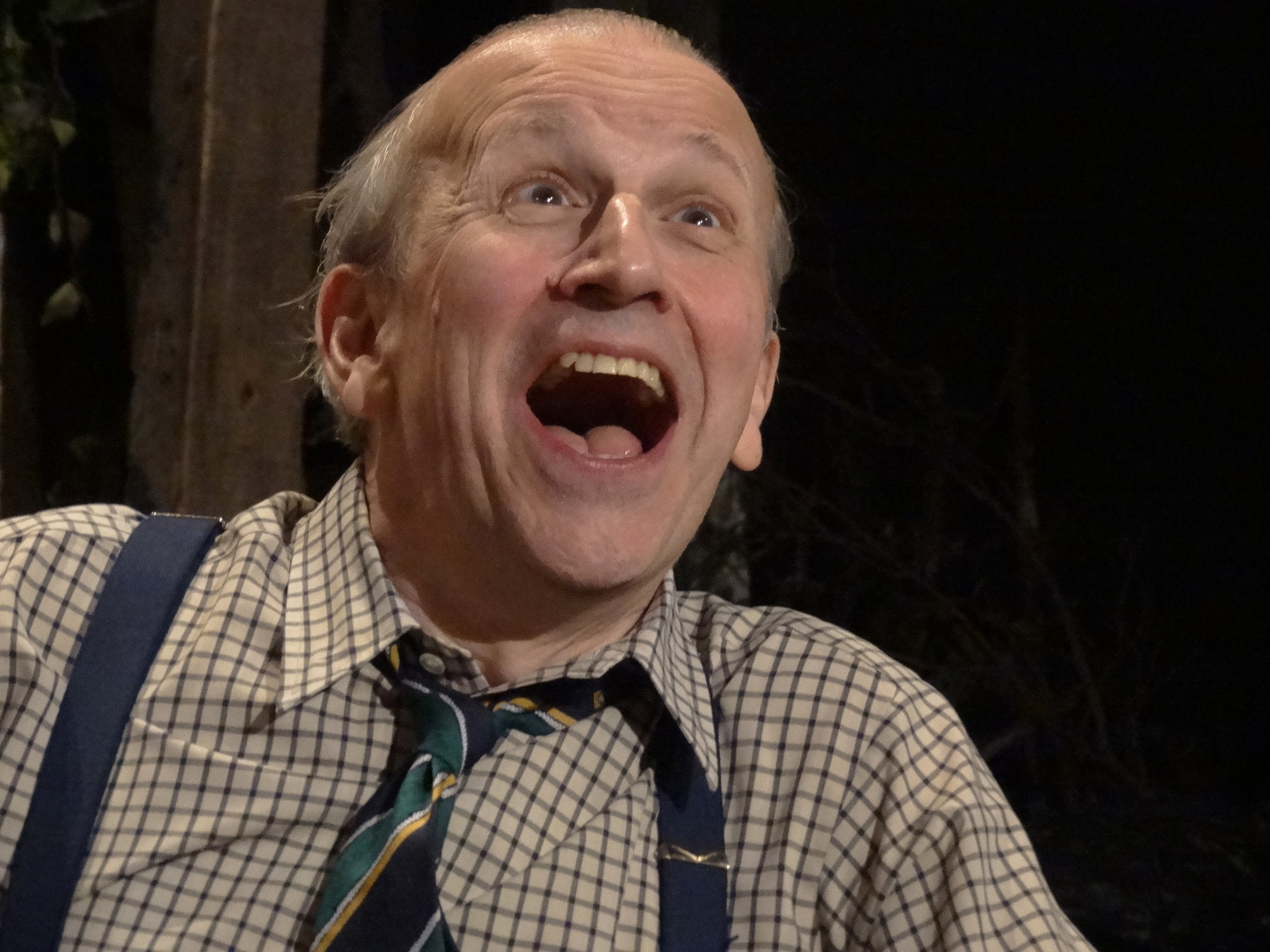
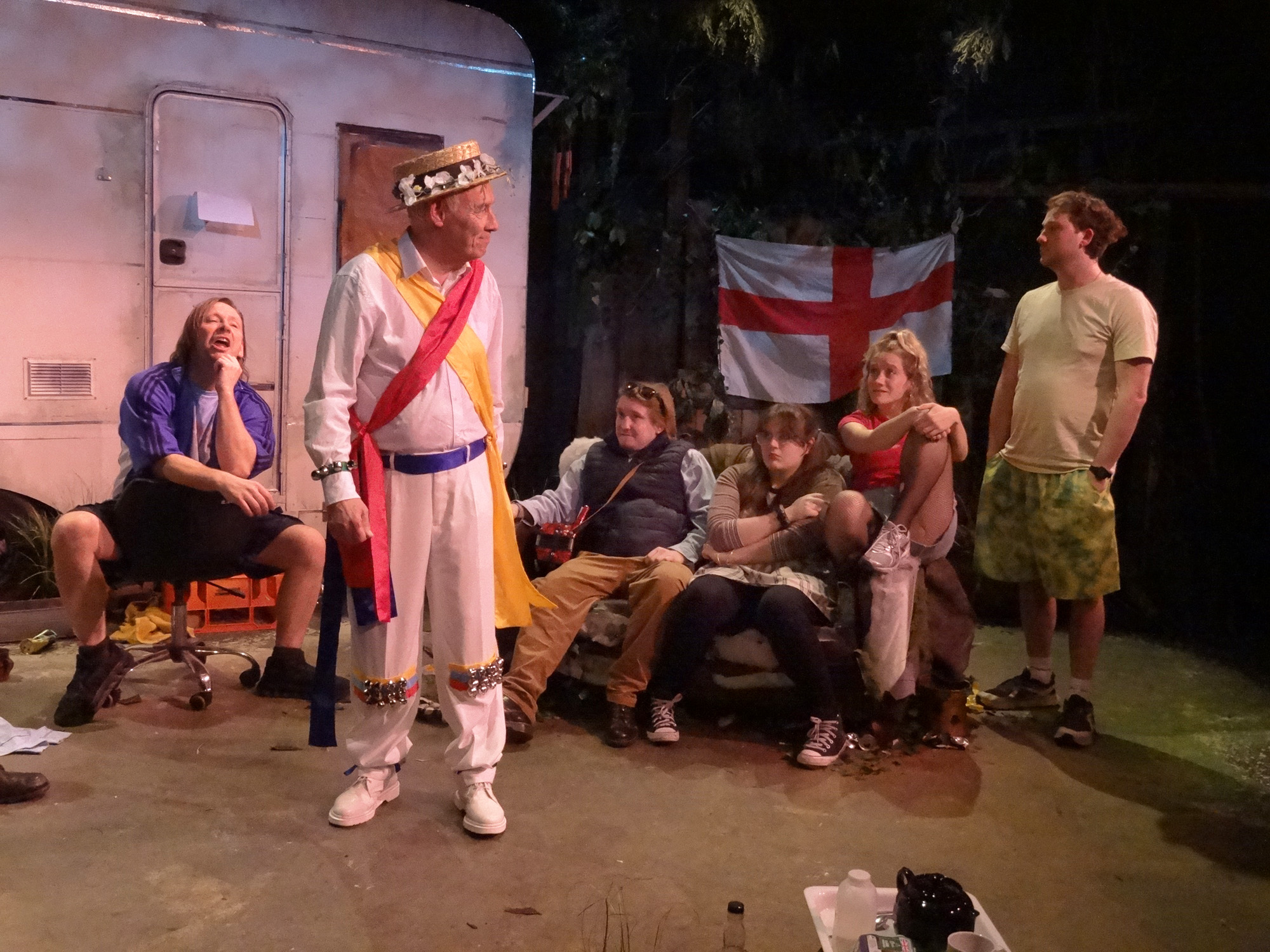
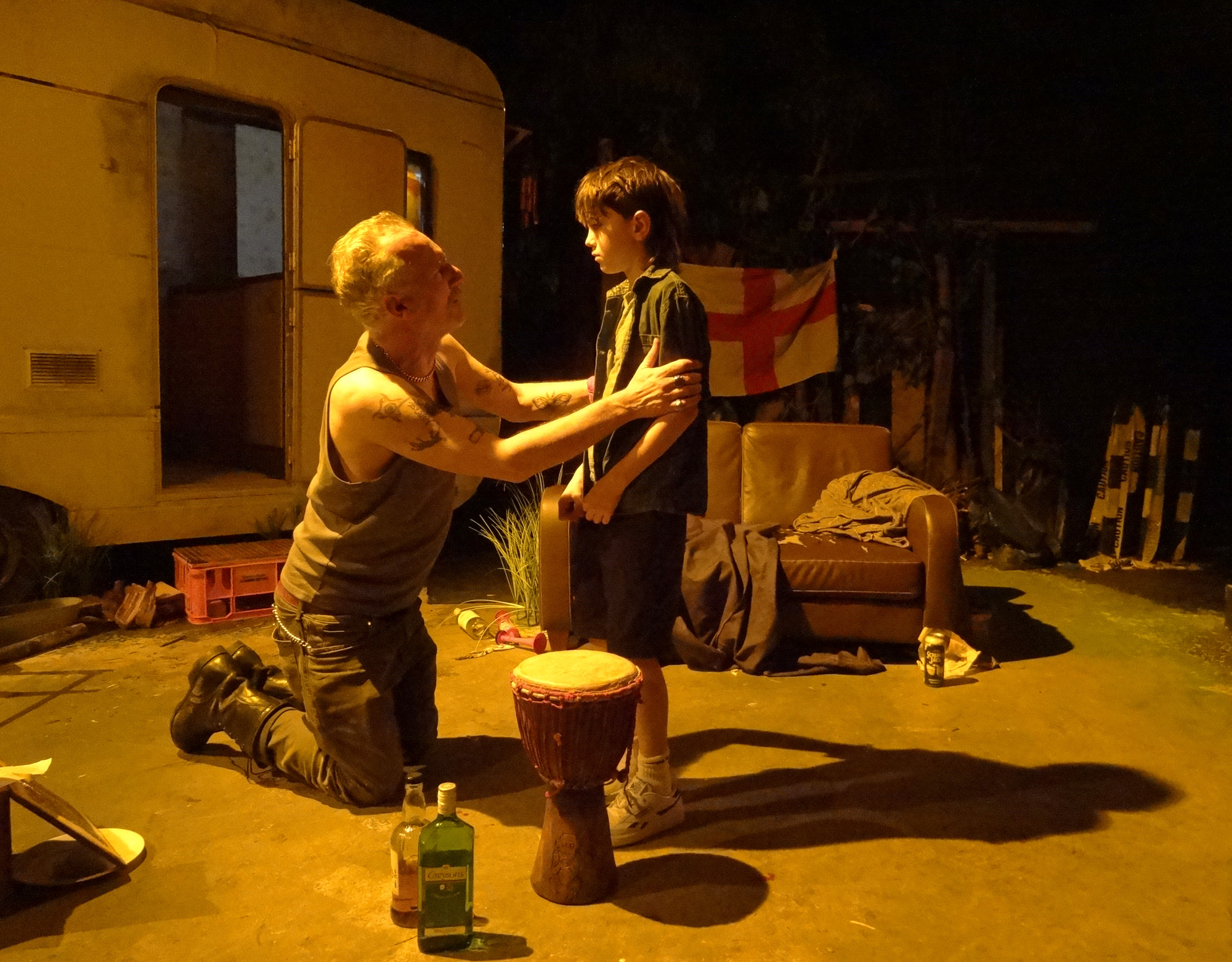
Rooster surrounds himself with rather ‘lost’ young people, supplying them with drugs and booze, but he has an eight-year-old son, Marky, who visits the encampment with his mother in the play’s closing scenes.
*
*

