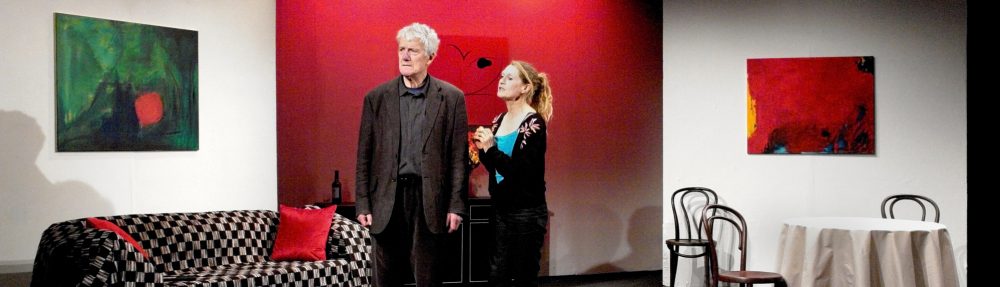
Listed in order, just scroll down to find them – W.M.D. Woman of Mass Deception / The Heresy of Love / The Approach / Macbeth
W.M.D. Woman of Mass Deception
In October at NVT, we staged my play about Helen of Troy. I wrote it to set out what I think must be the real story behind the Trojan War. Troy would have controlled the channel between the Mediterranean and the Black sea – a vital trade route in Bronze Age times. That power, and Troy’s ability to raise transit fees to punitive levels, would pose an economic threat to the Mycenaean Greeks, sufficiently serious to require a war to eliminate the city.
But Troy was part of the powerful Hittite empire, so the Greeks needed an excuse to create enough outrage to justify war – using Helen as a ‘honey-trap’ to seduce the Trojan prince Paris, and get him to carry her off to Troy. A complete reversal of Homer, but much more likely. And of course these lies and deceptions were mirrored in Tony Blair’s statements in the lead-up to the 2003 Gulf War. Nothing changes in politics in three and a half thousand years …
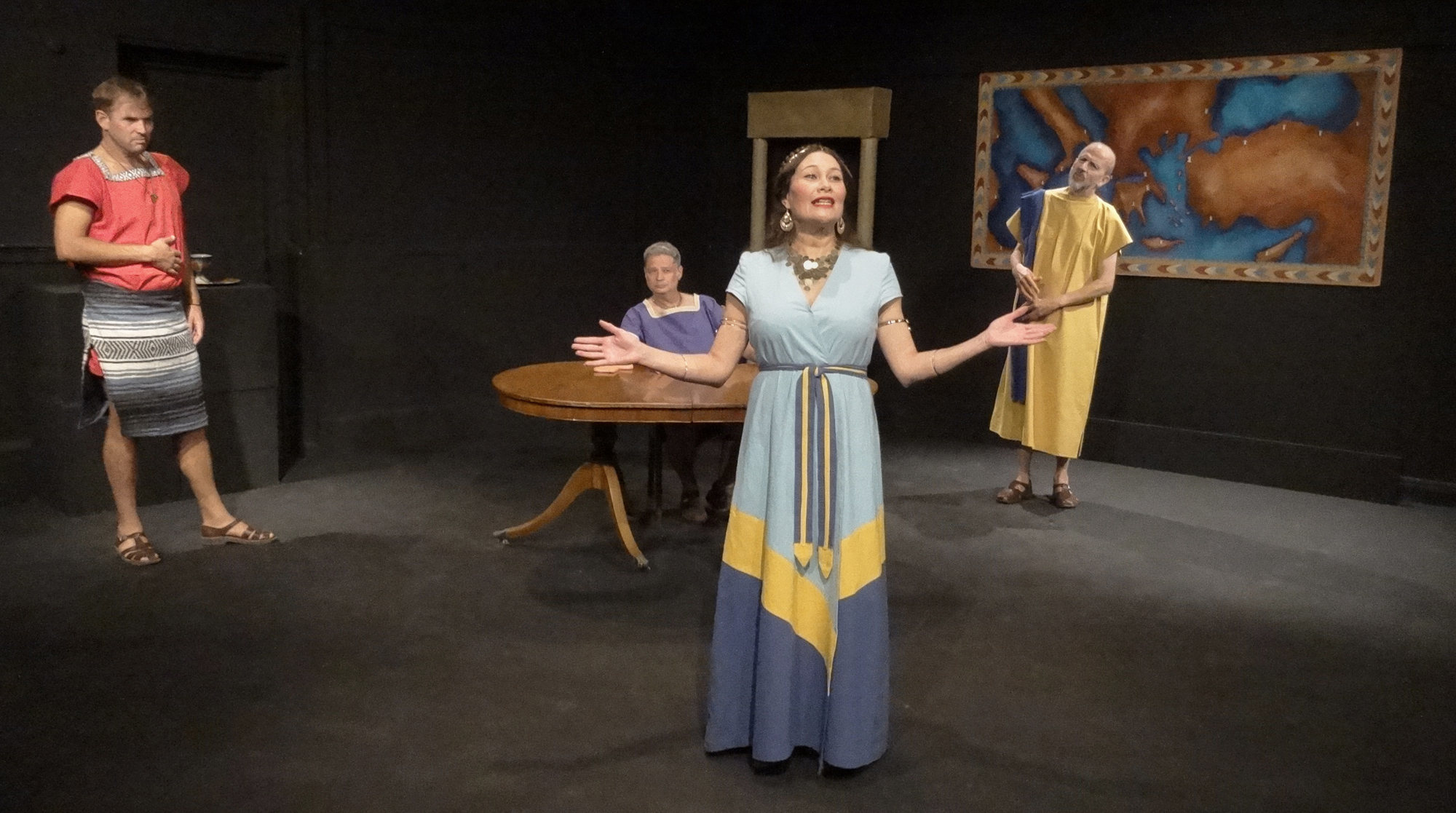
A very simple set, and just five characters. Above are Odysseus, Agamemnon, Helen herself, and the Treasurer of Mycenae.

There was also Iphigenia, Agamemnon’s teenage daughter – and a sixth character too, as Odysseus became Tony Blair in the final scene.
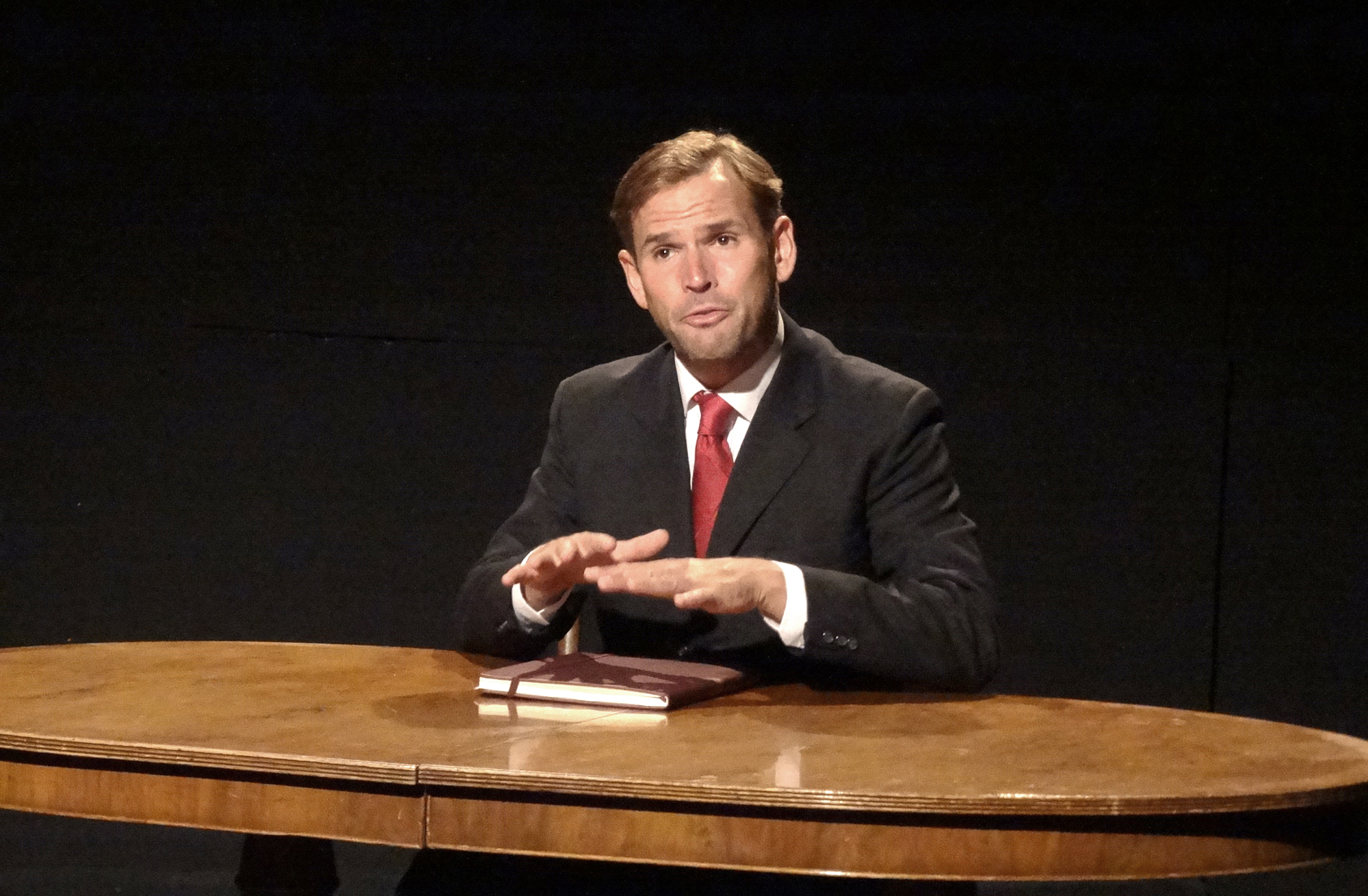
There he is with the ‘Dodgy Dossier’ which supposedly contained intelligence information about Saddam Hussein’s ‘Weapons of Mass Destruction’ – W.M.D.
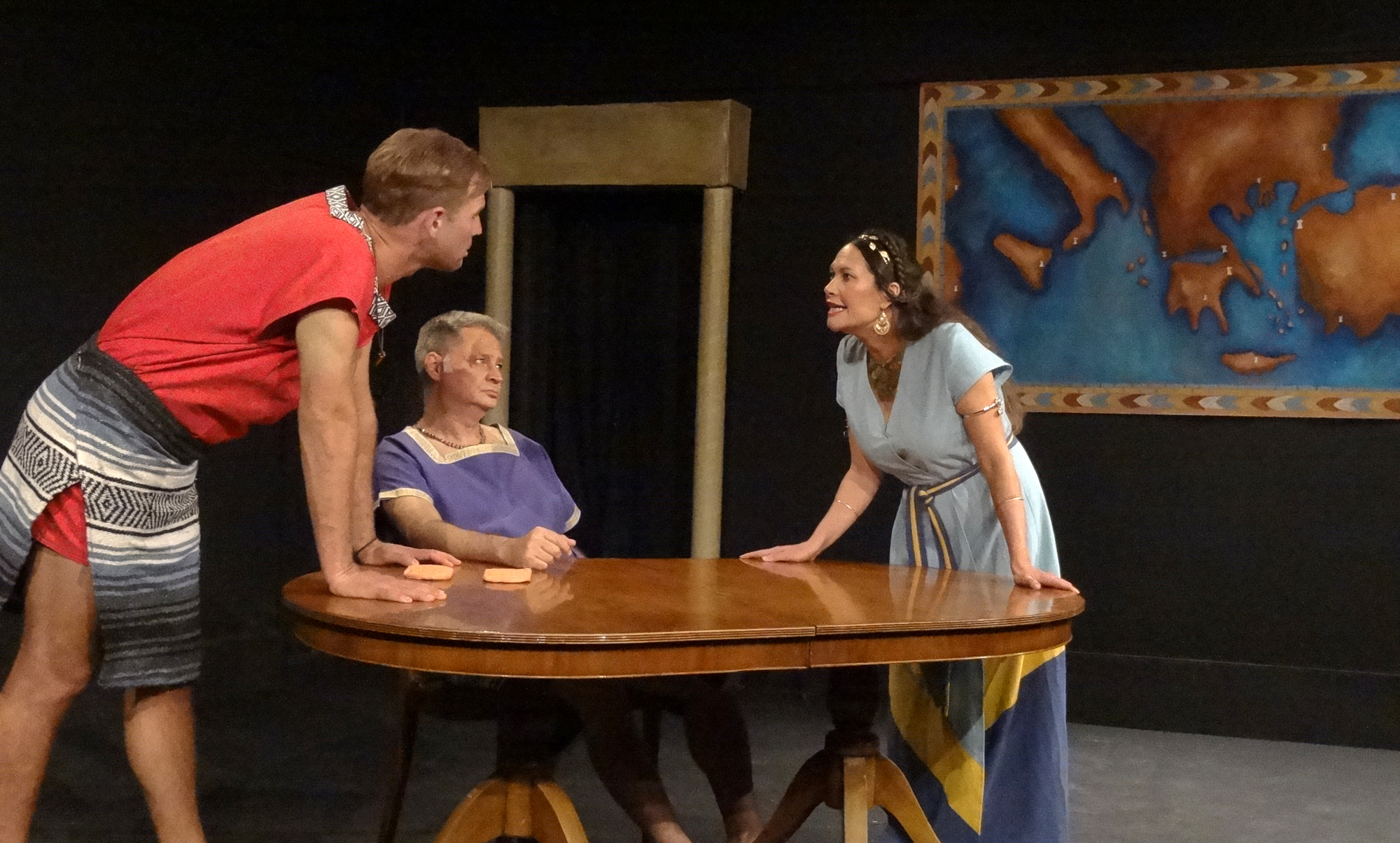
Above, Odysseus and Agamemnon are telling Helen what she’s required to do … and she’s NOT happy!
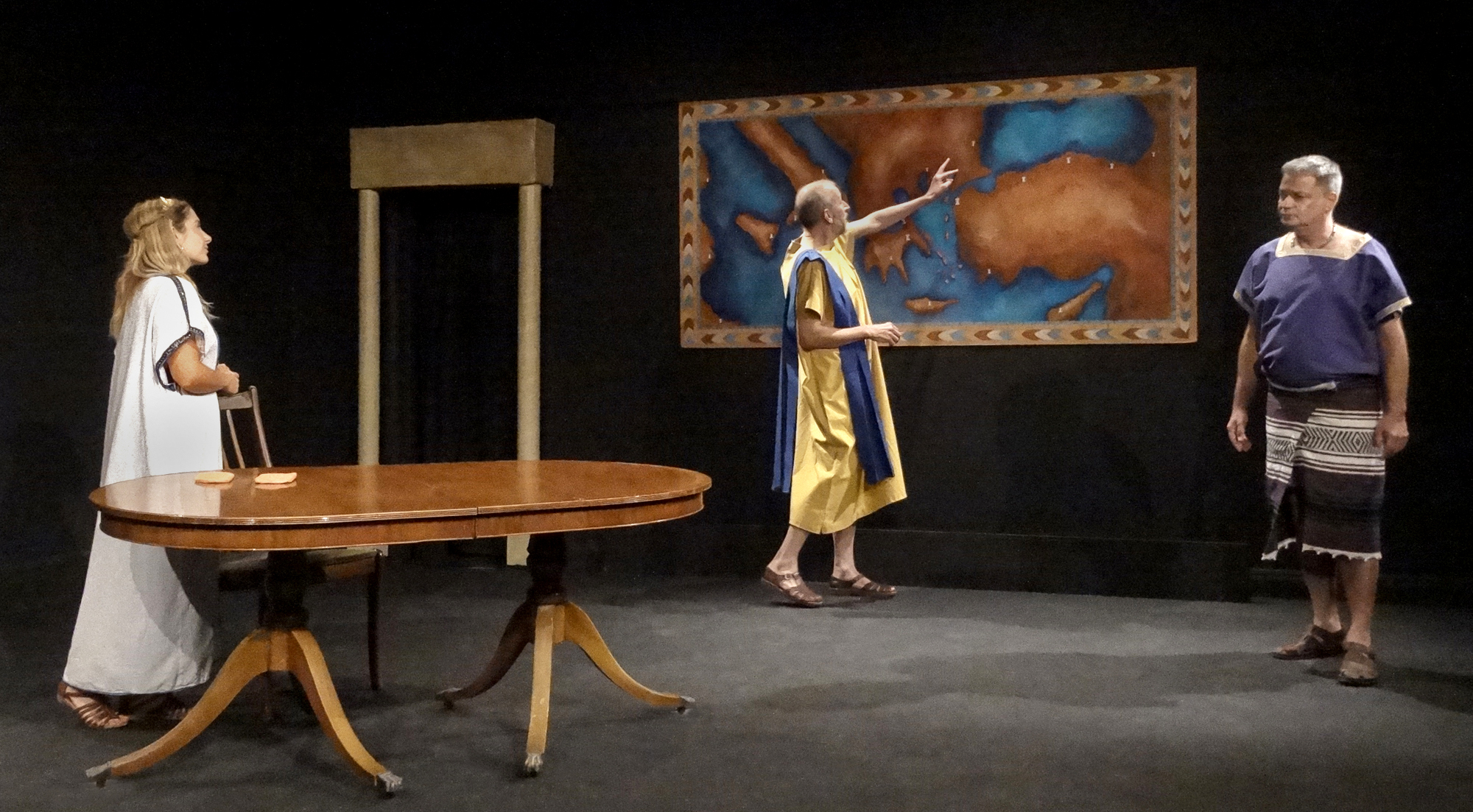
In an earlier scene, Agamemnon explains to his daughter how the Trojans are demanding double taxation on goods passing to and from the Black Sea, and how it will cripple the Greeks economically. The Treasurer is demonstrating to Iphigenia (and the audience) the immensely strategic location of Troy – at the mouth of the narrow channel linking the two seas.

I was very fortunate to have a cast of actors who brought my characters to vivid life. But we also had hugely talented costume designers/makers, and Judith Berrill’s wonderful wall painting, which gave us the geography of the region as well as producing the character of the Palace at Mycenae.

Karen Hindmarsh and Jackie Jones researched Mycenaean and Minoan costumes to produce an authentic feel to the production. No togas, but kilts for the aristocratic men – remember that the Trojan War took place a thousand years before the classical Greece of Euripides and Aeschylus. Jackie Jones cut Helen’s dress with panels on the slant, following ancient wall paintings of high-status women.
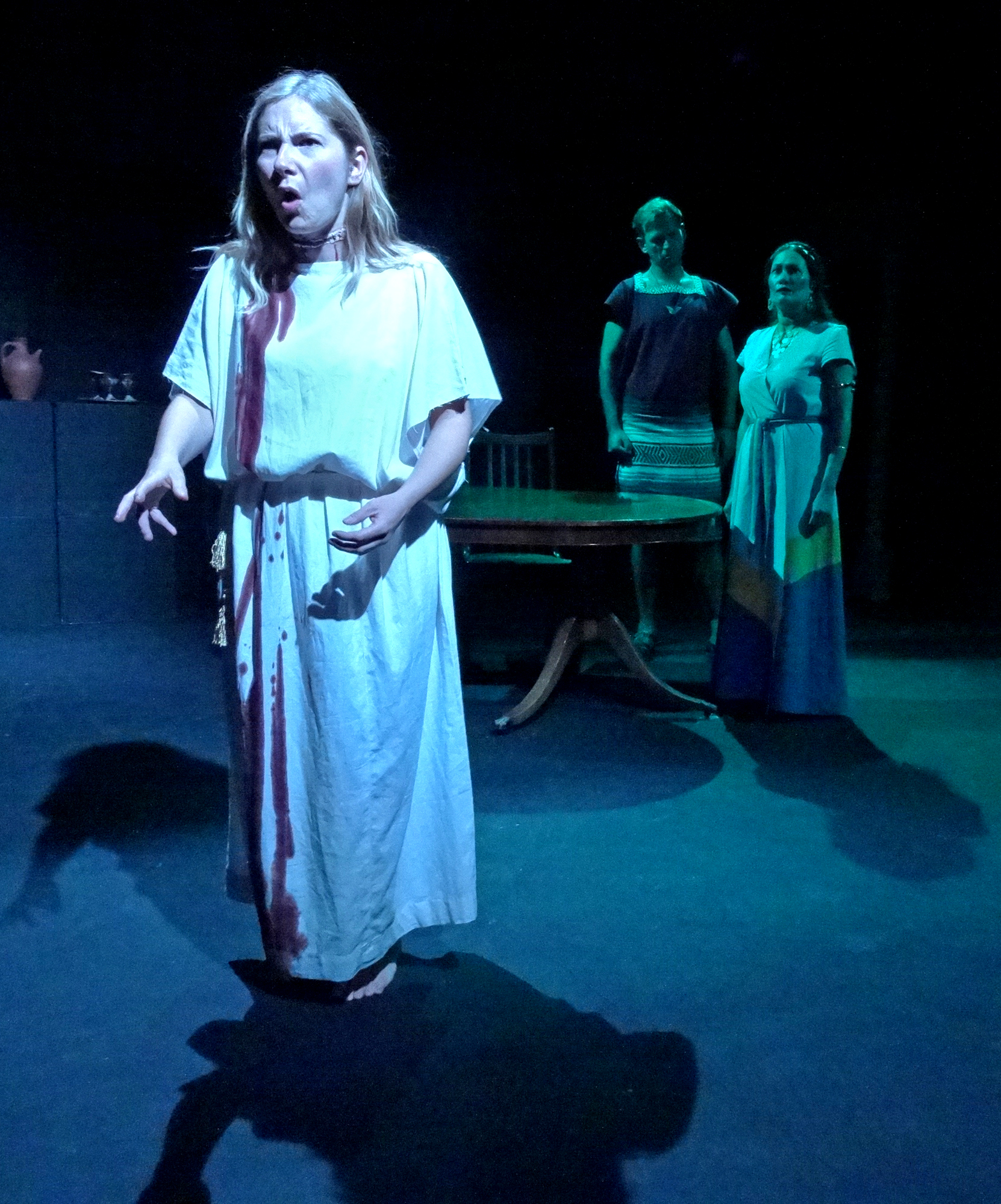
Iphigenia reappeared in a later scene – as a ghost, telling of her father’s deception, luring her and her mother to Aulis, where she was sacrificed to ensure a favourable wind to carry the Greek invasion fleet to Troy.

Mark Lester as Agamemnon

Jo Salter as Iphigenia
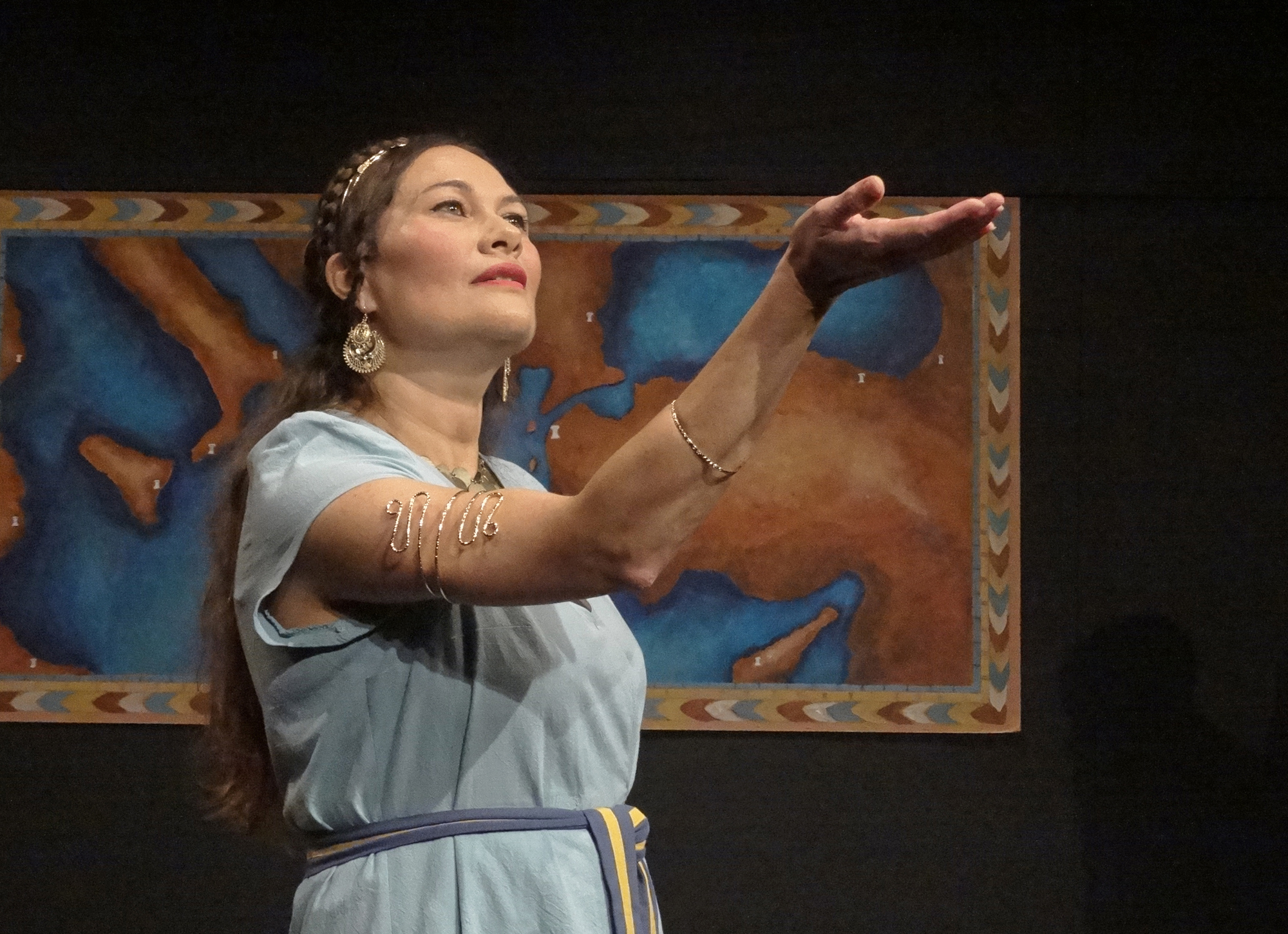
Kasha Goodenough as Helen
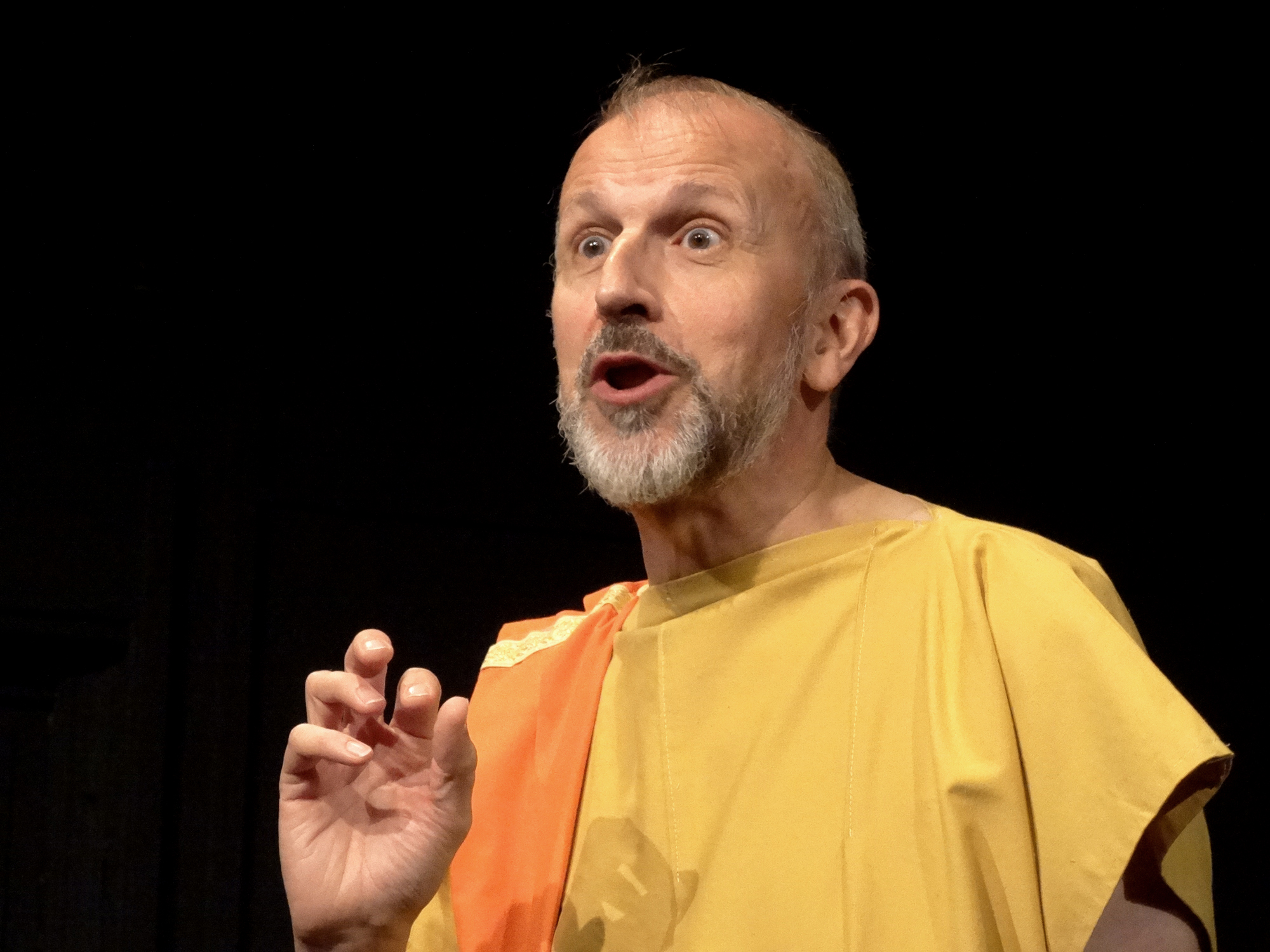
Jeremy Crow as the Treasurer of Mycenae
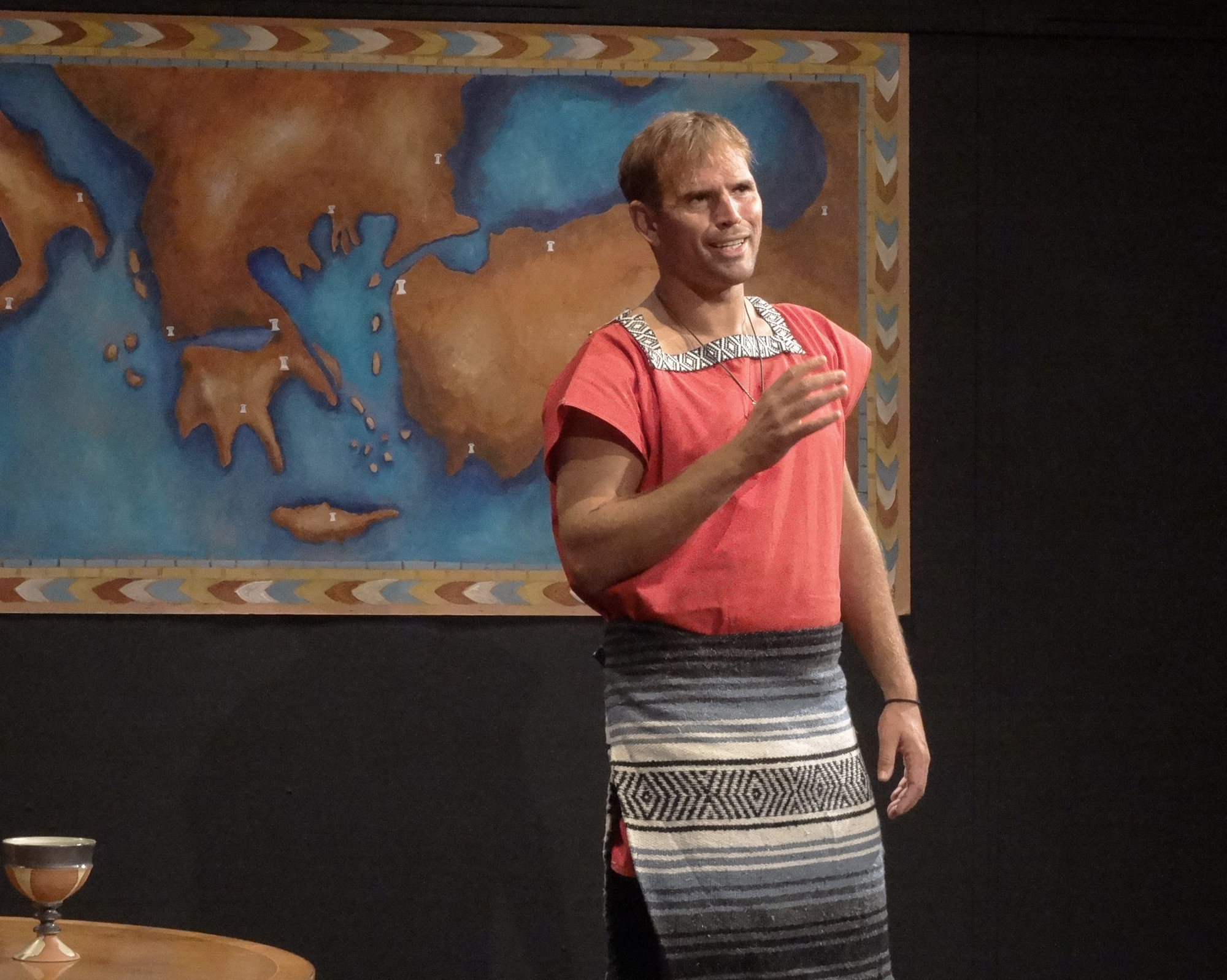
Rich Watkins as Odysseus
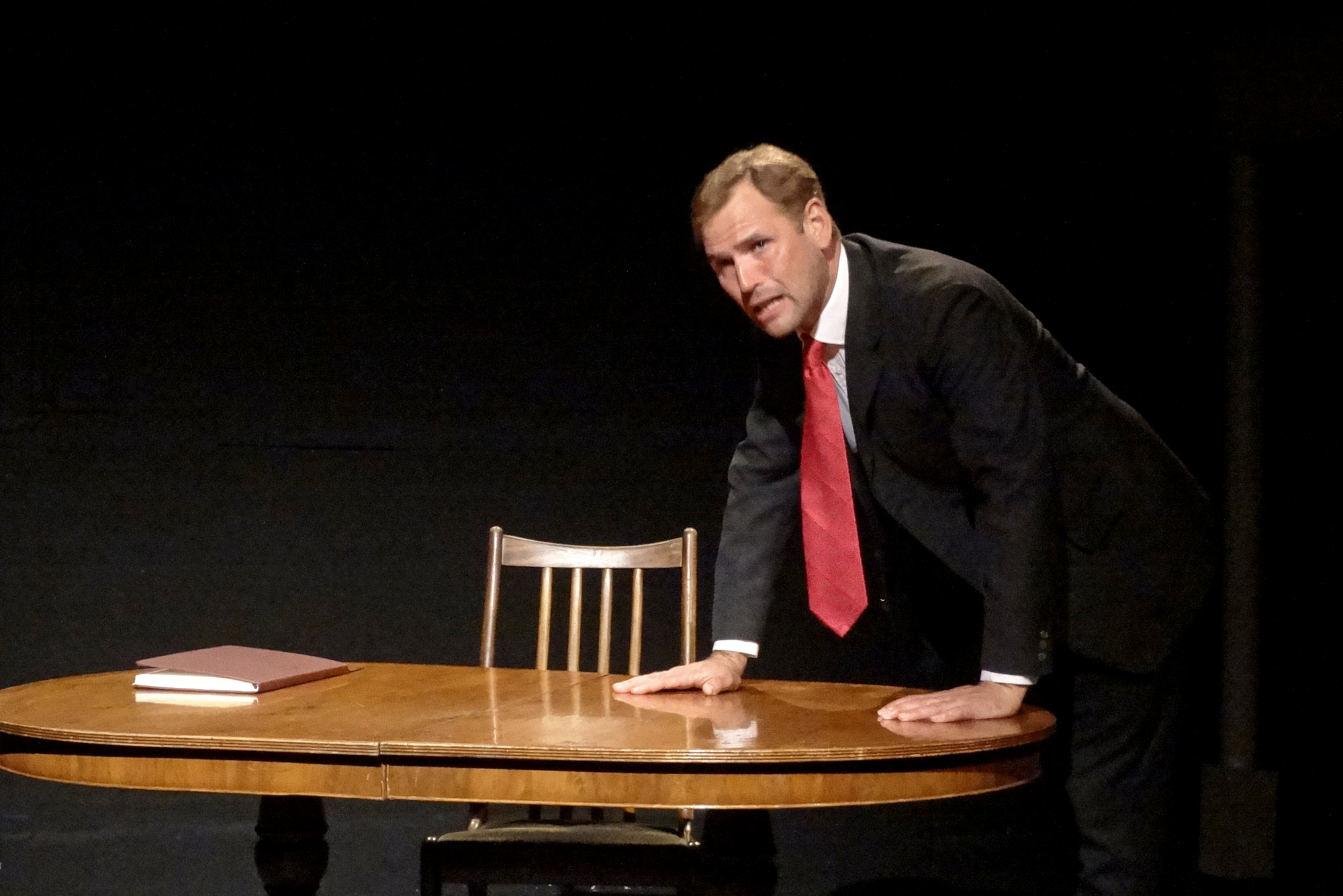
and again as Tony Blair, in the final scene. To keep scene changes smooth, we simply used the Treasurer’s table as the Dispatch Box in the House of Commons. Like all Prime Ministers, Blair leans on it while making a statement.
*
The Heresy of Love
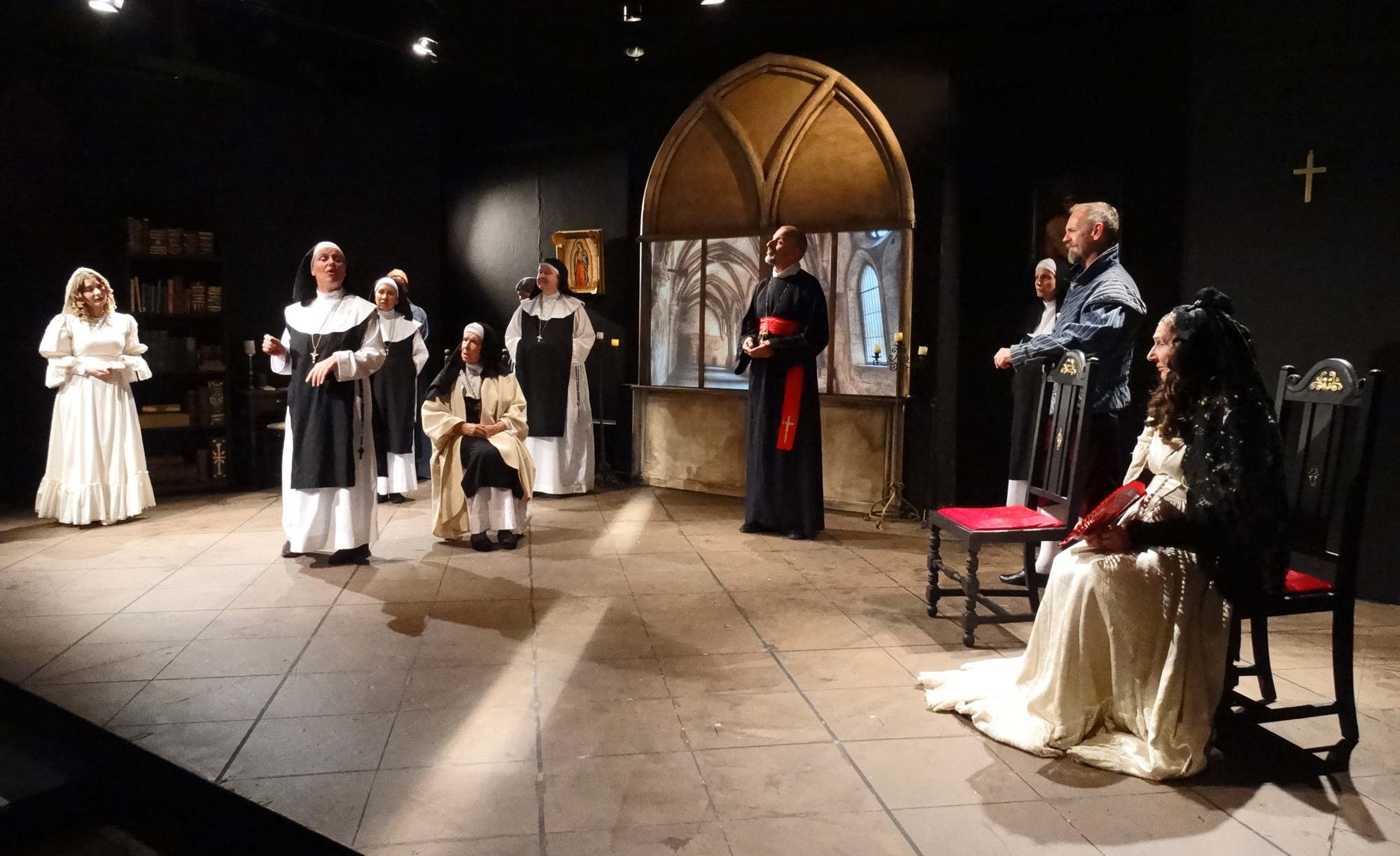
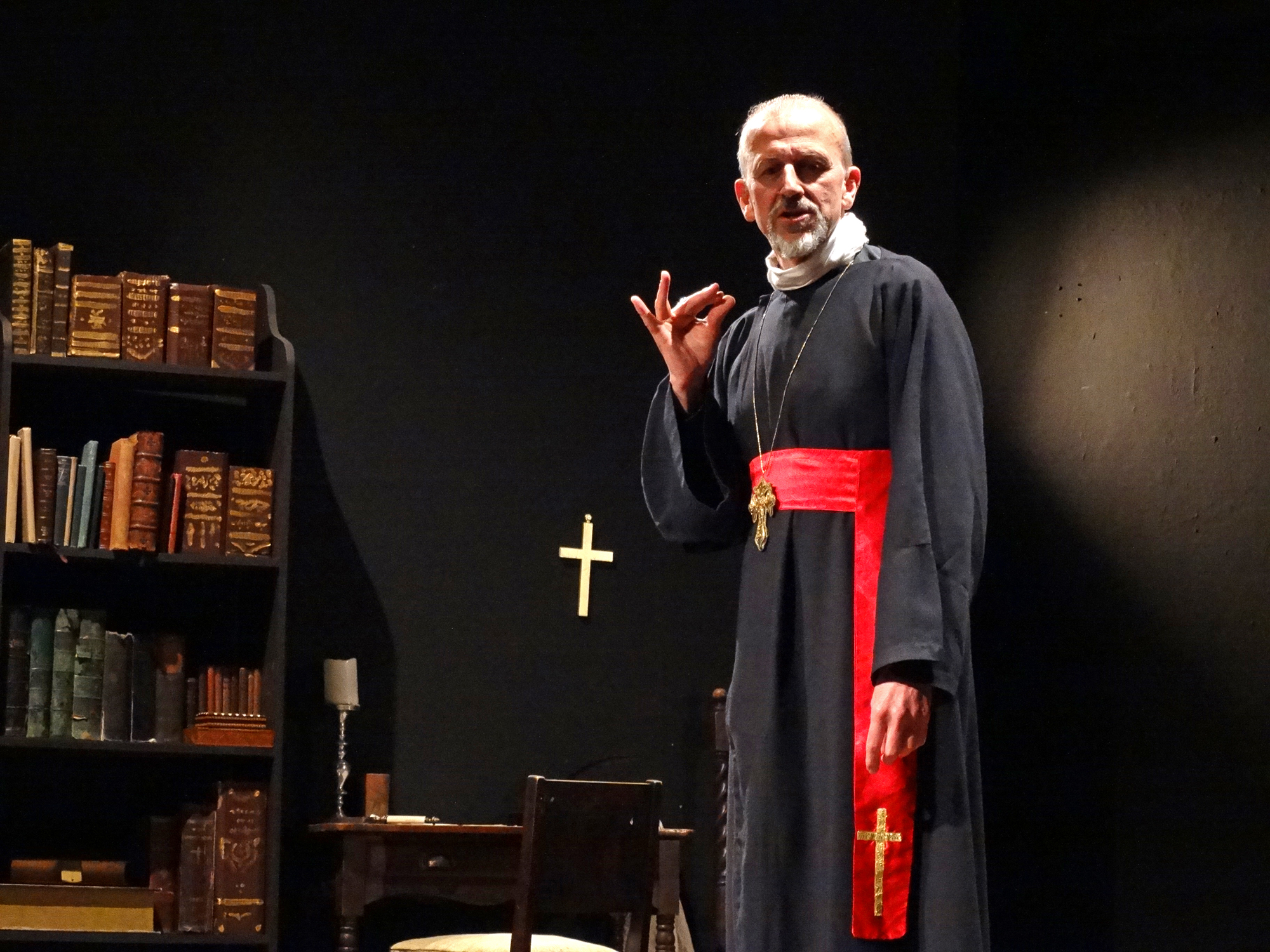
Helen Edmundson’s play was New Venture’s April production, and it was a technically challenging project. Director Gerry McCrudden didn’t want clunky scene changes, so most of the settings were produced by light effects. Above is the convent Locutary, where a grille separates the enclosed Sisters from their visitors. I created narrow shafts of light to define the barrier.

The barrier disappeared when we changed location. Here we are in the Archbishop’s palace. We used back-projected images onto gauze-covered apertures in the set’s back wall to show views through the room’s window. (this is actually the Palais Benedictine in Fecamp)

and this is the interior of a nun’s cell. Sister Juana Ines de la Cruz was a seventeenth century polymath in Spanish-occupied Mexico, who became a close friend of the Spanish Court and especially of the Vicereine. But she fell victim to the misogyny and Jesuit fervour of the newly appointed Archbishop – sent out to ‘New Spain’ to enforce the religious strictures. Here are the Nobles, outside the Locutary barrier.

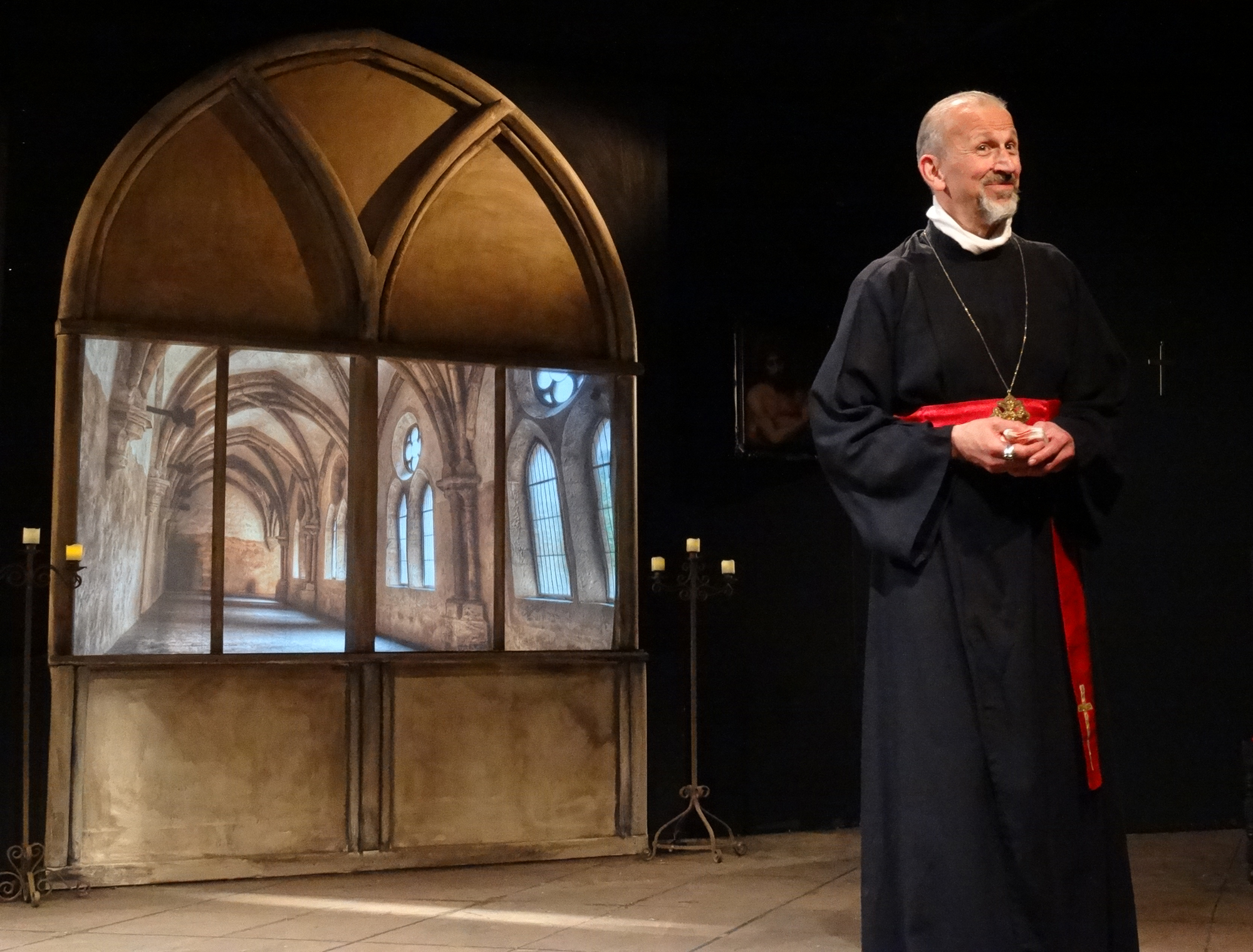
She had been supported in her studies and writing by the local Bishop, but finally he betrays her. Above you can see the convent cloister through the window of the Locutary (with the barrier visible on the stage floor) and below is Sister Juana’s study.

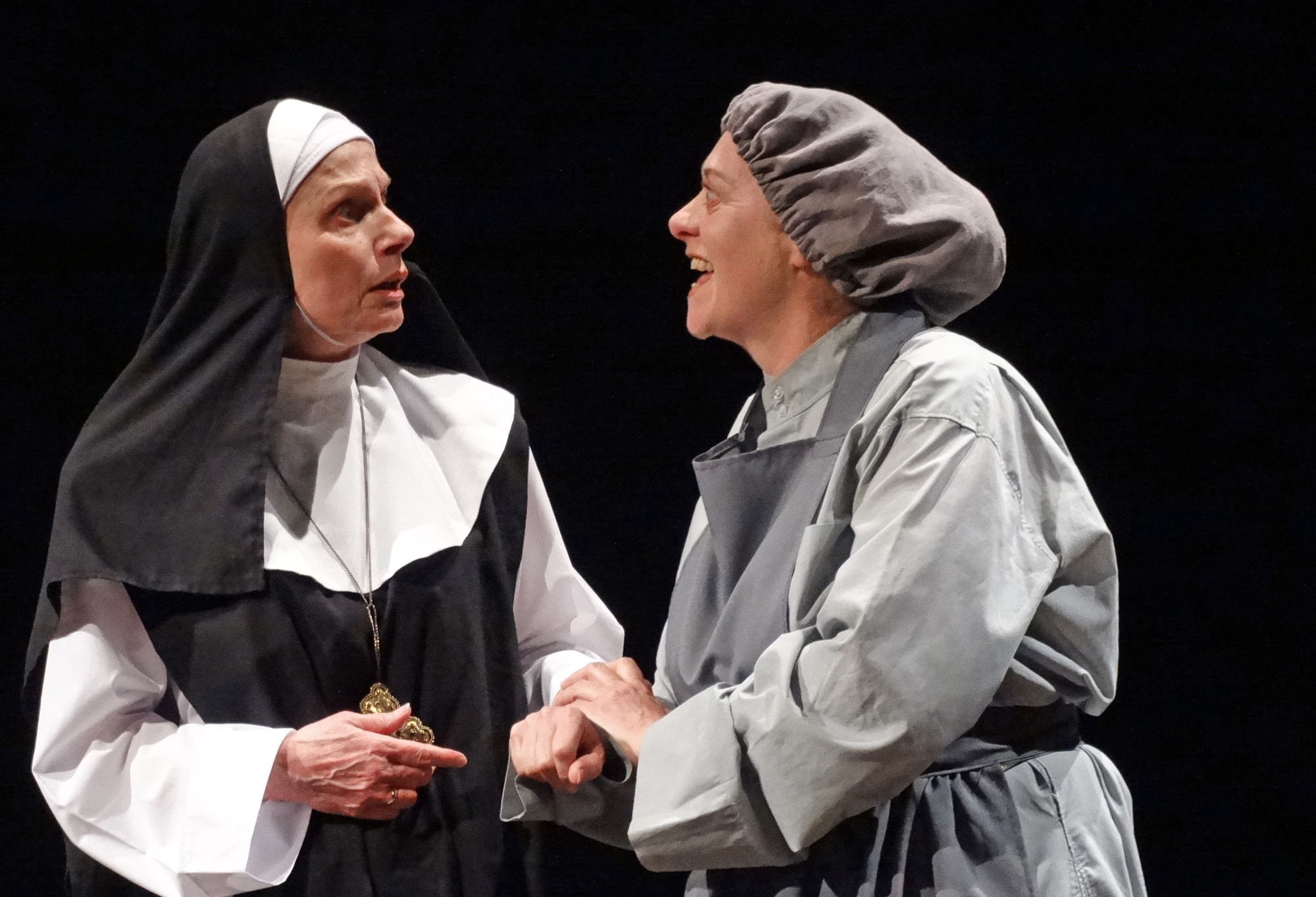
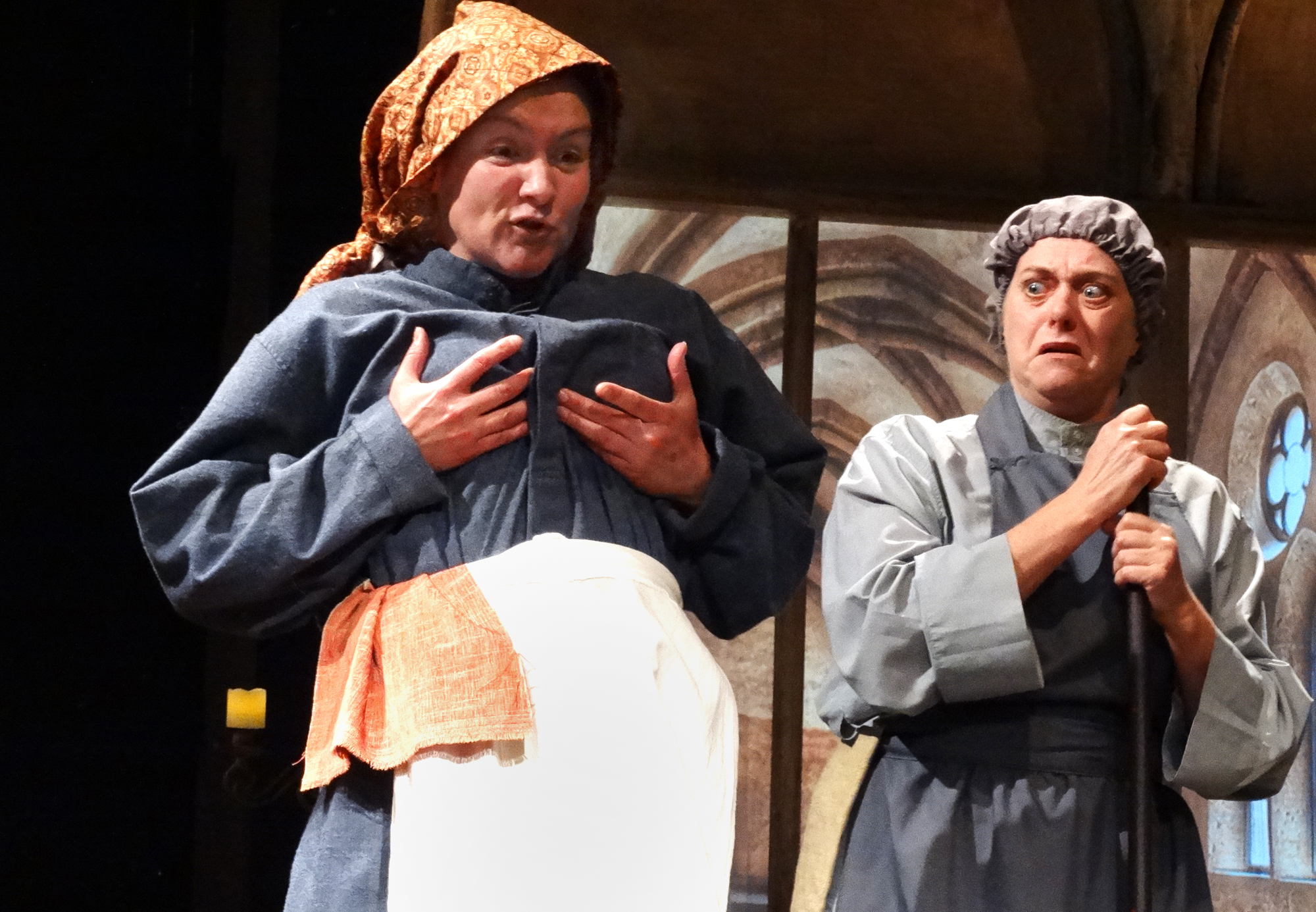
It wasn’t all doom and gloom, though – there were some unforgettable moments featuring the convent’s domestic servants.
*
The Approach
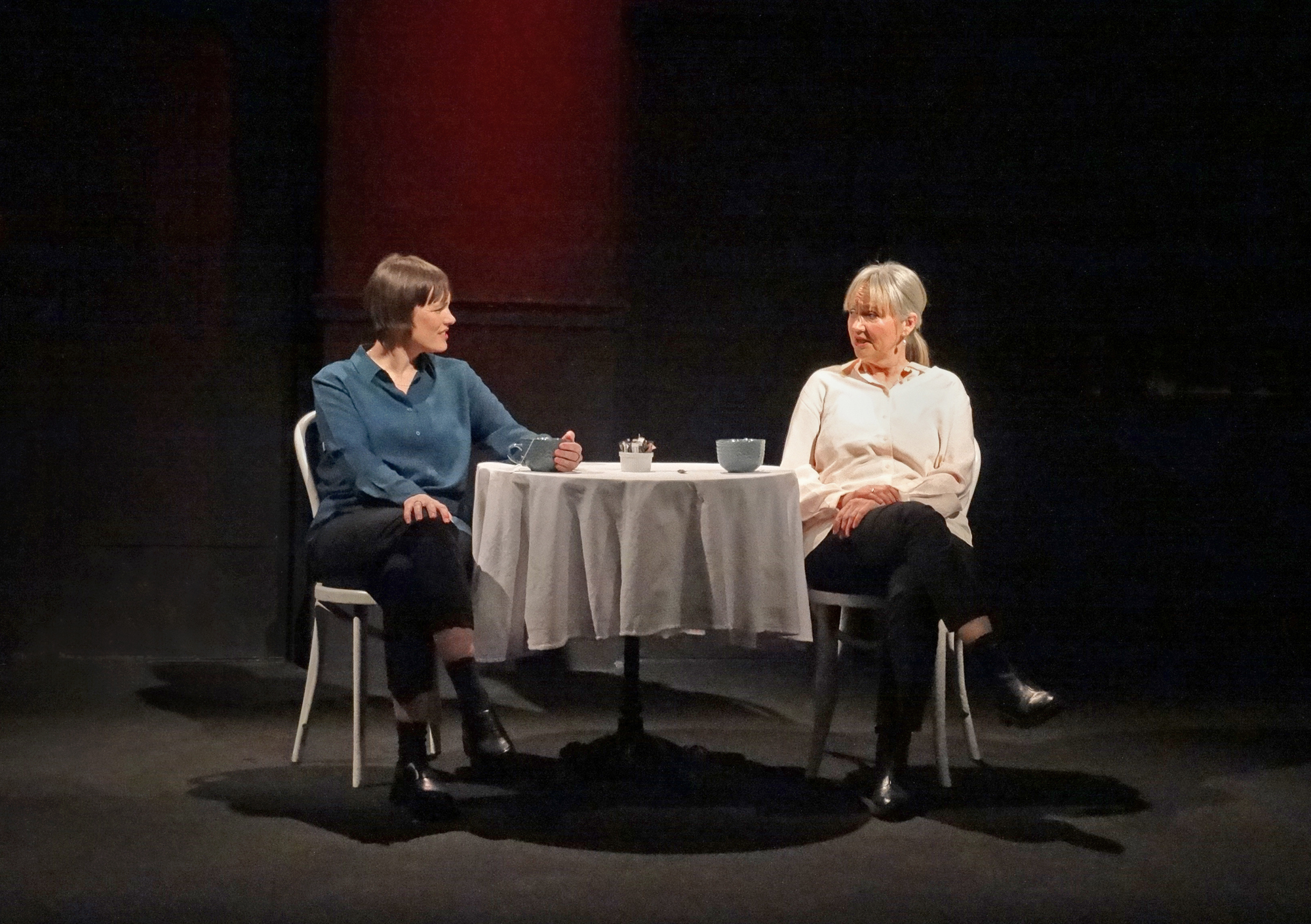
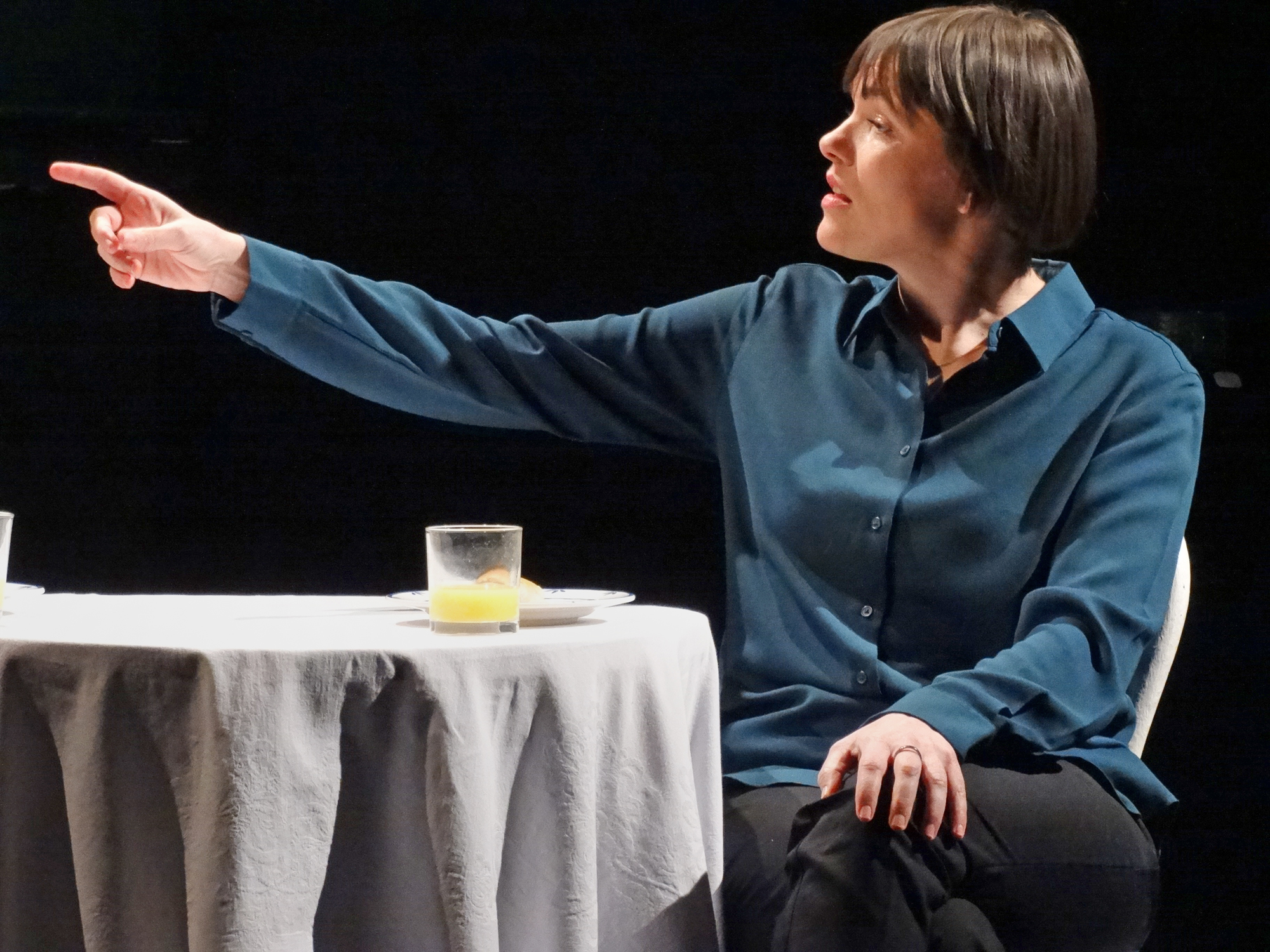
Two women in a café, sitting talking over coffee or a drink. That’s the entirety of the setting for New Venture’s March production of ‘The Approach’.

Director Mark Wilson chose to stage Mark O’Rowe’s play very simply – just a table, in three different locations over a three year period, with three women (that’s all three of them in the first two photographs) meeting in pairs.

The pair above are Anna, on the left, and her sister Denise. They are sisters, but they’ve become estranged after both had relationships with the same man.
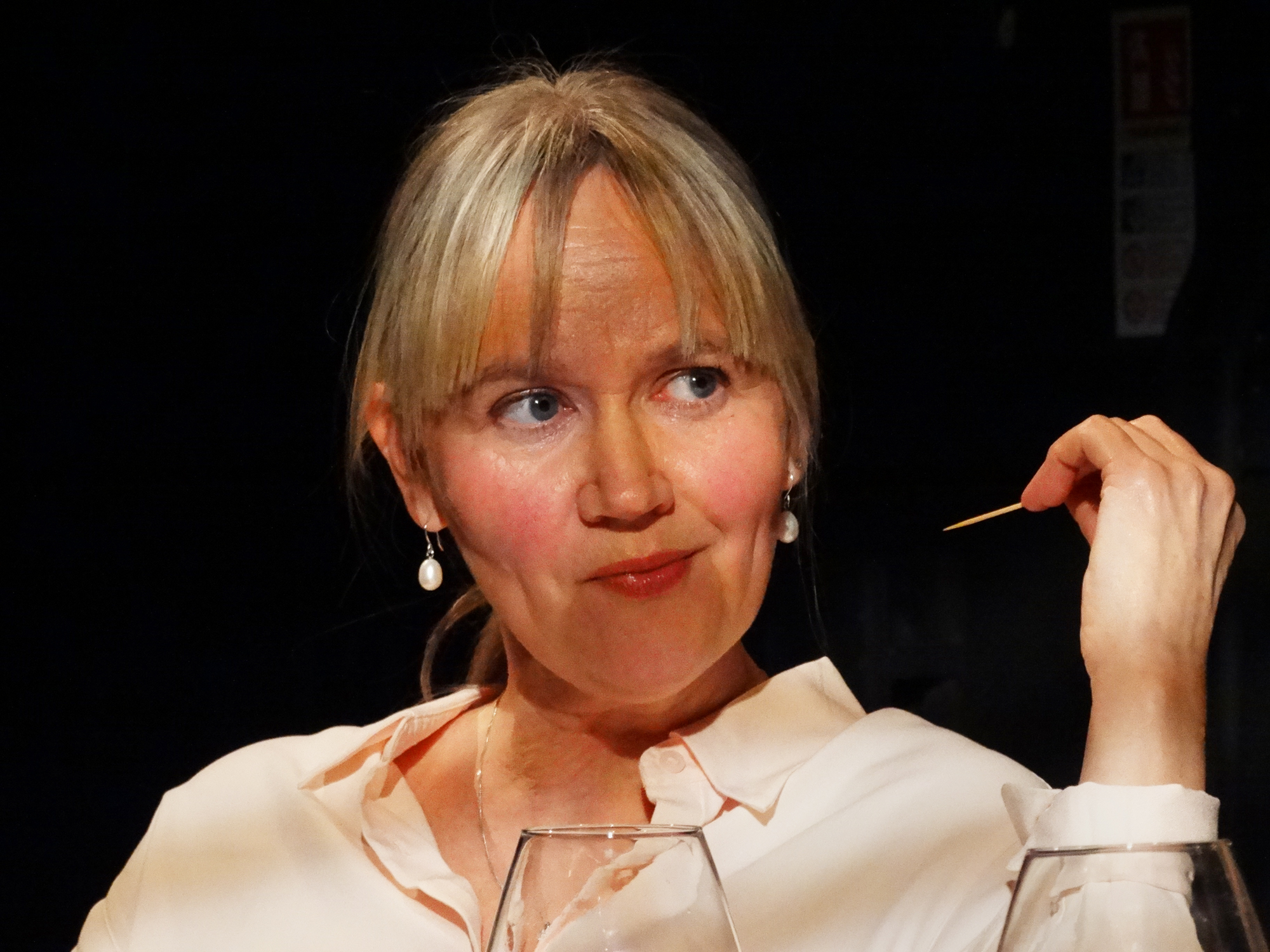
Cora (that’s her above) is a childhood friend of both sisters, and she attempts to reconcile them, or at least to smooth the waters.
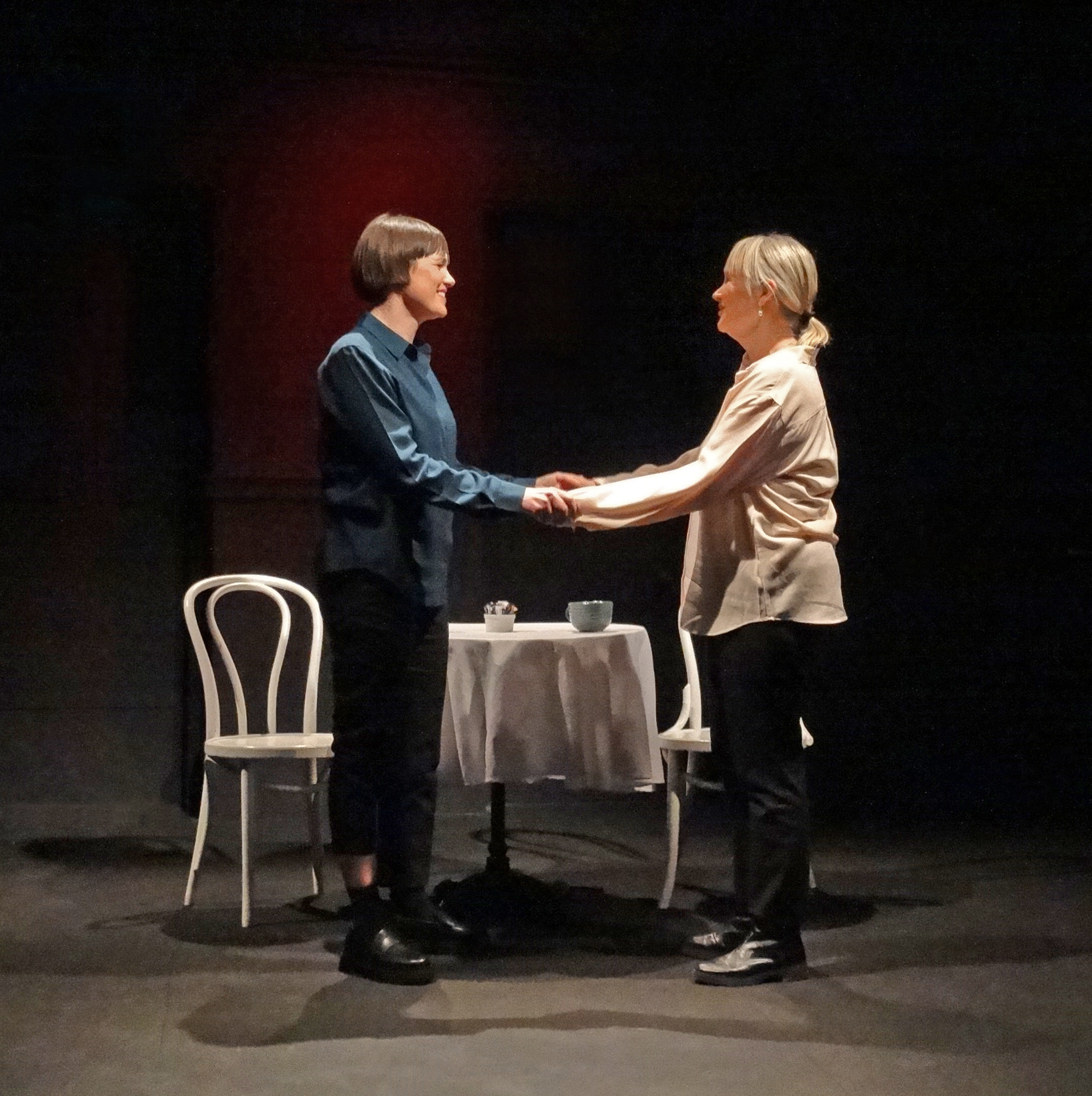
An interesting project. All the lines are spoken sitting at the table, so I had to create a series of lighting states to indicate changes in venue or time of year. At the end of each meeting, the women stood to embrace as one of them left, and then the glasses and plates were changed in near darkness before the next woman arrived.



*
Macbeth

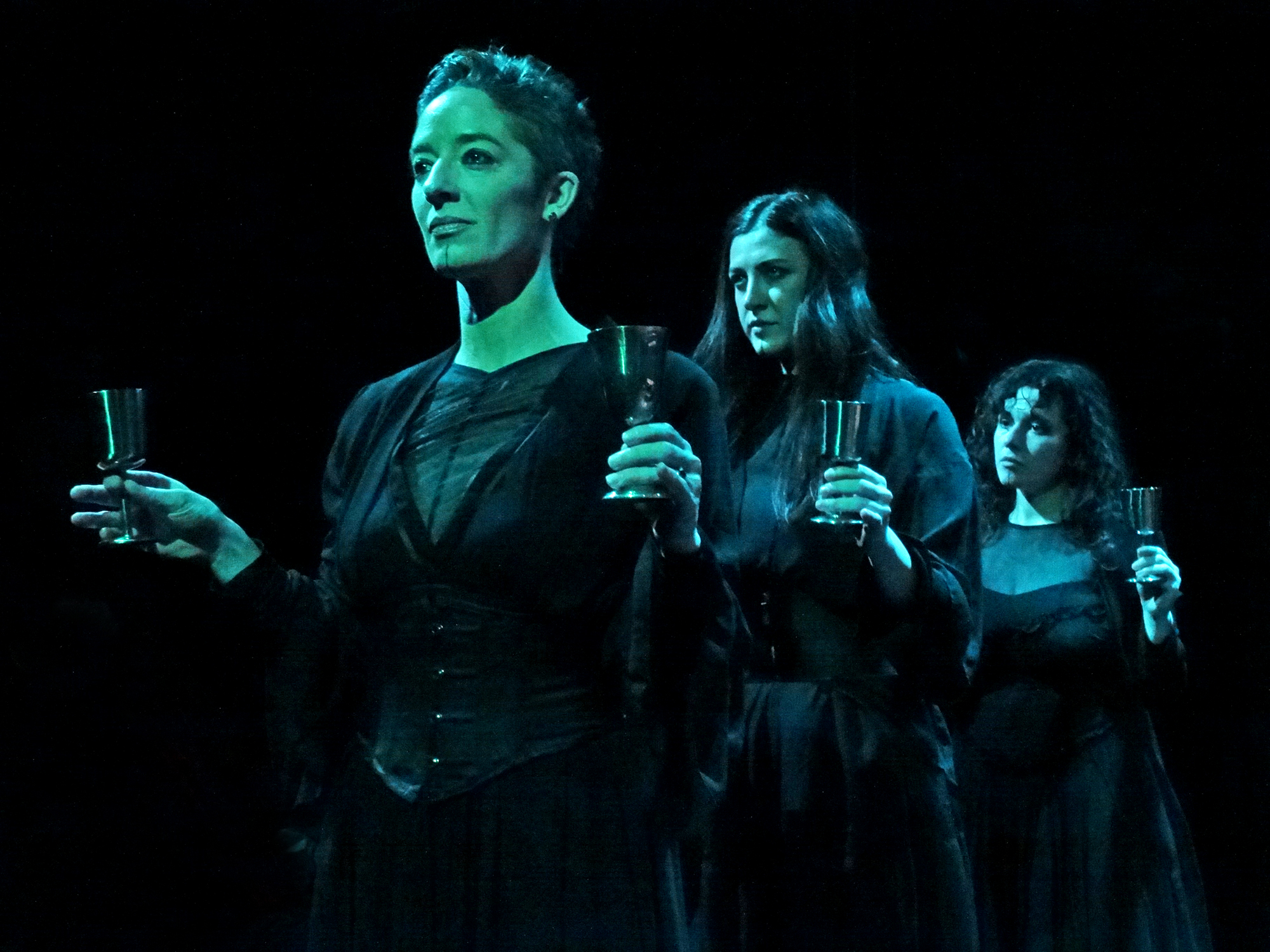
To paraphrase the Duke of Wellington talking about his troops – I don’t know if they frighten the audience, but they scare the hell out of me !

The Witches are crucial elements of ‘Macbeth’, of course, and usually cast as old hags – but in Steven O’Shea’s adaptation they are young, and somehow timeless, and … terrifying. The three women also double up as palace attendants and as assassins, so the NVT’s January production had only six actors in total.

A stark set, with a raised gantry and a staircase, all in black, to give us Macbeth’s castle at Glamis, as well as the ‘blasted heath’ where he and Banquo first meet the witches.
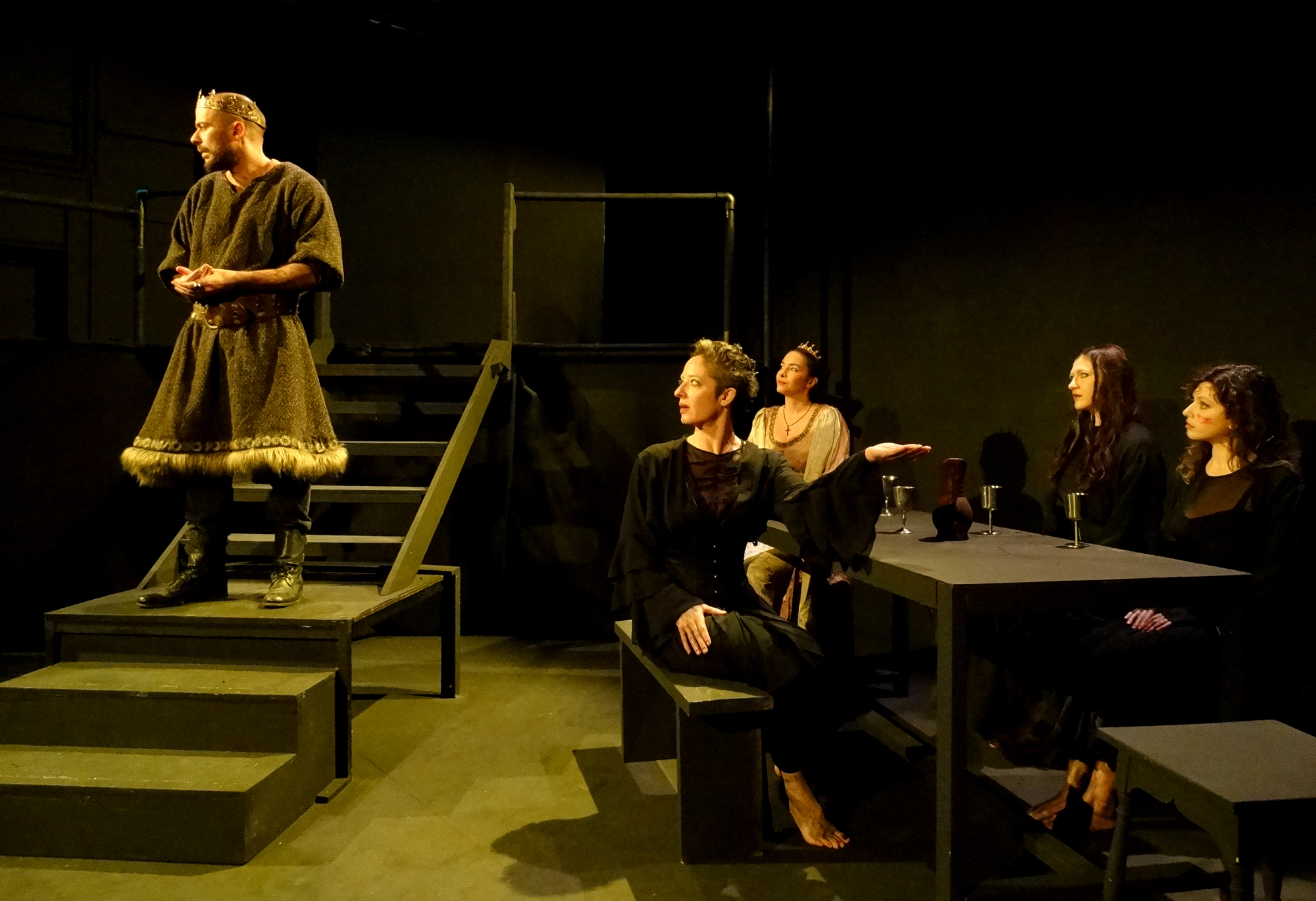

A truly wonderful project to light. I had to utilise a wide colour palette to evoke cold Scottish mists, the eerie creepiness of the witches, and the interior of Glamis castle itself, both in the day and torchlit at night. All with just thirty lighting channels.
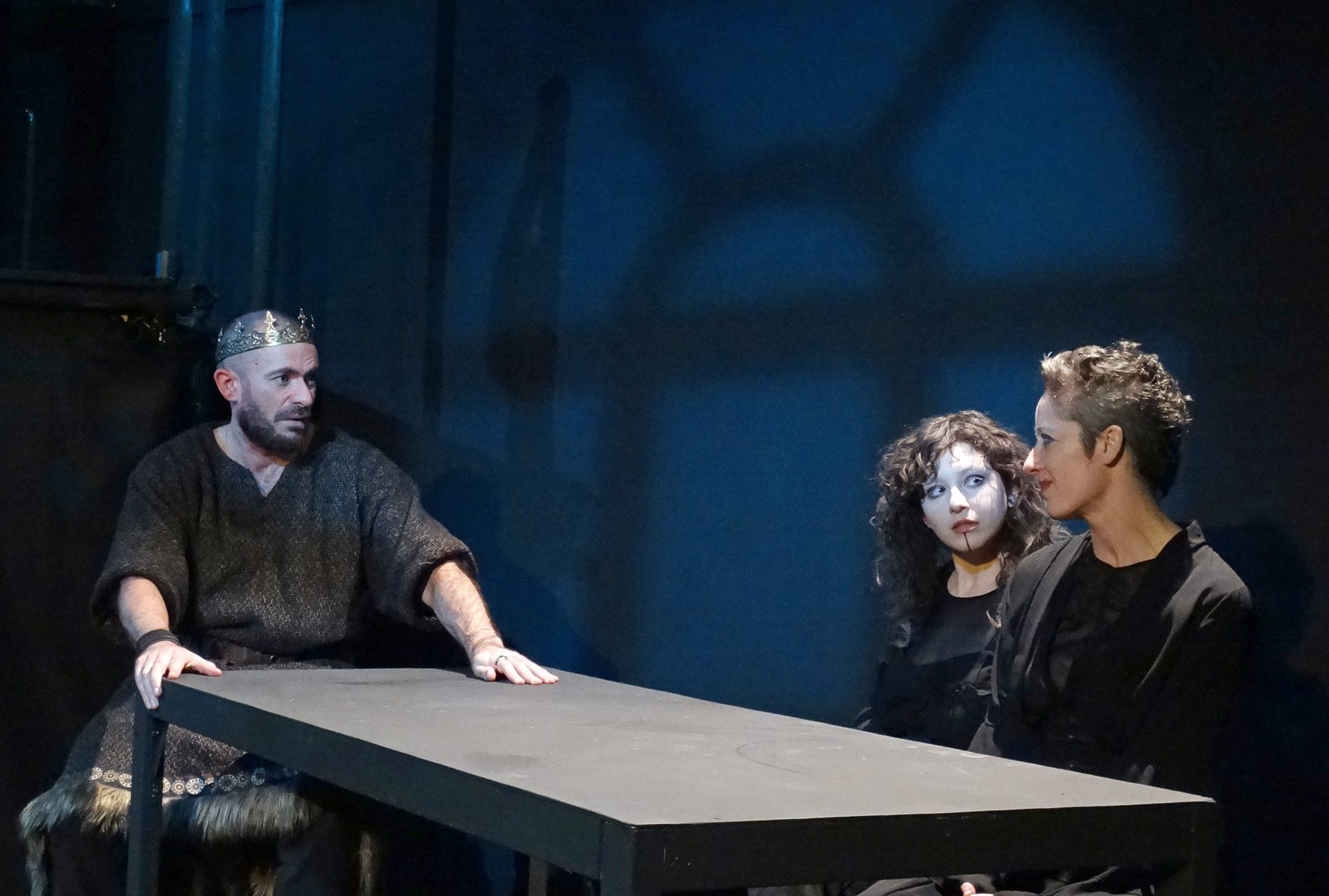
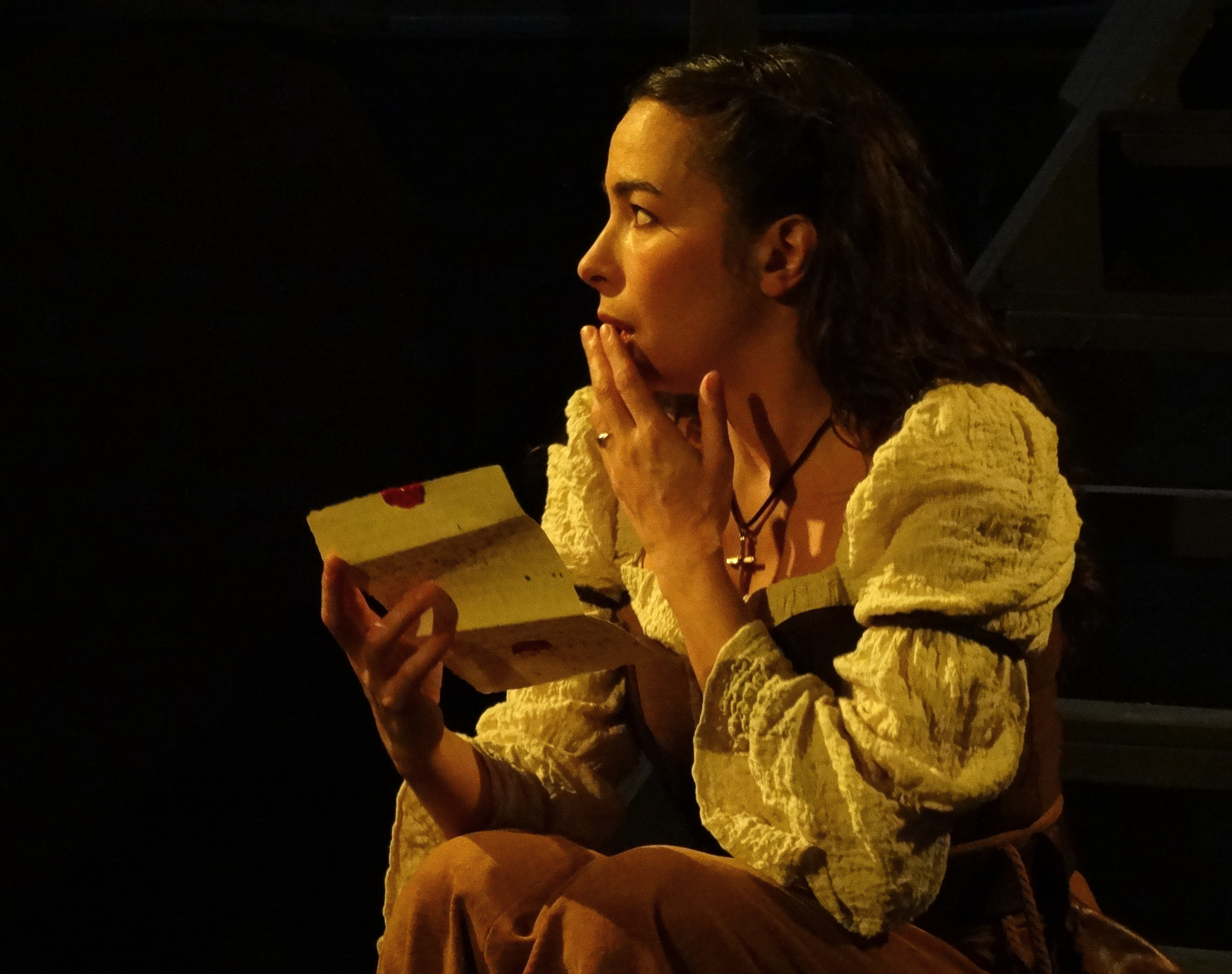

I was able to keep the shadows much darker than usual – a real example of ‘less is more’ …

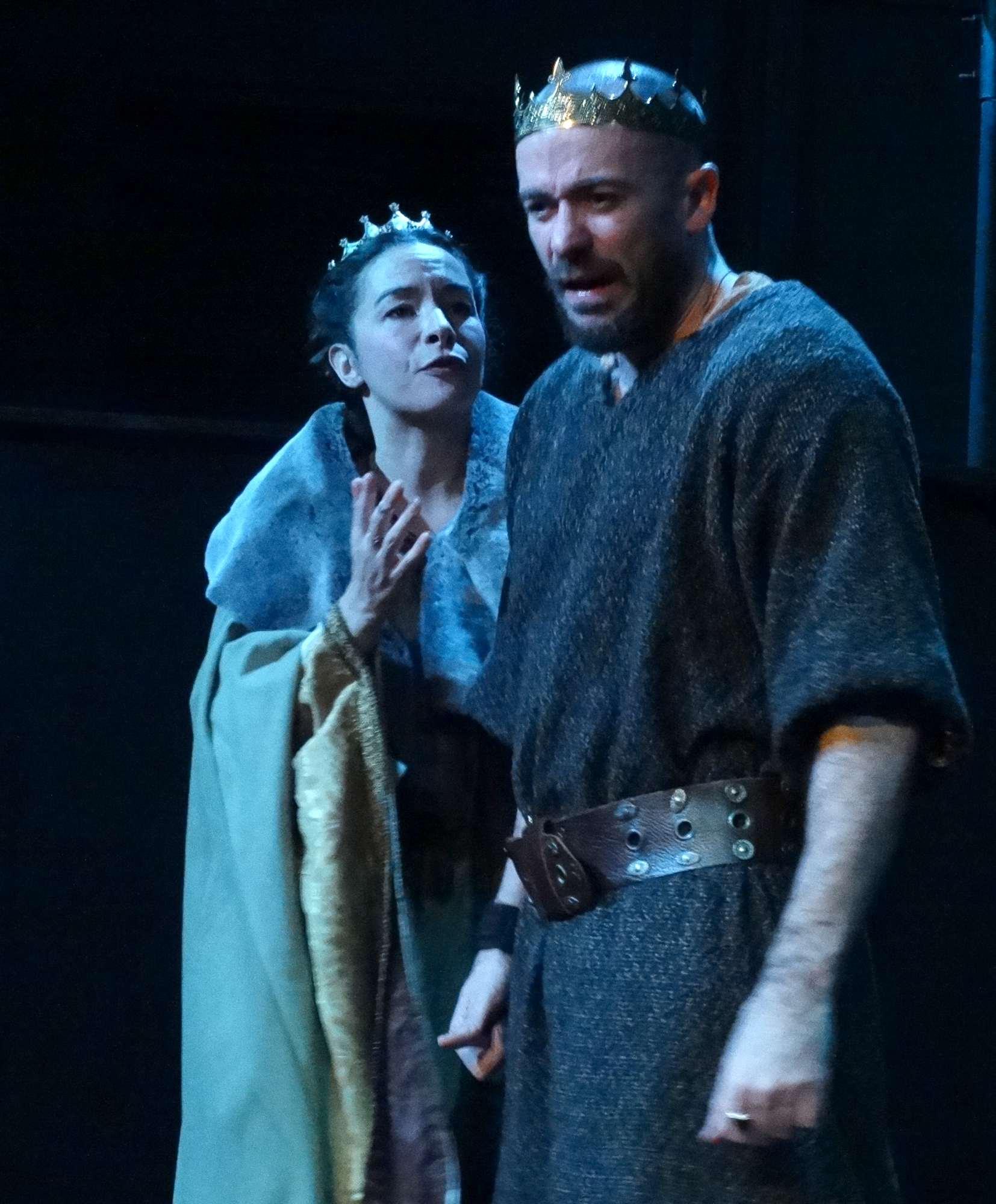
The final result allowed the Director to evoke both delight and anguish from the characters.
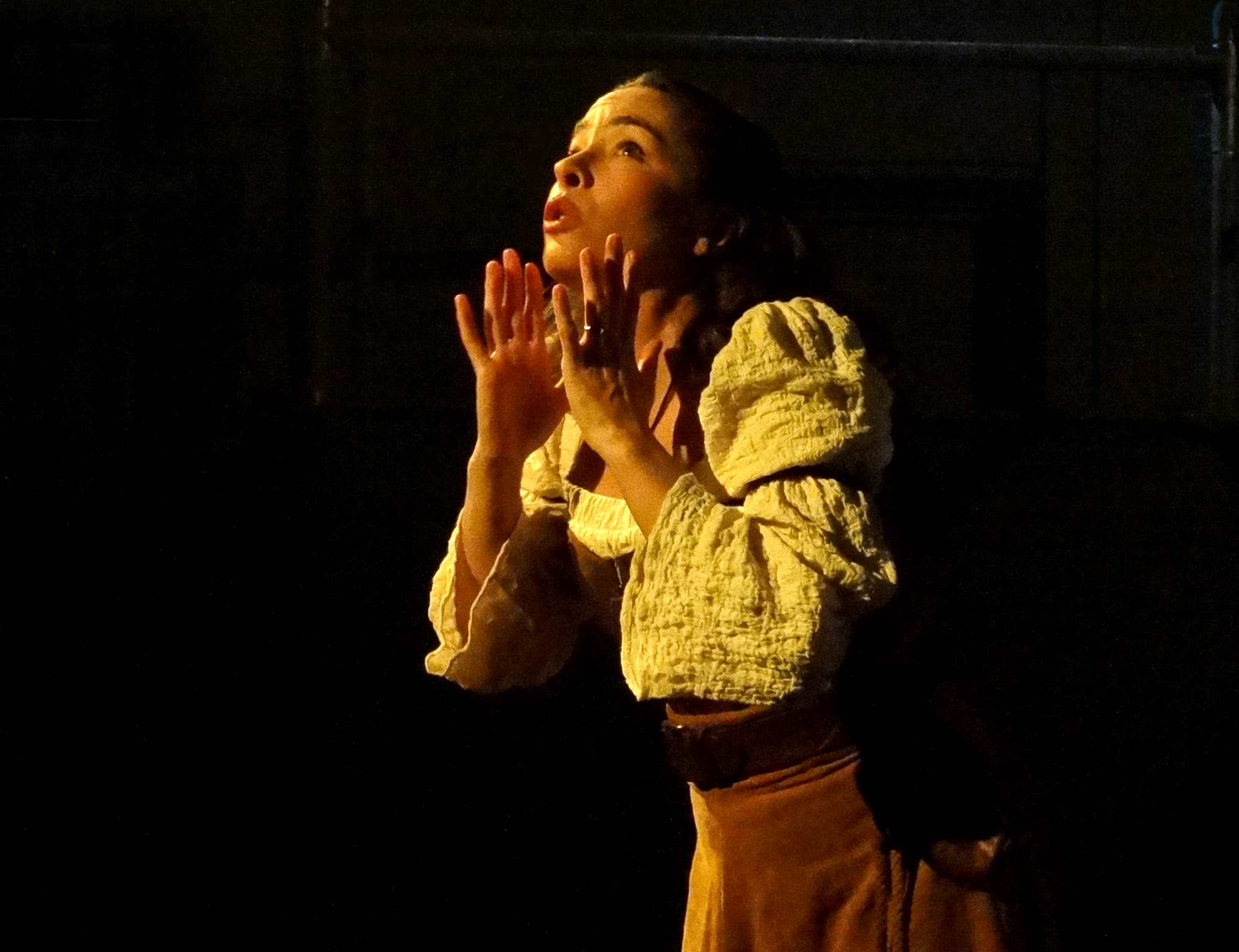

And the moody lighting allowed for some great portraits.
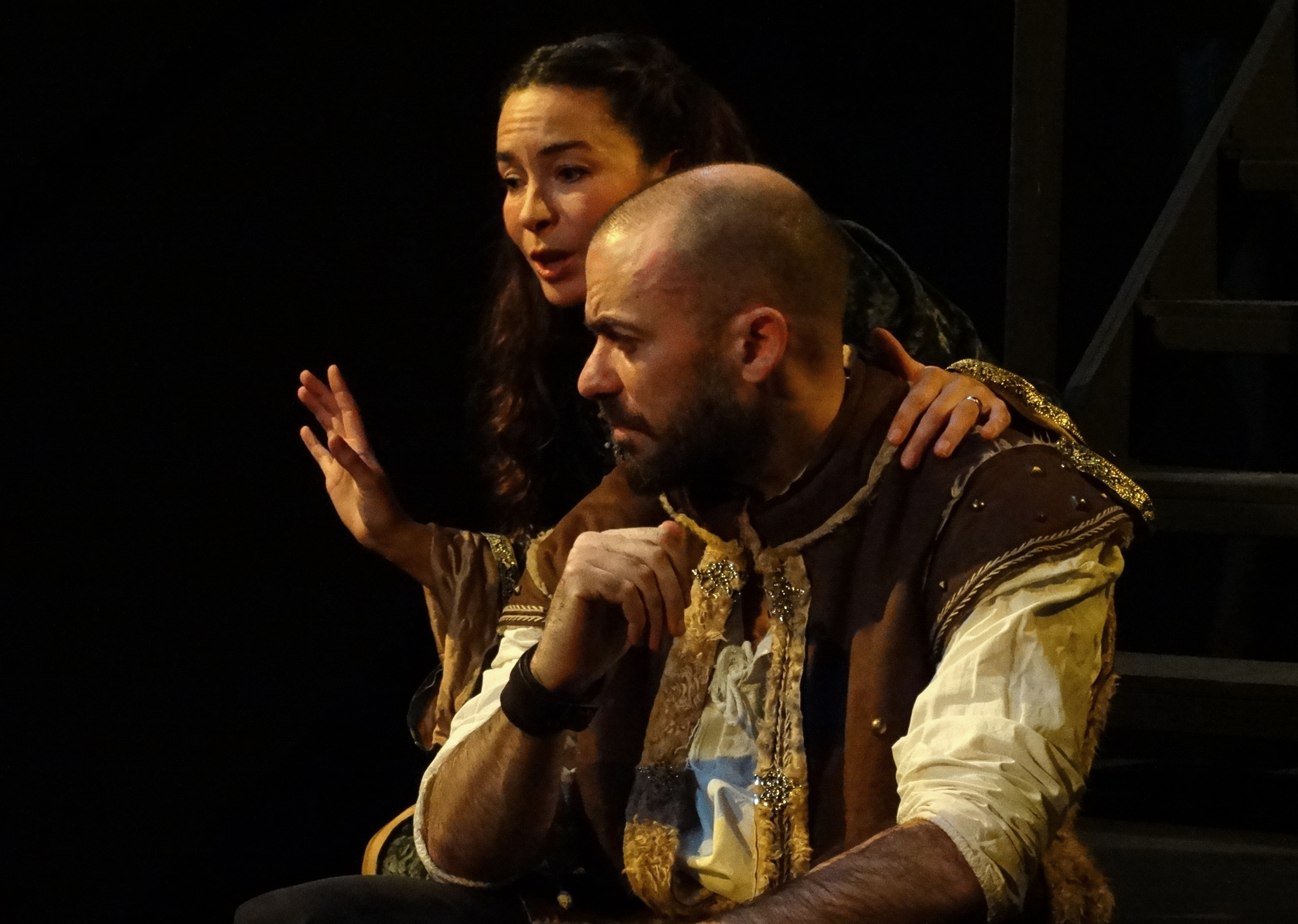
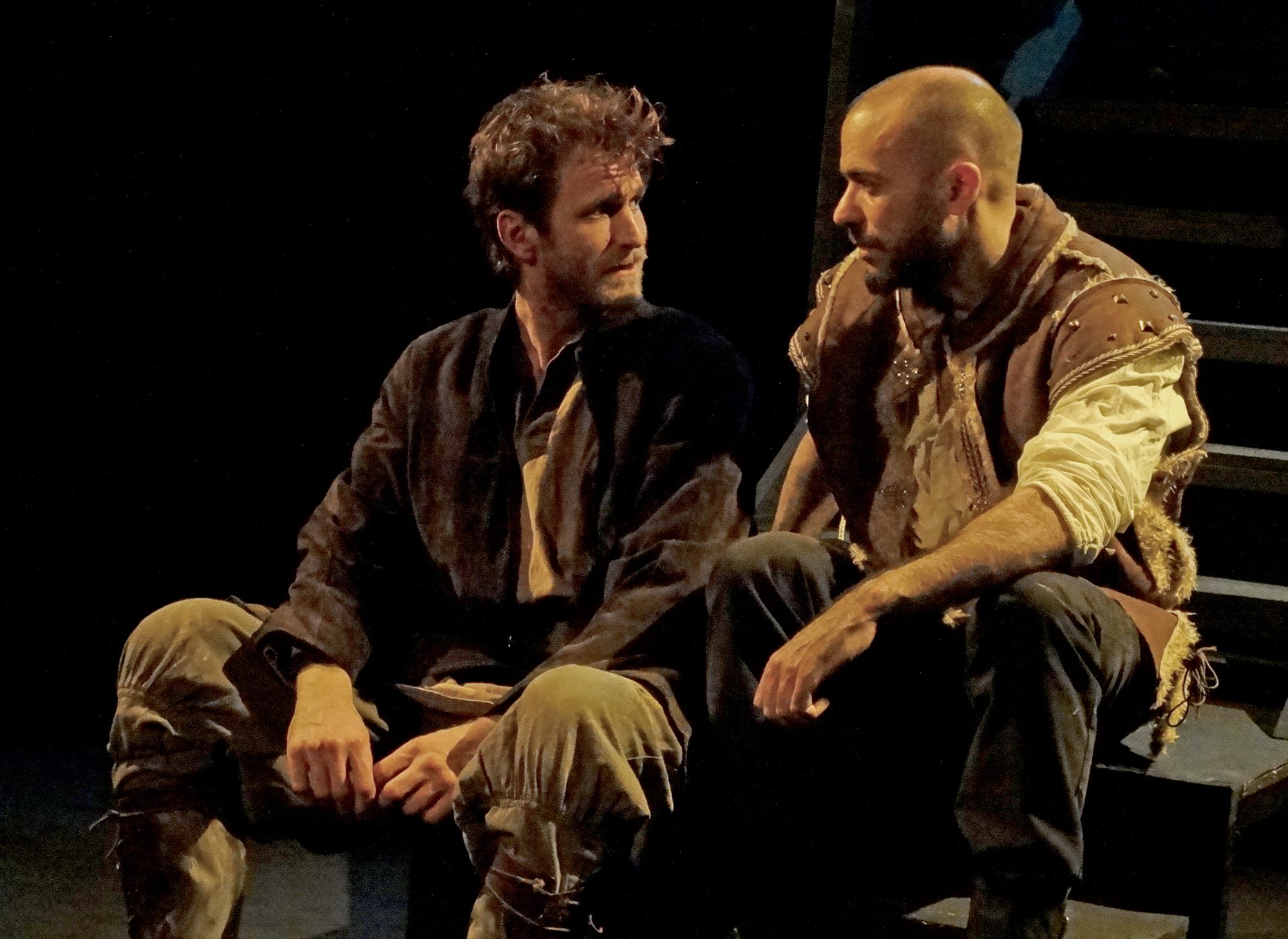
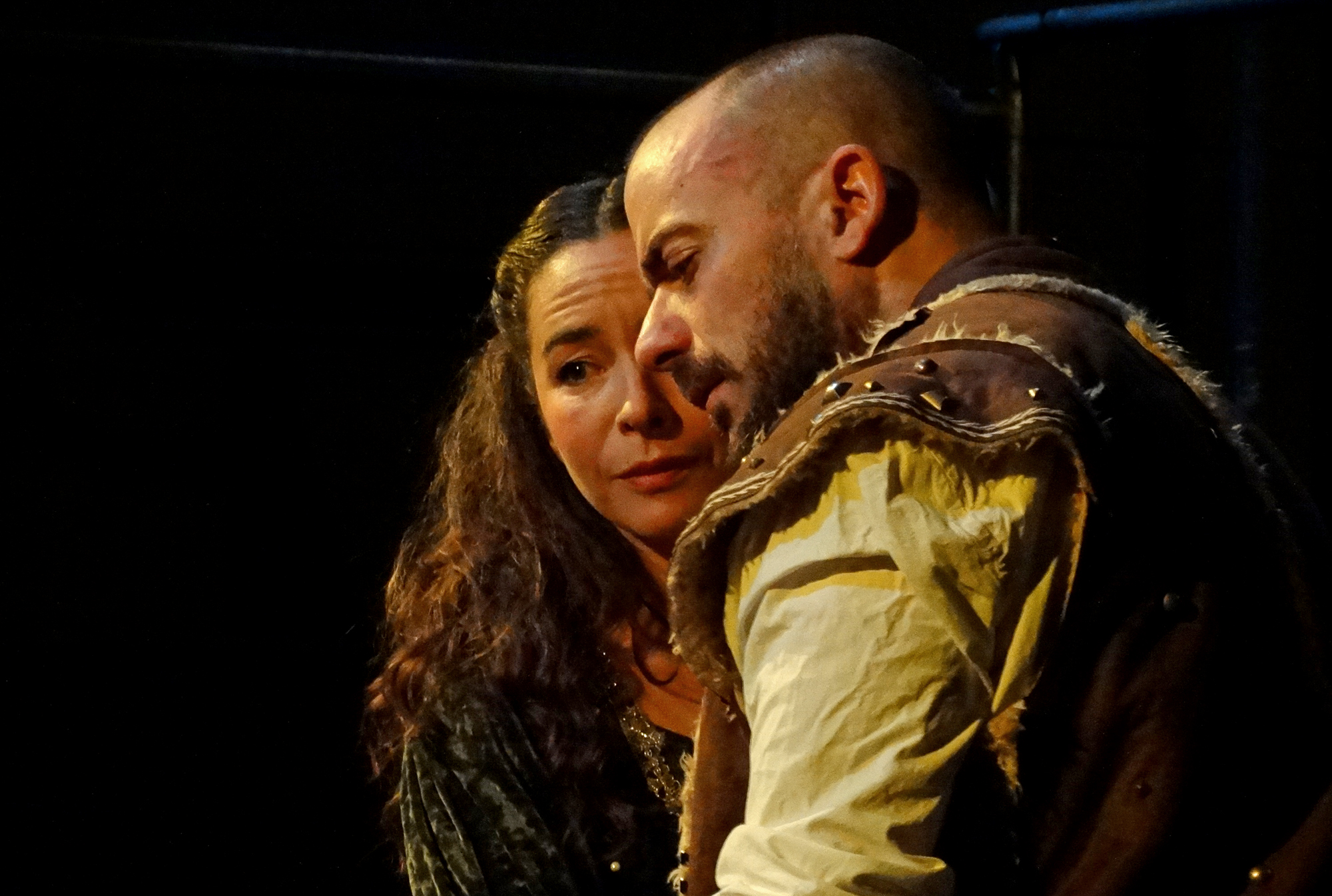


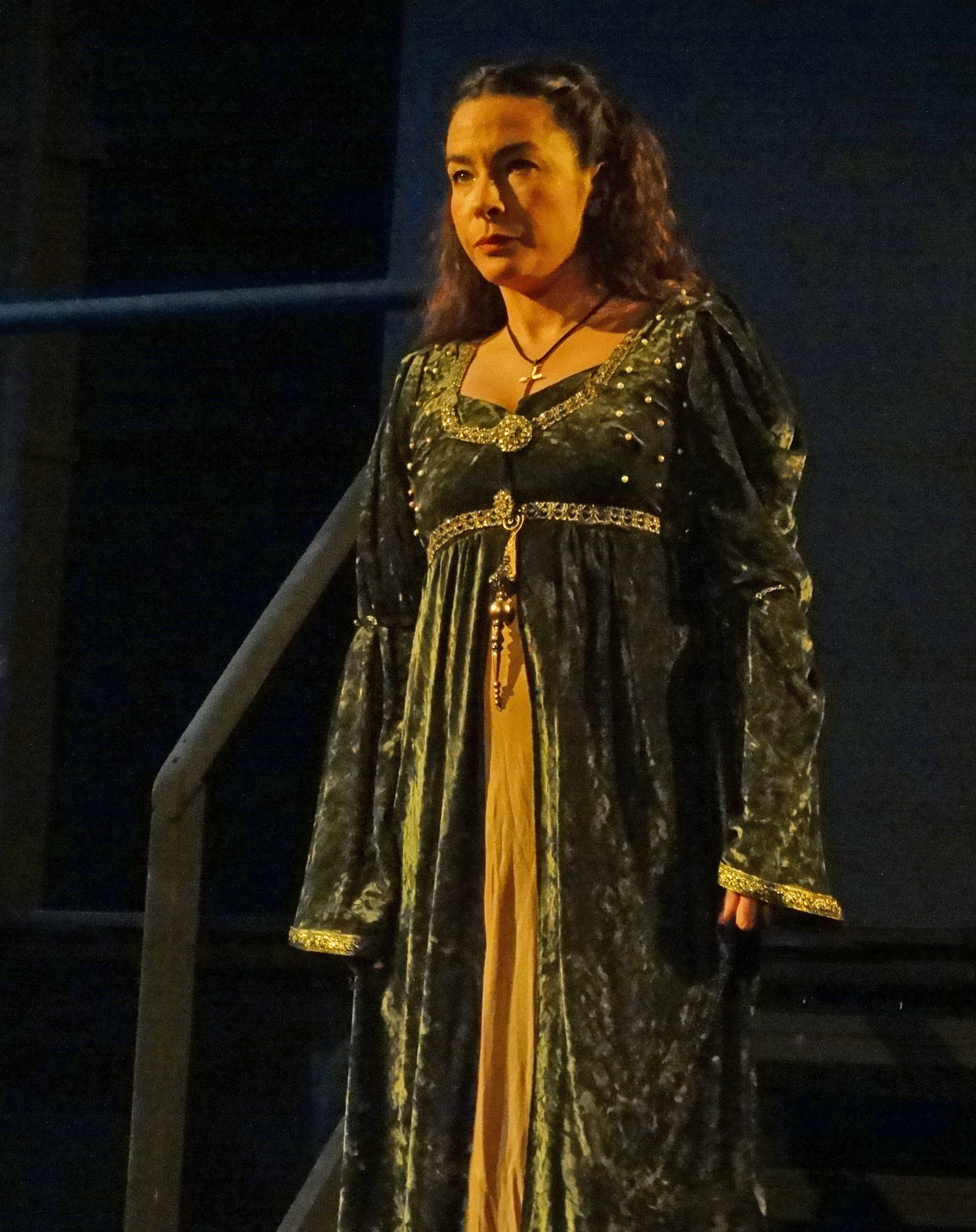
Steven O’Shea’s production ended with the death of Macbeth’s wife. All the rest of the play was cut, leaving essentially a story of love, fuelling ambition – fuelling murder.

But of course, it was instigated by the witches …
*
 seeing stages