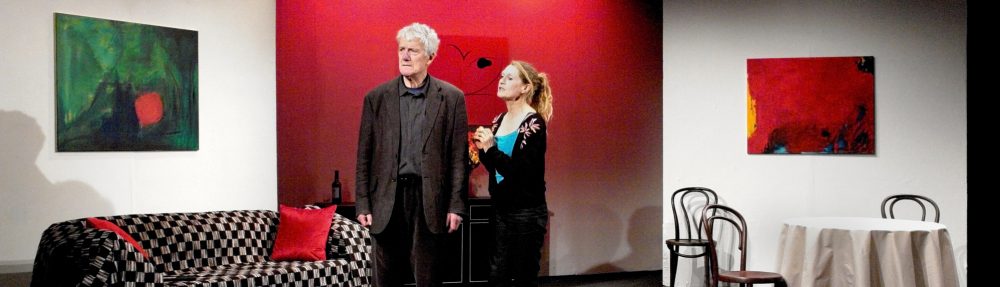
Listed in order, just scroll down to find them - Anna Karenina / Rules For Living / Salome / Constellations / Picnic at Hanging Rock / An Experiment With An Air Pump / Les Liaisons Dangereuses / Taking Care Of Baby
Anna Karenina

Snow falling in this one – it’s a Russian winter in St. Petersburg, and Anna Karenina is in the arms of her lover, Count Vronsky.

Indoors, out of the snow, there were sumptuous ballroom scenes. ‘Anna Karenina’ was staged at The Barn Theatre in Southwick, and I was able to use their extensive range of lighting equipment – and the help of their brilliant technical team – to bring Tolstoy’s classic to life.
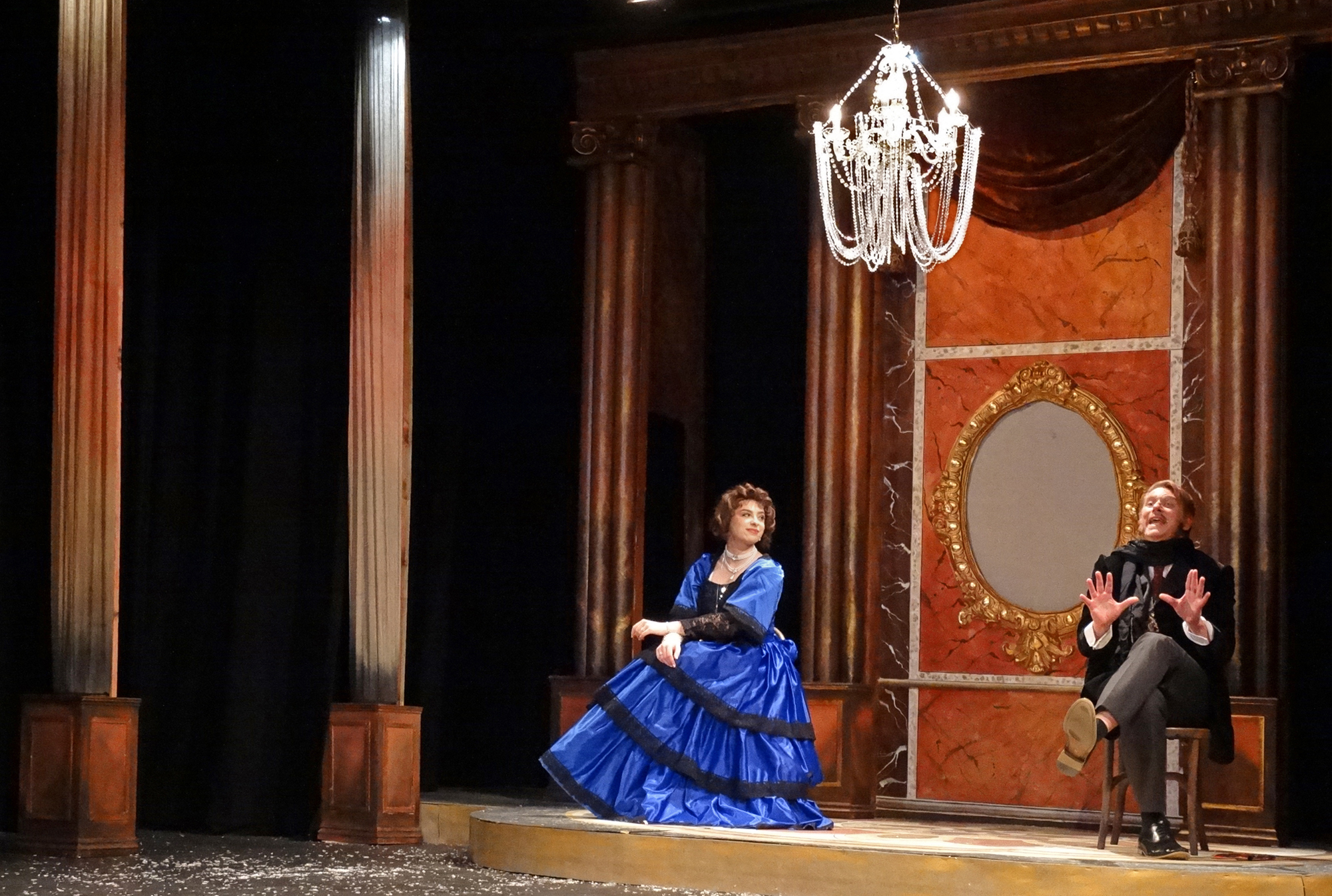
Anna’s a married woman, so Russian aristocratic society is scandalised by their affair. The lovers escape abroad for a while, staying in an Italian Palazzo. Designer Judith Berrill created an airy set on the Barn’s deep stage, including these columns, and the whole space could be lit to produce a wide range of locations.
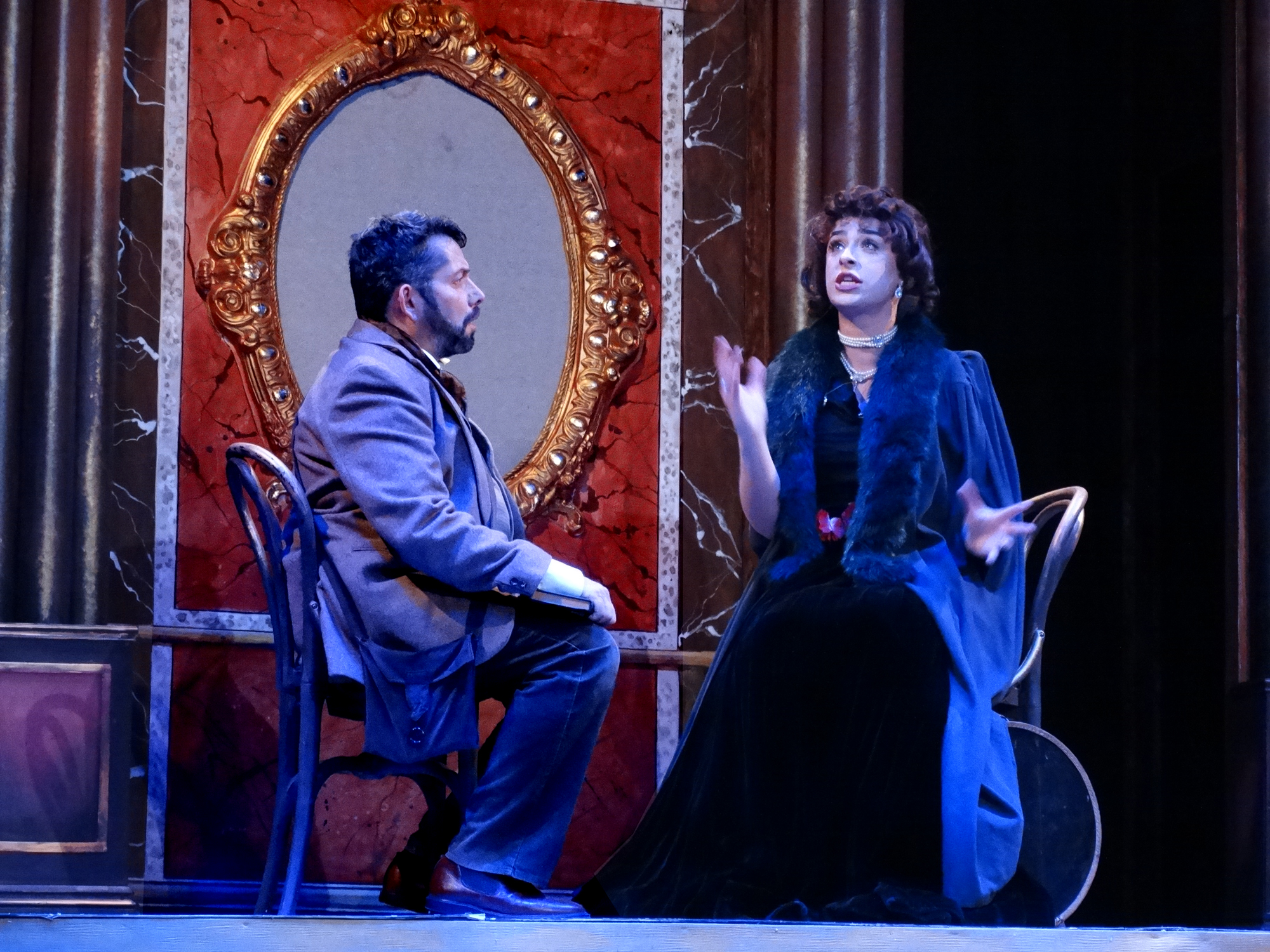
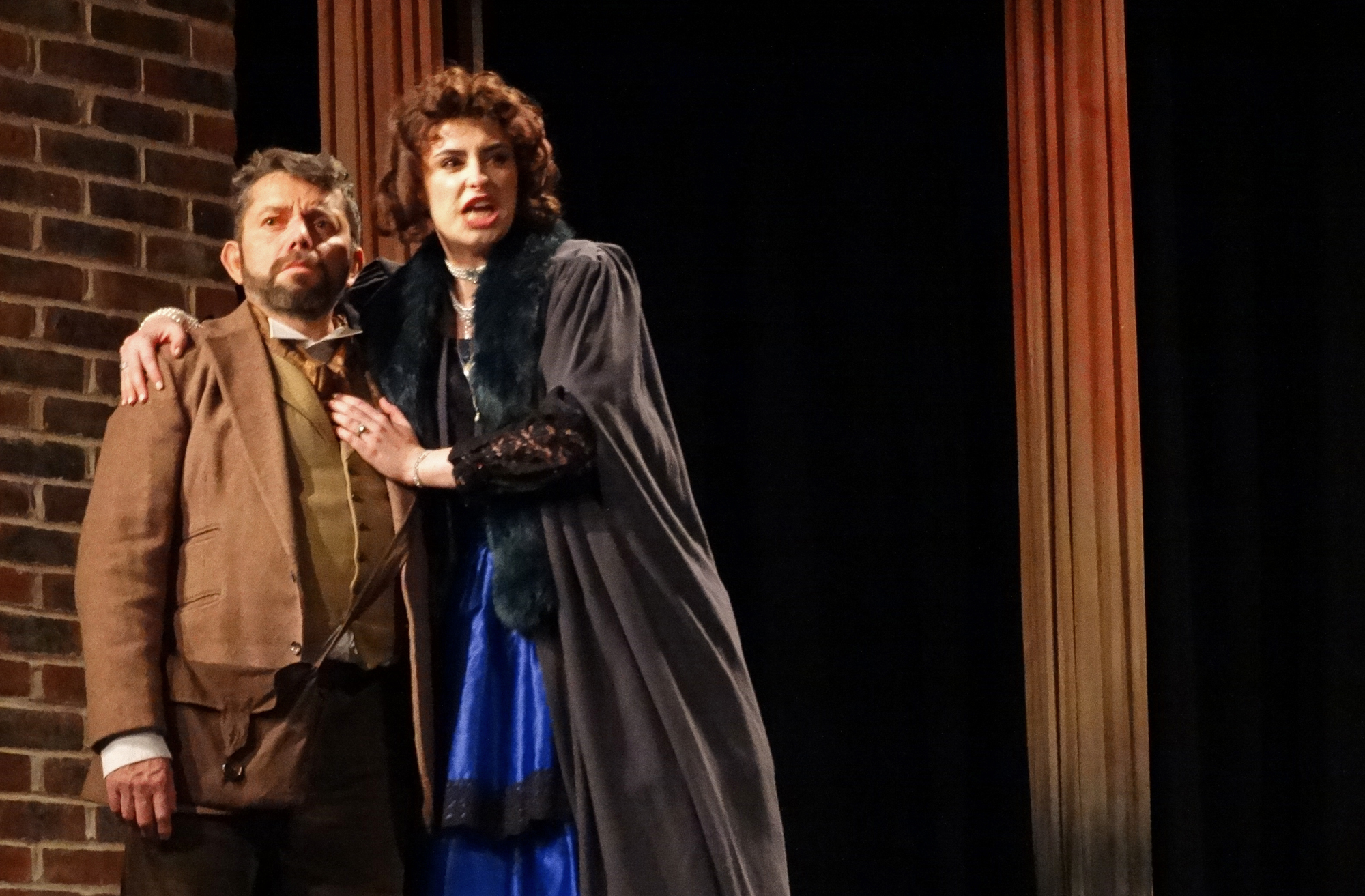
No clunky scene changes – just a subtle rearrangement of chairs, and the rest done with lighting and sound. The play’s essentially about two people, Anna and Constantine Levin, a landowner, and their respective relationships. Here Anna is on a train with Levin.
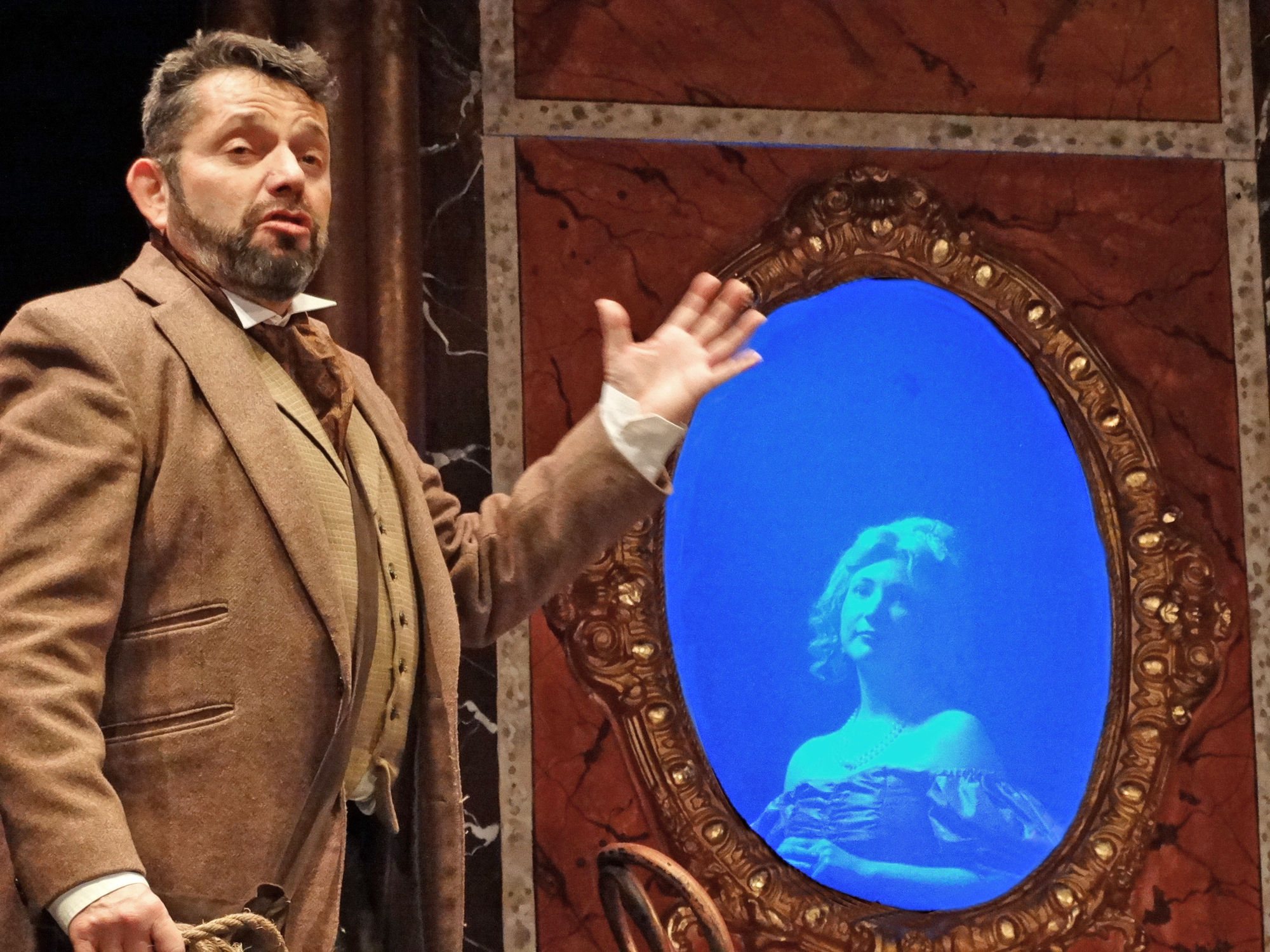
Levin is the owner of six thousand acres of farmland, and he’s concerned about the conditions of the Russian peasants; but he yearns after Kitty, who in turn is in thrall to Vronsky. (These aristocrats, Eh?) Judith Berrill designed a gauze-covered aperture – from the front it looked like a mirror, but with actors lit from behind it represented the characters’ dreams and fantasies.

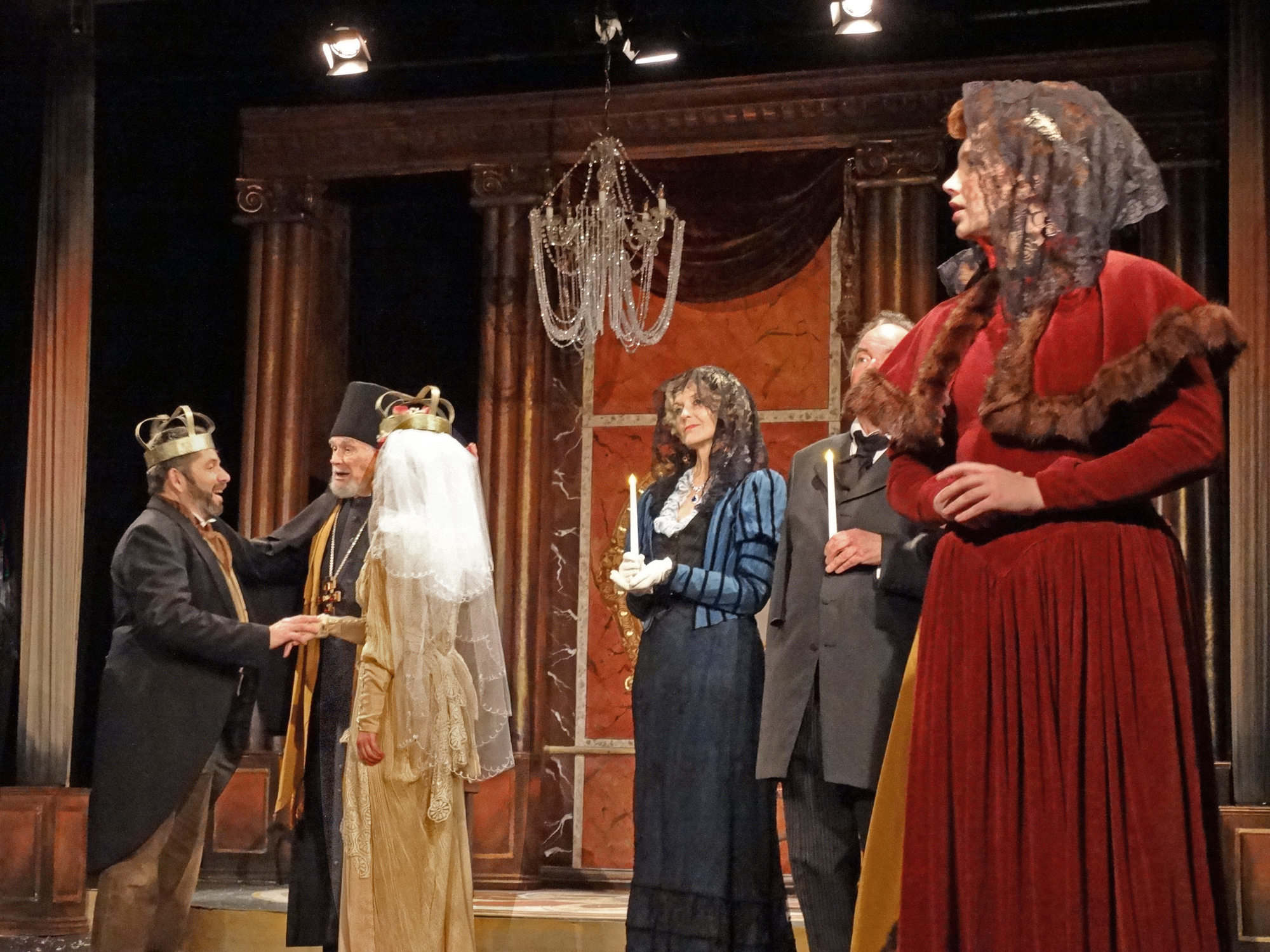
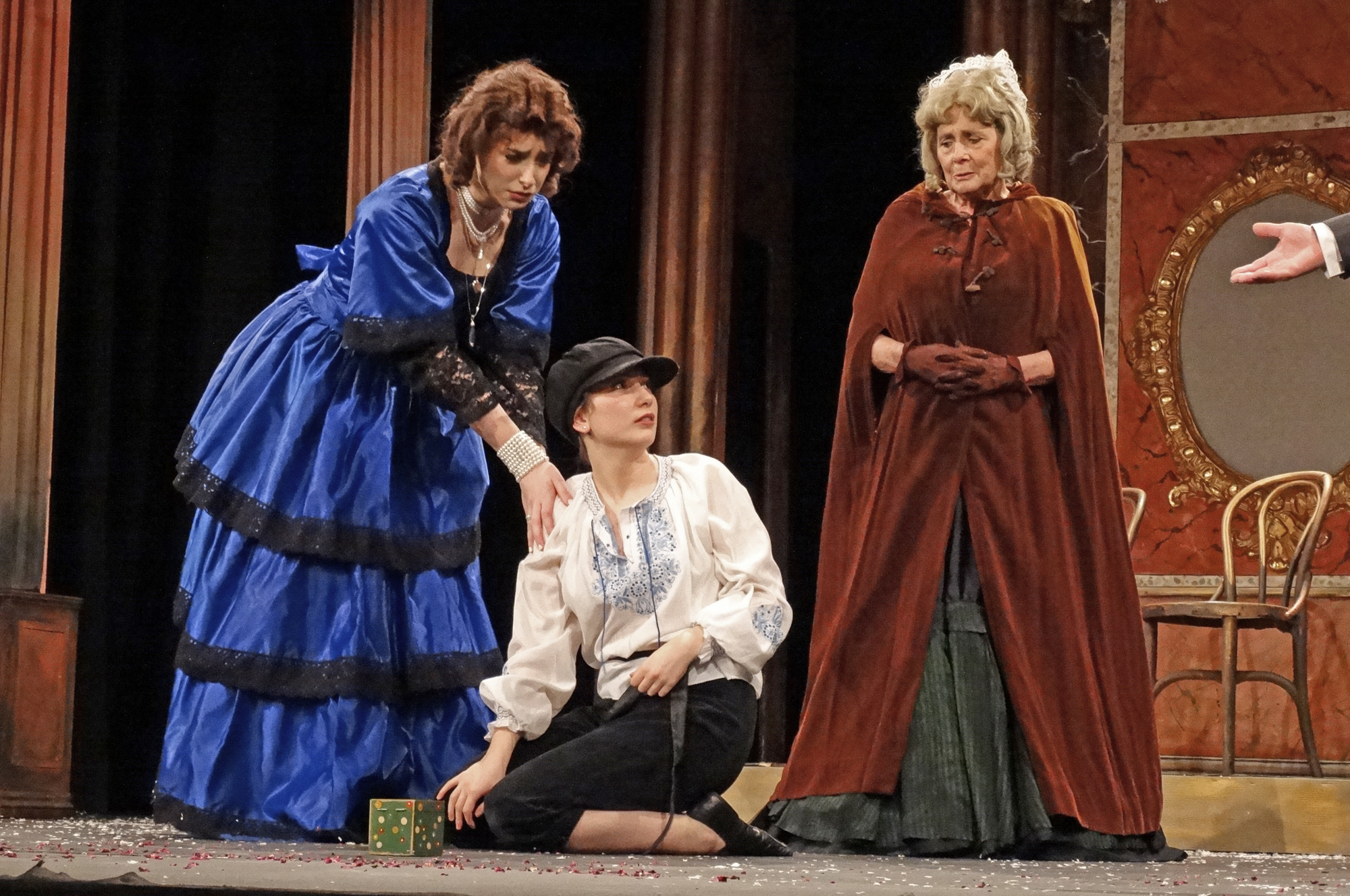
Kitty and Levin eventually marry. The wedding scene stretched right across the stage. Esther Draycott, playing Kitty, had to carry out a number of quick costume changes to become Anna’s son Seriozha. Her husband, Karenin, refuses to let his son live with Anna and her lover.

Tolstoy’s book is more than a simple love story – it’s about all the different levels of Russian society. Diane Robinson, the Director, vividly portrayed the varied situations and locations. Here they are a race meeting where Vronsky is riding.
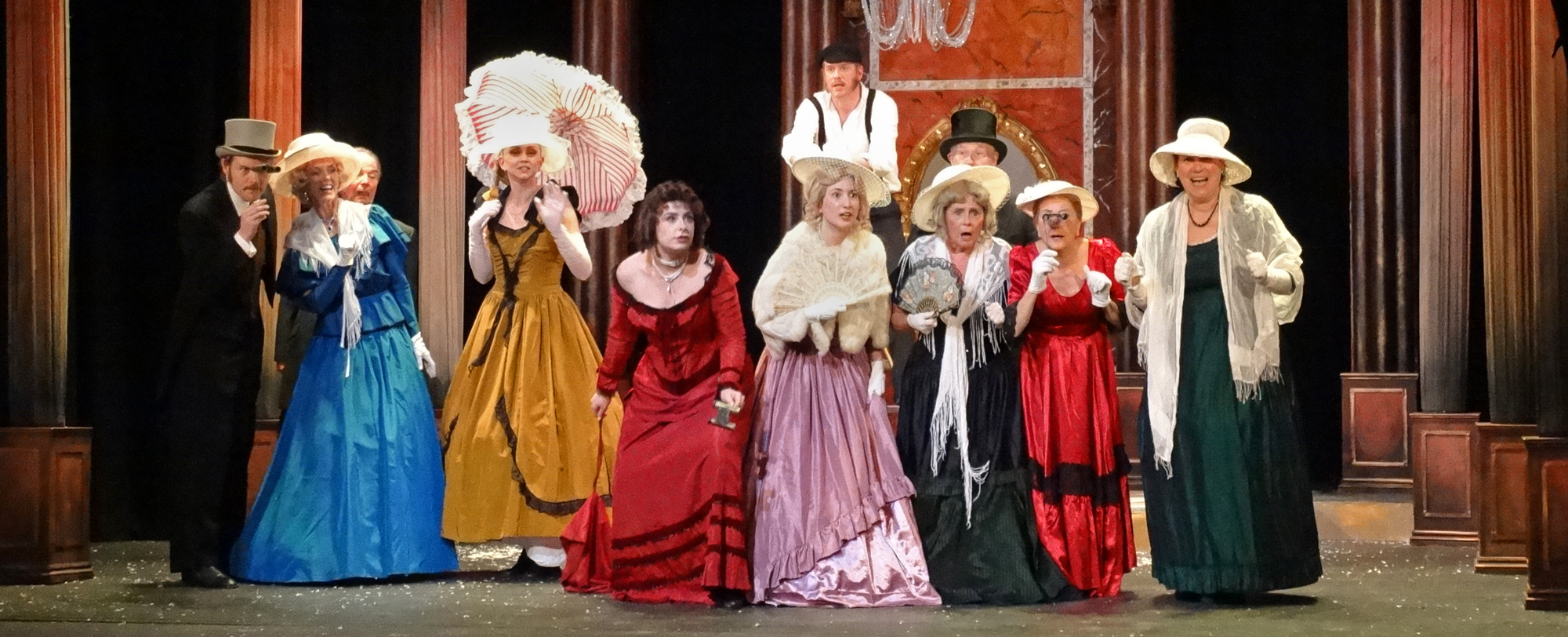
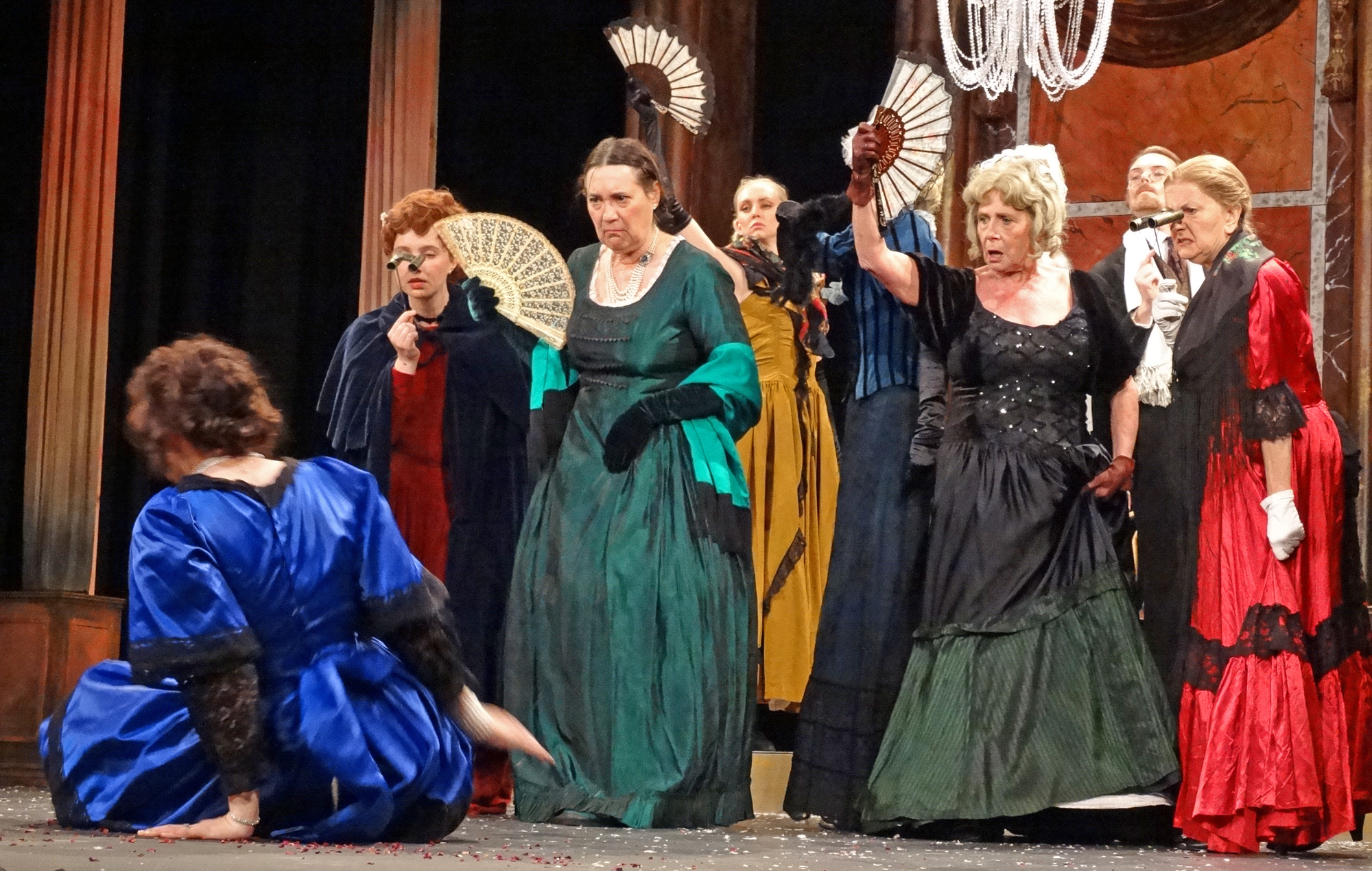
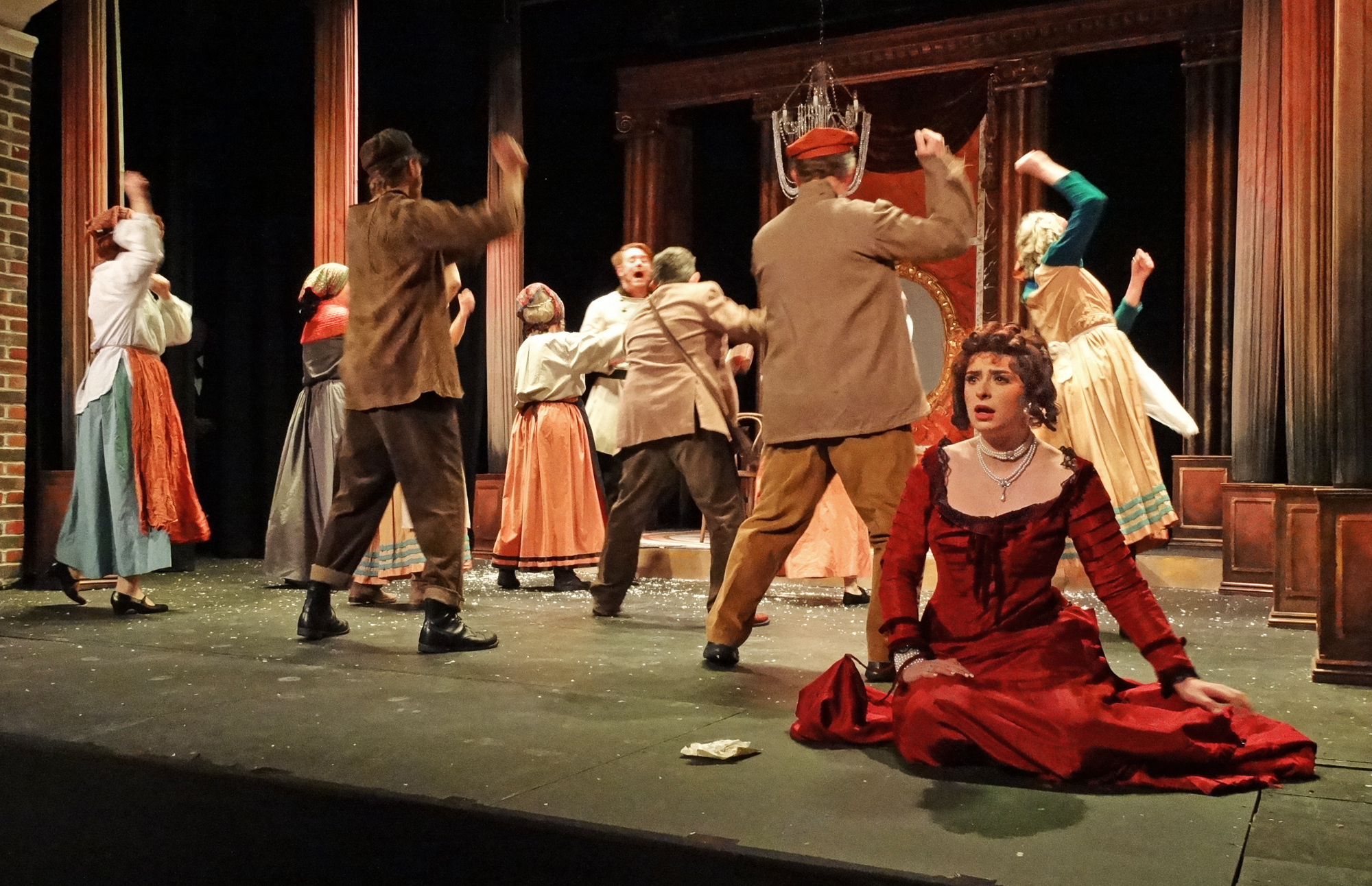
And here at the Opera. Anna insists that she can attend, along with Vronsky – but as a woman who’s still married she cannot appear in ‘society’ with her lover, and the others turn on her.
The strain of her marital situation, coupled with the daughter she conceives with her lover, becomes too much for Anna and she descends into illness and morphine addiction. We created a disturbing nightmare scene.

Anna and Levin don’t actually meet until late in the play. He spends his time away from St Petersburg, on his estate, with the serfs reaping the barley in his fields. His brother is dying, and we shrank down the lighting area to isolate his anguish as Death closed in …
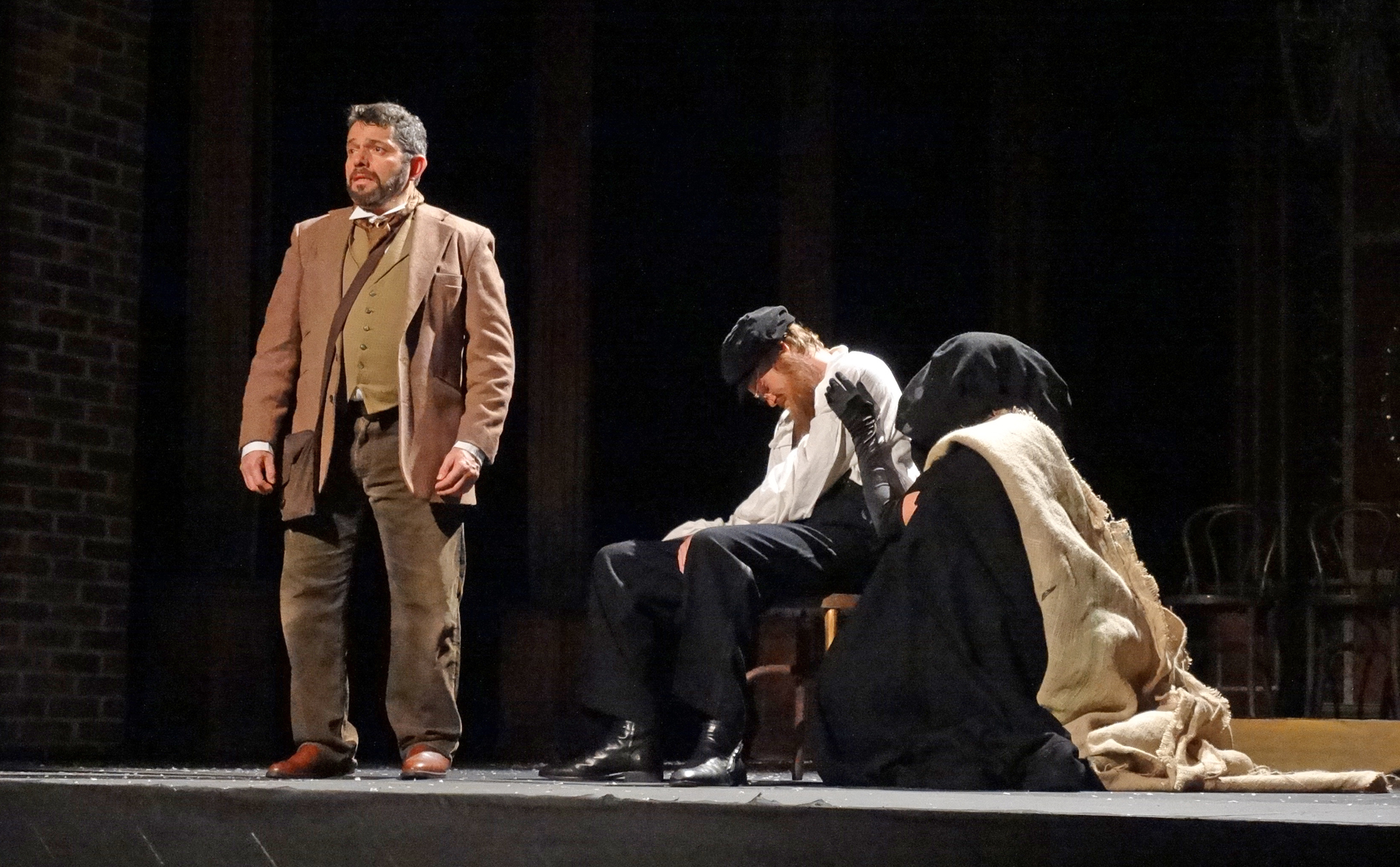
It ends, as all great tragedy must, with the death of Anna – mown down by a train as she crosses the railway tracks in her drug-addled state.


*
*
Rules For Living
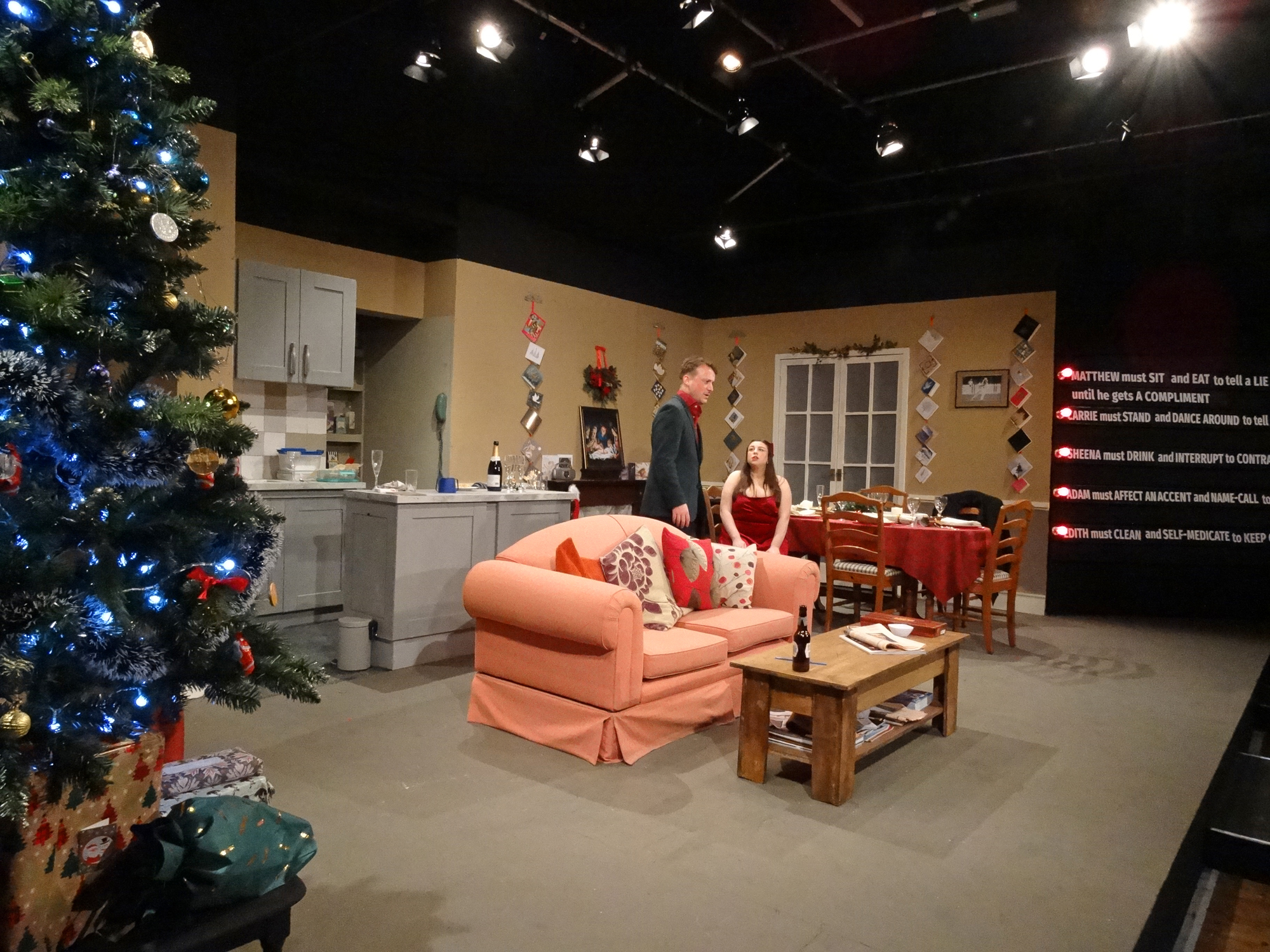
NVT’s December production was also staged in our Upstairs Theatre, but it couldn’t have been more different to ‘Salome’. It’s set in a contemporary living room, and it’s about a traditional family Christmas gathering.
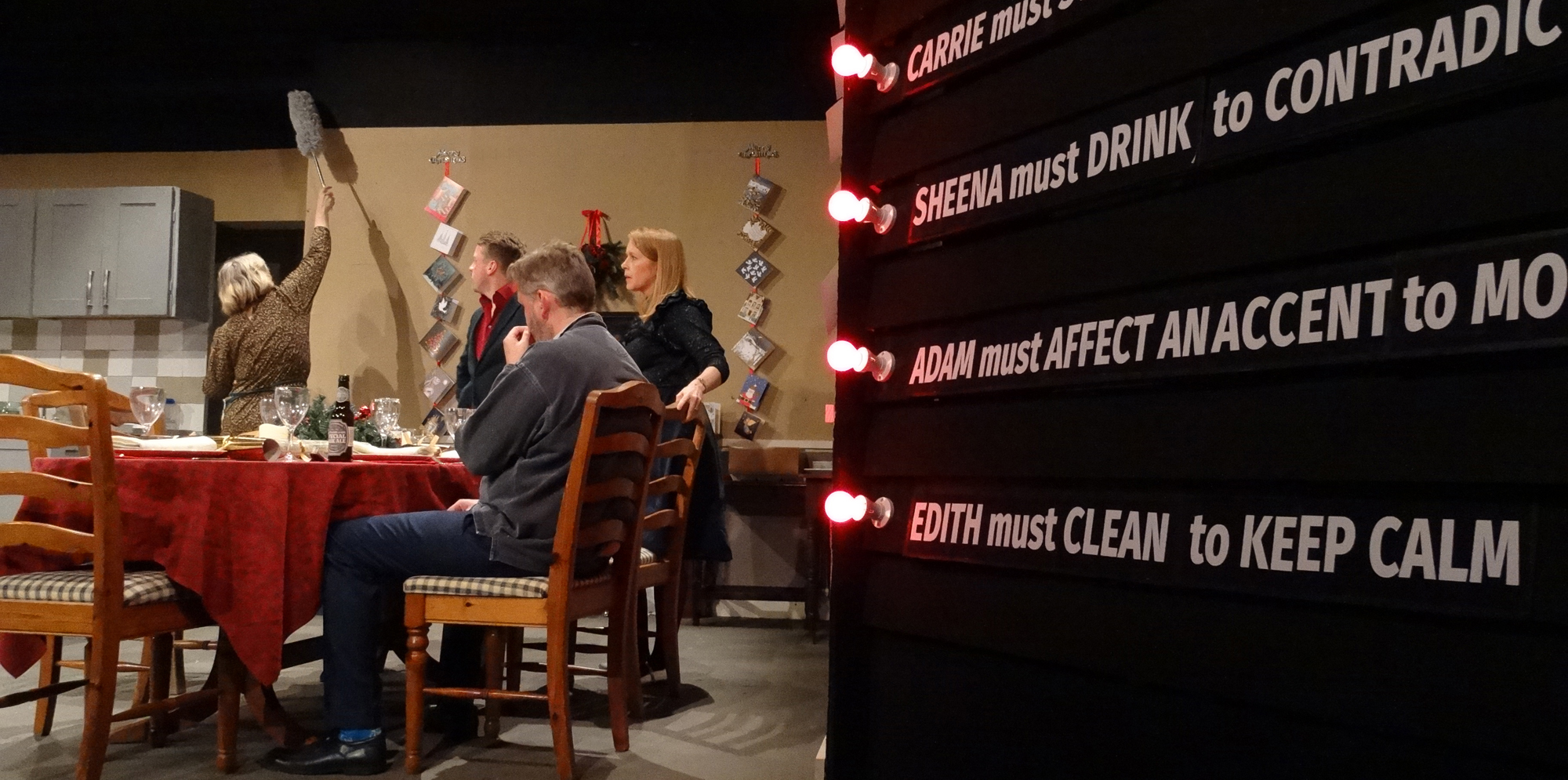
This family, however, is fairly dysfunctional – each member has their own personal rule that governs their behaviour. Edith (that’s her with the duster) is the matriarch, and as the board tells us, she cleans obsessively as a means of relieving stress.

That’s Matthew, one of her sons, above; if he’s sitting down then he’s probably lying about something. Lights come on when each character’s rule is operating.

Matthew has a lot to lie about – he’s there with his girlfriend Carrie (left) but he’s secretly in love with his brother Adam’s wife Sheena (right).
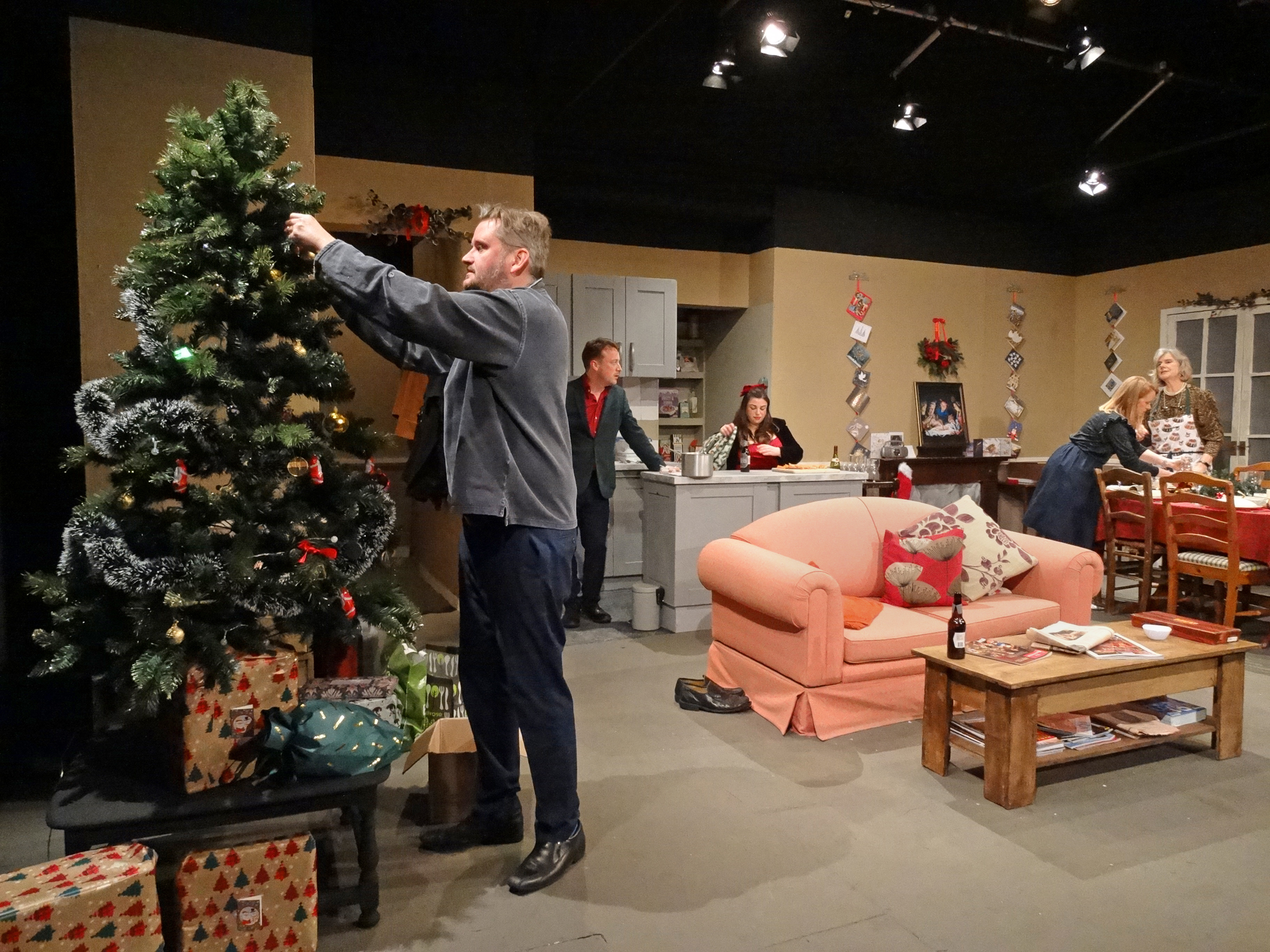
This is Adam decorating their tree. I needed to keep the lighting evenly balanced right across the set. Lighting down a corridor, too. Michael Foulkard’s set design was fairly complex. He’s a brilliant artist: just look at the (painted) kitchen tiling.
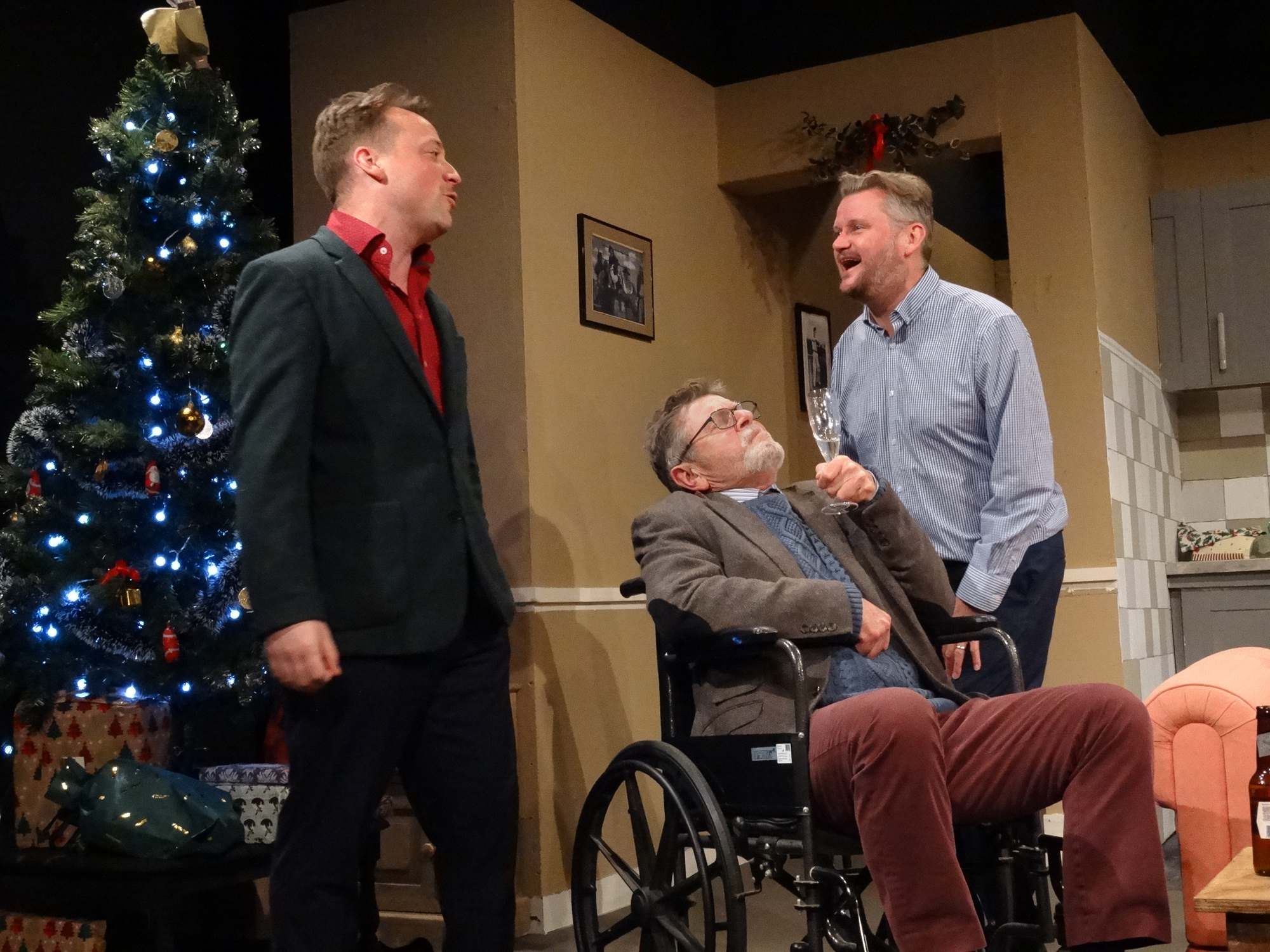
The boys’ father, Francis is in this one. He’s just had a stroke, so he’s in a wheelchair – which Foulkard’s set had to allow to be moved in from backstage as part of the action.

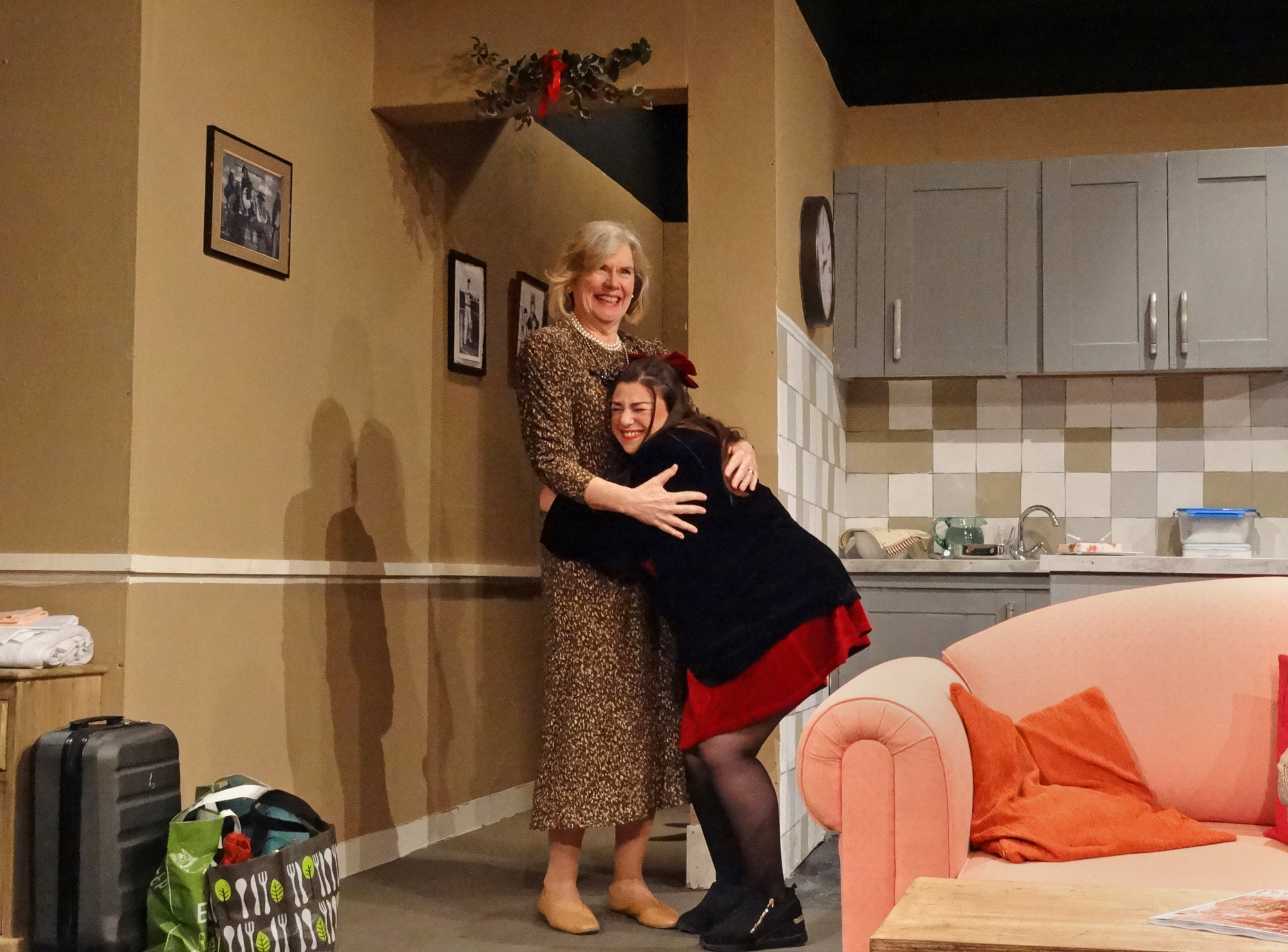
Sheena’s good at dealing with her father-in-law, but it takes its toll – a LOT of wine helps …

Before Christmas lunch, the family play a particularly hard-to-follow card game. Everyone’s nightmare – and the stress ignites emotional tensions that can’t be kept hidden.


They are discussing Sheena’s daughter’s problems, but Edith has focussed all her attention on a (perfectly clean) fork. Director Martin Gordon did a great job of orchestrating the rivalry between Francis’s sons, and finally the awful behaviour of the man himself. It’s no wonder his family turned out as it has.
*
*
Salome

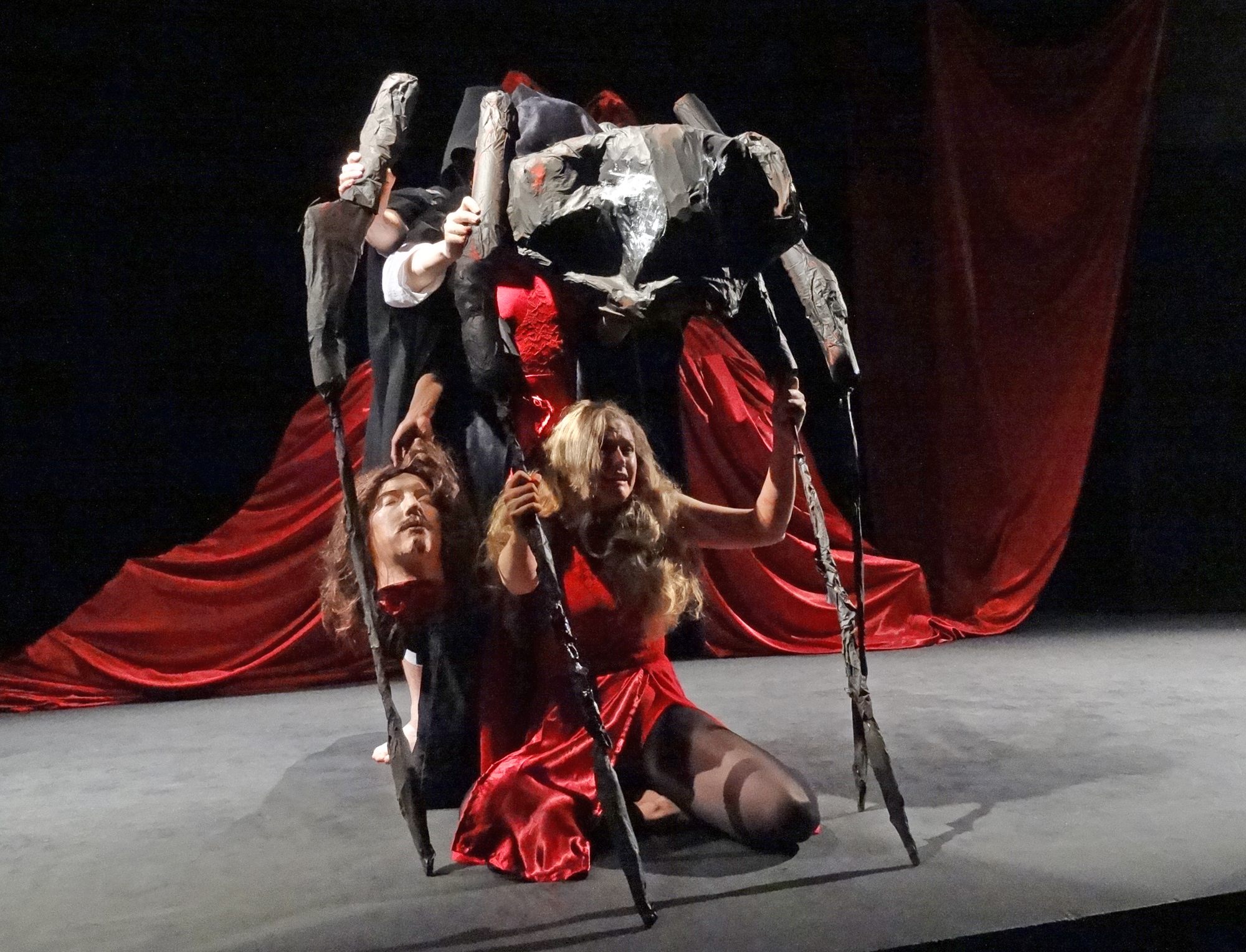
Where to start with ‘Salome’? It’s a BIG production: probably the most ambitious we’ve ever staged at New Venture. As well as the actors themselves, Natasha Higdon’s production featured powerful music and movement pieces. A lot of physical theatre too; like the death-spider above, where the cast operated the creature’s legs as they related the tale of the killing of Herod’s elder brother, and of how the dead king’s wife became Herod’s queen.
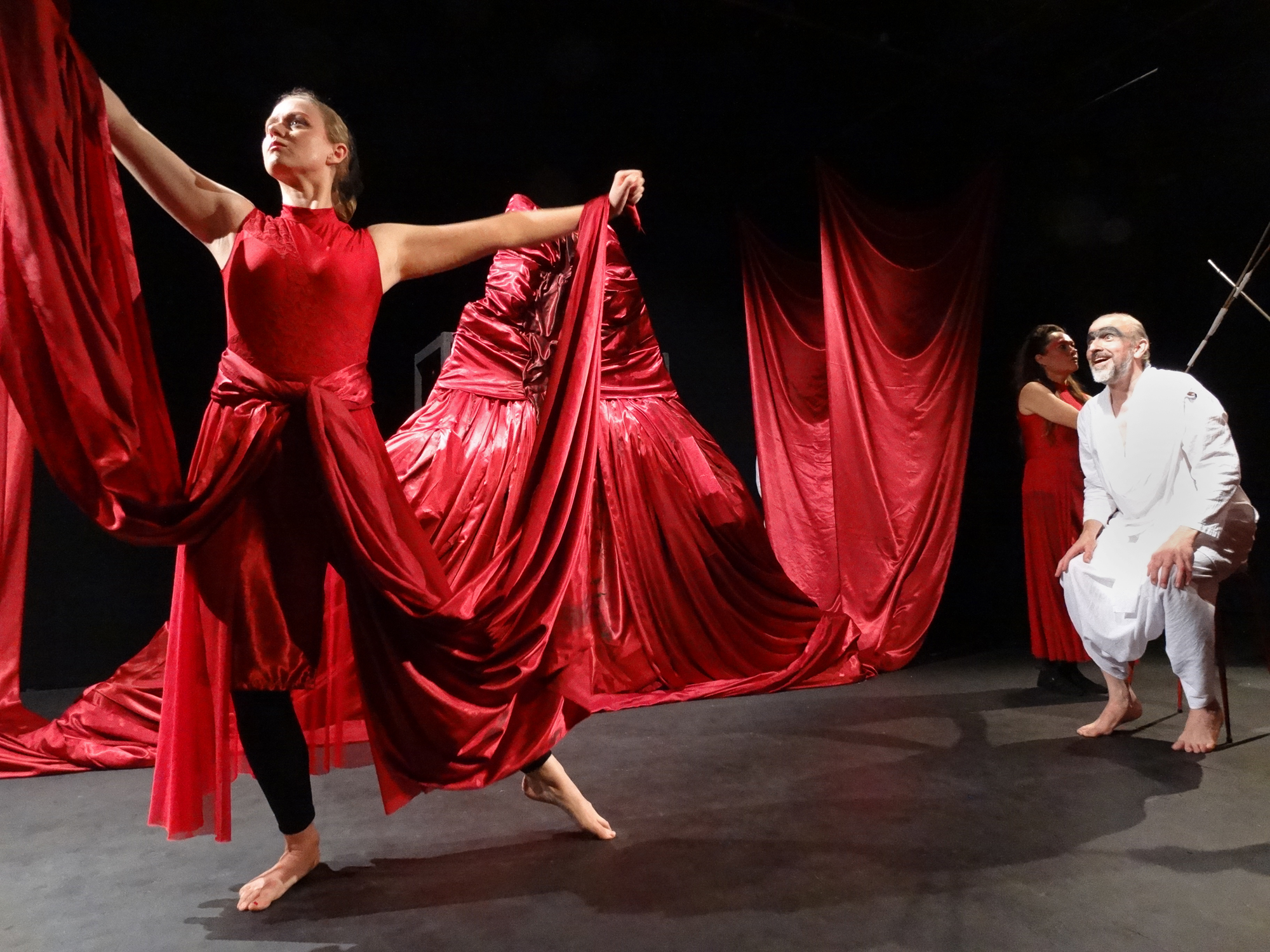
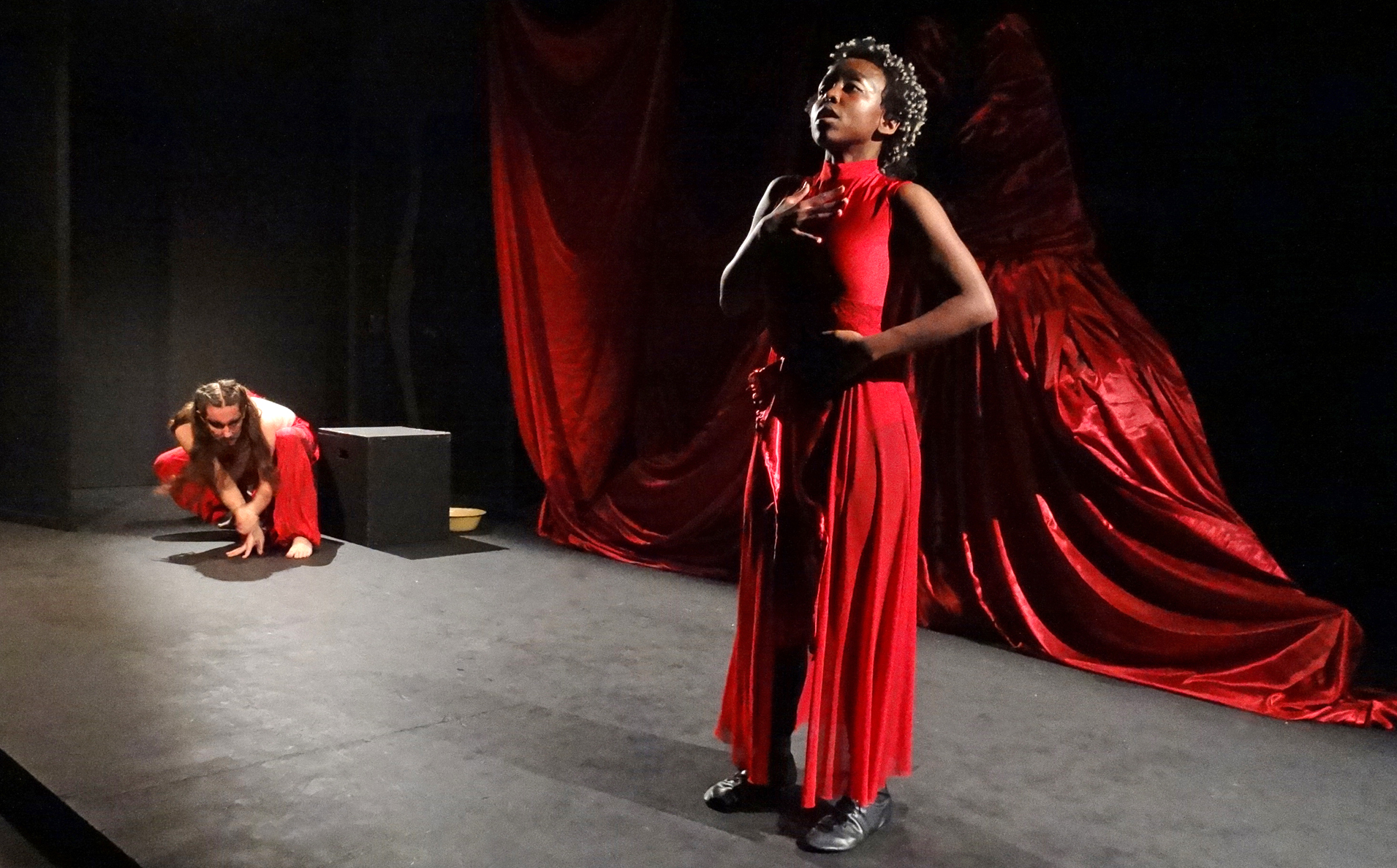
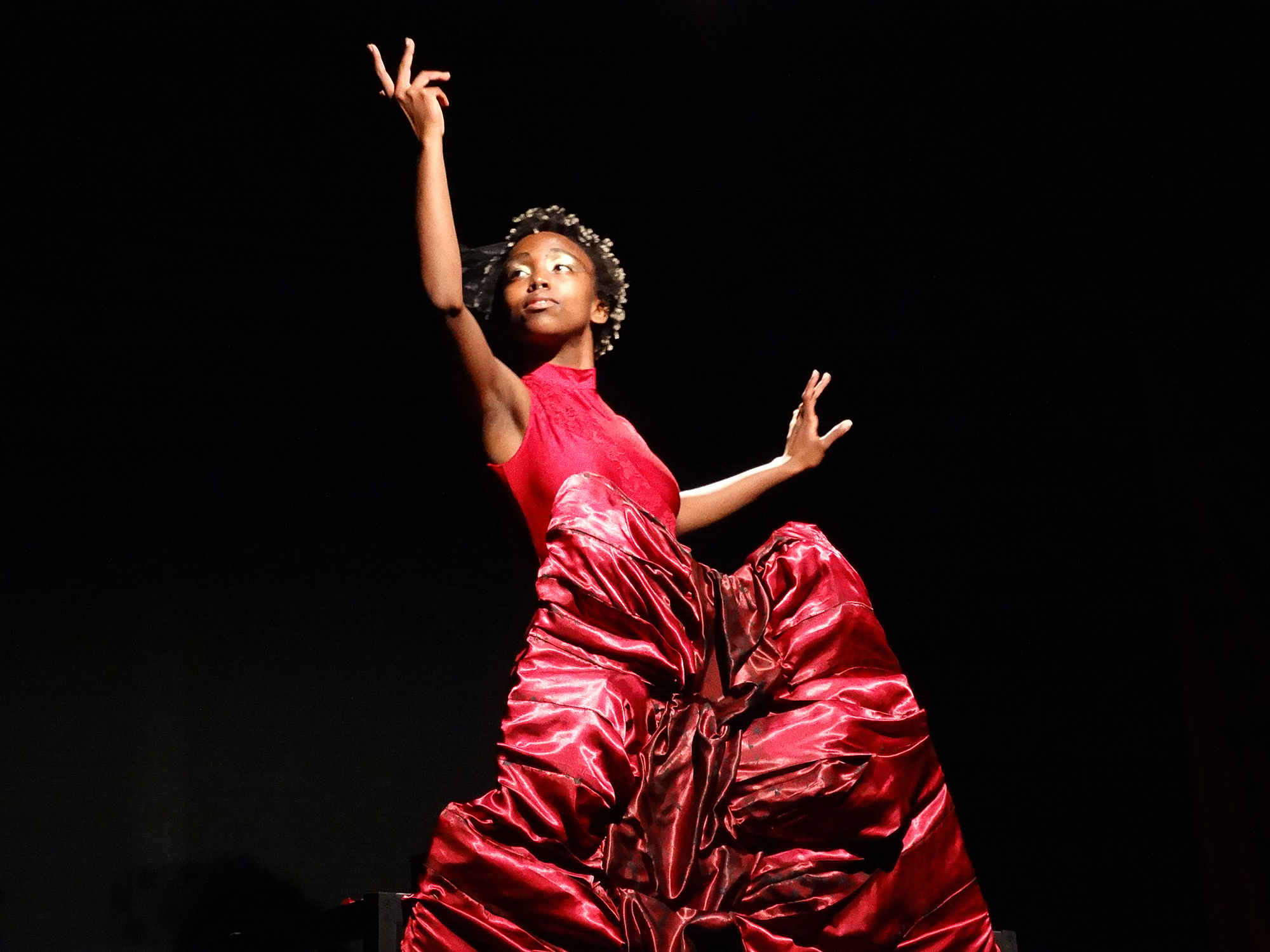
We all know the story of Herod’s obsession with his wife’s daughter Salome, and HER obsession with the prophet John the Baptist (called Jokanaan in Oscar Wilde’s text). The set design called for sumptuous use of silk for the Dance of the Seven Veils.

Two actors played Salome, on alternate nights, as both the Princess herself and one of the palace pages. Two stunning dancers. The central set element became Salome’s dress, then the palace battlements, and also the mountain from which Jokanaan shouted his prophesies.
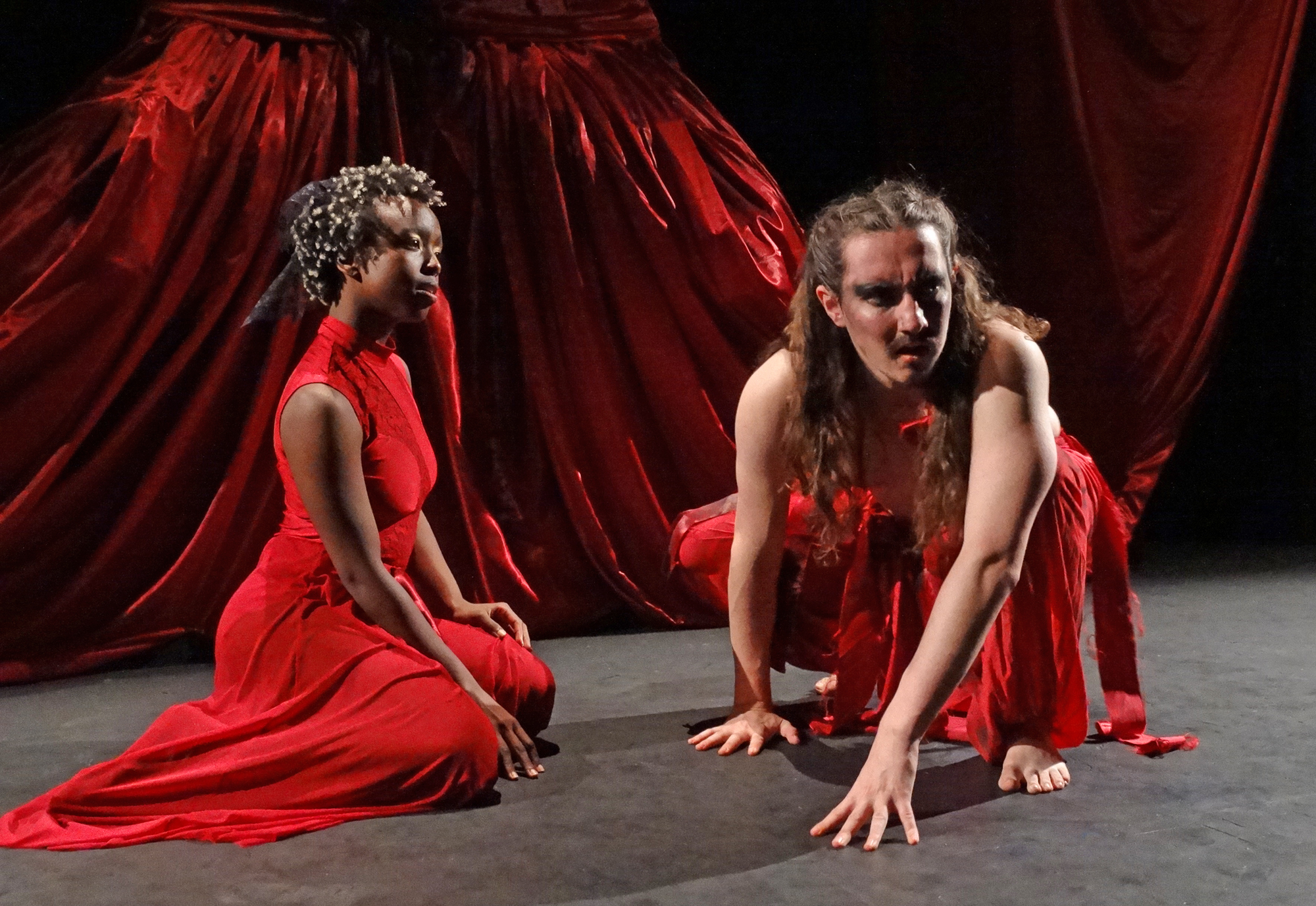
It ended badly, of course, after Salome claimed her reward …

Remember that this is all part of the Jesus story, and Natasha Higdon created a set of puppet heads to relate Christ’s miraculous doings to Herod’s court.

The action wasn’t confined to the NVT stage – they used one of the side aisles to give a space for Herod and Queen Herodias to work out their problems.

For, of course, Herod’s lust for Salome is a direct threat to the queen’s marriage – and to her status as co-ruler if her daughter were to be granted “Half of my Kingdom”.
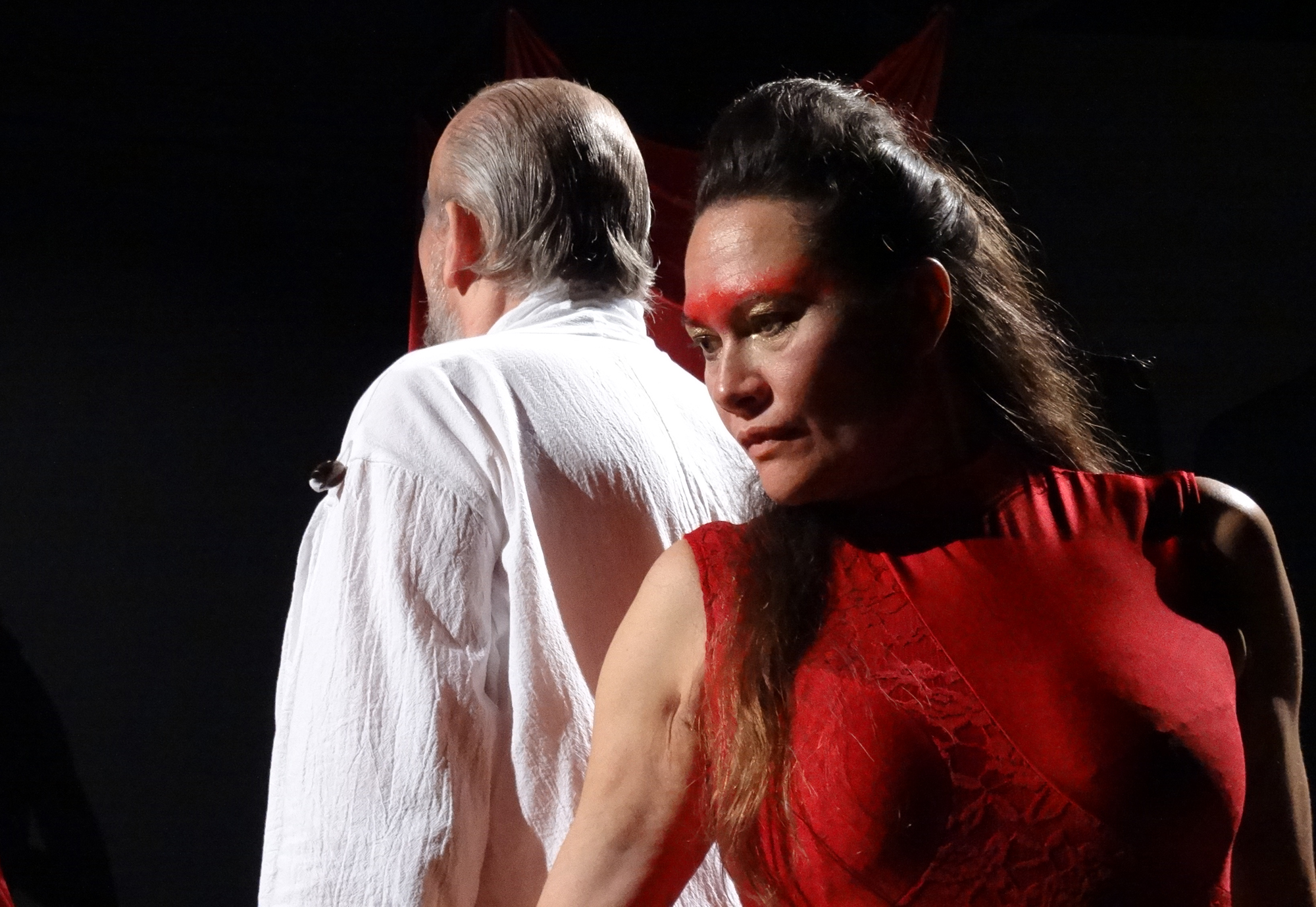
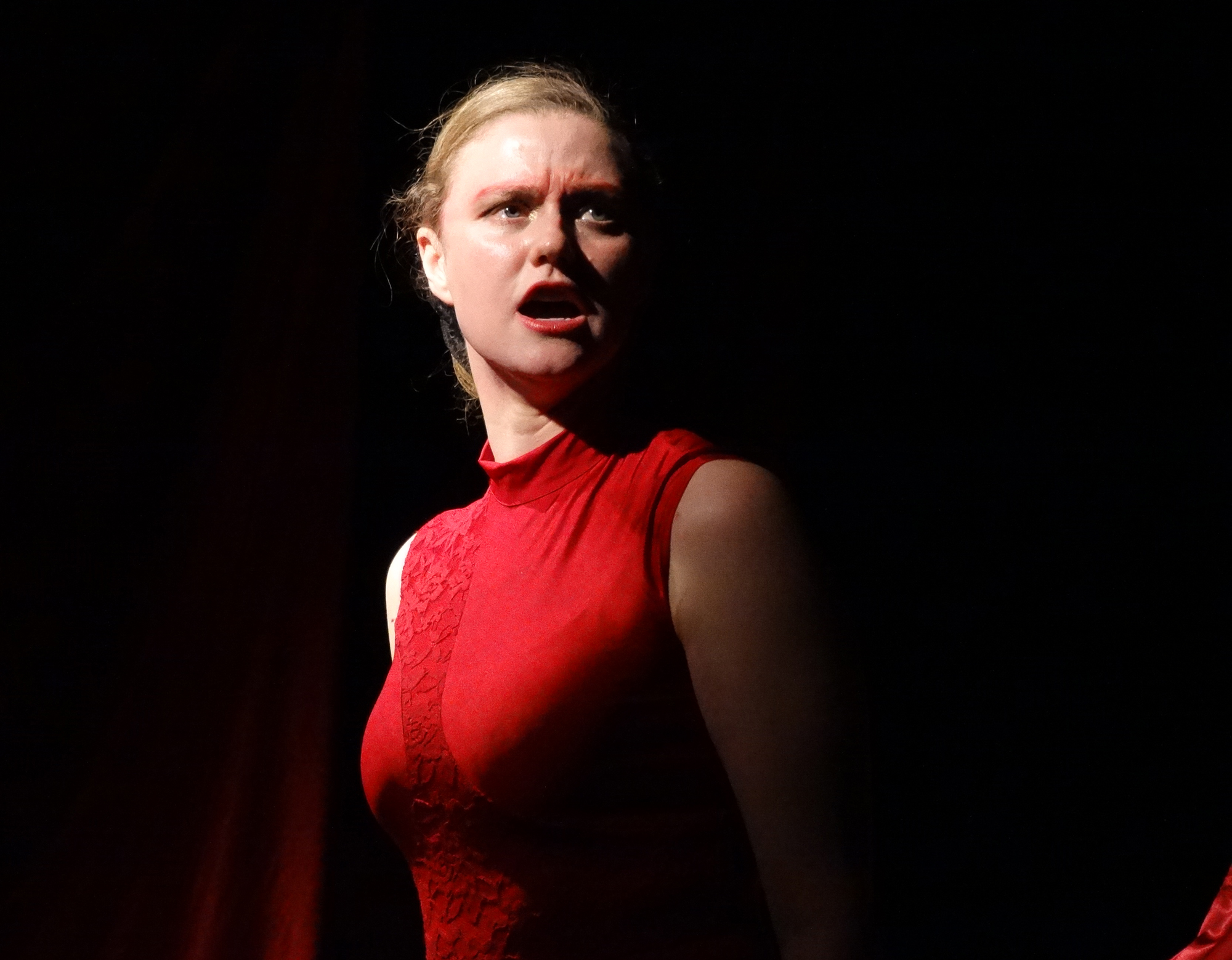
Seven actors in total – though it seemed like many more as they sometimes doubled up roles. Herod’s Court stretched right across the stage as they addressed the populace.

Innovative ideas, too, using mobile phones for illuminating the meeting of Salome and Jokanaan in his prison, watched by the Captain of the palace Guard.
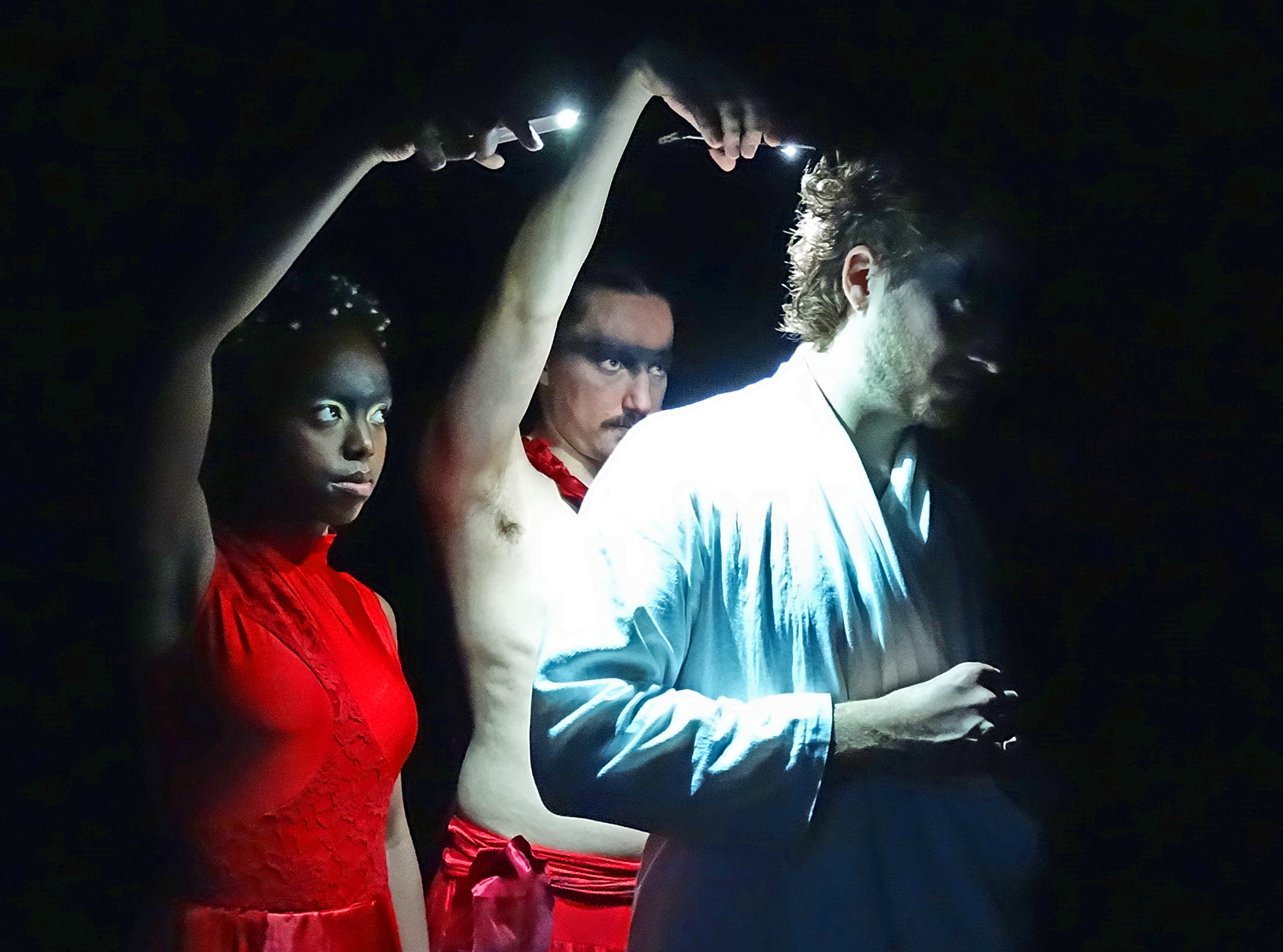
A wonderful production to light. I was able to make use of side-lights to enhance the drama of the scenes.

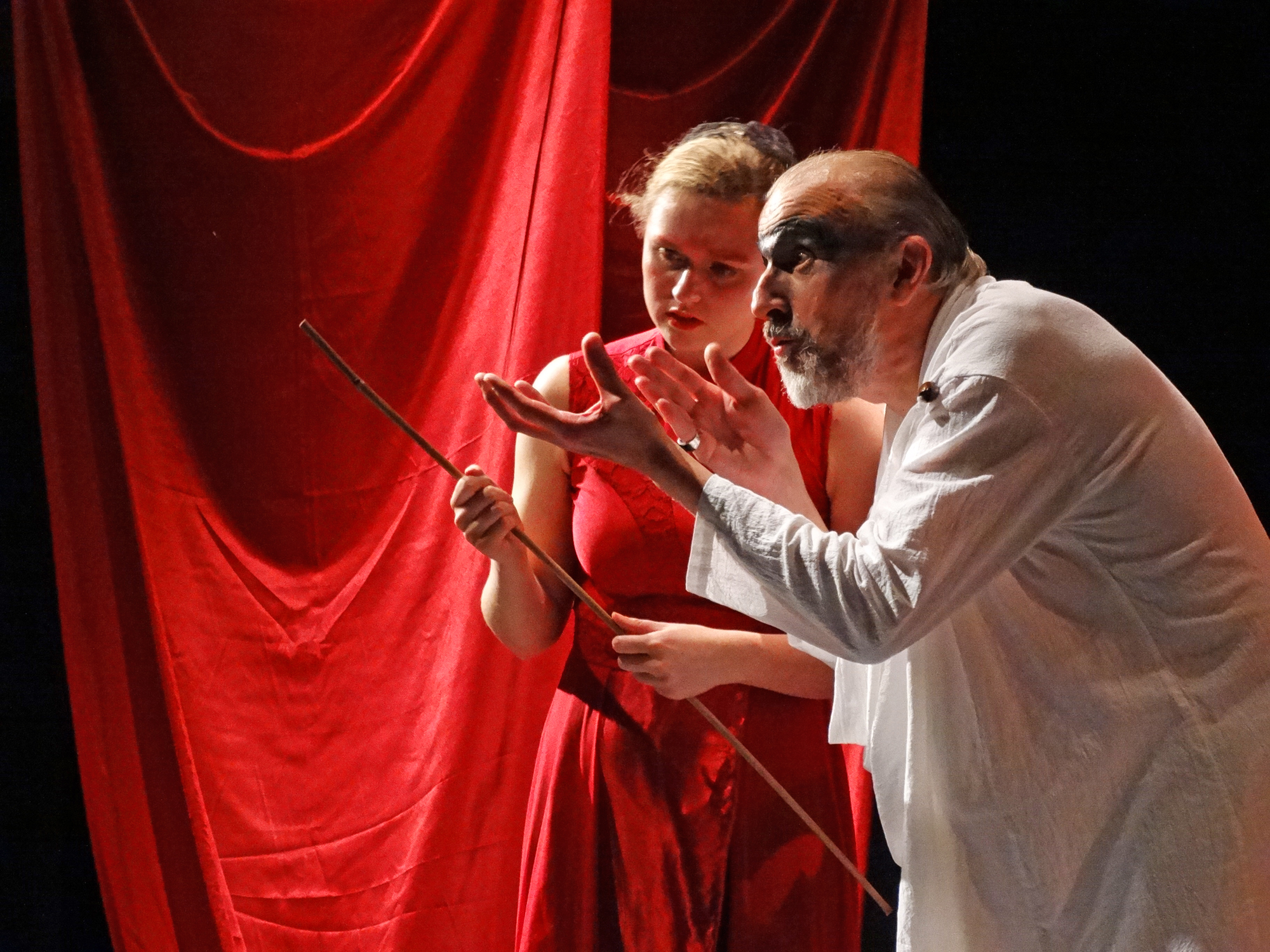

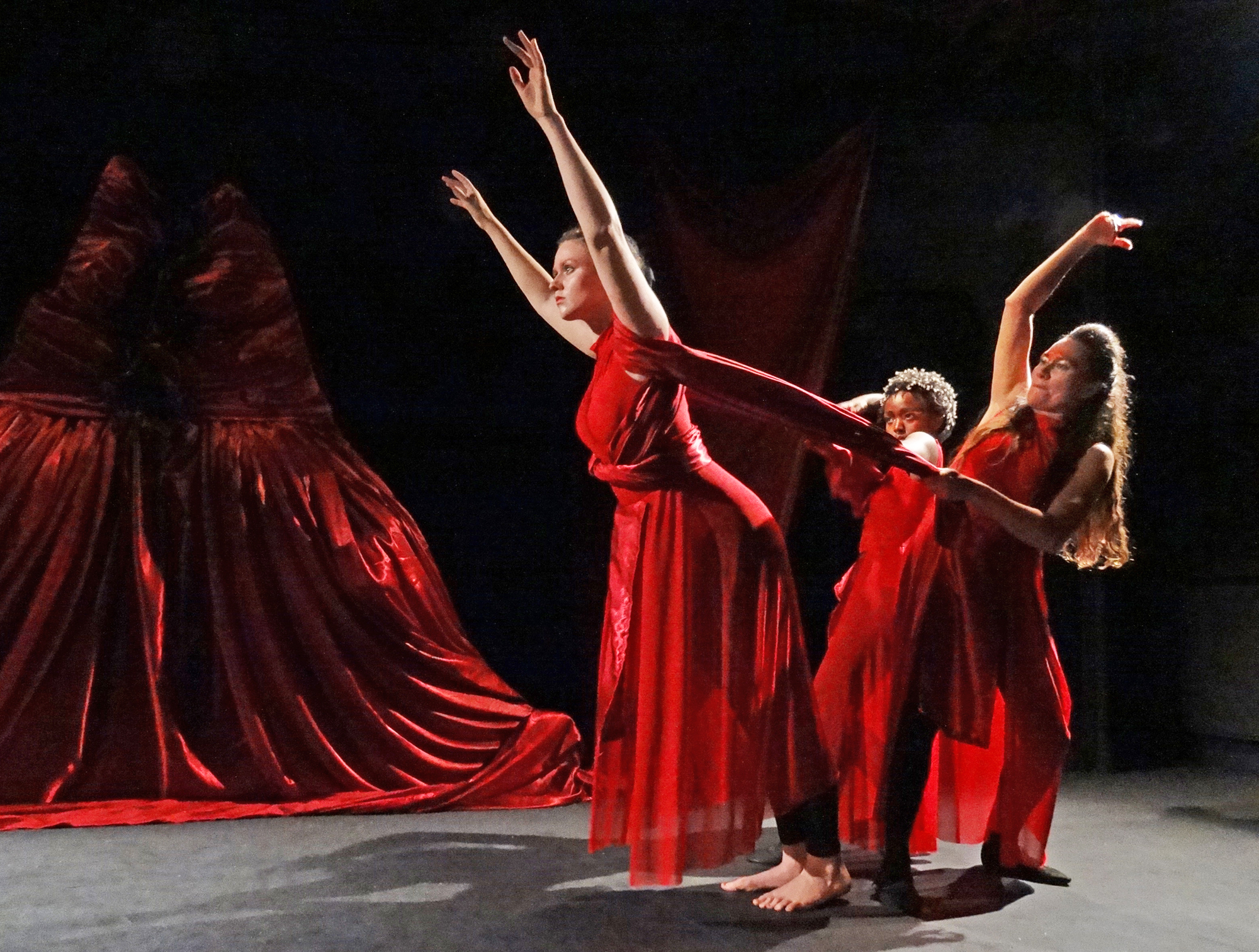
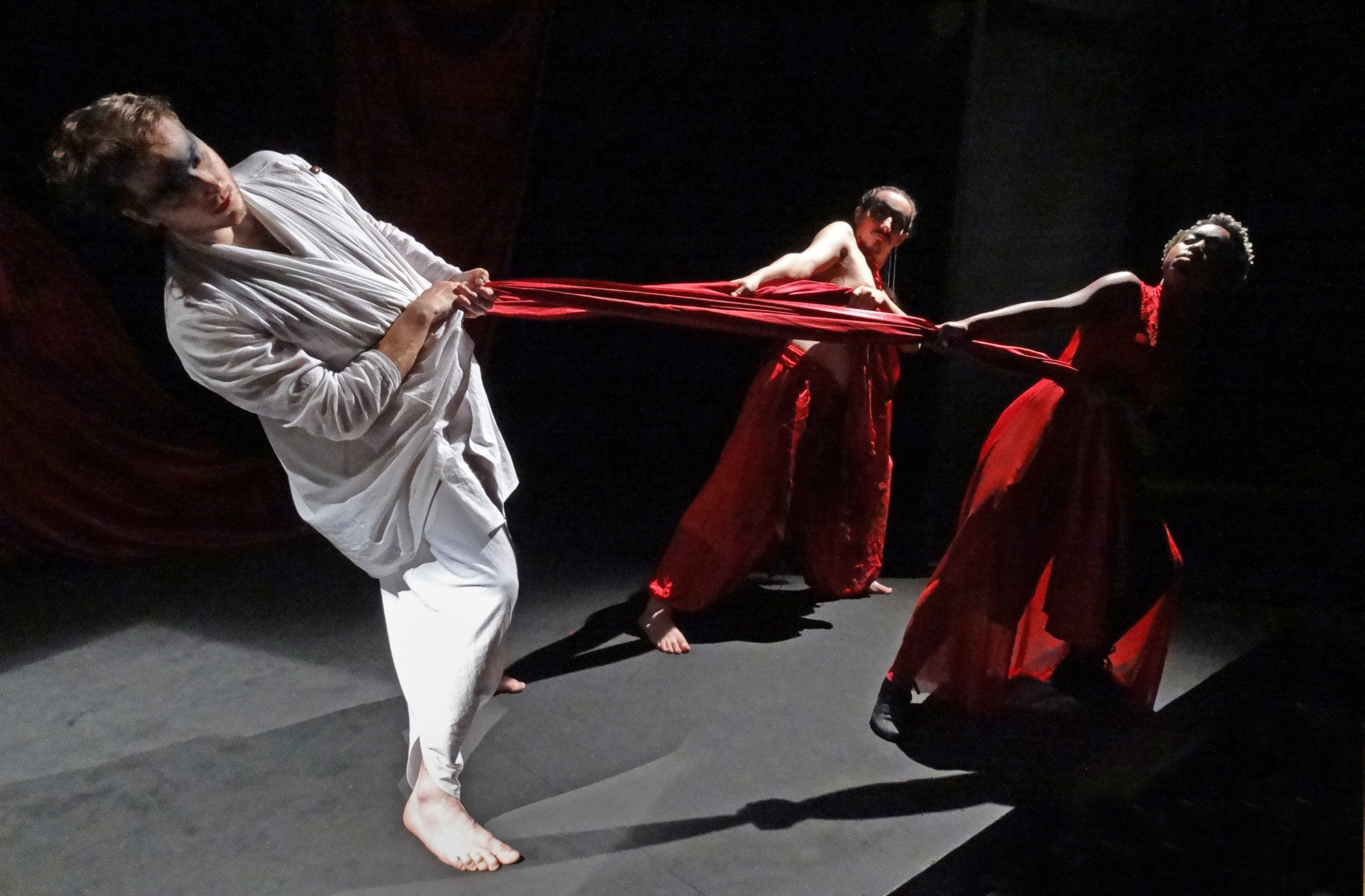
As well as the main stage elements, designer Simon Glazier and the director had set side panels where characters delivered lines, lit from behind to project shadows onto the gauze

A powerful production – unforgettable!

*
*
Constellations

‘Constellations’ was a great project to work on. It’s about the relationship between an astrophysicist and a bee-keeper.
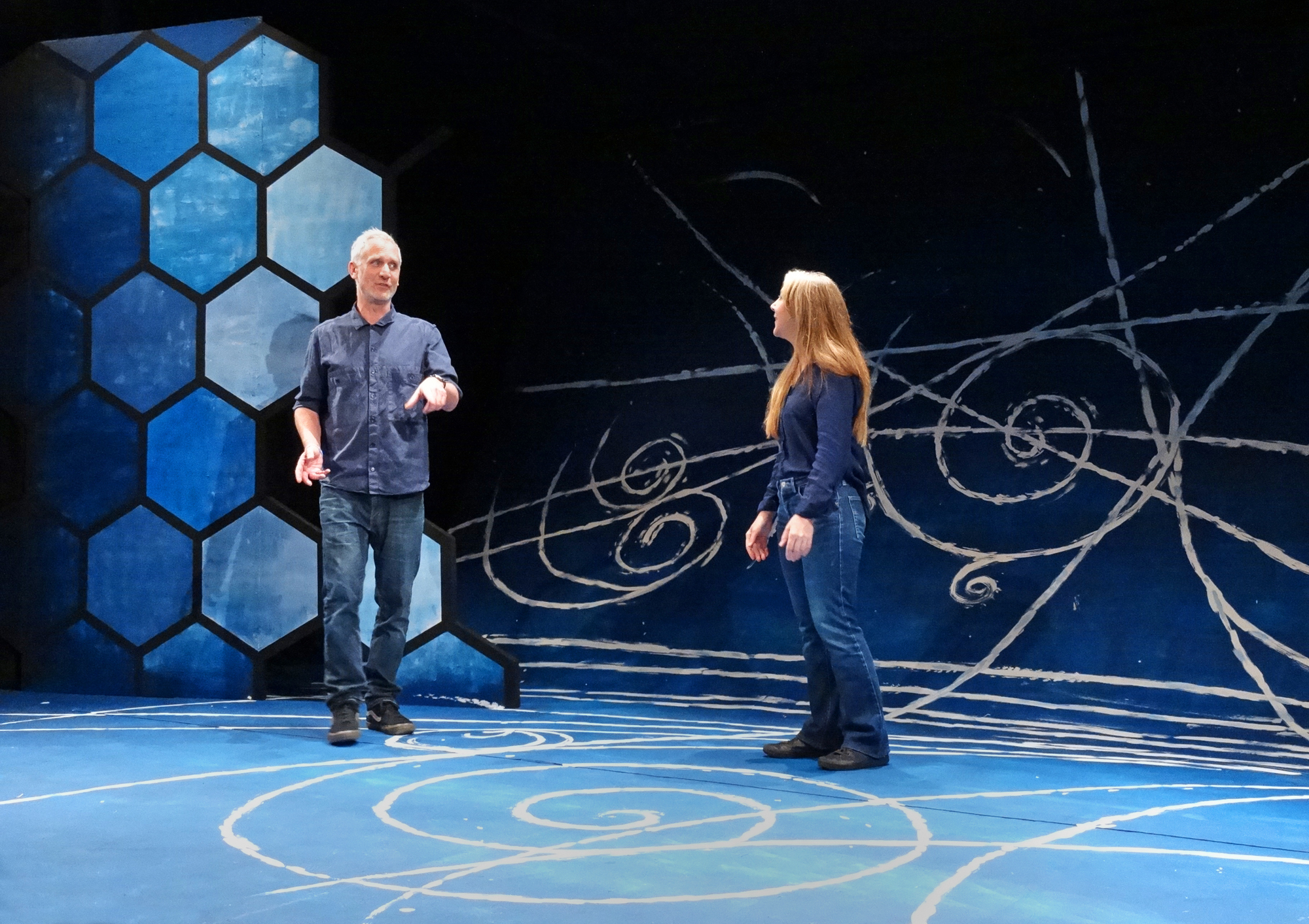
Nick Payne’s play was the NVT’s June production, and the story is actually a multitude of possible stories – “Everything you’ve ever done, and everything you’ve never done”, co-existing simultaneously in a ‘multiverse’ of possible realities.
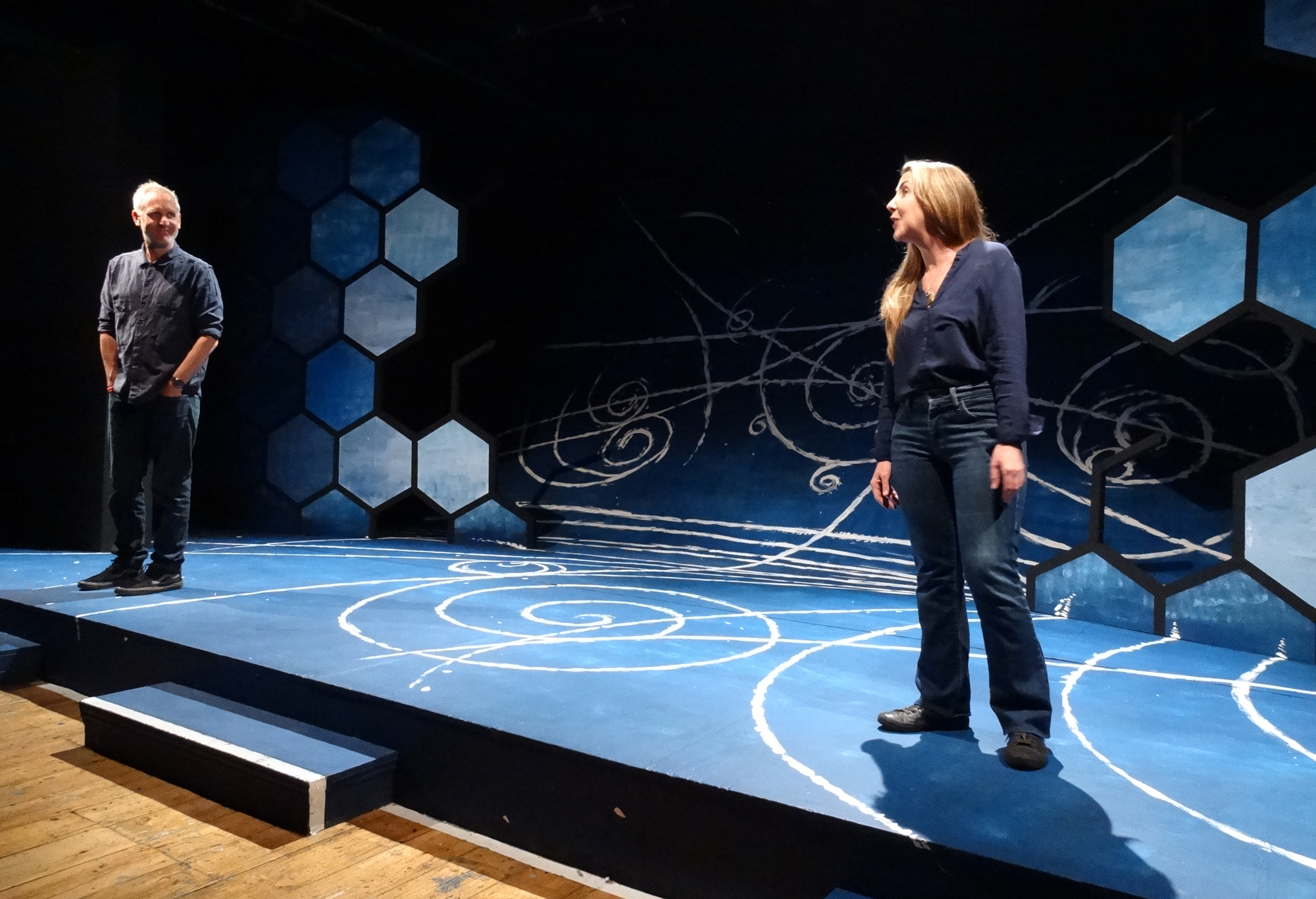
Successive scenes were separated by very quick blackouts, and each ‘reality’ had to look different. John Everett’s wonderfully creative set design used the full width of our Upstairs theatre, and featured side tabs representing the honeycomb of Roland’s bees; while a curved backdrop showed the CERN sensor tracks of the subatomic particles that Marianne’s work involves.

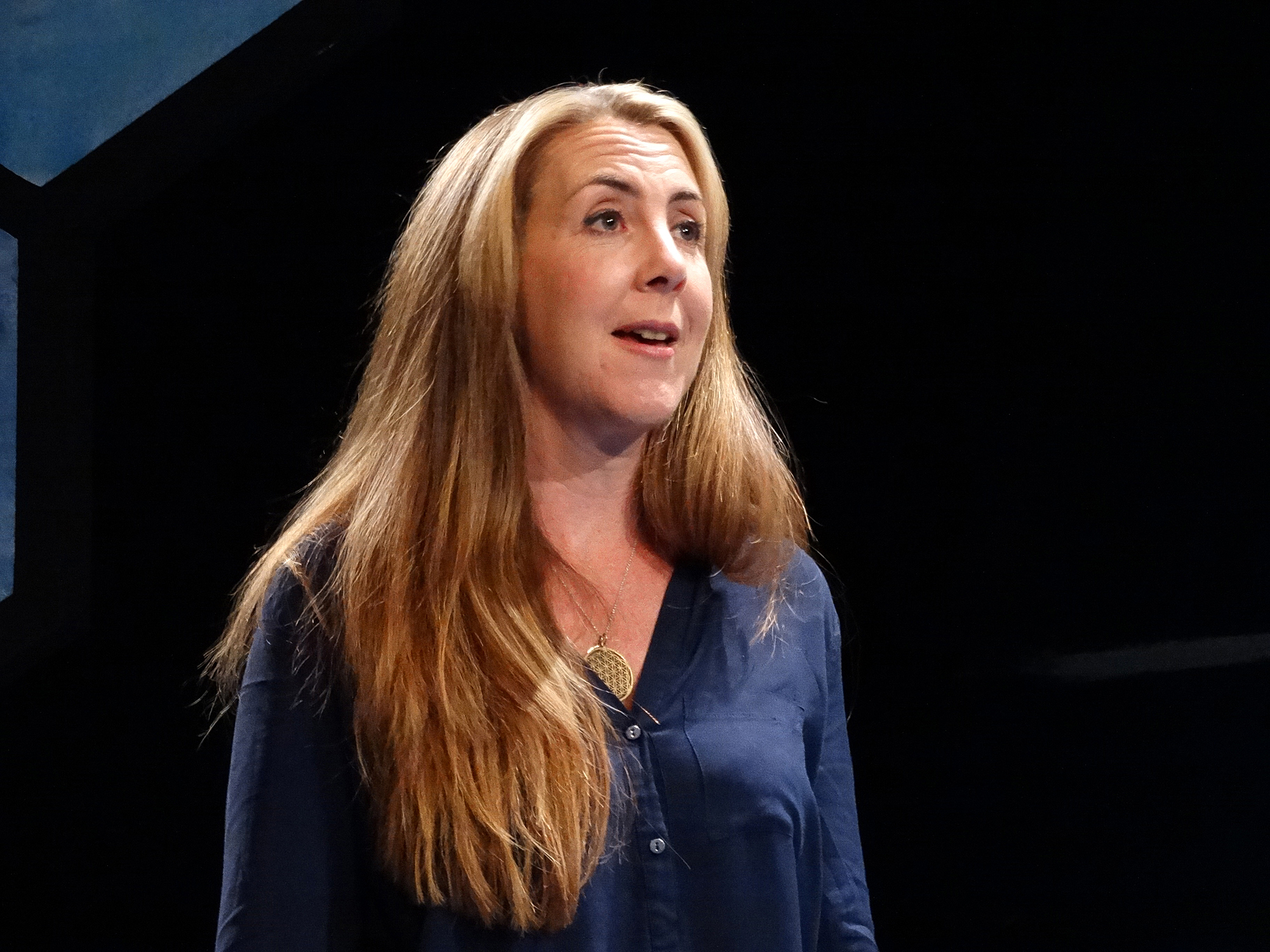

I was able to light different levels of the stage, at varying intensities, to give a much greater impression of depth than is possible with a simple box set, and to change each scene’s location.
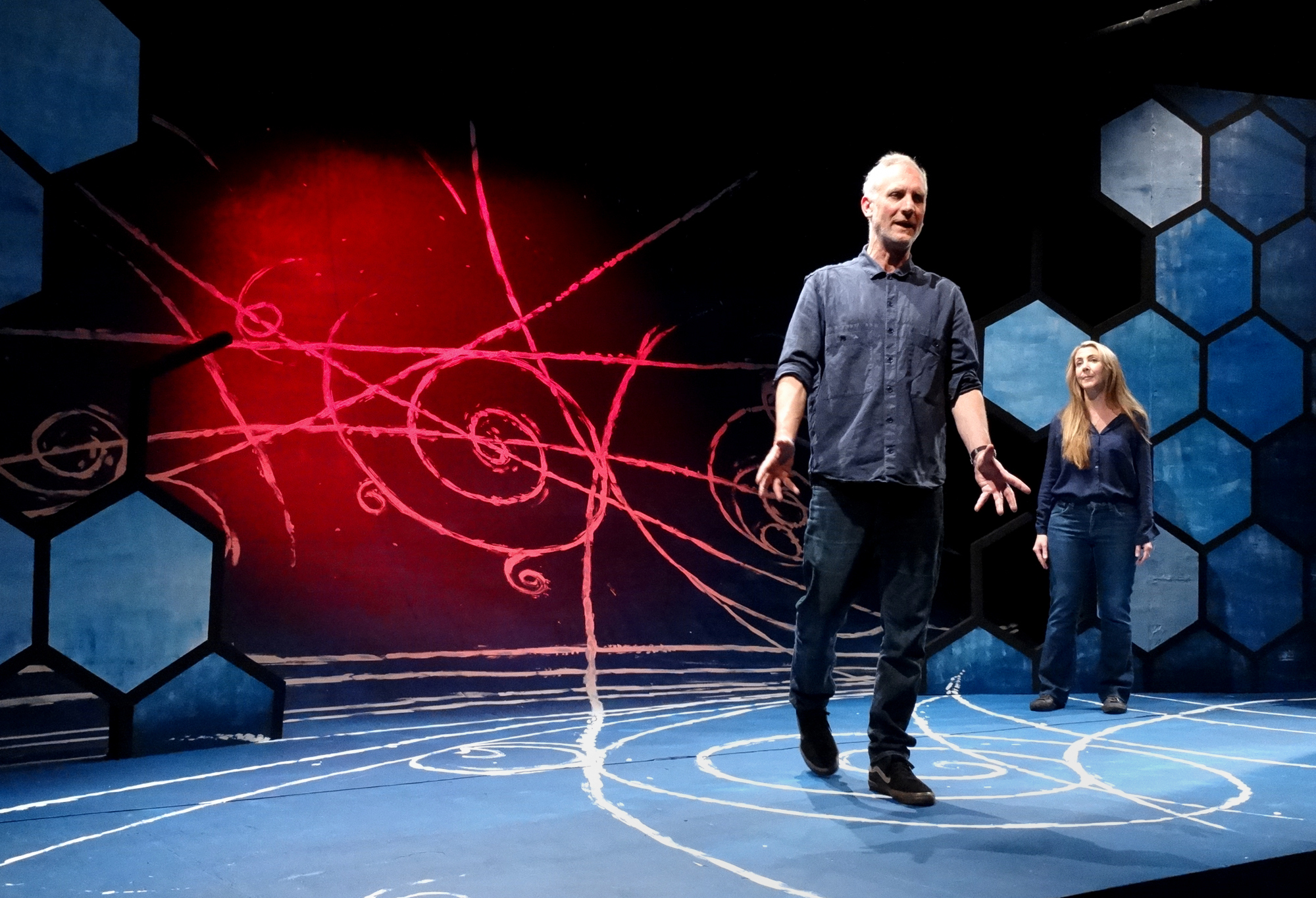
One thread of the story is that Marianne has a terminal cancer (or maybe, in another reality, she doesn’t …) and we used a red light on the background; gradually increasing in intensity as her condition worsened.

Director Mary Allen achieved performances from her two actors that were both believable and – ultimately – heartbreaking.
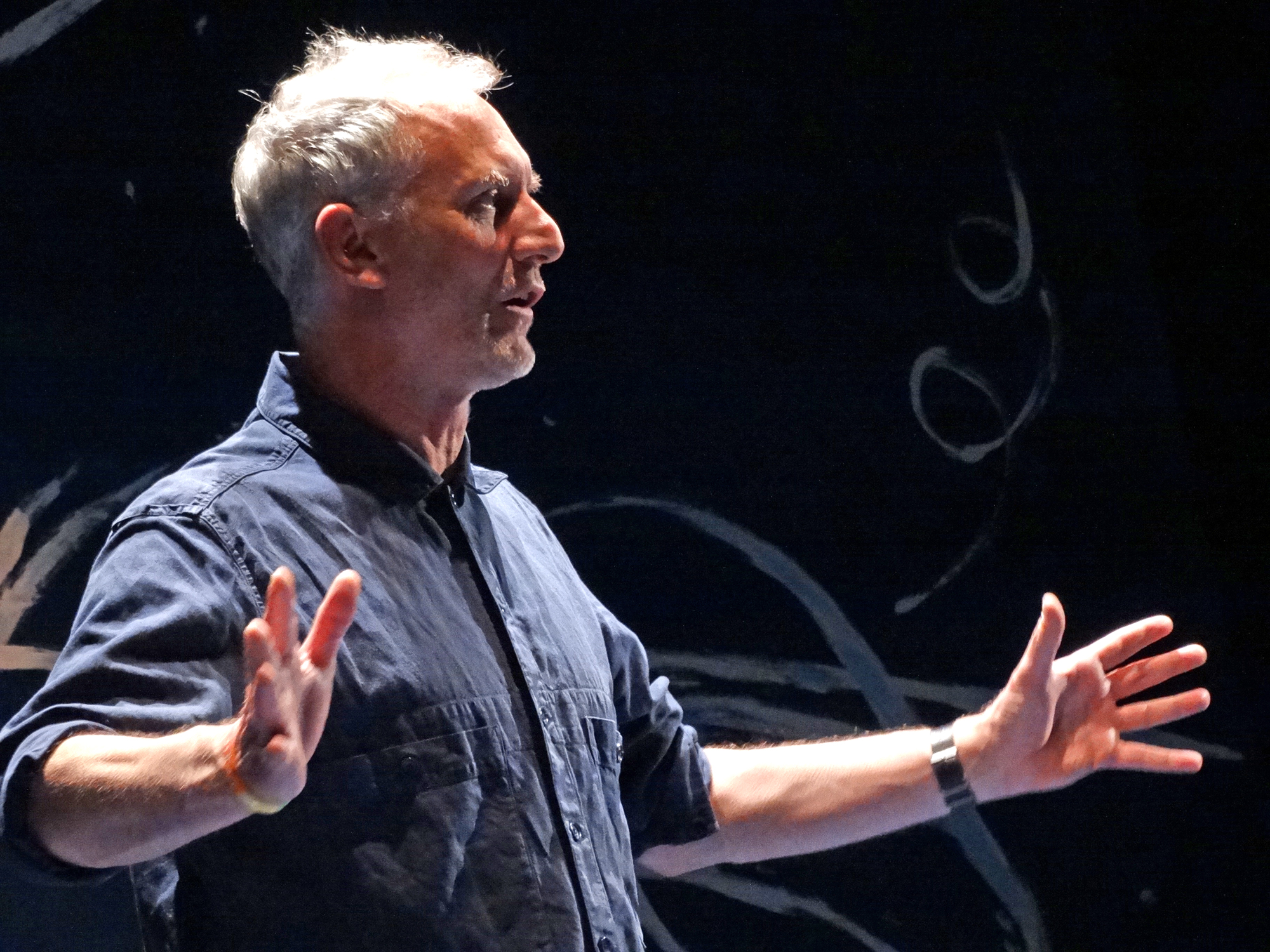
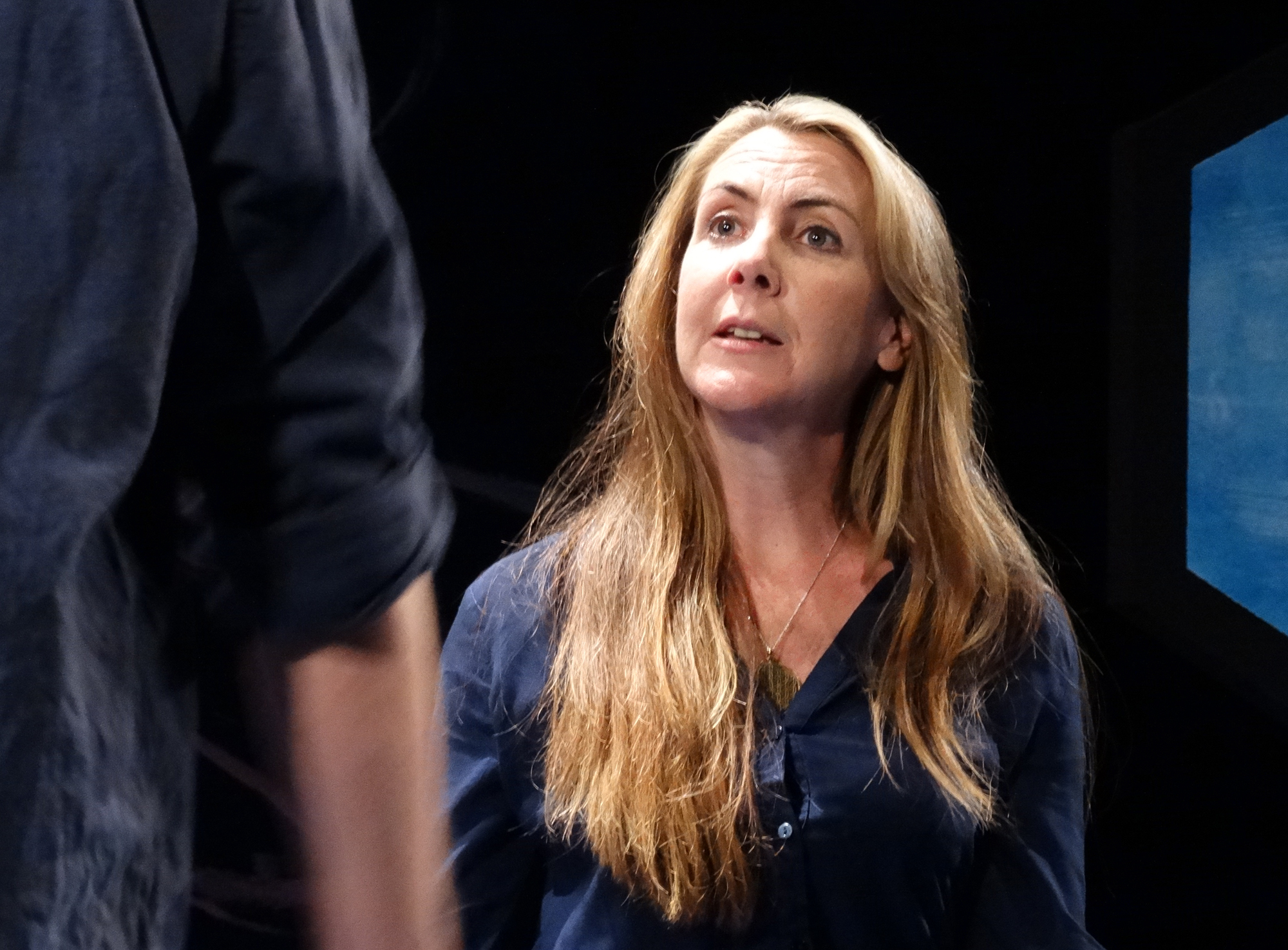

But it’s a very funny play, too. The set of successive scenes where Roland proposes marriage, using (and losing) his script featuring the analogy of bees’ short but intense lives, got a lot of laughter from the NVT audience.


*
*
Picnic at Hanging Rock

NVT’s May production was ‘Picnic at Hanging Rock’, by Tom Wright., a play based on the 1967 novel by Joan Lindsay.
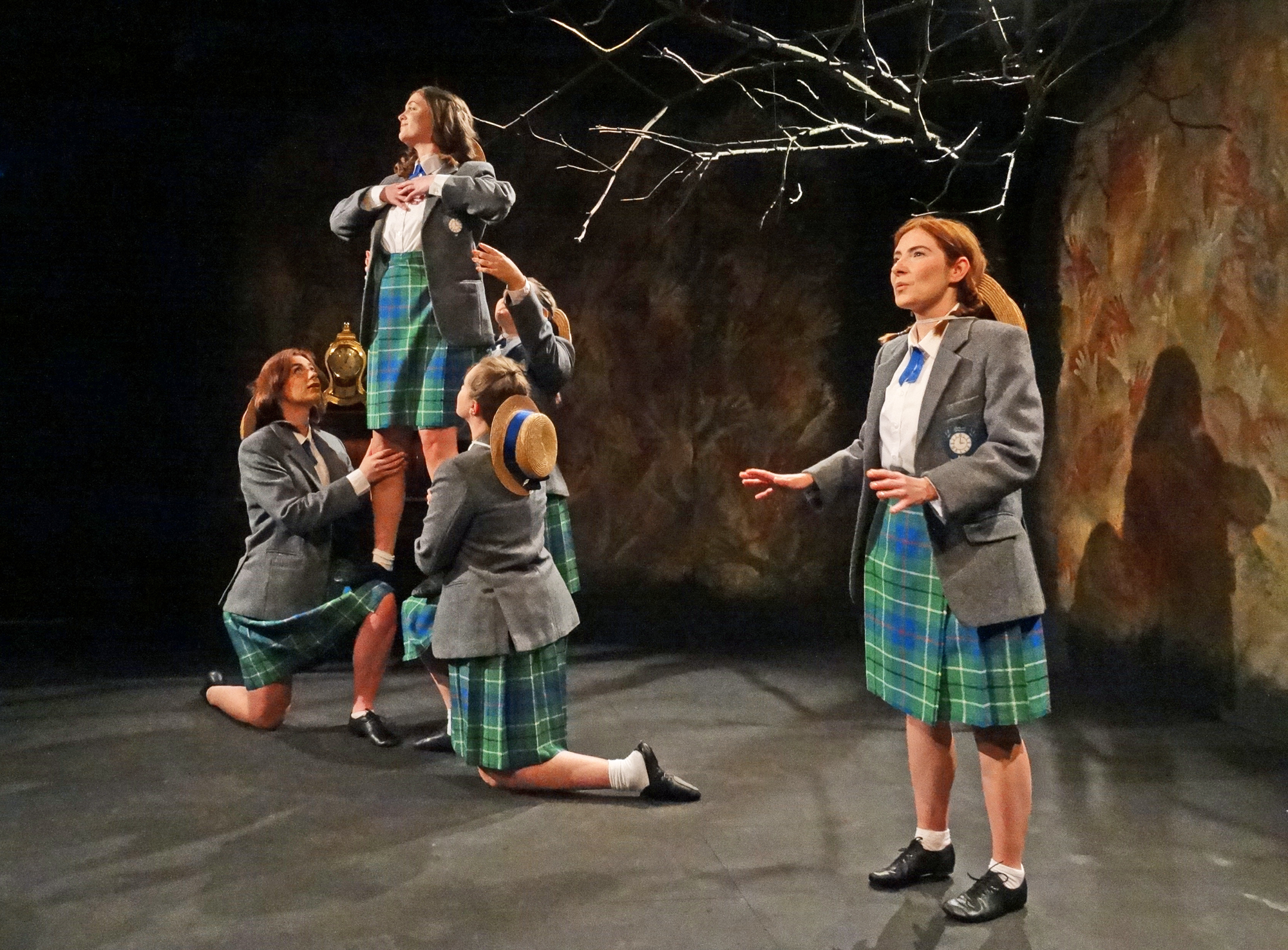
It’s about a group of schoolgirls in Australia in 1900, who go on a school outing on Valentine’s Day, for a picnic near the eponymous Rocks. Three of them, plus a teacher, go missing.

In Wright’s play, a group of modern-day schoolgirls attempt to solve the mystery of their predecessors’ disappearance.
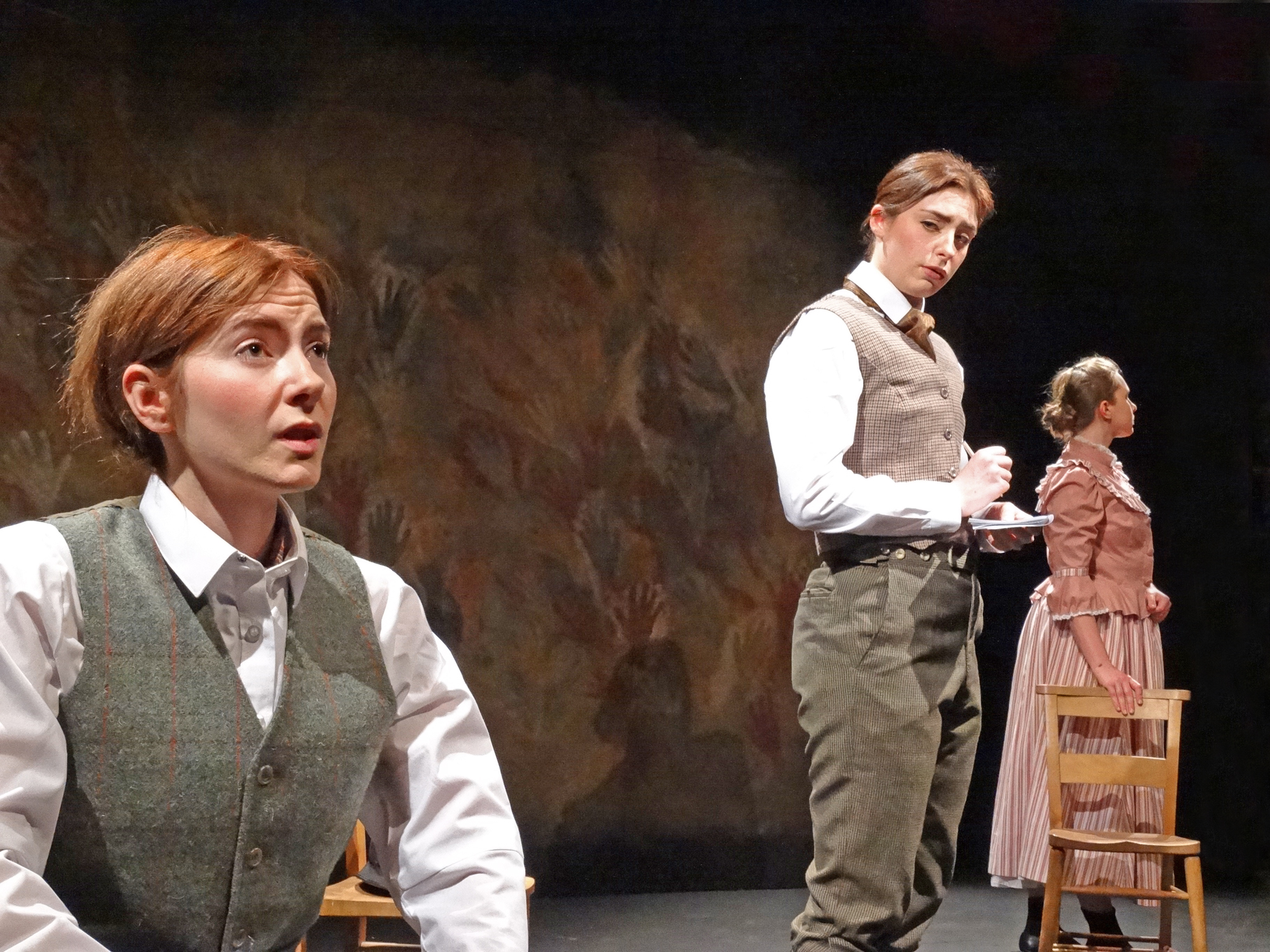
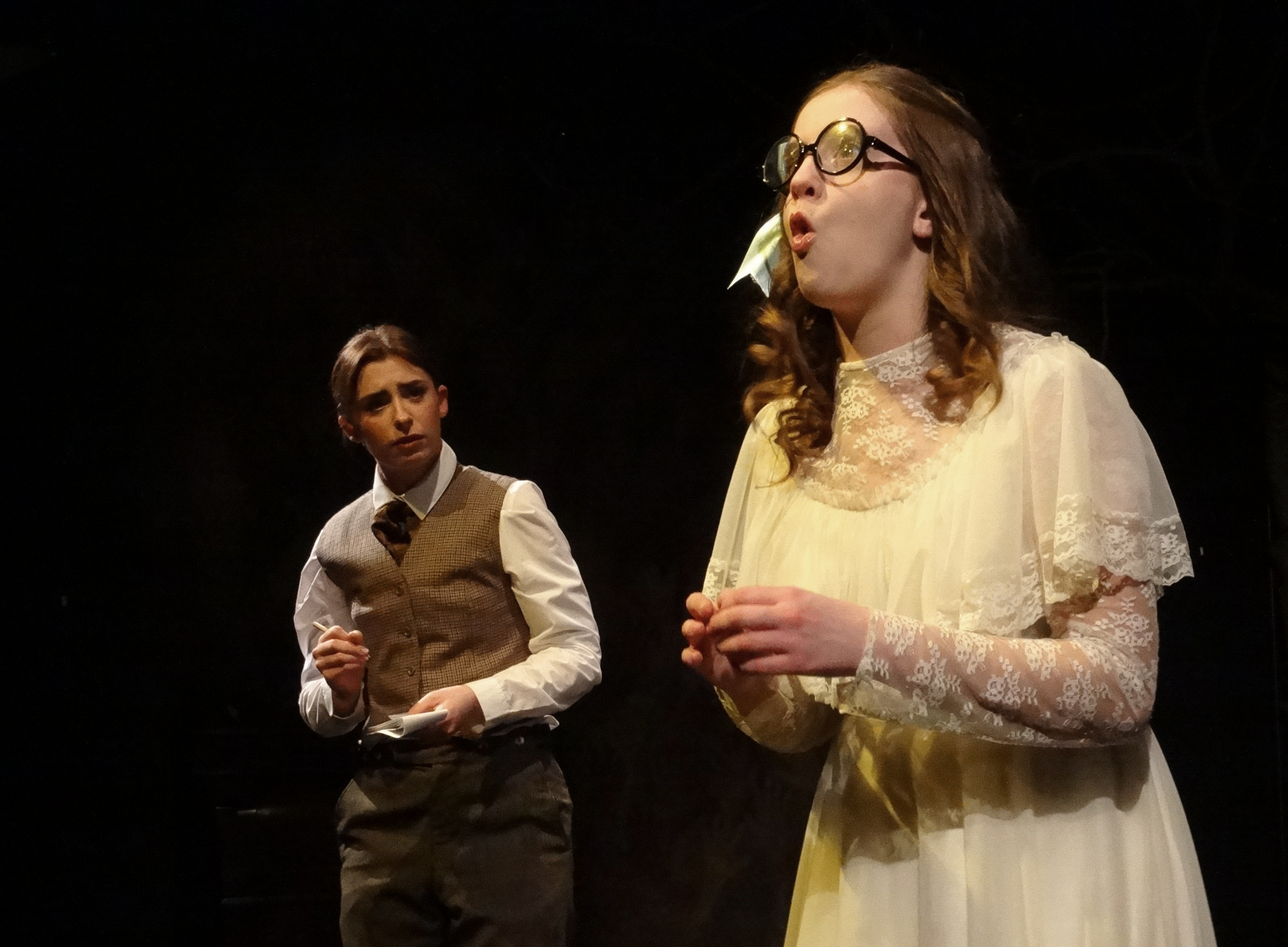
Director Diane Robinson chose to place all the action within a single set, which I had to light to show changes of mood and location.
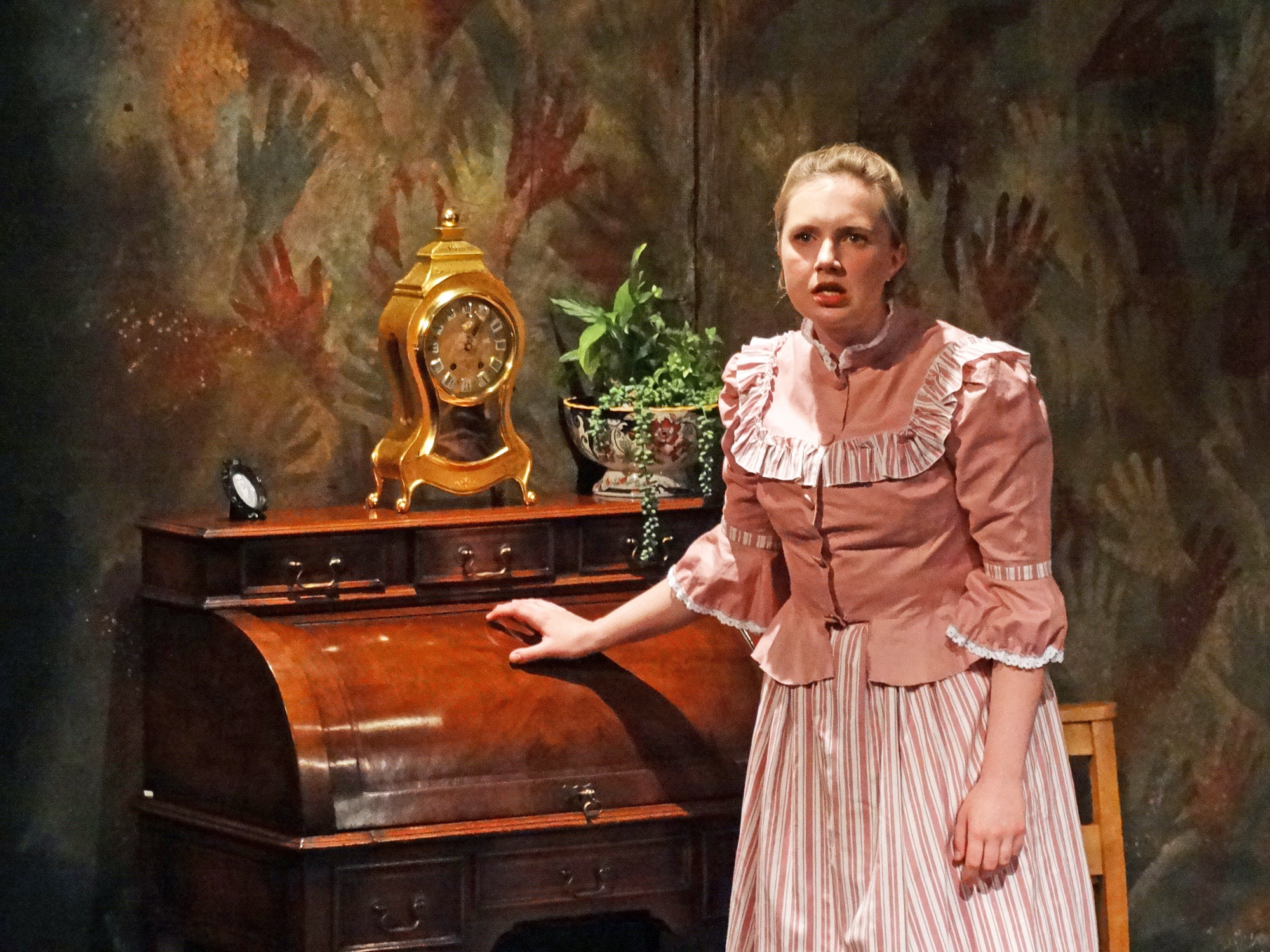

Some scenes took place inside the headmistress’s office, and I was able to isolate that area of the stage. Designer Judith Berrill painted the backing flats with an Aboriginal-inspired design, based on ancient Australian rock paintings.

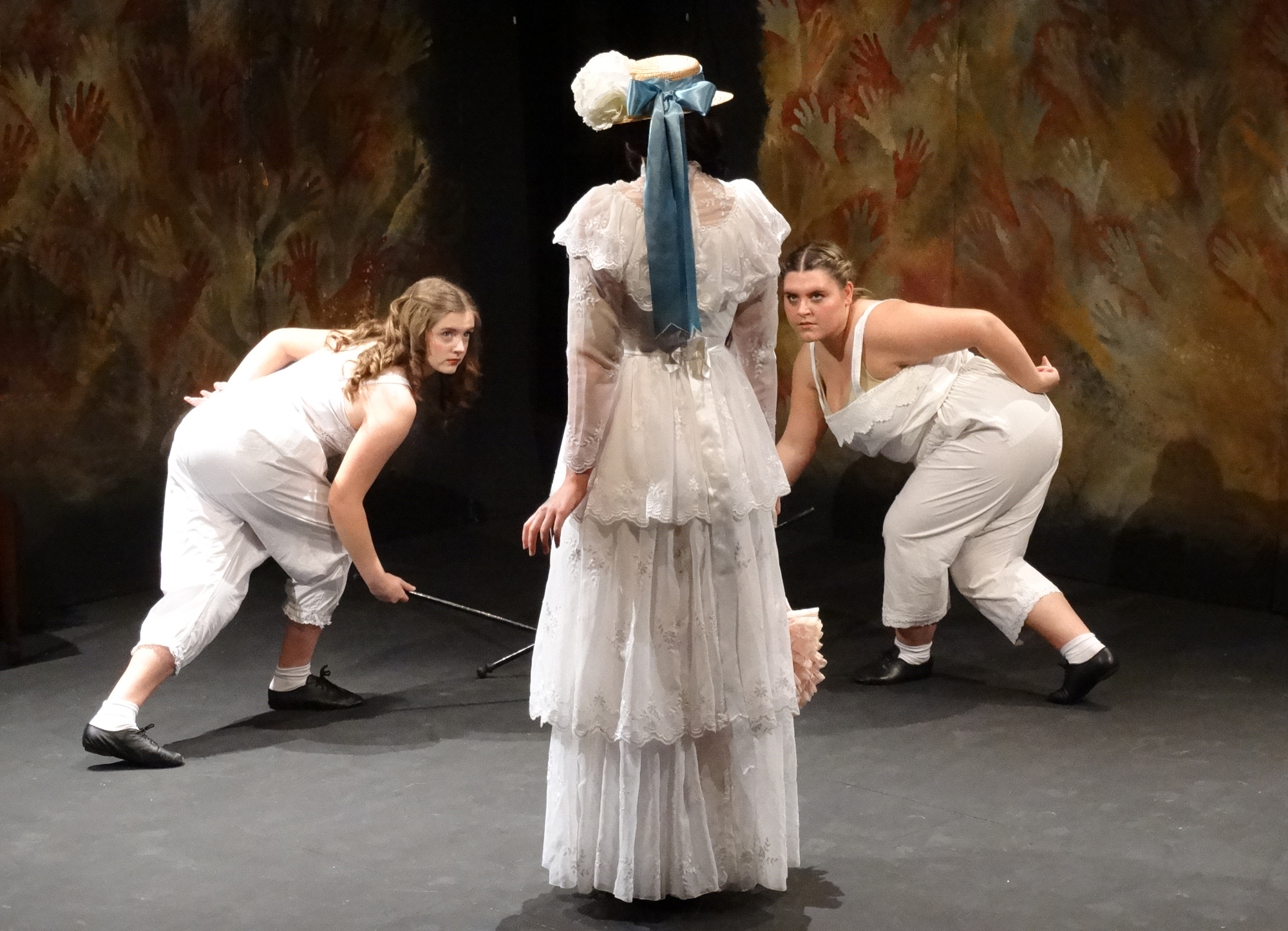
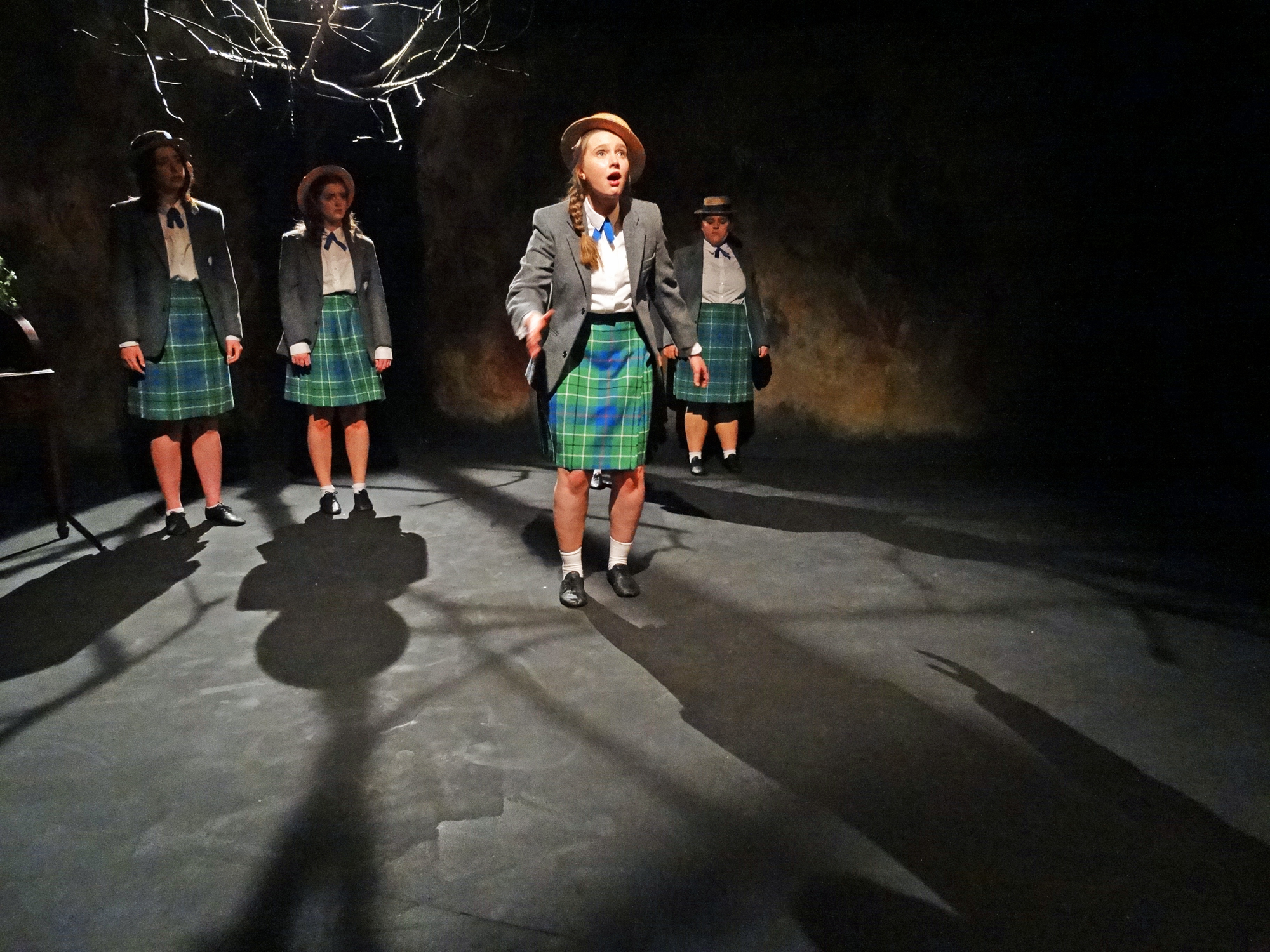
The play is concerned with the power of Nature, and Berrill wanted a tree to intrude into the acting space, also providing a passage for the actors. An interesting subject to light, with the branches throwing ominous shadows right across the Studio Theatre floor.
*
*
An Experiment With An Air Pump
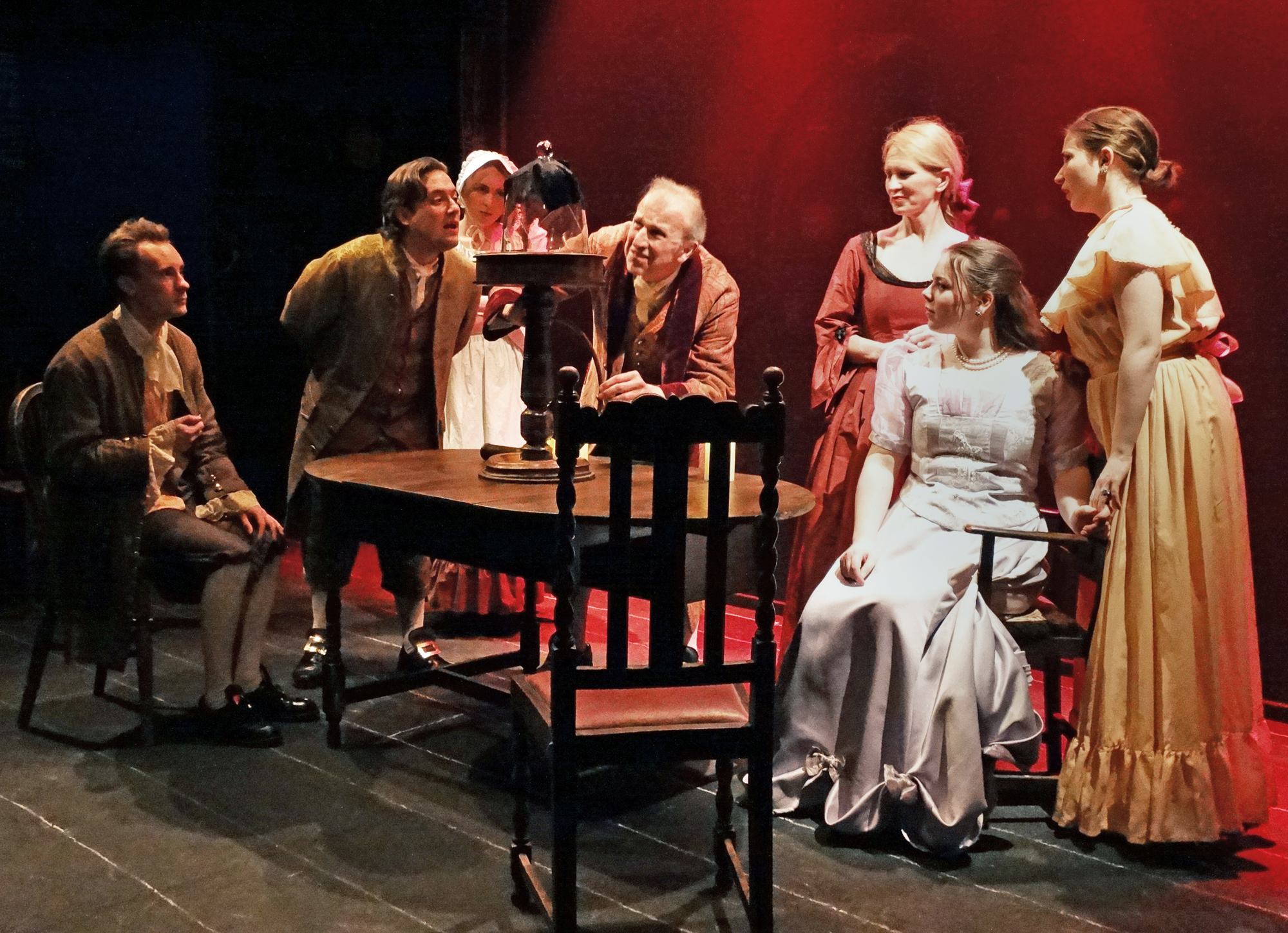
Remember ‘An Experiment With An Air Pump’, the painting by Joseph Wright of Derby? Well, this is what it looks like from the side … In Wright’s canvas it seems the small bird was asphyxiated – but in Sam Chittenden’s April production the creature was finally set free.

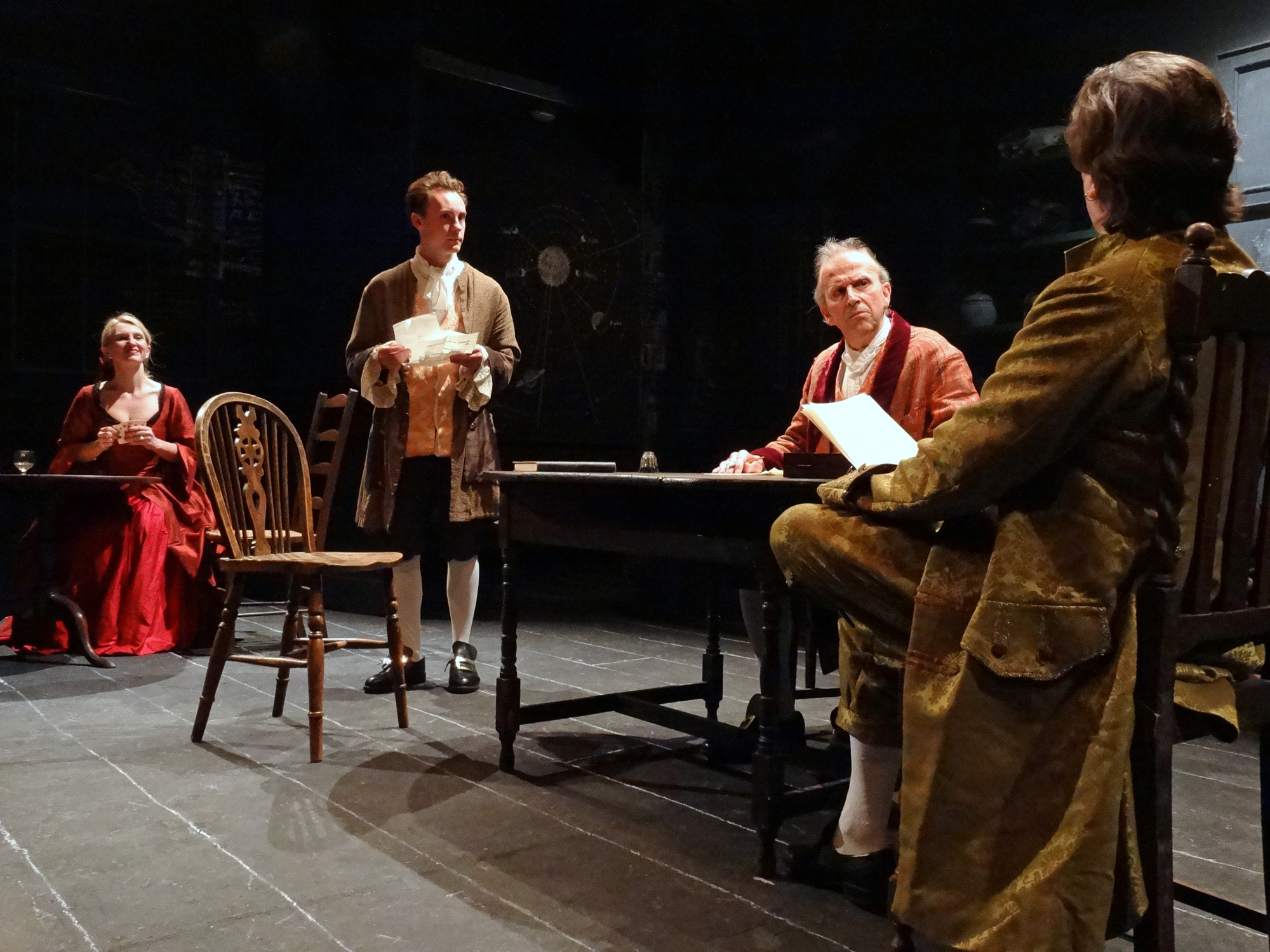
Shelagh Stephenson’s play spans two centuries – set in the same house in Newcastle, with the action jumping back and forth between 1799 and 1999.
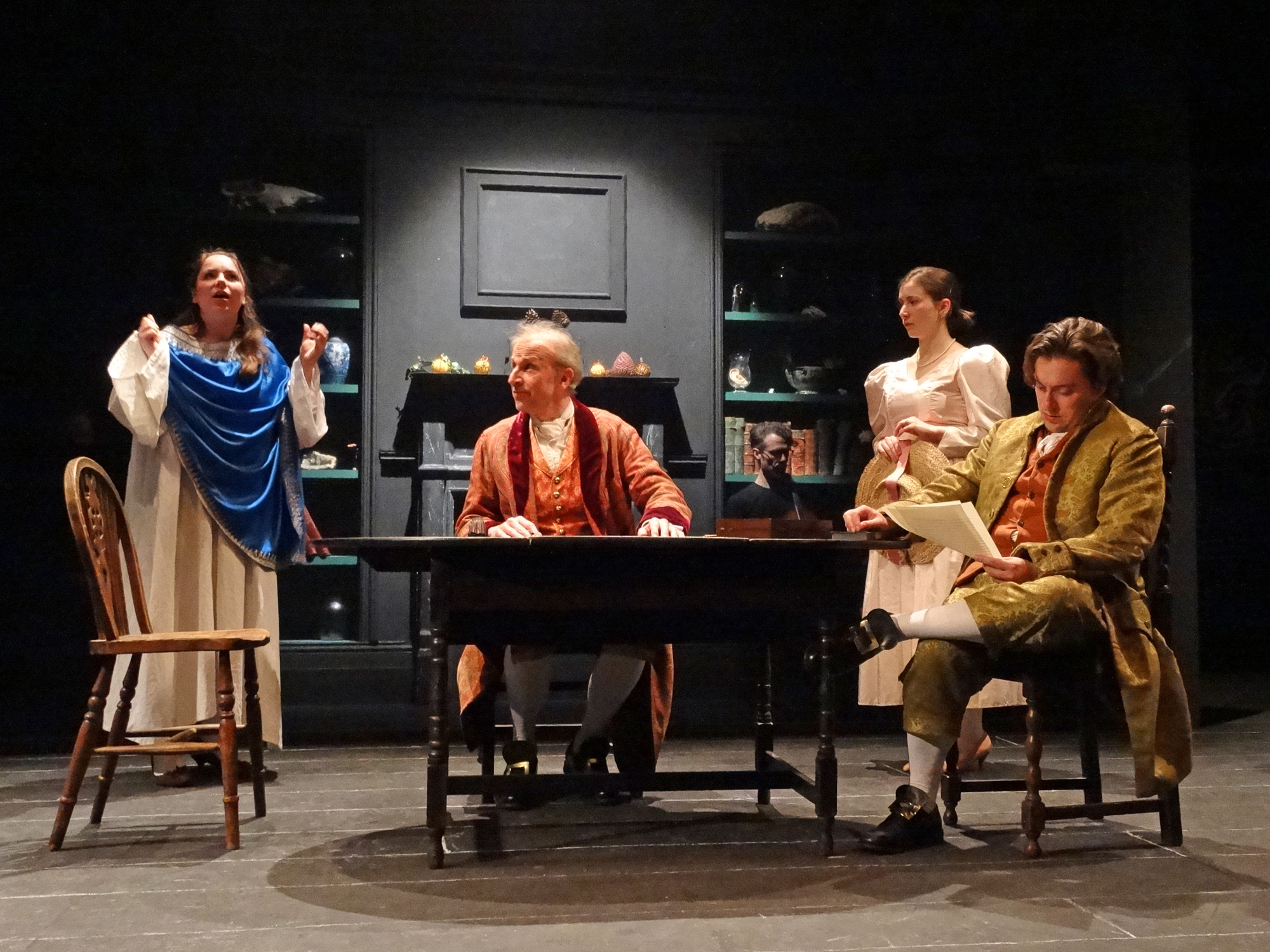
The eighteenth century house is inhabited by a gentleman scientist and his family and guests, while in the twentieth century its occupants are renovating the old property before selling it.

We achieved the time-shifts seamlessly, by using a large gauze towards the rear of the stage. When I lit it high up from the front, it gave the feeling of a richly painted wall – then when the red lights were taken out, a white light behind made the gauze disappear, letting us see the eighteenth century action as if there was nothing between.
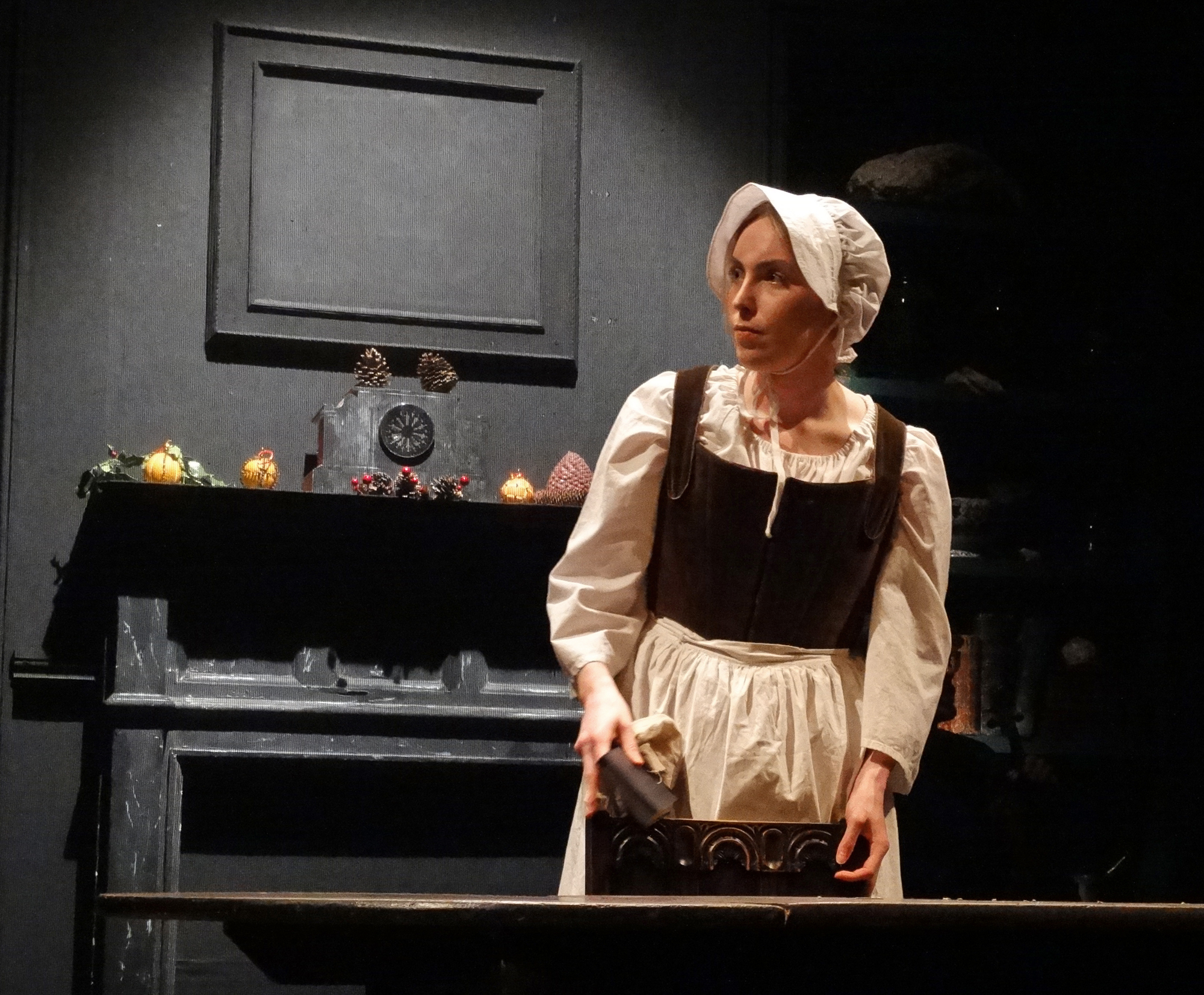

The two eras’ situations are mirrored. In 1799, Dr Joseph Fenwick and his friends are Enlightenment scientists and doctors, while Fenwick’s wife Susannah is so ignored and belittled by the men that she’s turned to alcohol for solace.
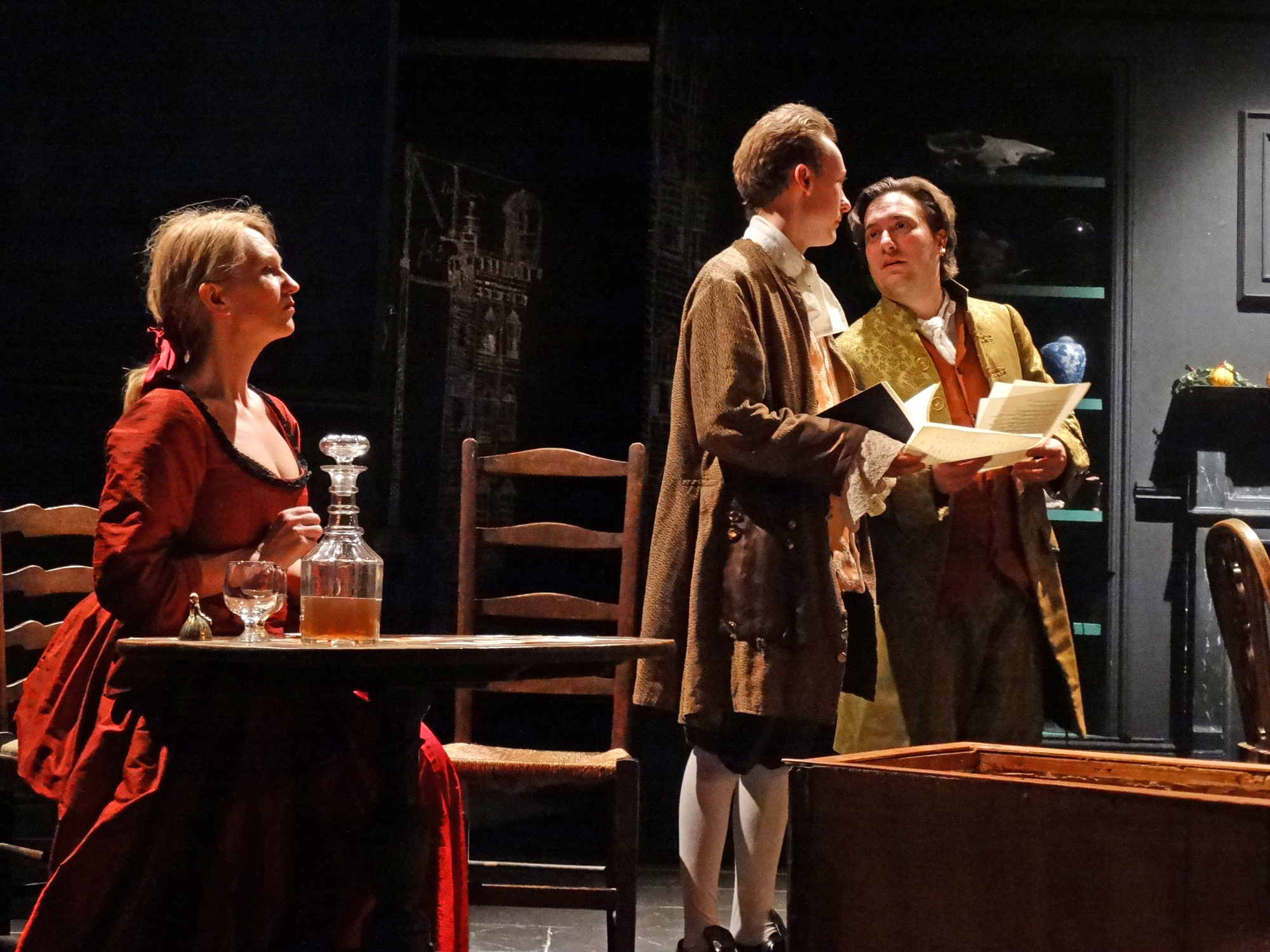
In the twentieth century, though – the couple are Ellen and Tom (played by the same actors). Ellen’s a brilliant geneticist who’s just been offered a very well paid job, while Tom’s an English lecturer who’s been made redundant by his University. A very neat reversal of status.
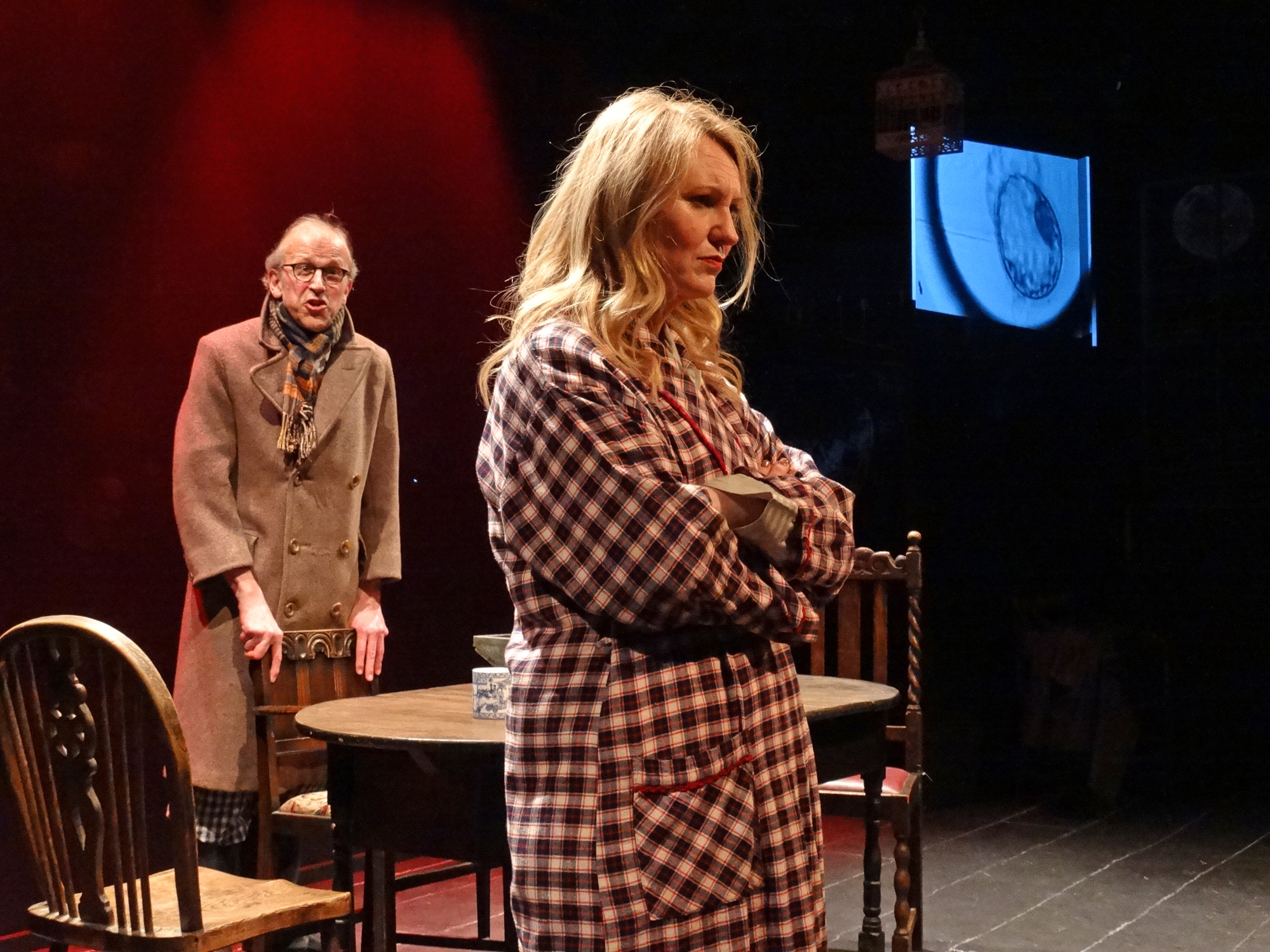
‘Air Pump’ was performed Upstairs at New Venture, and we made full use of the wide stage.
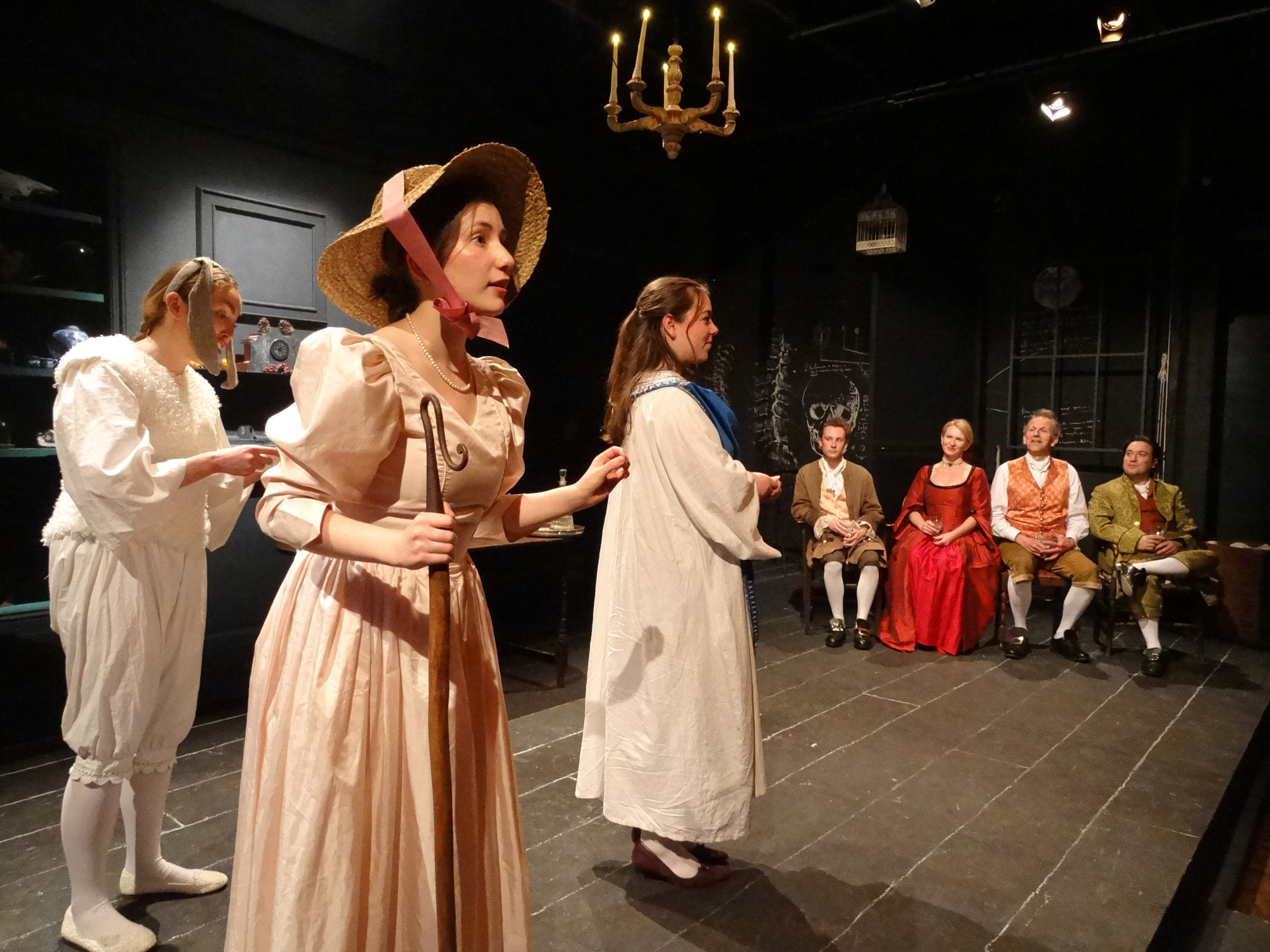
Fenwick’s daughters (and their maid) perform a play for the adults. Maria (she’s the daughter in the foreground) has a fiancé who’s travelling in India, and we watch the deterioration of the relationship through their letters.

Meanwhile, Armstrong, one of the young doctors who are Fenwick’s guests, seduces Isobel, his host’s family’s maid.

One of the play’s themes is the morality of scientific research (remember the small bird) and what Armstrong’s really after is to examine Isobel’s spinal deformity – close up when she’s naked …
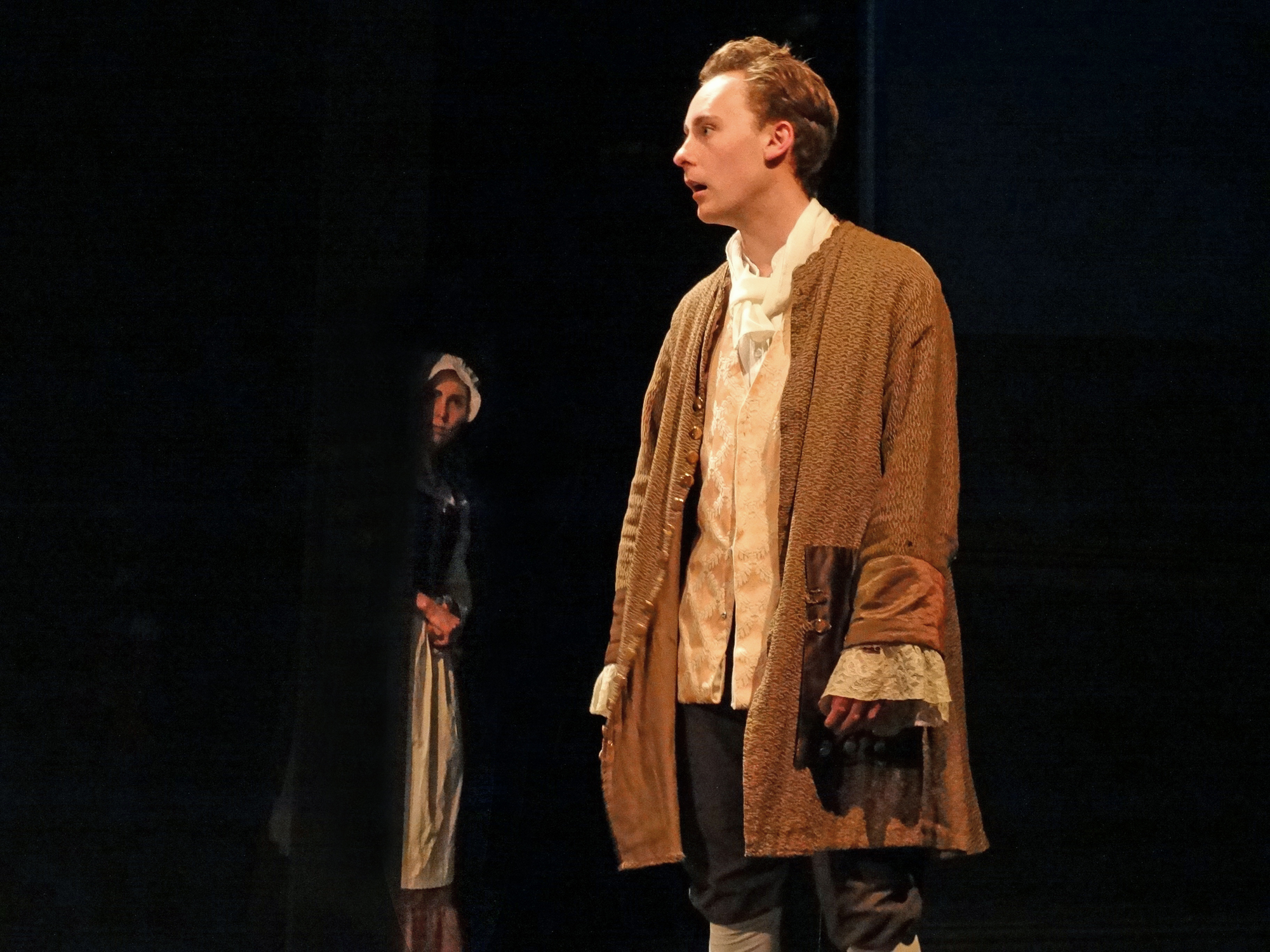
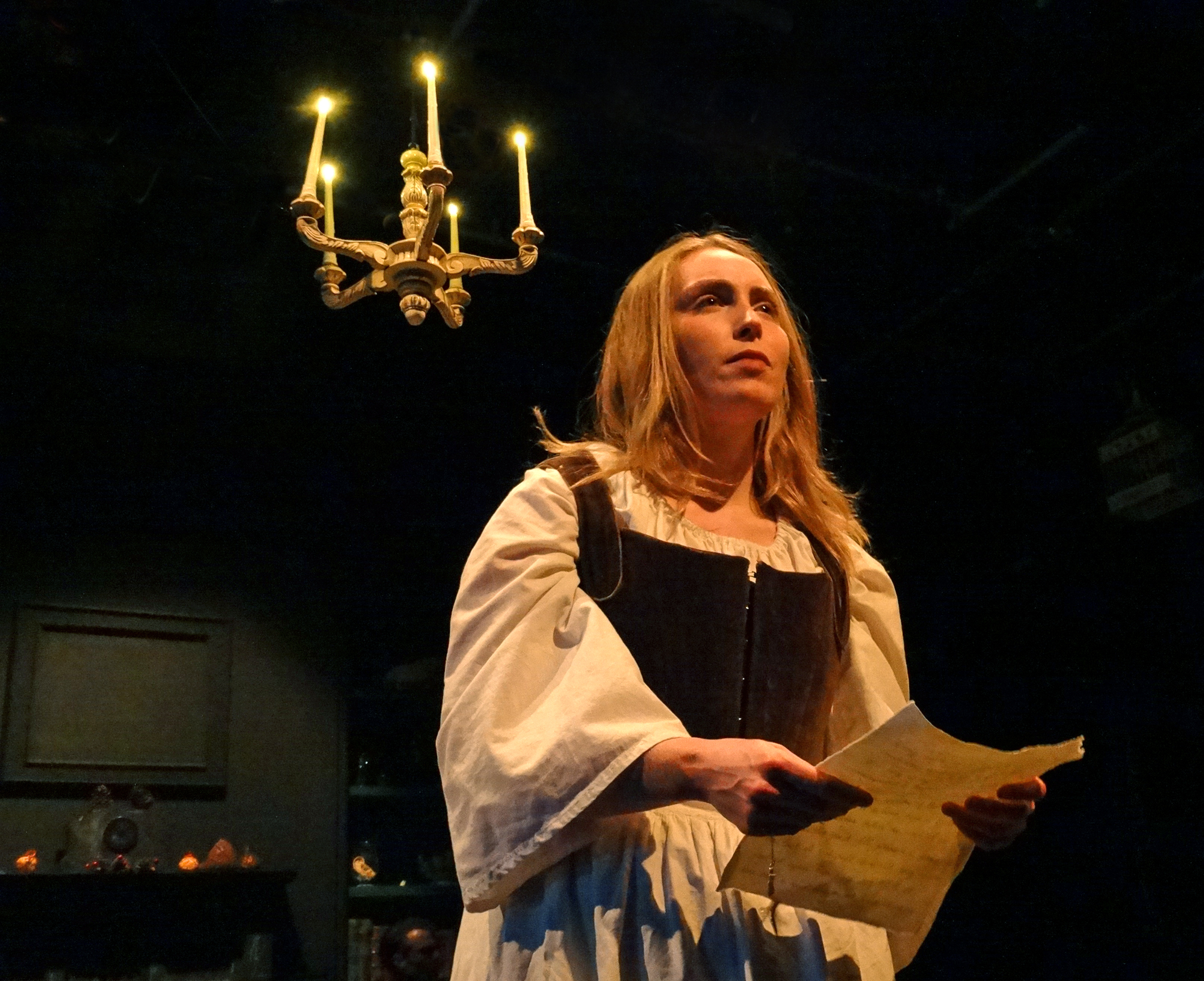
But she realises she’s been betrayed, and writes a touching suicide note before hanging herself.

In another of the play’s twists – Isobel’s deformity is the sort of condition that Ellen’s research hopes to alleviate. Research is never value-free, of course, and Ellen’s friend Kate has a company that will provide funding for Ellen’s work – and monetise the resulting treatments.

At the end of the twentieth century, Dr Armstrong has been transformed into Phil, the Geordie builder …
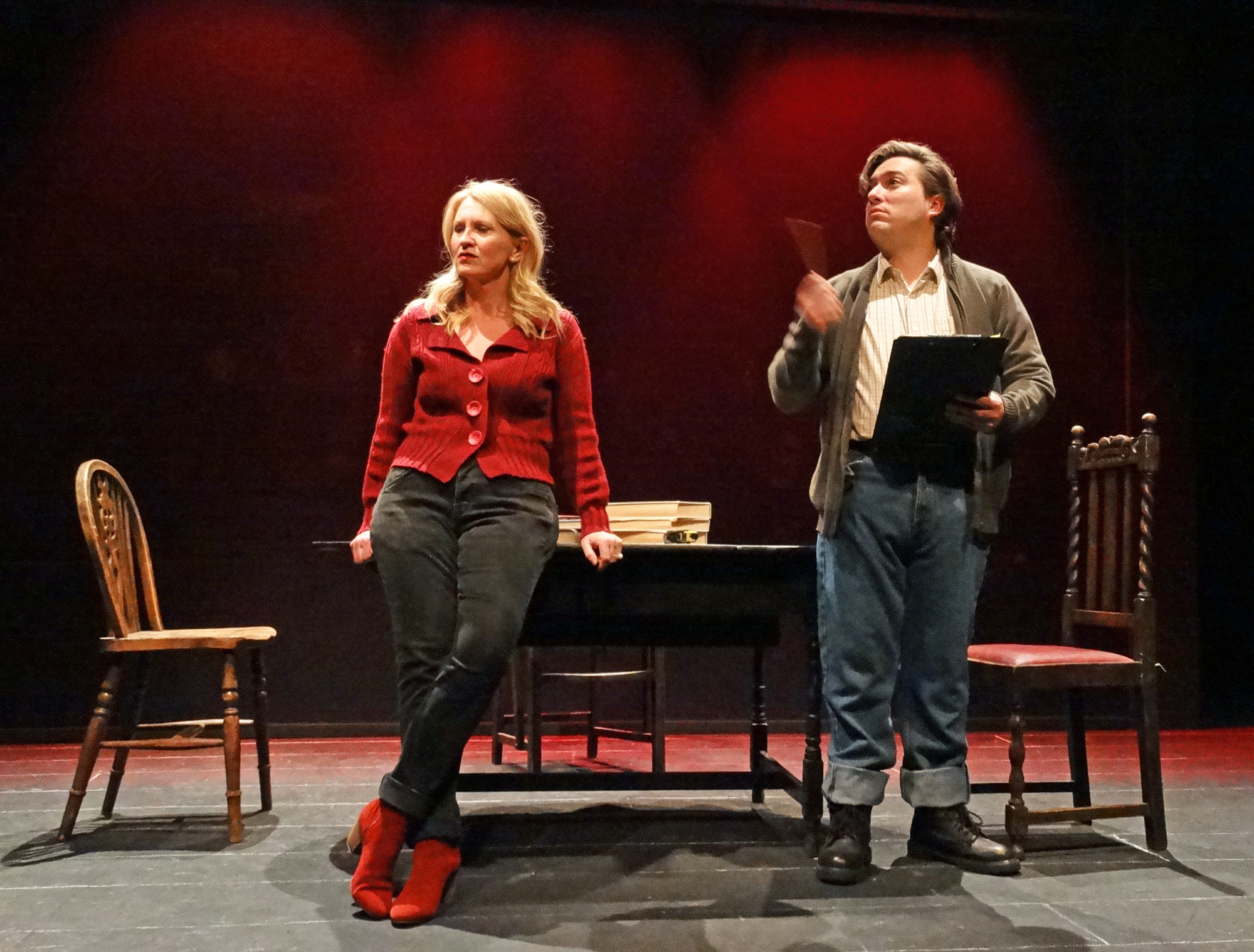
… and the new century starts with a celebration – forgetting for a while that Isobel’s bones lay beneath the kitchen floor for two hundred years.

*
*
Les Liaisons Dangereuses

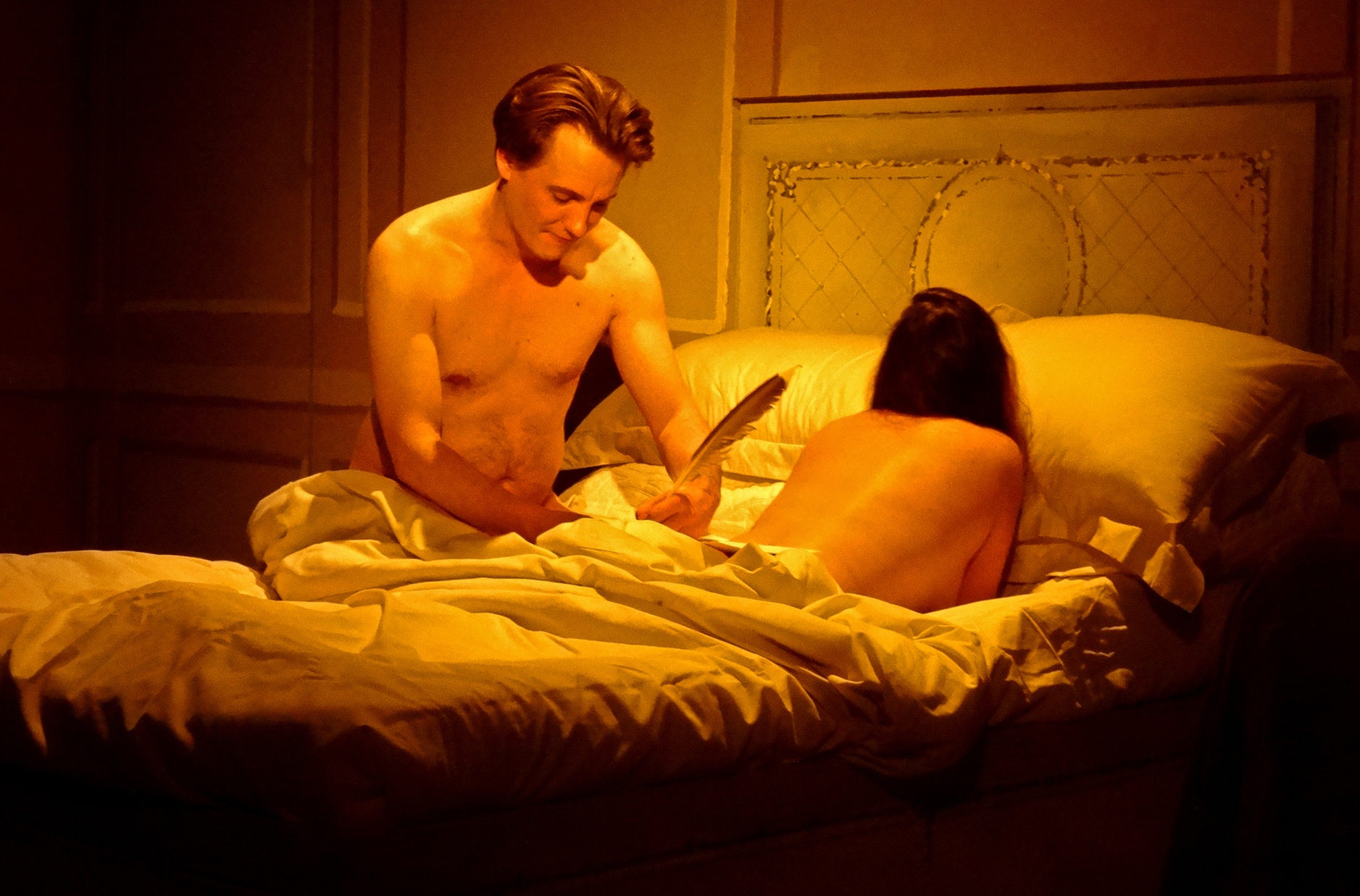
As you can see, Valmont does a lot of writing. He has a lot of letters for his manservant to send, as he’s involved in several simultaneous seductions.
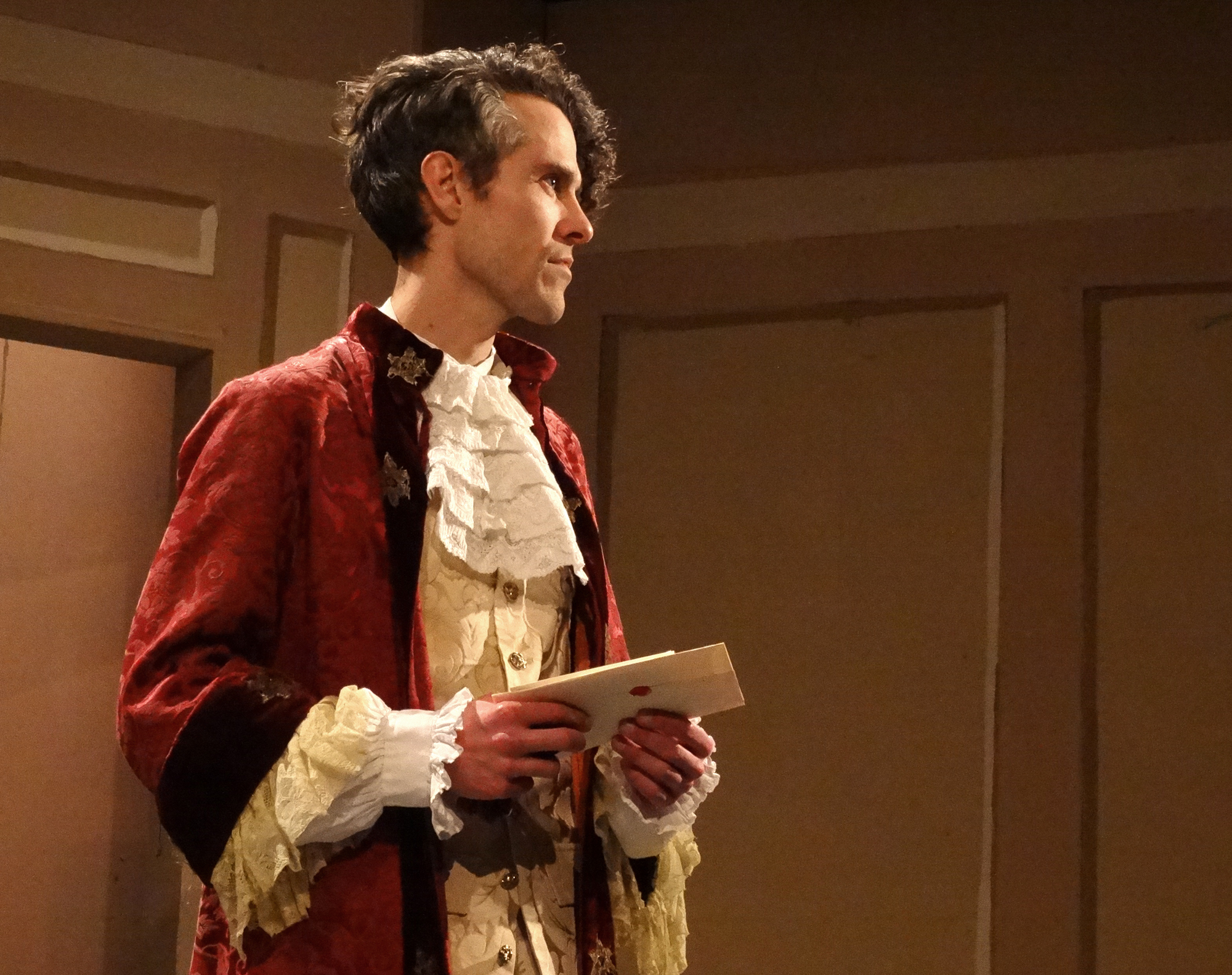
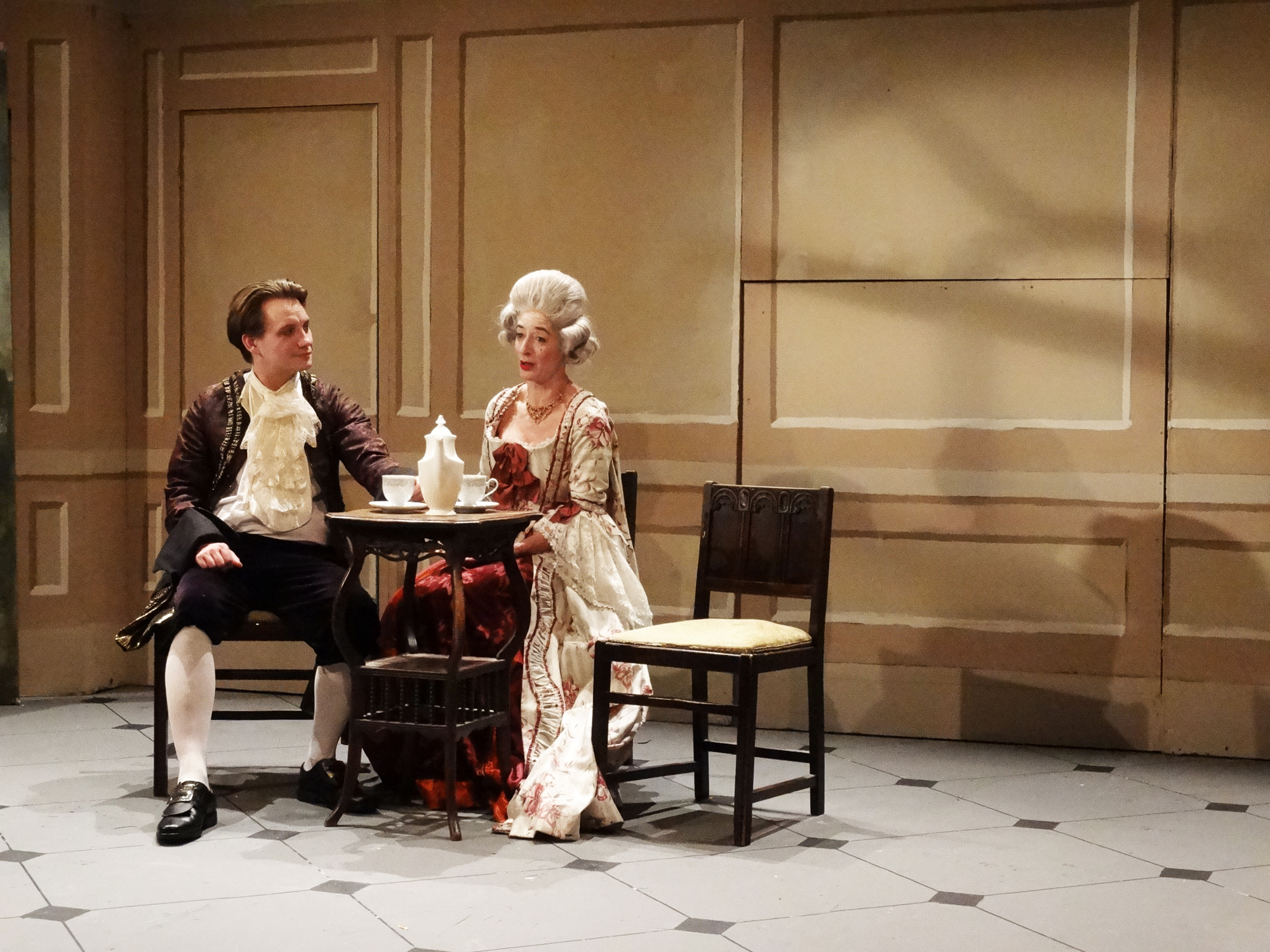
‘Les Liaisons Dangereuses’ is set amongst the corrupt French aristocracy, just before the Revolution, where Valmont and his long-term lover plot the embarrassment and ridicule of their ‘friends’ and enemies.

The action takes place in a grand Paris house, as well as a country chateau.
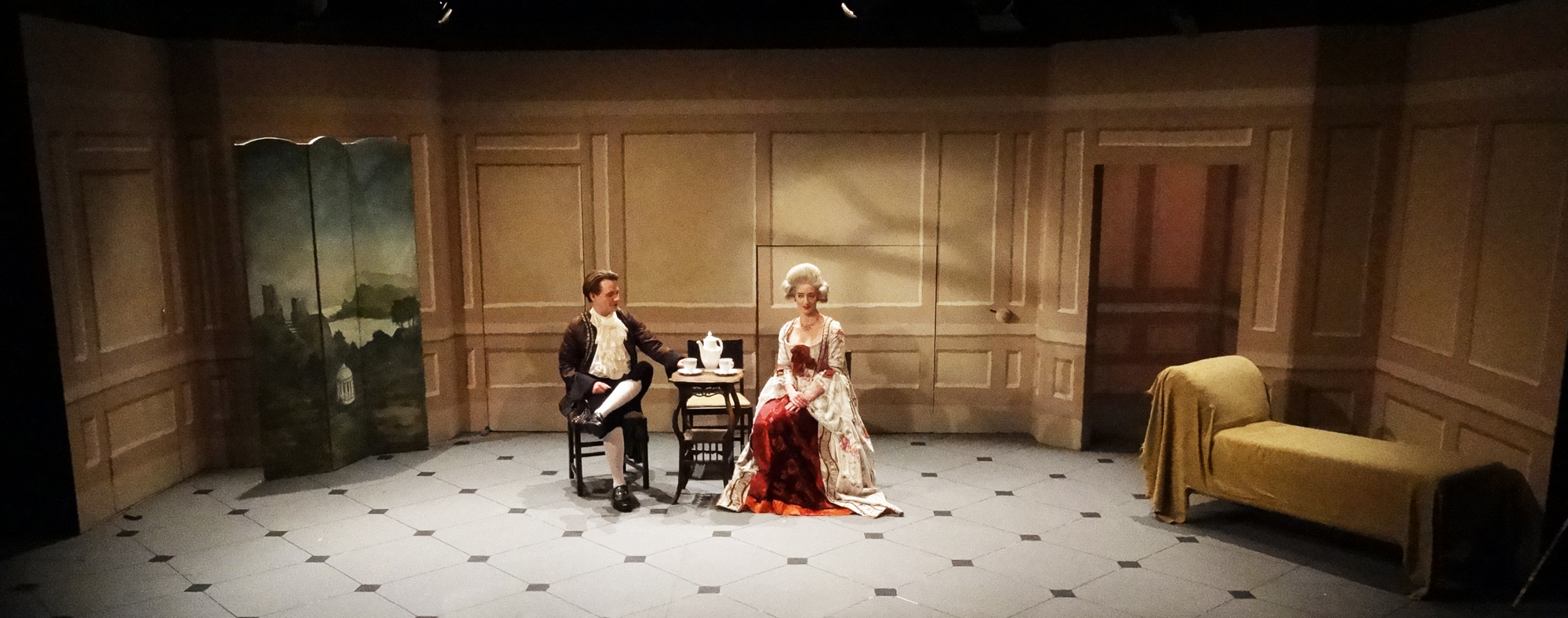
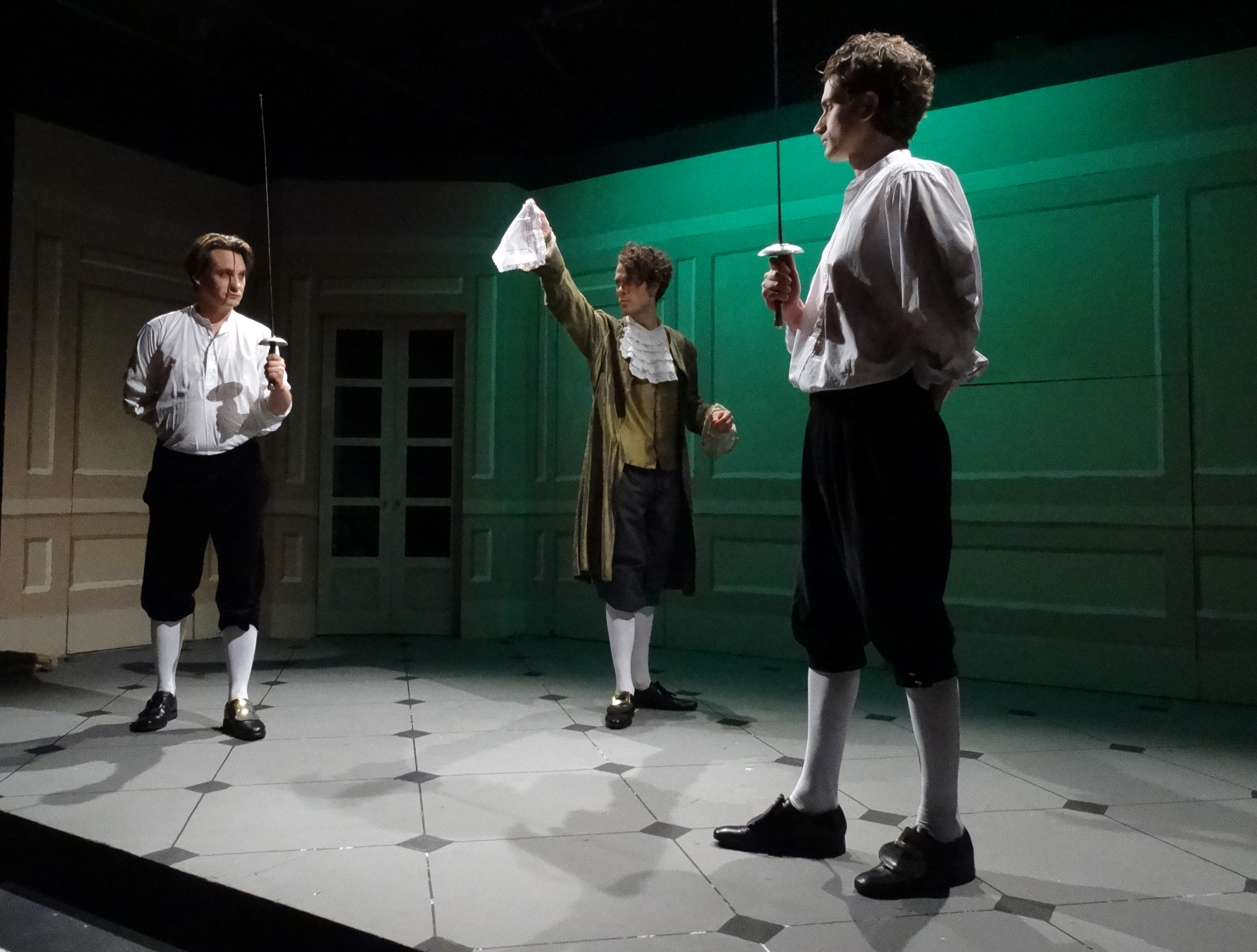
The fixed set spanned the entire NVT stage, so I suggested the different locations by varying the window light on the rear wall.
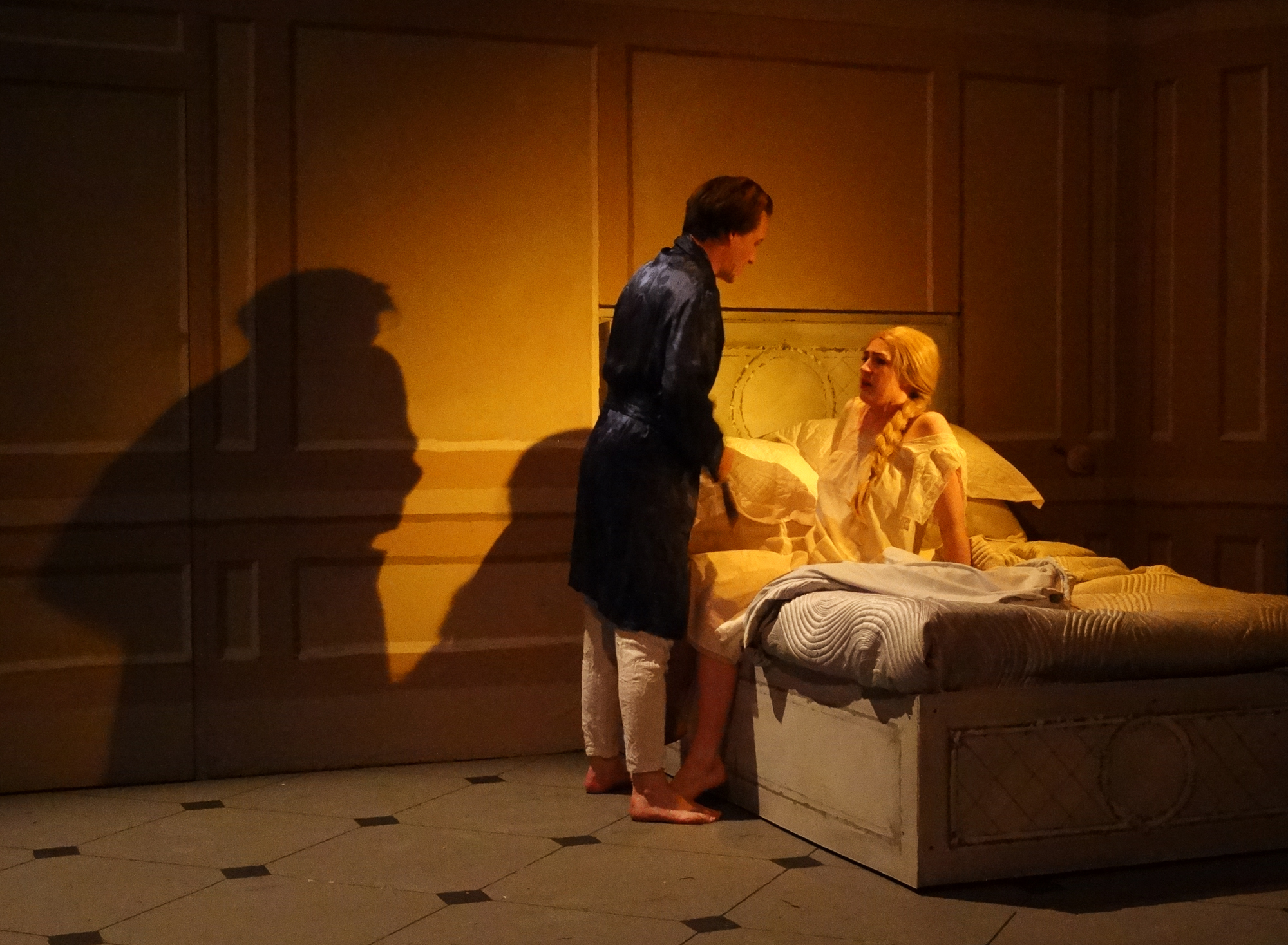
There were bedrooms, too. Creating the candle-lit effects was great fun.

A dizzying number of set and costume changes – the stage crew were constantly busy.


It was hard to keep up with all the plot twists, but director Mark Lester achieved great performances from his cast.
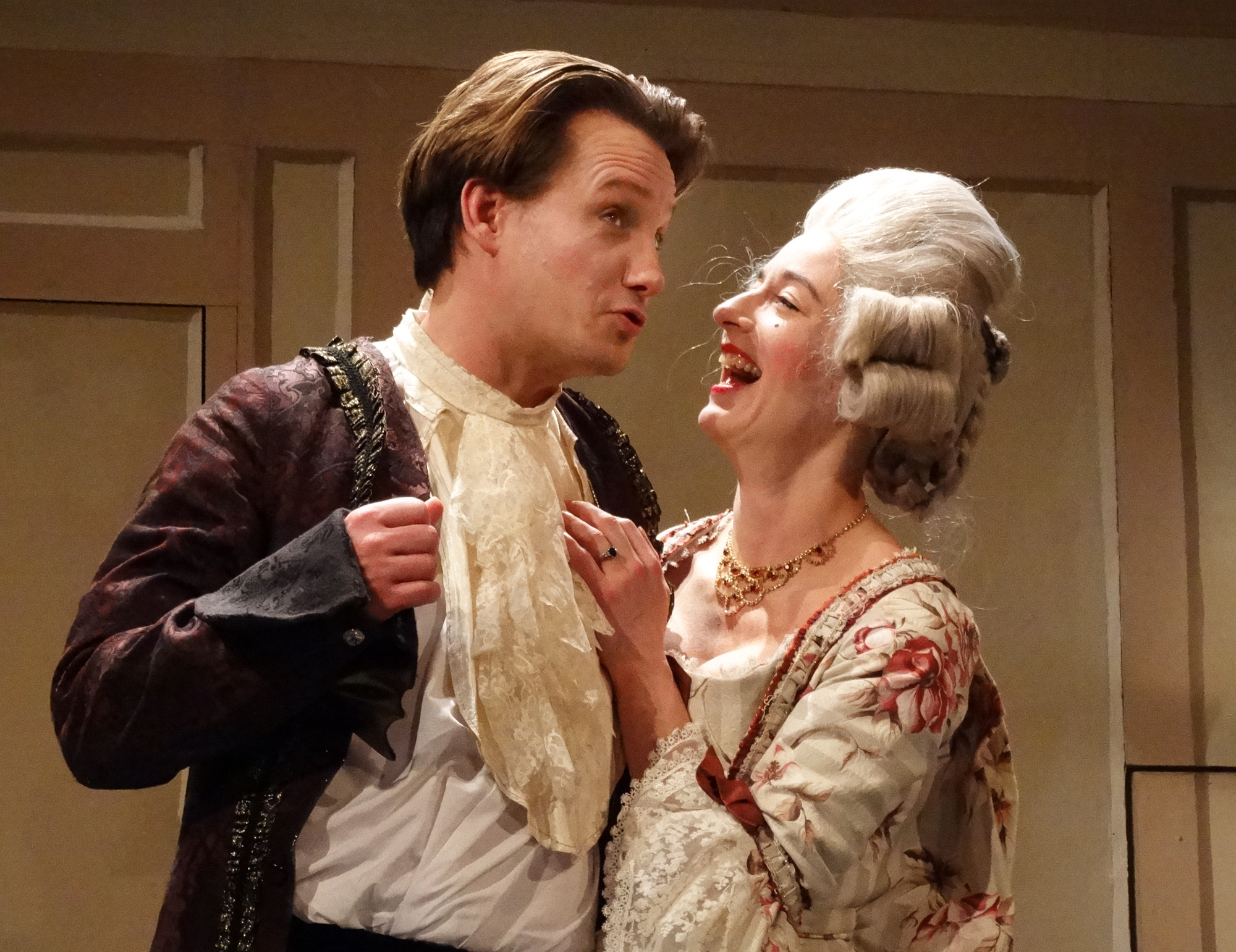
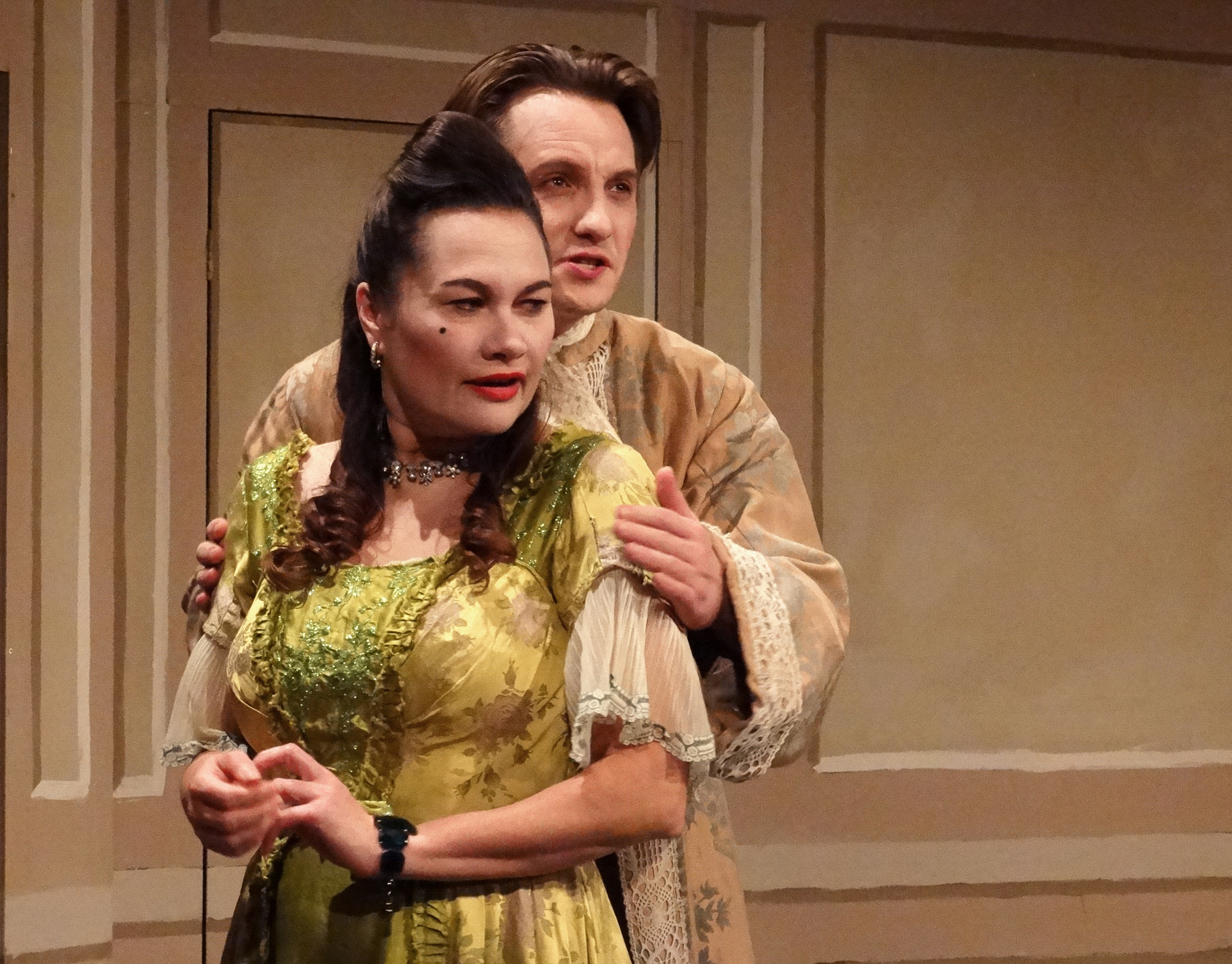


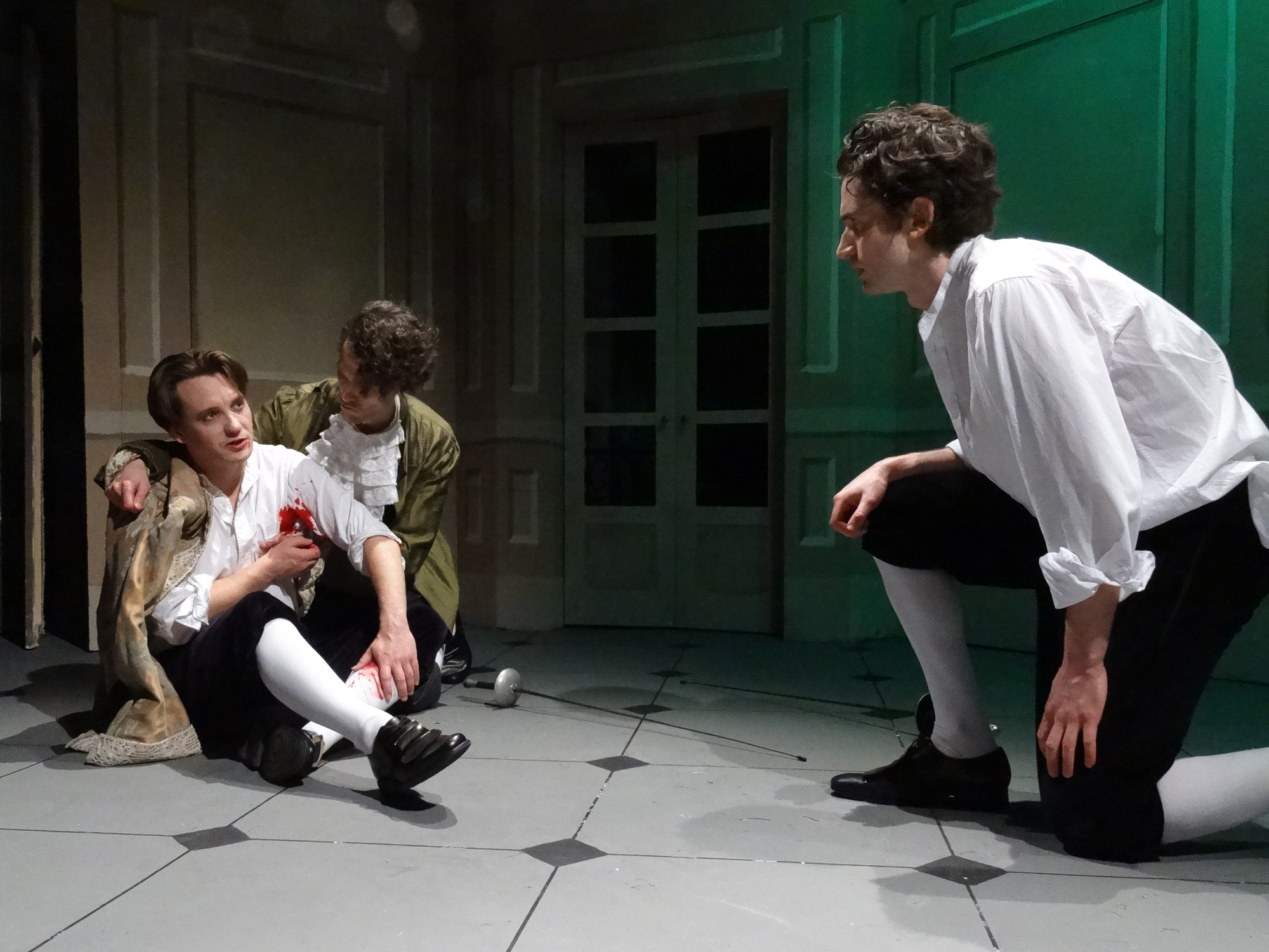
At the conclusion, of course, it ends in tragedy. The deceptions are uncovered, and the honour of the outraged victims demands a duel.

*
*
Taking Care Of Baby
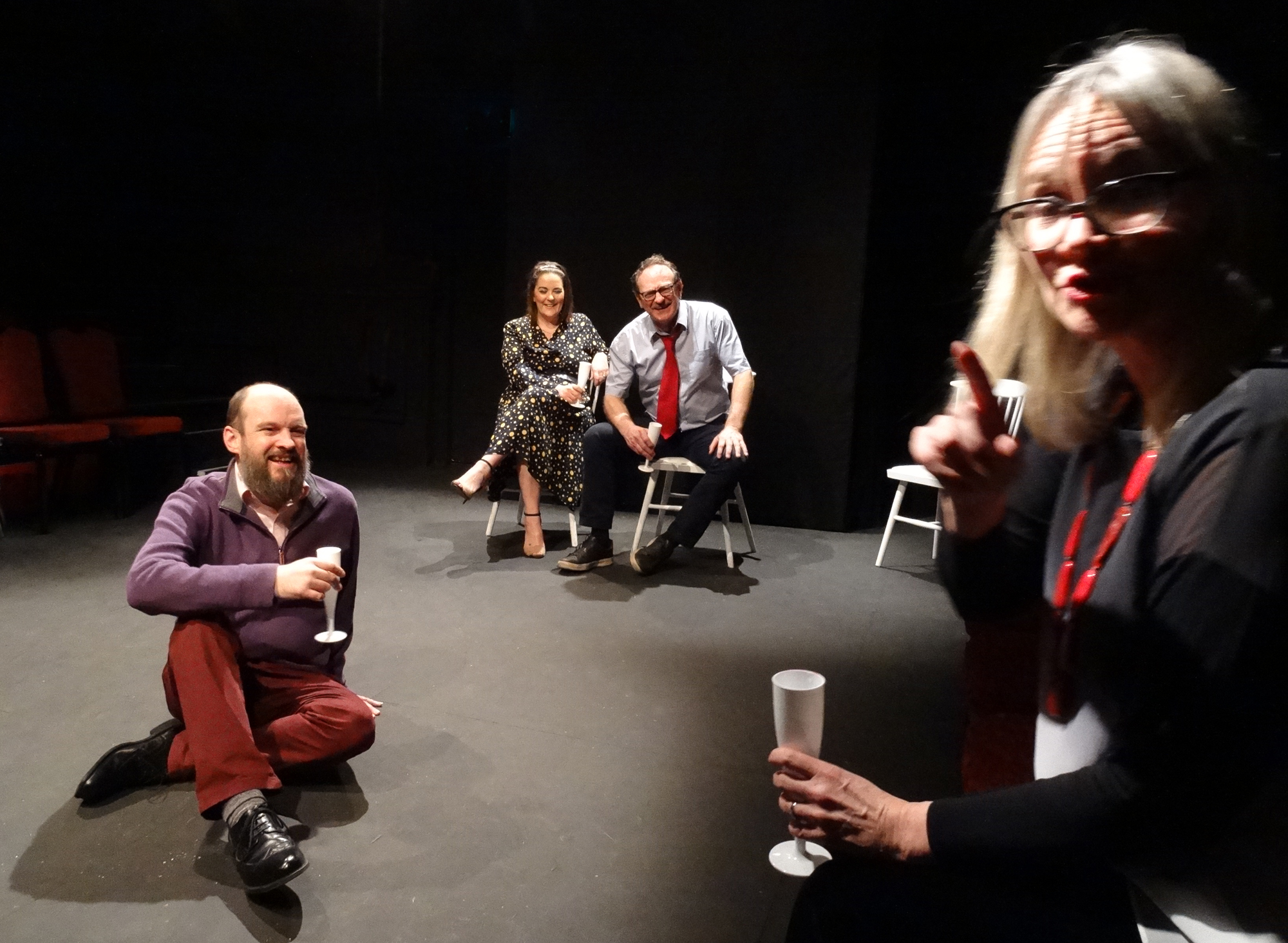
Lynn (that’s her on the right) is standing in an election to be the town’s MP. But she’s also the mother of Donna, who’s lost two of her children to cot death. New Venture started 2024 with Dennis Kelly’s complex, harrowing play.

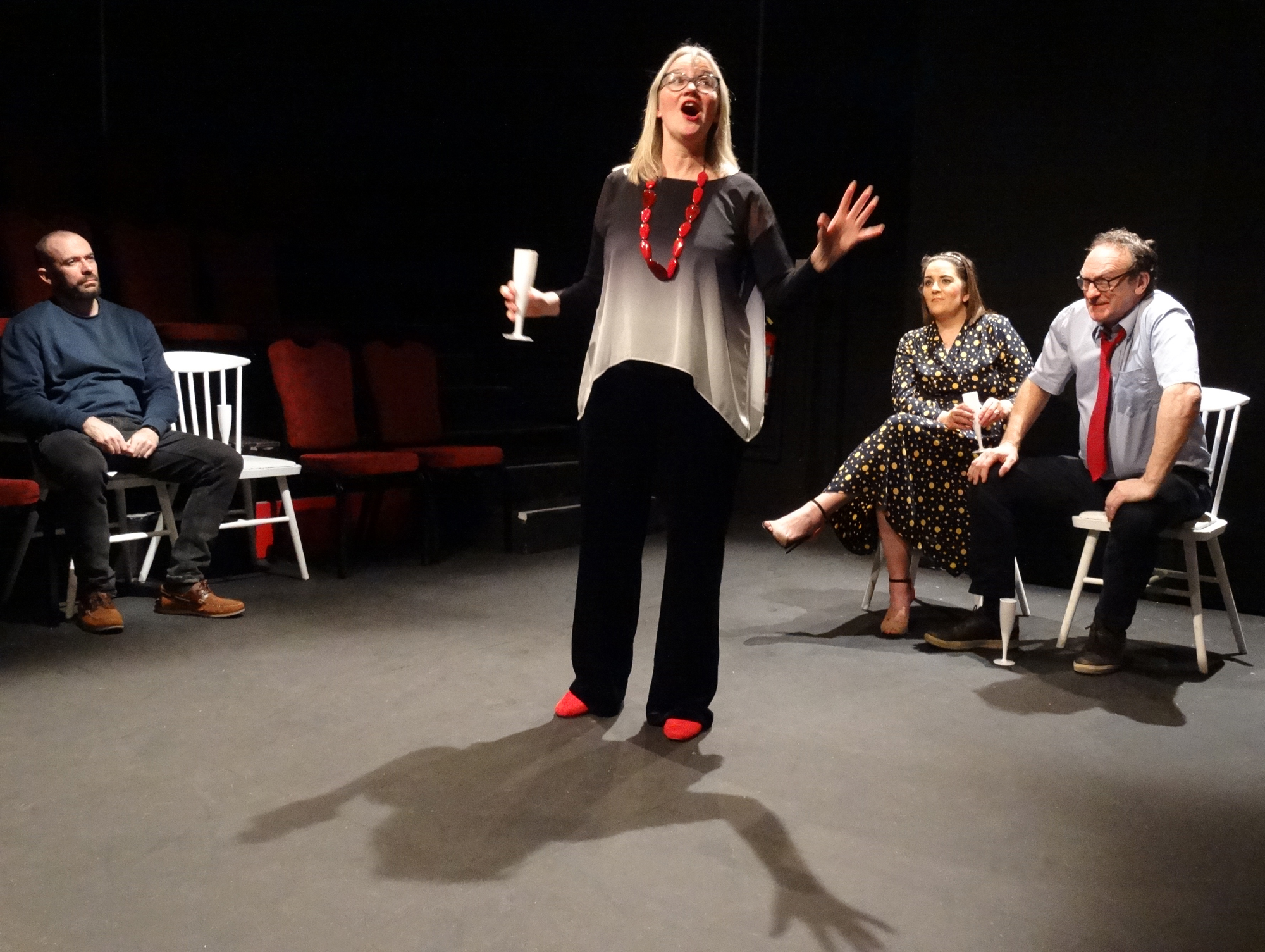
Dennis Kelly wrote the – fictional – piece as though it was actual verbatim theatre, with actors speaking the words taken from interviews with real people. The author inserted himself into the script, as an outside voice asking the questions. Director Neil Hadley chose to have an actor playing Kelly as part of the cast. That’s him seated on the right, while he’s questioning Donna about the deaths, and the subsequent investigations, which culminated in a High Court trial.
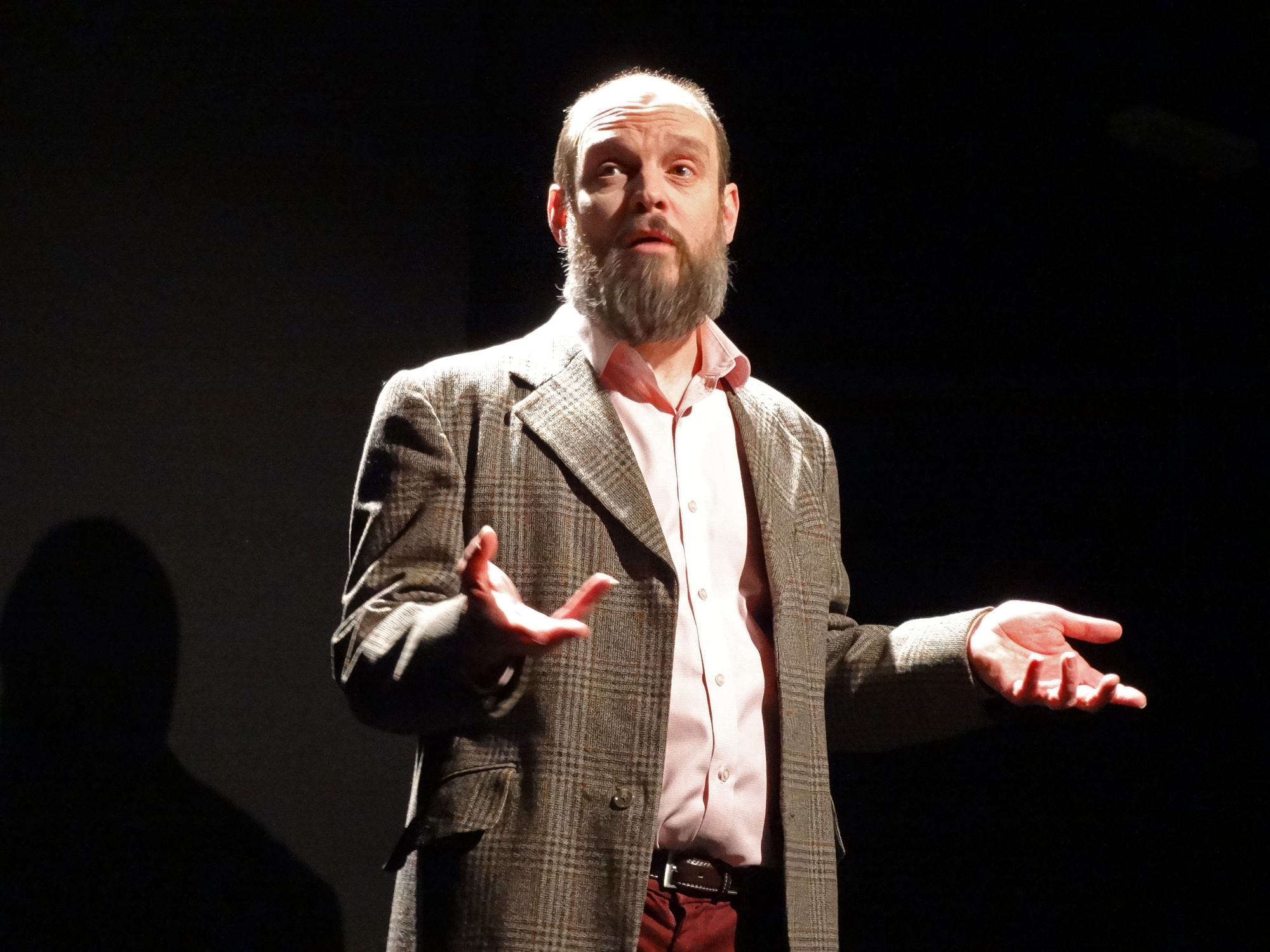
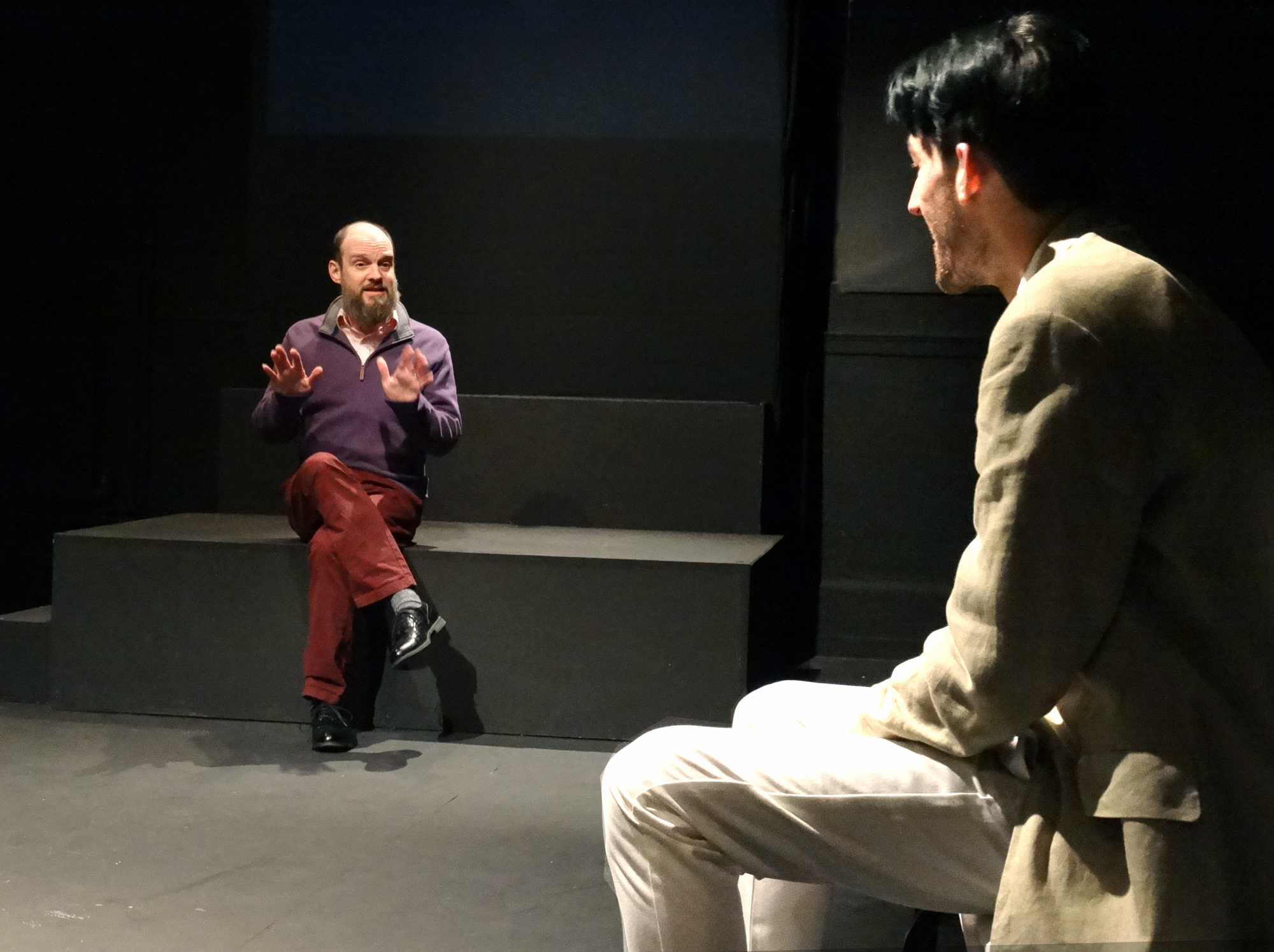
He also interviews Professor Millard, the psychiatrist who’s diagnosed Donna with a rare psychological disorder that supposedly drives mothers to harm their infants. Millard’s diagnosis turns out to be questionable, though, and the professor seems to have lost the confidence and trust of his wife.


The play was done ‘in traverse’, with audience on both sides of a central acting area. Starkly done, as you can see – a perfect fit for New Venture’s Studio Theatre. The children’s father writes to Dennis Kelly, setting out his opposition to the theatre project, and that he feels the author is ‘a parasite’ for exploiting his family’s grief by turning it into ‘an entertainment’.
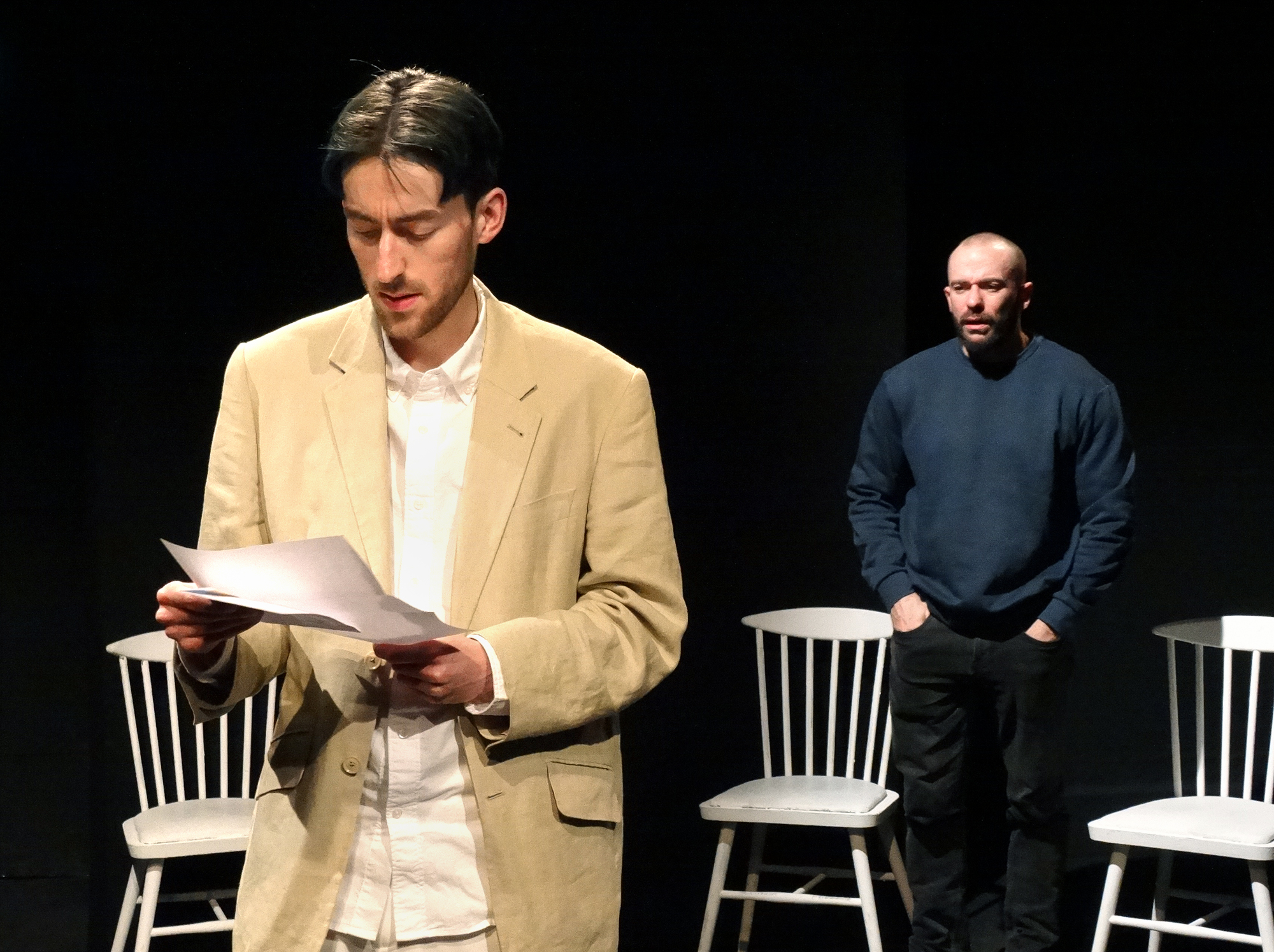
There’s more than one kind of parasite, though. Kelly interviews the journalist who followed the story (played by the same actor who plays the father, multi-role like a number of the cast) – a sleazy character and a bit of a sex addict, who’s made a lot of money by selling the story to the ‘Red Top’ newspapers.
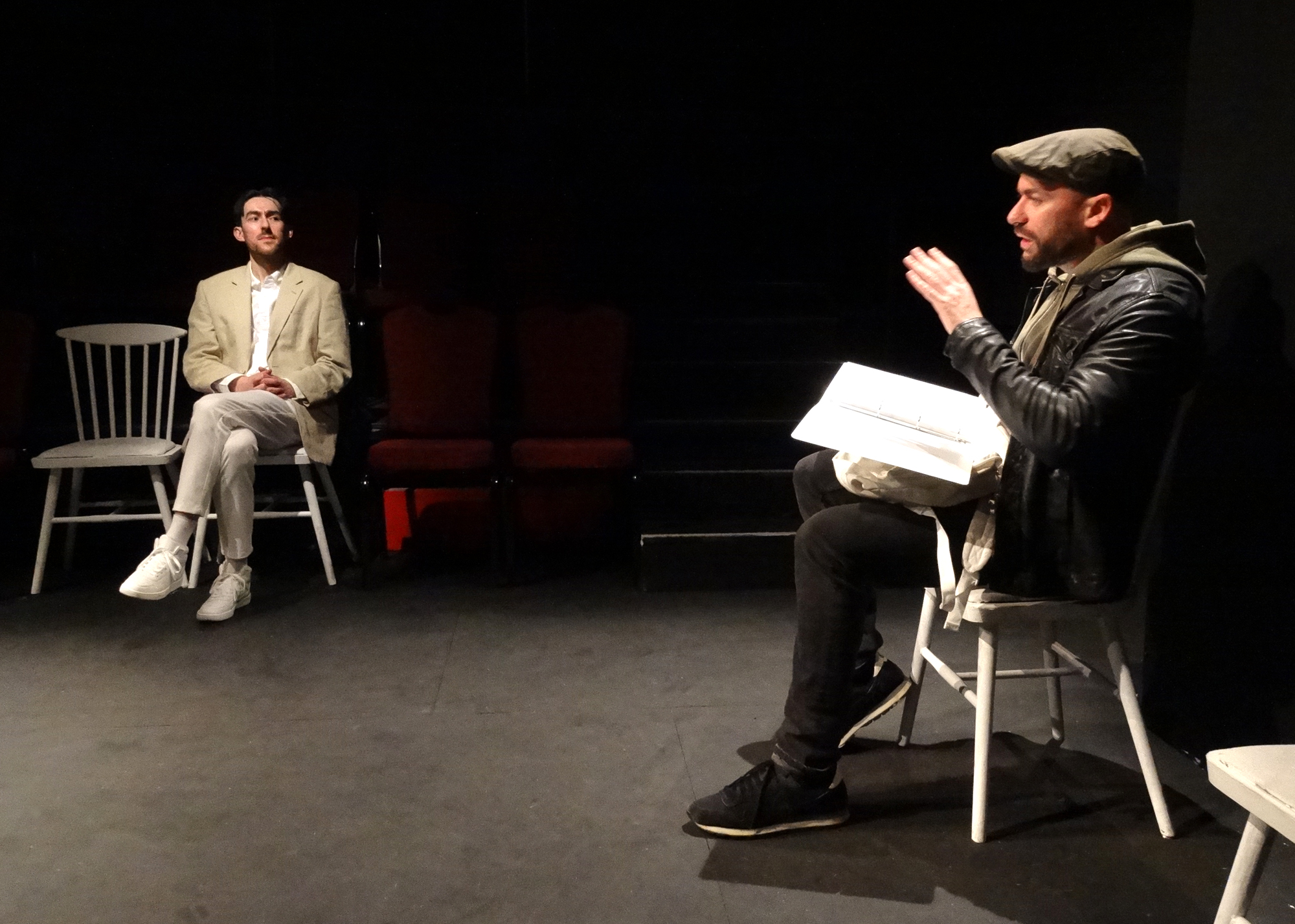
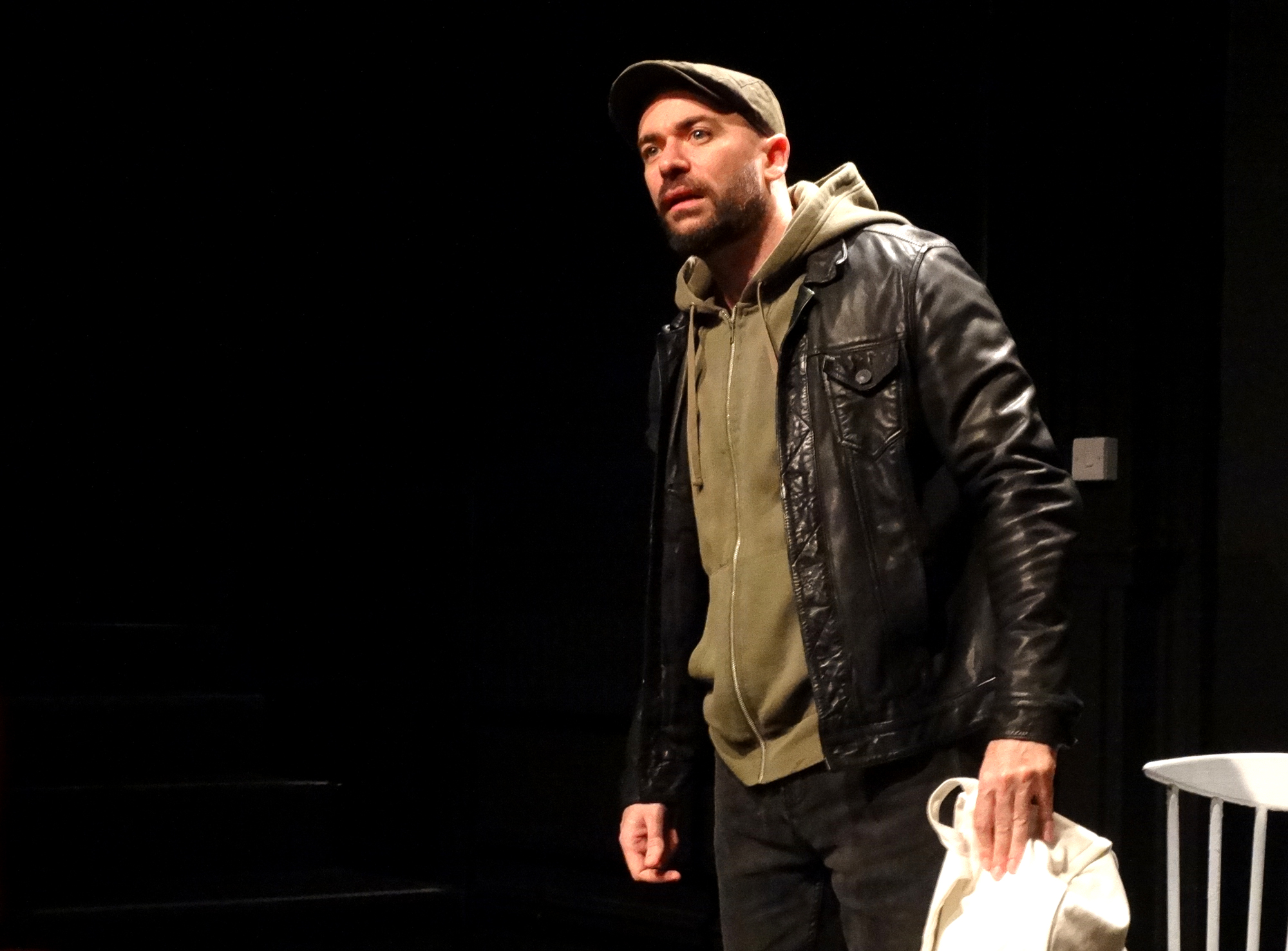
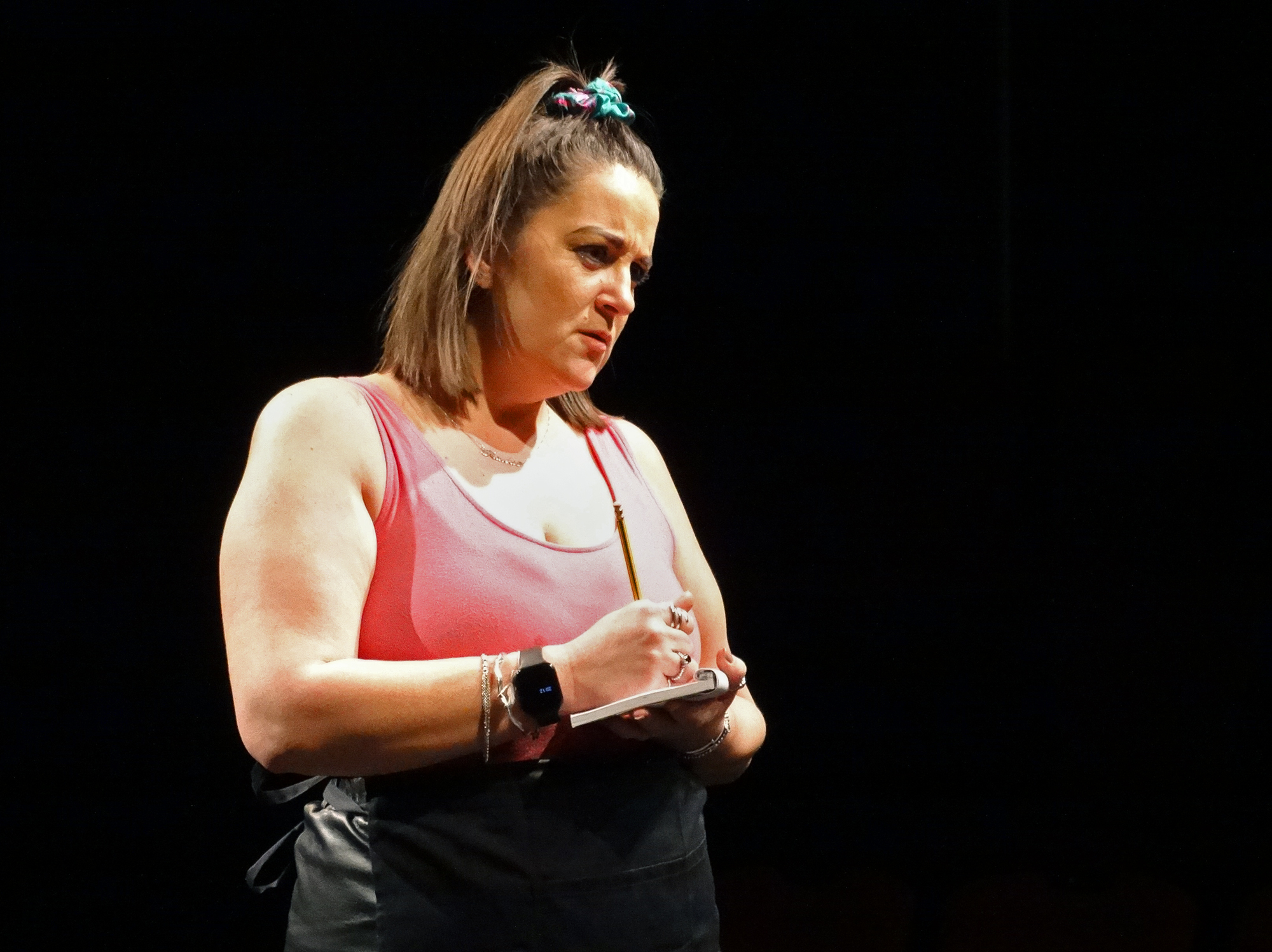
Closer to home, Donna’s mother Lynn is using the case, and all the publicity, to boost her electoral fortunes. Her grandchildren’s deaths might get her into Parliament.
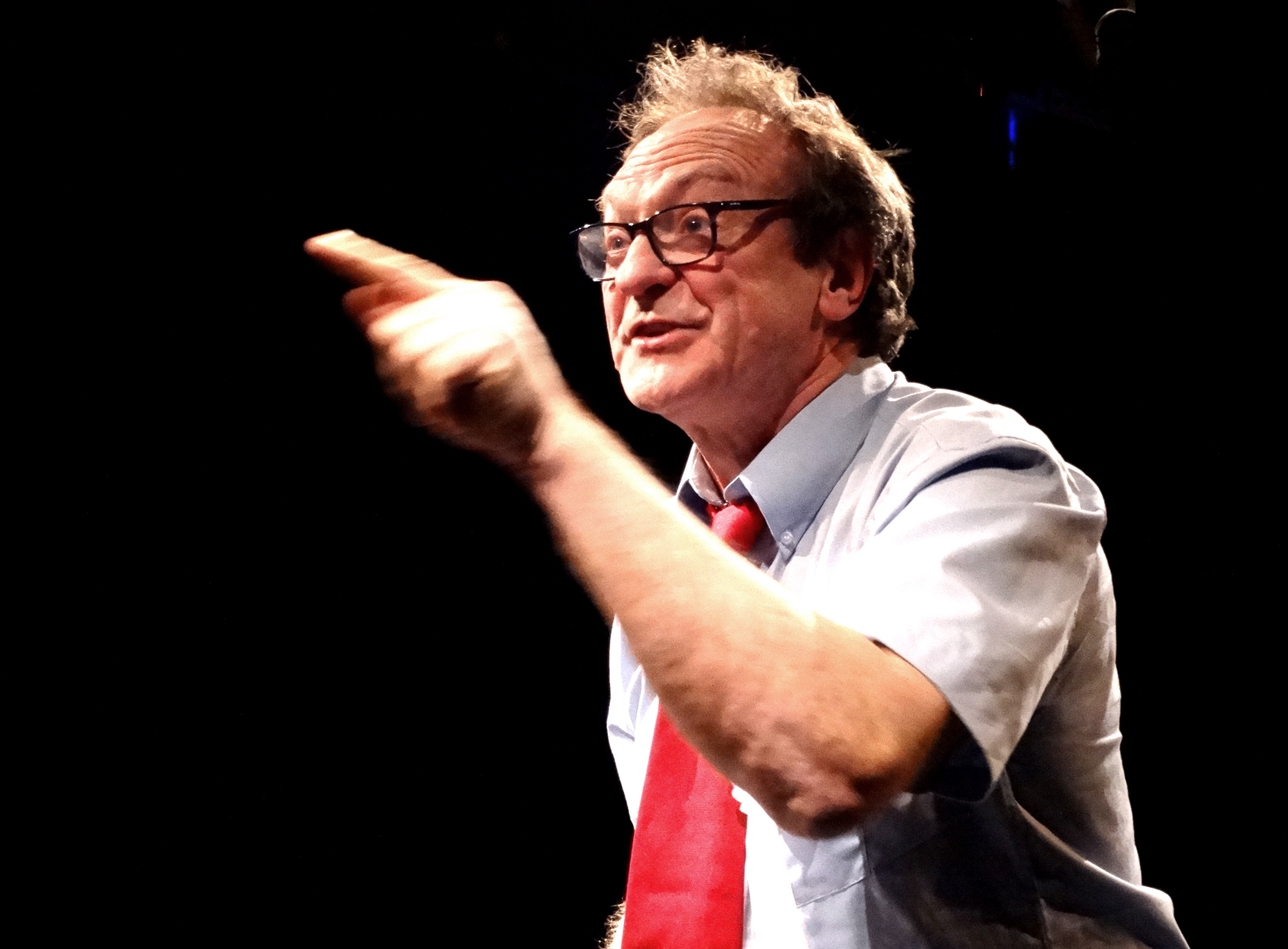
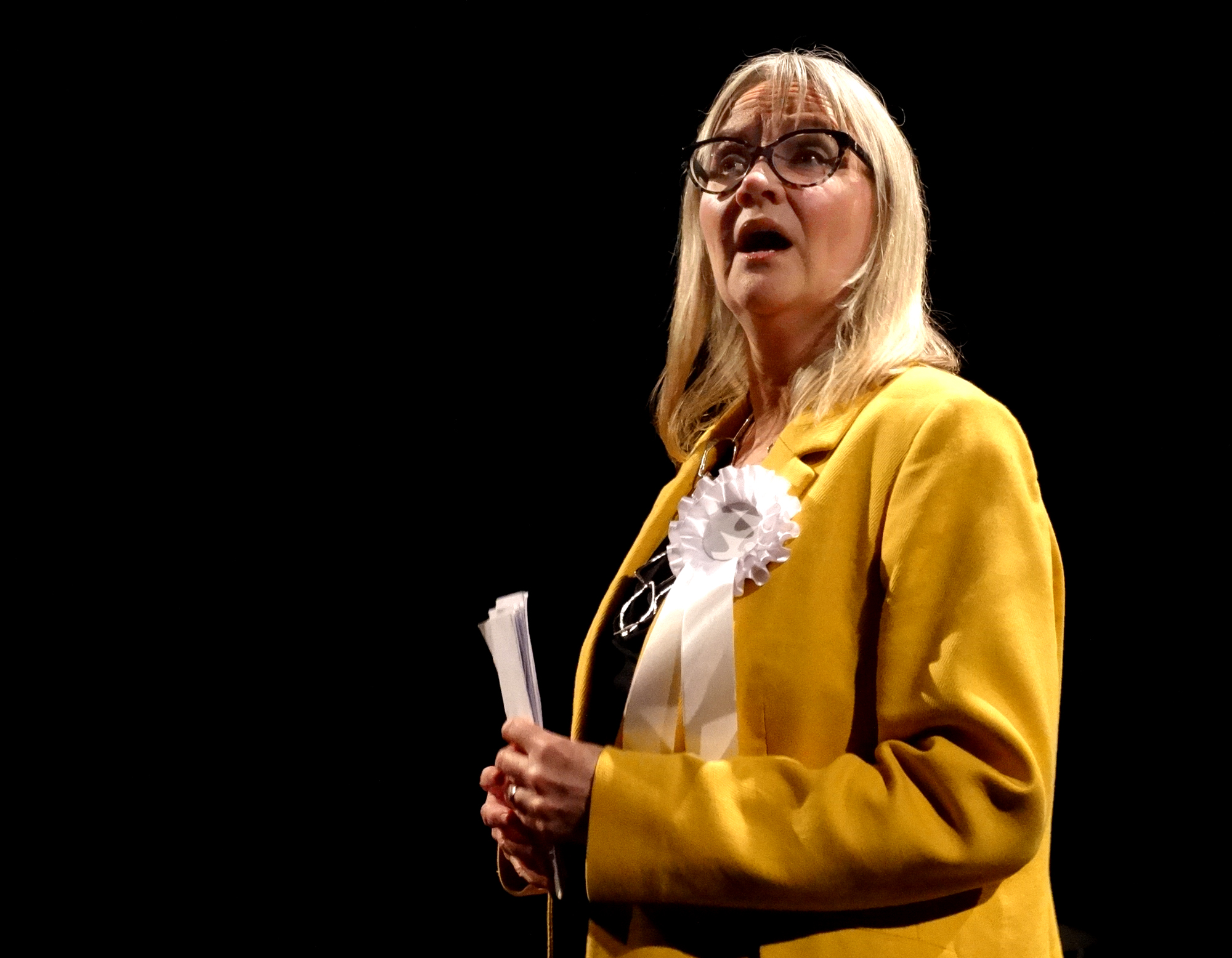
She’s an ex-Labour politician, standing as an Independent. Her rise in the polls, though, leads a slimy Tory official to try to woo Lynn over to his own party – to stand as a Conservative candidate.

A great project to light – stark and uncompromising. No set as such, just the seating, a stage at one end, and black panels defining the limits of the acting area.


*
*
 seeing stages